Commercial Gas & Propane Deep Fryer Engineering Guide
Engineering guide for commercial gas and propane deep fryers. Compare open-pot vs tube-fired designs, BTU recovery speeds, and cold zone sediment management.
Deep frying is a high-temperature immersion cooking process where food is rapidly cooked in liquid lipid at temperatures between 175°C and 195°C (350°F - 385°F). In high-volume commercial hospitality, gas and liquid propane (LP) fryers are the preferred cooking platforms due to rapid thermal recovery times, high BTU heat input, and lower operating fuel costs compared to electric elements. However, poor burner calibration, inadequate sediment cold zones, and neglected oil filtration severely degrade food flavor, accelerate cooking oil breakdown, and create catastrophic kitchen fire risks. This comprehensive whitepaper explores the mechanical engineering, combustion thermodynamics, oil chemistry, and fire safety protocols for commercial gas fryers.
1. Combustion Thermodynamics: Natural Gas (NG) vs. Liquid Propane (LP)
Specifying a commercial gas fryer requires matching burner design to the facility's fuel infrastructure. Natural gas and liquid propane have substantially different energy densities, combustion air ratios, and operating manifold pressures:
| Combustion Parameter | Natural Gas (Methane - CH4) | Liquid Propane (LPG - C3H8) | Engineering Significance |
|---|---|---|---|
| Higher Heating Value (HHV) | ≈ 1,020 BTU per cubic foot | ≈ 2,500 BTU per cubic foot | Propane delivers ~2.5x more thermal energy per unit volume than natural gas |
| Nominal Manifold Pressure | 3.5" to 4.0" Water Column (W.C.) (0.87 - 1.0 kPa) | 10.0" to 11.0" Water Column (W.C.) (2.49 - 2.74 kPa) | Propane requires higher manifold supply pressure to inject fuel through smaller burner orifices |
| Stoichiometric Air-to-Fuel Ratio | ≈ 10:1 (10 parts air to 1 part gas) | ≈ 24:1 (24 parts air to 1 part gas) | Propane requires 2.4x more primary combustion air; improper air shutters produce toxic carbon monoxide |
| Burner Orifice Size (for identical BTU) | Larger diameter drill size (e.g., #36 to #42 drill) | Smaller diameter drill size (e.g., #51 to #54 drill) | CRITICAL WARNING: Connecting a natural gas fryer to a propane line results in catastrophic fire and explosion |
| Specific Gravity (Relative to Air = 1.0) | 0.60 (Lighter than air; rises) | 1.52 (Heavier than air; pools at floor level) | Propane leaks pool in floor drains and low areas, requiring floor-level gas leak detection sensors |
2. Frypot Heat Exchanger Architectures
The method used to transfer thermal energy from burning gas into the cooking oil defines a fryer's operational characteristics, cleaning ergonomics, and lifespan:
- Open-Pot / Infrared Burner Fryers: Gas burners are mounted externally against the outside stainless steel frypot walls, or radiate infrared heat through ceramic tiles. The interior frypot is completely smooth, unobstructed by tubes, making it exceptionally fast and easy to clean. Ideal for lightly battered items, french fries, and QSR applications.
- Tube-Fired Fryers (Immersion Tubes): High-output gas flames fire horizontally through internal submerged stainless steel tubes (typically 3, 4, or 5 tubes) welded directly inside the oil reservoir. Baffle diffusers inside the tubes maximize conductive heat transfer into the oil. Produces a generous deep cold zone beneath the tubes, making it the industry benchmark for heavily breaded items (fried chicken, fish) where crumbs fall to the bottom.
- Flat-Bottom Fryers: Shallow, wide-bottom tanks with external gas burners underneath, designed for floating dough products (tempura, donuts, funnel cakes, tortilla chips) that cook on the surface without deep basket immersion.
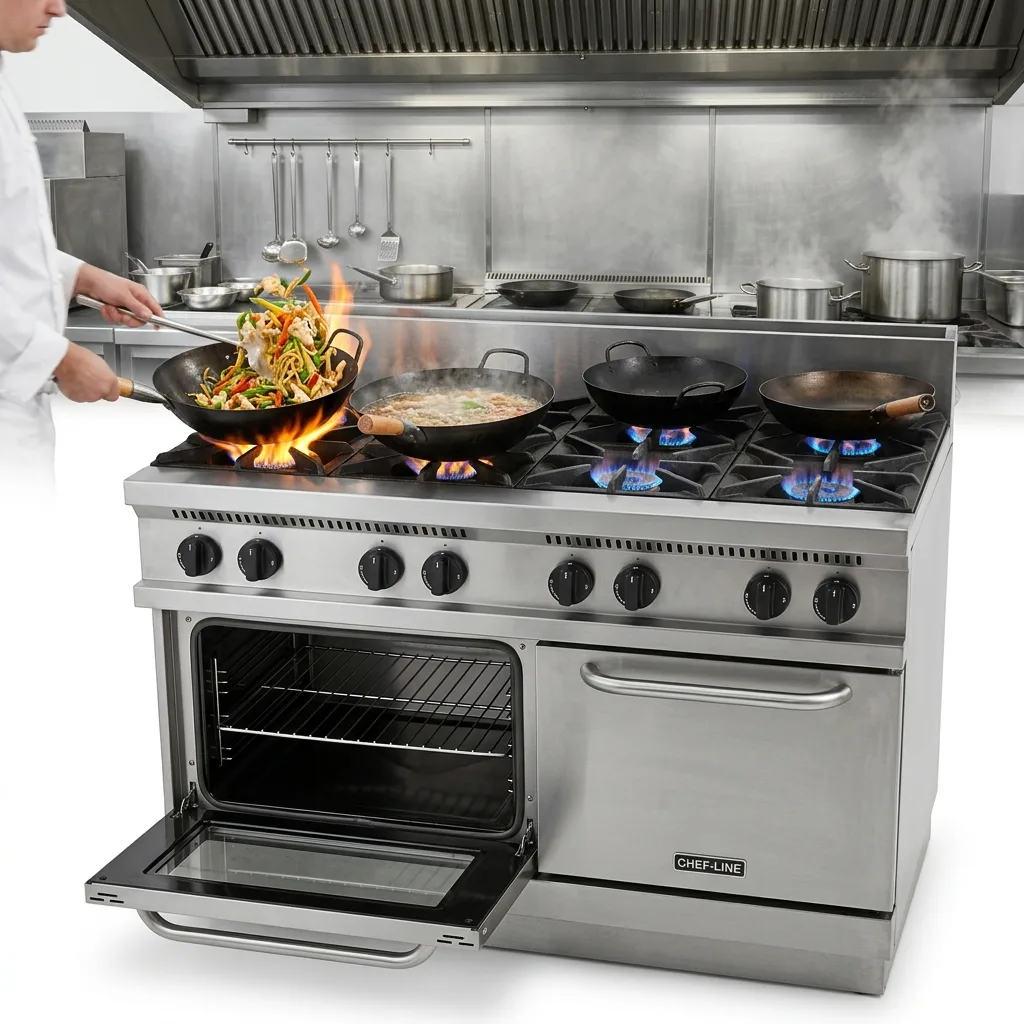
Figure 1: Heavy-duty commercial gas deep fryer line engineered with sub-burner cold sediment zones for oil preservation.
3. Cold Zone Physics & Cooking Oil Degradation Chemistry
Cooking oil represents one of the highest recurring consumable expenses in commercial kitchens. The lifespan of frying oil is governed by thermal and chemical degradation:
The Cold Zone Solution: In a tube-fired fryer, the oil volume beneath the firing tubes remains 40°C to 60°C cooler than the 180°C cooking zone above. Crumbs falling from breaded foods settle into this stagnant cold zone without carbonizing, preventing burnt off-flavors and extending oil usable life by up to 40%.
Oil Degradation Thresholds:
- Free Fatty Acid (FFA) Concentration: Fresh cooking oil has an FFA of < 0.05%. When thermal breakdown pushes FFA above 2.0%, the oil's smoke point drops dramatically, causing intense foaming and acrid smoke.
- Total Polar Materials (TPM %): The global gold standard for food hygiene testing. Using a calibrated digital oil tester:
- Fresh Oil: 1% - 10% TPM
- Optimal Frying Zone: 12% - 20% TPM
- Mandatory Disposal Threshold: > 24% TPM (At > 24%, acrylamides and carcinogenic oxidized polymers reach unsafe levels).
4. Automated Oil Filtration Engineering & Payback Analysis
Manual oil filtering with hot pots and filter cones is hazardous, labor-intensive, and frequently skipped by kitchen staff. Modern commercial fryers incorporate built-in automated filtration systems:
| Filtration System Feature | Manual Pan & Paper Cone Method | Built-In Automated Pump Filtration | Operational ROI Benefit |
|---|---|---|---|
| Cycle Time per Vat | 25 - 40 minutes (Requires fryer cool down) | 4 - 6 minutes (Hot filtering at 175°C) | 85% labor reduction; enables mid-service filtering during lunch/dinner changeovers |
| Filtration Media Precision | Coarse mesh (100 - 200 microns) | 5-micron filter paper / envelope with diatomaceous earth powder | Removes microscopic carbonized dust, clarifying oil color and halting oxidation |
| Staff Safety & Burn Risk | Extremely High (Transporting 180°C liquid oil in buckets) | Zero Handling (Closed-loop stainless piping & 1/3 HP motorized pump) | Eliminates workplace slip-and-fall and severe burn liability claims |
| Annual Oil Cost Reduction | Baseline Expense (100% oil consumption) | 35% - 50% Reduction in bulk oil purchases | Payback on automated filtration package achieved in 6 to 14 months |
5. Thermal Recovery Rate Calculations & Production Capacity
A deep fryer's true culinary output is determined by thermal recovery time—the seconds required to reheat oil to 180°C (350°F) after a basket of -18°C (0°F) frozen french fries is dropped into the vat:
Where m = oil mass, c_p = specific heat of oil (≈ 2.0 kJ/kg·°C), ΔT = temperature drop.
High-efficiency gas fryers with 120,000+ BTU inputs and pulse atmospheric burners recover setpoint temperature in under 90 seconds, preventing soggy, oil-saturated fries and maintaining crispy, golden exterior crusts.
6. Burner Turndown Ratio & Gas Modulating Valve Technology
Traditional snap-action gas valves alternate between 100% full fire and 0% pilot flame, resulting in severe temperature overshoots (±10°C) that degrade delicate fry oils. Modern high-efficiency gas deep fryers feature modulating gas valves:
- Electronic Proportional Modulation: Modulates gas input smoothly between 30% and 100% based on load demand. When product is introduced, the valve ramps instantly to 100% fire; as the setpoint approaches within 3°C, the valve throttles back to 40% fire, preventing temperature overshoot and scorch marks on frypot walls.
- Pulse Combustion Burners: Pulse combustion generates acoustic shock waves within sealed combustion chambers, delivering thermal efficiencies exceeding 80% (compared to 45% for standard atmospheric tube fryers) and cutting natural gas consumption by 30%.
7. Fire Safety, High-Limit Thermostats & NFPA 96 Compliance
Deep fryers represent the single highest fire risk in commercial kitchens, accounting for over 45% of back-of-house structure fires:
- Dual High-Limit Safety Thermostats: Commercial fryers feature an operating thermostat (175°C - 195°C) and a redundant manual-reset high-limit thermostat. If the primary thermostat contacts weld shut, the high-limit sensor trips at 232°C (450°F), cutting power to the millivolt gas control valve before the oil reaches its auto-ignition temperature (~360°C / 680°F).
- NFPA 96 Hood Clearance & Wet Chemical Suppression: All gas deep fryers must be located under a Type 1 exhaust hood with a minimum 400 mm (16-inch) clearance from open flames (or separated by an 8-inch high stainless steel baffle splash guard). A dedicated UL 300 / NFPA 17A wet chemical fire suppression nozzle (potassium acetate/potassium carbonate formulation) must be aimed directly into each fryer vat.
6. Gas Supply Piping & Manifold Header Sizing Engineering
In high-capacity frying operations, multiple gas deep fryers operate simultaneously under full thermal recovery. Inadequate gas pipe diameters cause severe pressure drops during peak meal rushes:
| Total Gas Demand (BTU/hr) | Equiv. Fryer Battery (120,000 BTU/vat) | Max Pipe Run: 3/4" Diameter | Max Pipe Run: 1" Diameter | Max Pipe Run: 1-1/4" Diameter | Max Pipe Run: 1-1/2" Diameter |
|---|---|---|---|---|---|
| 120,000 BTU/hr | 1 Single Vat Fryer | 18 meters (60 ft) | 45 meters (150 ft) | 120 meters (400 ft) | 200 meters (650 ft) |
| 240,000 BTU/hr | 2-Vat Frying Battery | 6 meters (20 ft) | 15 meters (50 ft) | 40 meters (130 ft) | 75 meters (250 ft) |
| 360,000 BTU/hr | 3-Vat Frying Battery | Inadequate | 8 meters (25 ft) | 20 meters (65 ft) | 38 meters (125 ft) |
| 480,000 BTU/hr | 4-Vat High-Volume Lineup | Inadequate | Inadequate | 12 meters (40 ft) | 24 meters (80 ft) |
Engineering Code (NFPA 54): Gas supply pressure must not drop more than 0.5" W.C. between the facility gas meter and the fryer appliance manifold when all battery burners fire simultaneously.
7. Automated Basket Lifts & Oil Antioxidant Conditioning
Modern commercial deep fryers utilize electromechanical automation to ensure product consistency and minimize oil thermal stress:
- Synchronized Motorized Basket Lifts: Microprocessor-controlled linear actuators automatically lower fry baskets when cooking begins and lift them precisely at 0:00. This eliminates over-cooking, reduces human error during high-ticket rushes, and drains excess oil back into the vat for exactly 15 seconds before service.
- Active Antioxidant Filter Powders (Magnesium Silicate): Adding synthetic amorphous magnesium silicate filter powders during daily automated filtering cycles absorbs dissolved Free Fatty Acids (FFA), polar compounds, and color pigments through molecular adsorption. This restores clear amber color and extends cooking oil life by an additional 30% to 50%.
Featured Commercial Equipment Models
Tube-Fired Commercial Gas Fryers
High-recovery 4-tube gas fryers featuring 120,000 BTU input and generous cold sediment zones.
View Gas Deep Fryers →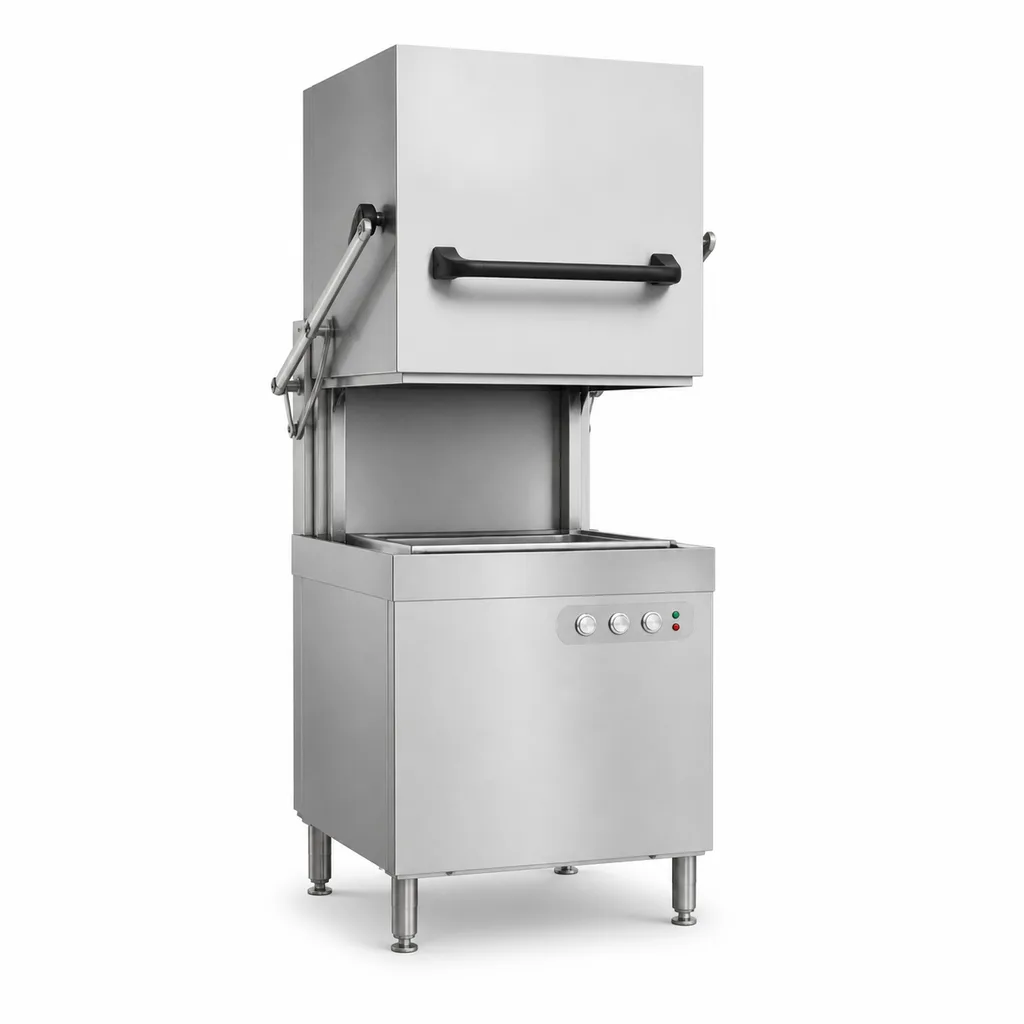
Electric High-Recovery Fryers
Precision solid-state electric deep fryers with immersion elements for maximum thermal efficiency.
View Electric Fryers →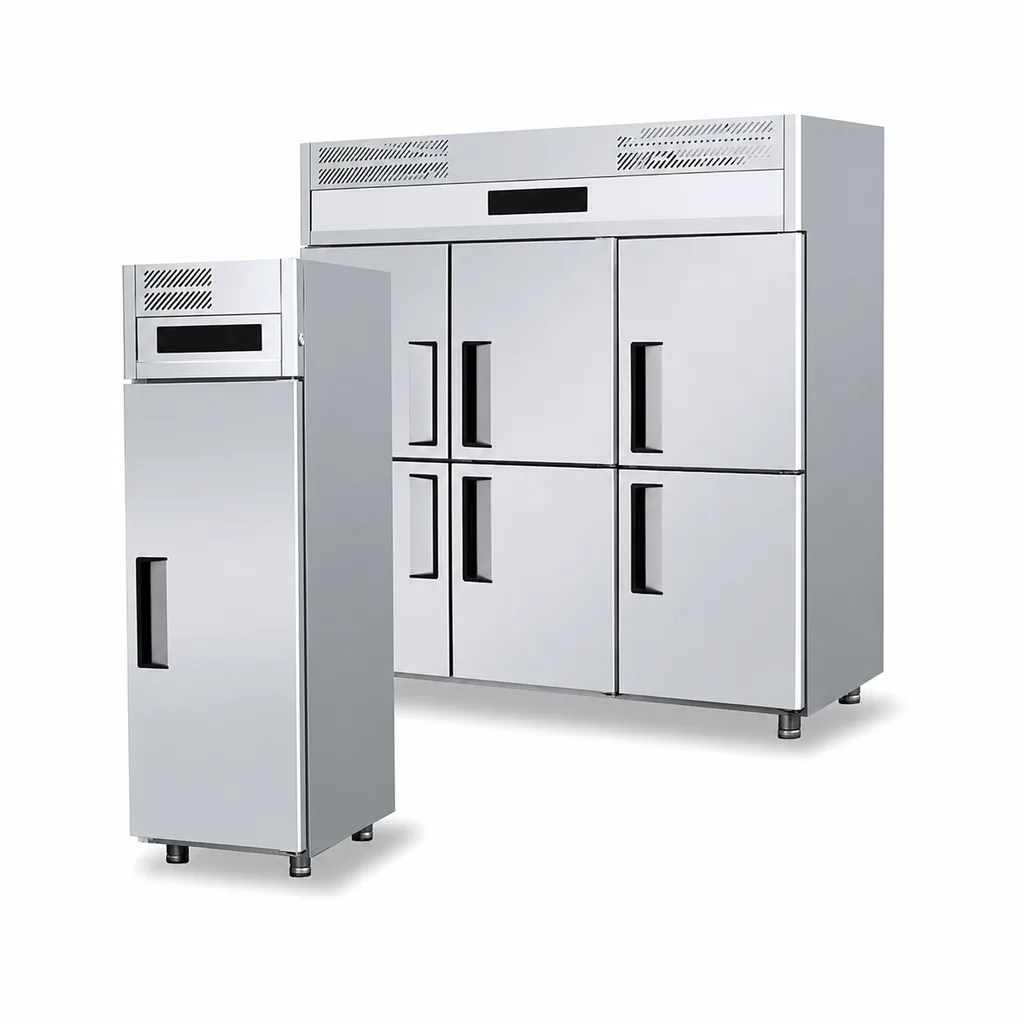
Dual-Vat Split Fryer Systems
Twin-basket split vat fryers engineered to fry proteins and potatoes separately without flavor transfer.
View Split-Vat Fryers →
Automated Oil Filtration Stations
Mobile stainless steel 5-micron oil filtration carts with high-temp continuous evacuation pumps.
View Filtration Carts →Turnkey Engineering Solutions & Applications
Quick-Service Restaurant (QSR)
Ultra-fast cookline configurations engineered for continuous french fry, chicken, and burger ticket throughput.
Explore QSR Solutions →
Hotel Sports Bar & Pub Kitchens
Rugged heavy-duty frying batteries equipped with automated multi-basket timers and filtration bays.
Explore Hotel Solutions →
Institutional Dining Operations
High-capacity commercial fryers tailored for high-volume cafeteria batch frying with strict safety interlocks.
Explore School Solutions →
Centralized Fried Snack Commissaries
Continuous industrial frying and cooling production lines engineered for volume snack manufacturing.
Explore Central Kitchen →Frequently Asked Questions
Can a natural gas commercial fryer be converted to propane?
Yes, but conversion requires changing the main burner orifices, pilot orifice, and adjusting or replacing the gas regulator spring. Conversions must be carried out by certified gas technicians using factory OEM kits.
What causes commercial deep fryer oil to break down quickly?
Oil breaks down rapidly due to five factors: excessive heat (over 195°C), moisture from frozen foods, salt, oxygen exposure, and burnt batter sediments resting against heating surfaces.
What is the typical BTU rating for a 20-liter commercial gas fryer?
A standard heavy-duty 20-to-25 liter gas fryer typically features an input rating of 90,000 to 120,000 BTU/hour to guarantee fast temperature recovery during peak frozen basket drops.
Do commercial gas fryers require electrical power?
Most standard commercial gas fryers operate on millivolt gas control valves powered directly by a pilot thermopile, requiring zero electrical connection unless fitted with automatic basket lifts or digital timers.
Plan the Equipment Around Your Kitchen.
Share your menu, peak service demand, available space and site utilities. Tell us which equipment you are considering so we can review the requirements with you.