Airline Catering Equipment for Ground-Based Flight Kitchens
Build the equipment schedule around flight departure waves, meal production, chilling, tray assembly and returned catering equipment. Confirm each item's scope and interfaces before quotation.
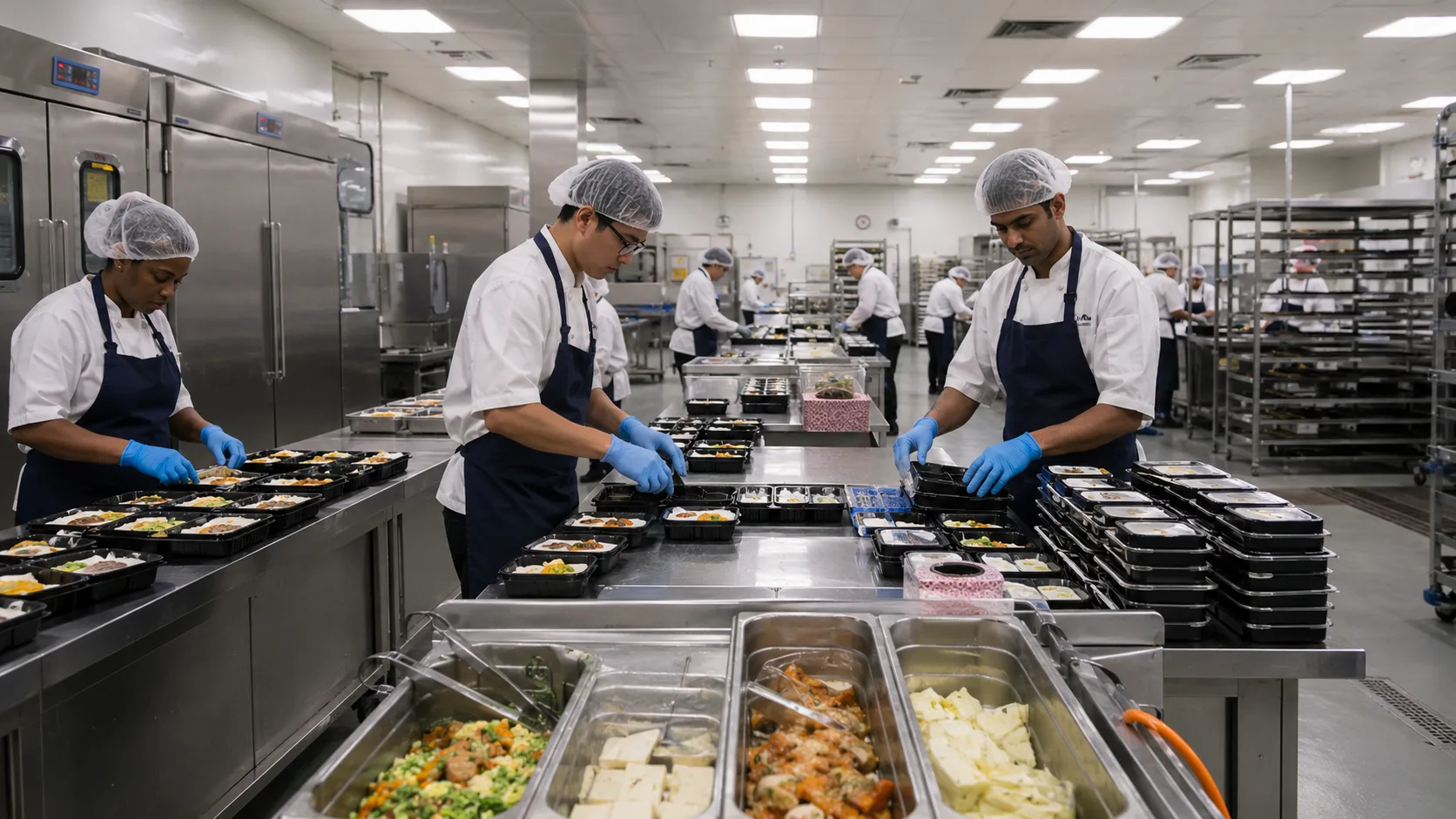
Plan Around the Departure Wave
List meals by flight, service class, special-meal category and required kitchen release time. The busiest release period can determine cooking, chilling and assembly capacity even when daily meal totals appear manageable.
Record how returned carts and utensils enter the facility, where cleaning takes place and how clean items rejoin production. Confirm security, dispatch and food-safety interfaces with the facility operator.
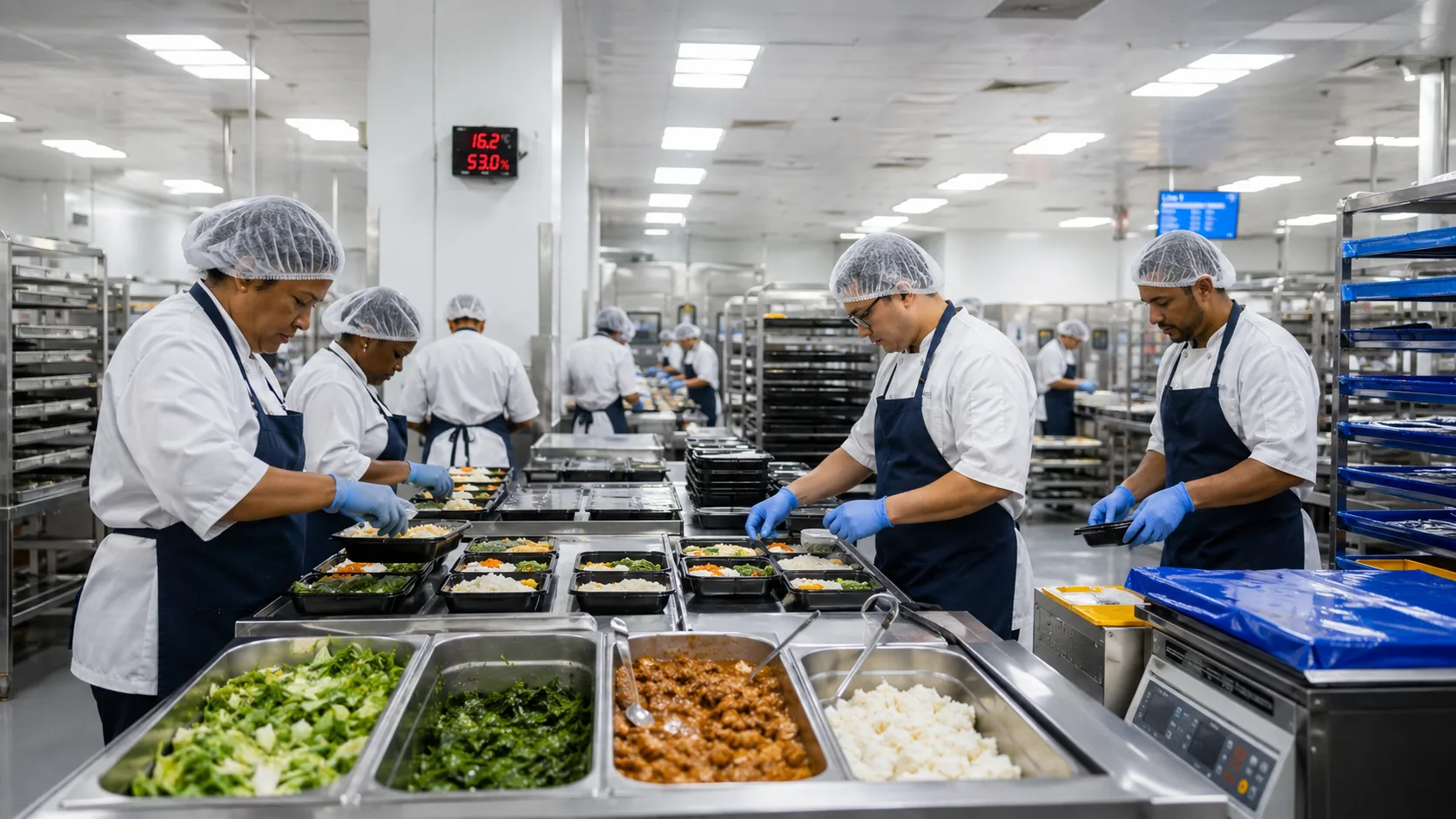
Map the Ground-Based Catering Workflow
Coordinate incoming ingredients and returned items with cooking, meal assembly and chilled or hot dispatch as required by the operation.
Equipment Families and Scope Boundaries
Use verified product pages to begin selection. Confirm dimensions, performance and any specialist interfaces in the final equipment schedule.
Commercial Combi Ovens
Review batch cooking, pan format and connection requirements. Compare the exact oven against the meal menu and production schedule rather than relying on a daily capacity claim.
Review Combi Oven Options →Blast Chilling Requirements
Start with concurrent food load, loading temperature, pan depth and batch release time. Confirm the selected model's tested duty and whether its loading arrangement fits the operation.
Review the BEC Blast Chiller →Commercial Warewashing
Compare commercial dishwashing equipment for the actual utensils and racks. An airline trolley washer is a separate application; confirm cart dimensions, wash process and available models before specification.
Review Conveyor Dishwashers →Assembly Work Areas
Coordinate work surfaces, tray components, staff positions and cart loading. Powered conveyors, dispensers and control integration require separate confirmation of scope and interfaces.
Review Stainless Steel Equipment →Preparation Equipment
Match slicers and mixers to ingredient condition, finished cut and batch sequence. Include changeover and cleaning time in the required throughput.
Review Preparation Equipment →Cold Storage Equipment
Size storage from the inventory and production schedule. Confirm the required temperature conditions, door access and loading pattern for the exact model.
Review Refrigeration Equipment →Build a Comparable Flight Kitchen Enquiry
Separate the production requirement from the equipment scope so that missing interfaces remain visible during quotation.
Operating Inputs
- Meal quantities and release time by departure wave
- Menu and special-meal batch requirements
- Cooking and cooling batch schedule
- Tray, pan, rack and cart dimensions
- Return-equipment volume and wash-up window
- Available utilities, access routes and project location
Supplier Scope to Confirm
- Offered equipment and exact model identification
- Standard supply versus project-specific configuration
- Third-party equipment and integration responsibilities
- Mechanical, electrical, water and drain interfaces
- Performance verification conditions and acceptance records
- Packing, installation assistance and after-sales scope
One Scope Line for Every Interface
For each item, record the buyer's operating requirement, the offered model, the evidence supplied and the party responsible for installation or integration. Leave unconfirmed specialist equipment outside the committed supply schedule until its availability and interfaces are established.
Review blast-chiller load planning
Use the Airline Catering Equipment Procurement Checklist to compare supply boundaries and acceptance requirements.
Turn a Departure Wave into Equipment Requirements
Work backwards from the required kitchen release time for each flight. Reserve time for meal assembly, cart loading and dispatch checks, then identify when cooking and any required cooling must finish. Several flights with similar release times may compete for the same oven, chiller, work area or cleaning team.
Use one production row for each meal batch
Record the flight or production group, meal quantity, menu, pan format, batch release time and next process. For special meals, include the operator's handling and identification requirements. This makes overlapping loads visible before equipment quantities are agreed.
Ask for performance evidence that matches the load
For cooking and chilling equipment, identify the food, batch weight, container depth, starting condition and required completion point. Ask how the offered model was assessed and which conditions apply to the stated result. A cabinet's storage volume alone does not establish a production rate.
Keep cart and airport interfaces explicit
Provide cart dimensions, wheel arrangement and loading clearances wherever carts meet washing, storage or dispatch equipment. Identify the party responsible for specialist cart systems, security interfaces and ramp transport. Confirm these items separately from the ground-kitchen equipment order.
Compare the available refrigeration equipment and stainless steel work areas against the release schedule and actual handling dimensions.
Airline Catering Planning FAQs
Resolve scope and performance questions before an equipment list becomes a purchase order.
Does a flight kitchen equipment proposal include aircraft-installed equipment?
Not unless it is explicitly included. Define ground-kitchen equipment, aircraft-installed equipment, ramp vehicles and specialist airport systems as separate scope items, with the responsible supplier identified for each.
Can a commercial conveyor dishwasher wash airline meal carts?
Do not assume this from its throughput or conveyor design. Confirm the cart dimensions, loading arrangement, cleaning process and tested application. A specialist trolley washer may be required.
How should blast chilling capacity be specified?
State the food type, batch weight, initial condition, container depth and release schedule, together with the required endpoint and time under the applicable procedure. Confirm performance using the selected model and representative load rather than cabinet volume alone.
Prepare Your Airline Catering Equipment Enquiry
Send the departure-wave meal schedule, floor plan, tray and cart dimensions, utility information and required supply scope. List specialist systems separately so their interfaces can be reviewed.