Central Kitchen Equipment & Turnkey Planning
Engineering-led layout design and equipment integration for raw material receiving, automated prep, batch cooking, blast chilling, packaging, and cold-chain distribution.
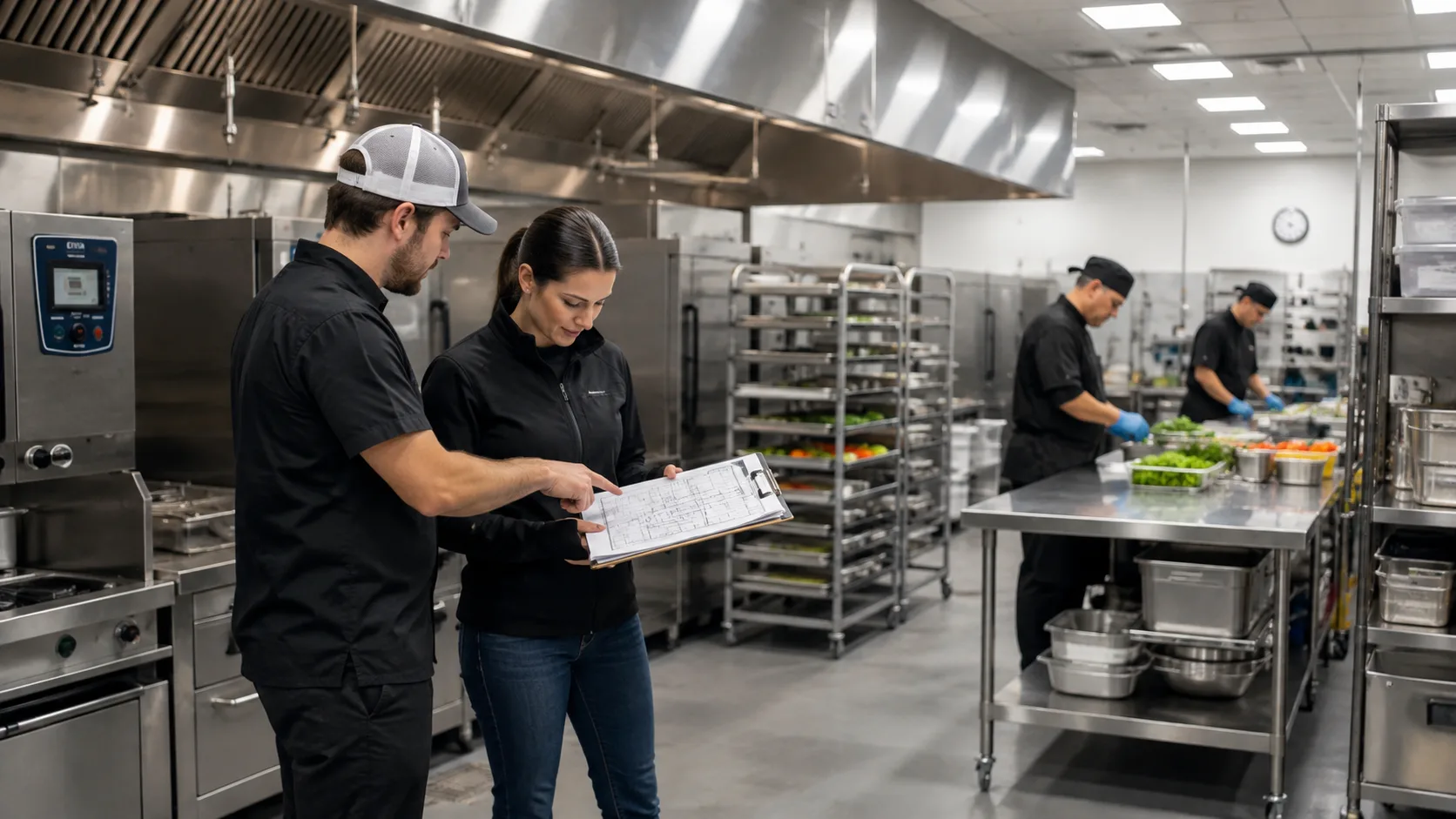
Engineering for Industrial Catering & Chain Brands
Designed for restaurant chain operators, central food commissaries, ready-meal processors, and multi-site enterprise food services producing 2,000 to 50,000 portions daily.
Our engineering methodology prioritizes mass-throughput automation, thermal energy recovery, standardized batch recipe control, and strict clean-room hygiene zoning.
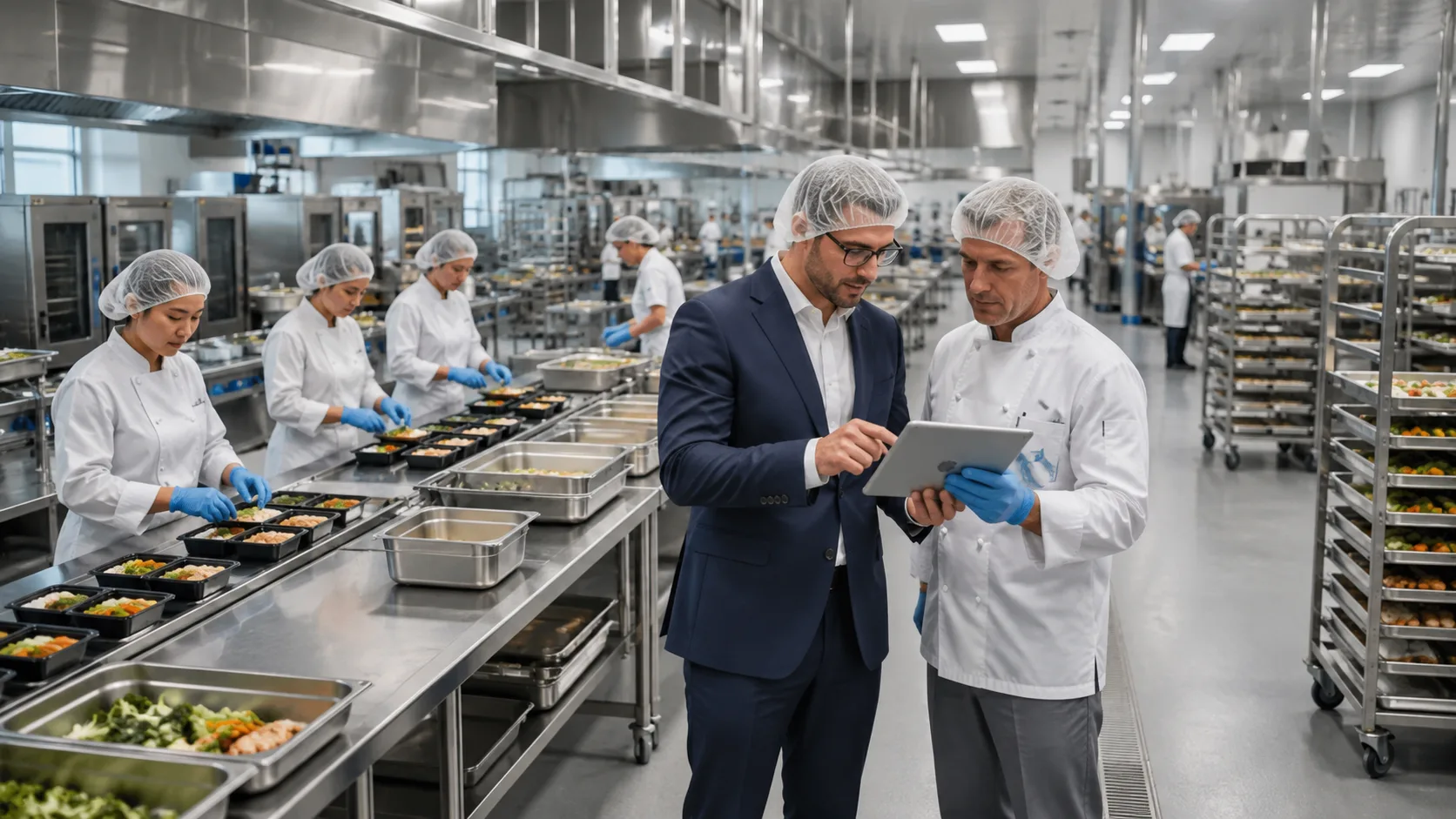
Linear Production & Material Flow Engineering
Unidirectional material movement prevents cross-contamination between raw agricultural products and ready-to-eat cooked meals.
Core Central Kitchen Equipment Schedule
High-efficiency equipment selection matched to batch cooking recipes and food safety standards.
Industrial Cooking Kettles
Steam-jacketed planetary tilting kettles and braising pans for large volume soups, sauces, and stews.
Explore Cooking Kettles →Raw Prep Automation
Continuous bubble vegetable washing, peeling, and automated dicers for high-capacity raw ingredient prep.
Explore Prep Lines →Roll-in Blast Chillers
Rapid roll-in trolley blast chilling systems engineered to drop cooked batch temperatures to 3°C in 90 minutes.
Explore Blast Chillers →MAP Packaging Lines
Automatic tray sealing and packaging systems with Modified Atmosphere Packaging for extended shelf life.
Explore Packaging Equipment →Continuous Container Washers
High-capacity crate and returnable tote dishwashers with 85°C thermal sanitization for clean-room return.
Explore Container Washers →Hygiene & Air Showers
Clean-room air locks, pass-through UV lockers, and anti-microbial drainage channels for HACCP zoning.
Explore Sanitation Units →Central Kitchen Technical Engineering Specs
We provide full documentation for building architectural integration, municipal MEP approval, and equipment commissioning.
Decisions & Calculations We Confirm
- Daily meal volume & peak batch size
- Cook-Serve vs. Cook-Chill ratio
- Steam, gas, and electric load demand
- HACCP clean/dirty room pressure gradient
- Water drainage capacity & grease traps
- Future modular capacity expansion
Project Technical Engineering Output
- Flow line CAD building layout
- Equipment 3D BIM models & specs
- MEP connection point schedule
- Exhaust ventilation CFM calculations
- Factory Acceptance Testing (FAT) plan
- On-site commissioning & SOP training
Central Kitchen Planning FAQs
Technical answers regarding commissary engineering, batch cooking automation, and hygiene compliance.
What is the difference between a Cook-Serve and a Cook-Chill central kitchen model?
A Cook-Serve central kitchen cooks meals for immediate delivery and consumption within a tight thermal window. A Cook-Chill central kitchen rapidly cools batch-cooked food using blast chillers from 70°C to below 3°C in under 90 minutes, extending shelf life up to 5 days while strictly maintaining microbial safety and flavor.
What key equipment is required for an automated central kitchen?
Core equipment includes industrial steam jacketed tilting kettles, continuous vegetable washing lines, automated meat dicing machines, roll-in blast chillers, vacuum coolers, automatic tray sealing machines, and flight-type container dishwashers.
How does HSYL handle HACCP hygiene zoning in central kitchen layouts?
We enforce physical separation between Low-Risk (receiving, raw prep) and High-Risk clean rooms (cooked portioning, packaging), complete with airlocks, pass-through sterilizers, anti-microbial floor drains, and positive pressure air ventilation.
Develop Your Central Kitchen Engineering Project
Submit your recipe menu, target daily output, floor plan, and available utility conditions. Our engineers will provide a custom layout drawing, equipment schedule, and budgetary proposal.