Hospital Kitchen Equipment & Meal Delivery Planning
Plan cooking, tray assembly, meal transport and wash-up around your patient meal schedule, ward routes and available utilities. Define the duty first, then compare the equipment.
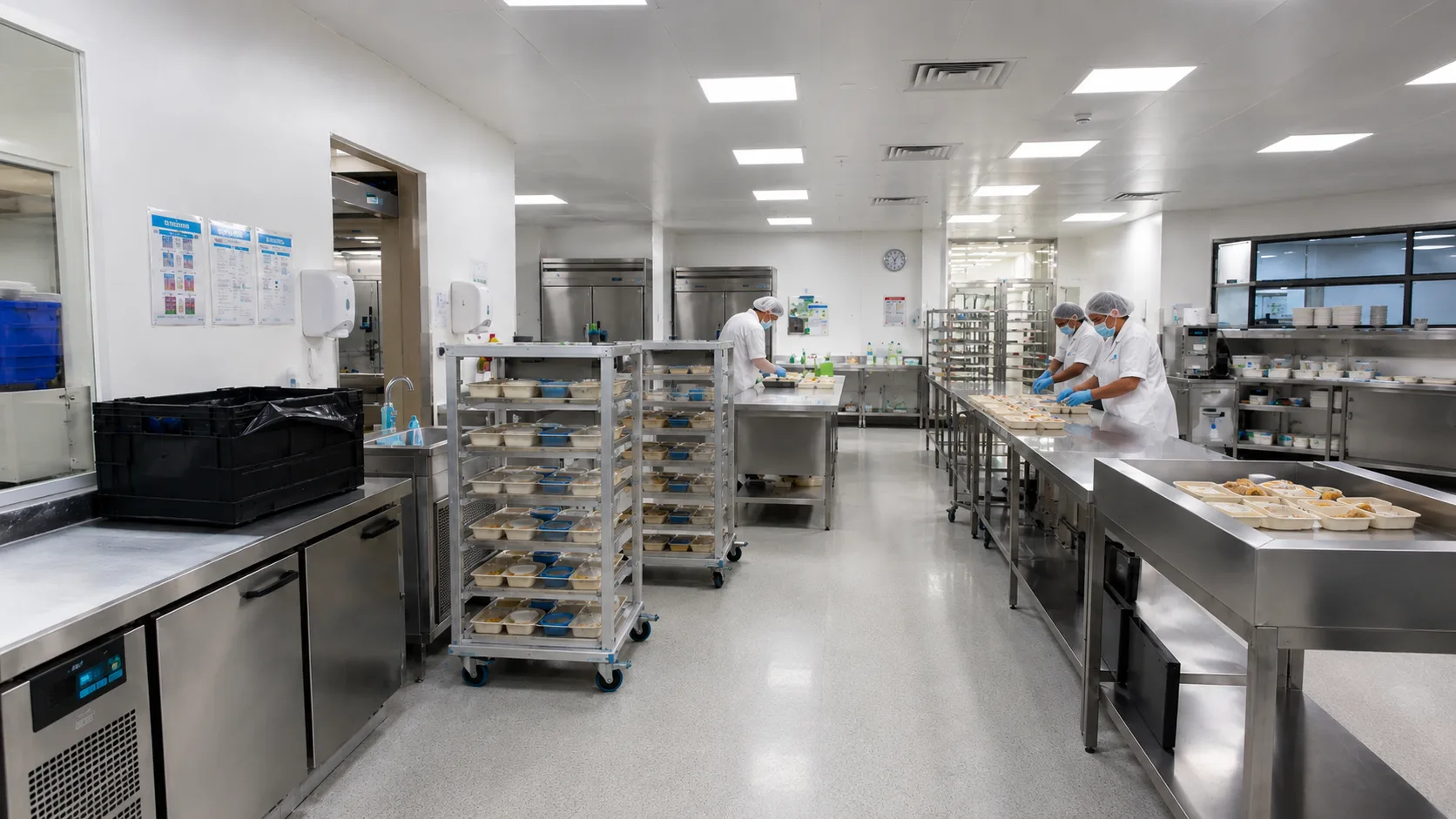
Start with the Patient Meal Service
Include patient meals, staff dining and any visitor catering in separate demand schedules. Record how many meals must leave the kitchen together and when returned trays arrive.
For texture-modified meals or other prescribed diets, the hospital's clinical and foodservice teams define the requirements. Equipment selection must follow the approved menu, preparation method and verification procedure.

Connect Production, Delivery and Return
Keep clean meal dispatch separate from returned trays, waste and wash-up traffic.
Equipment to Review for a Hospital Kitchen
These are selection starting points. A commercial cabinet, banquet cart or dishwasher must not be assumed suitable for every patient-tray system.
Commercial Combi Ovens
Compare pan format, batch loading, power supply, water and drain requirements against the hospital menu. Confirm the functions on the exact model and controller.
Review Combi Oven Options →Hot Holding Equipment
Specify container dimensions, food load, door-opening frequency and the time between cooking and dispatch. Verify food temperatures under the proposed operating conditions.
Review Holding Equipment →Tray Transport Requirements
Confirm loaded cart dimensions, tray compatibility, lift access and delivery time. State whether active heating, cooling or regeneration is required; do not substitute a banquet cart without validation.
Discuss Tray Transport Requirements →Commercial Dishwashers
Match the machine to tray dimensions, rack loading, peak return volume and available services. Verify the required sanitizing method using the selected machine documentation and local rules.
Review Conveyor Dishwashers →Preparation Equipment
Select the cutting or mixing process from the ingredient and required output. Any texture-modified diet application needs validation by the hospital's responsible team.
Review Preparation Equipment →Stainless Steel Work Areas
Coordinate preparation surfaces, sinks and storage with the clean and dirty routes. Confirm dimensions, material specifications, cleaning access and plumbing interfaces.
Review Stainless Steel Equipment →Prepare a Hospital Kitchen Equipment Brief
Use these inputs to make equipment quotations comparable and to define the documents required from each supplier.
Operating Inputs
- Meals per service and dispatch window
- Patient, staff and visitor meals listed separately
- Menu, diet mix and batch quantities
- Tray dimensions, loaded cart size and lift clearances
- Power, water, drainage and ventilation conditions
- Return-tray peak and available wash-up staffing
Documents to Specify in the Enquiry
- Itemized equipment schedule with model references
- Supplier scope and exclusions for each item
- Pan, tray, rack and cart compatibility information
- Confirmed connection loads and service clearances
- Agreed performance checks and acceptance criteria
- Installation scope, manuals and spare-parts information
Check the Longest Ward Route
Test the proposed loading and delivery sequence with the actual trays and cart. Include assembly time, lift waiting, transport, handover and door openings. Record food-temperature checks under the facility's approved procedure; a cabinet setpoint alone cannot demonstrate performance at the point of service.
Hospital Kitchen Planning FAQs
Clarify the interfaces that affect equipment selection before comparing quotations.
How should hospital kitchen capacity be calculated?
Build a schedule of meals required in each dispatch window, including separate diet batches and staff dining. Calculate the cooking batches, tray assembly rate and wash-up peak from that schedule. Bed count alone does not determine the equipment quantity.
Can a banquet cart be used for patient meal delivery?
Only after tray fit, loading, transport time and food-temperature performance have been checked. A banquet cart does not automatically provide separate hot and cold compartments or regeneration. Confirm the actual cart specification and test the proposed route.
Which dishwashing conditions should a hospital specify?
Use the requirements adopted for the facility and the chosen dishwasher's operating instructions. Confirm the sanitizing method, temperature or chemical controls, water conditions and validation procedure. Kitchen dishwashing equipment should not be presented as medical-device sterilization equipment.
Discuss Your Hospital Kitchen Equipment List
Send your meal schedule, tray format, ward route, floor plan and utility information. Identify any requirements that are still undecided so they can be addressed in the equipment enquiry.