Factory Canteen Equipment for Shift-Based Dining
Match cooking equipment, serving stations and wash-up capacity to the busiest employee meal window. Use shift demand and the menu to build a practical equipment schedule.
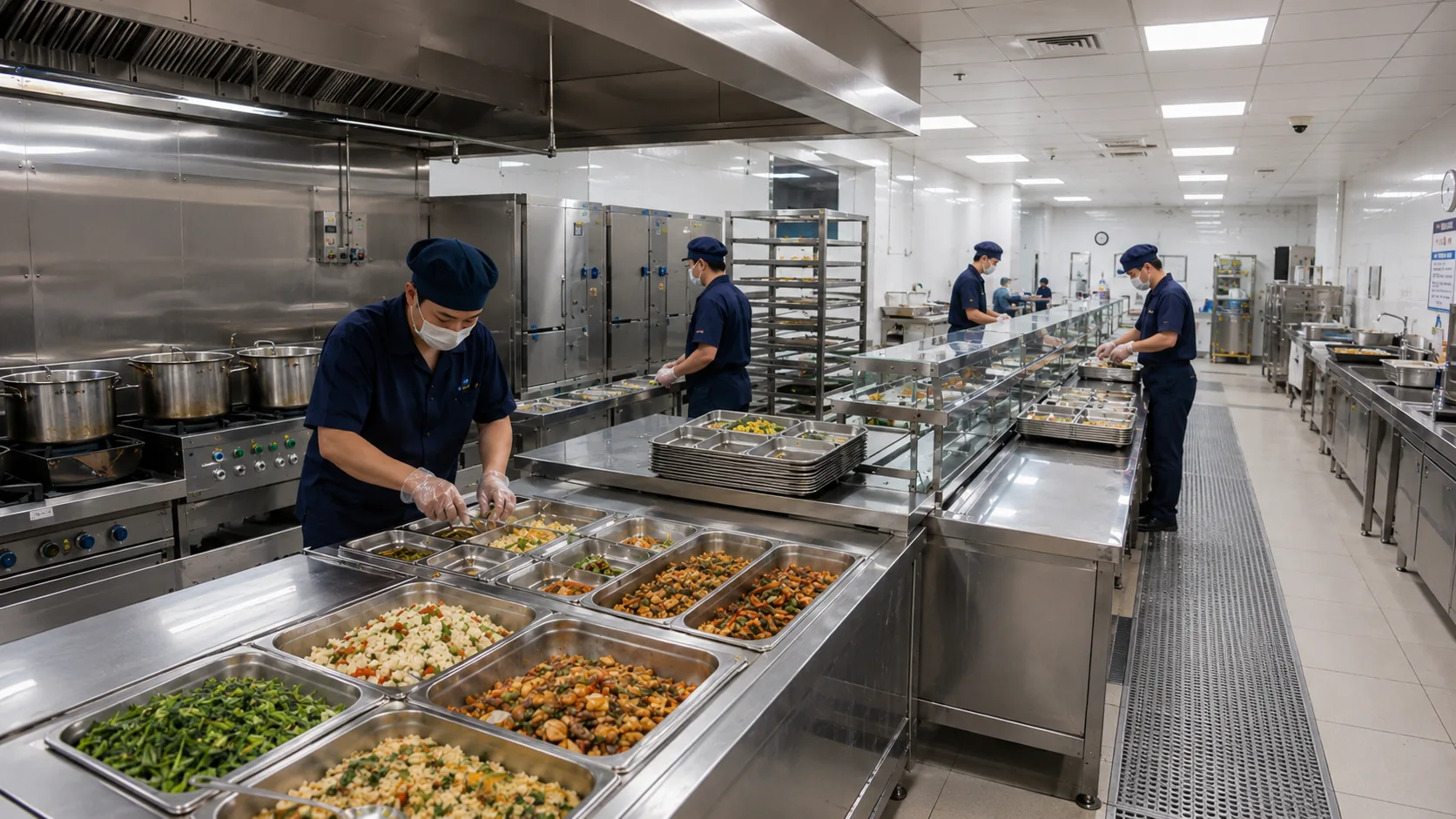
Define the Busiest Shift Before Selecting Equipment
Record the number of diners expected in each service period, the length of that period and whether departments arrive together. Separate meals prepared on site from meals delivered from another kitchen.
Map tray collection, serving, seating access and dirty-tray return. Check the slowest station and staffing plan before increasing the number of cooking machines.
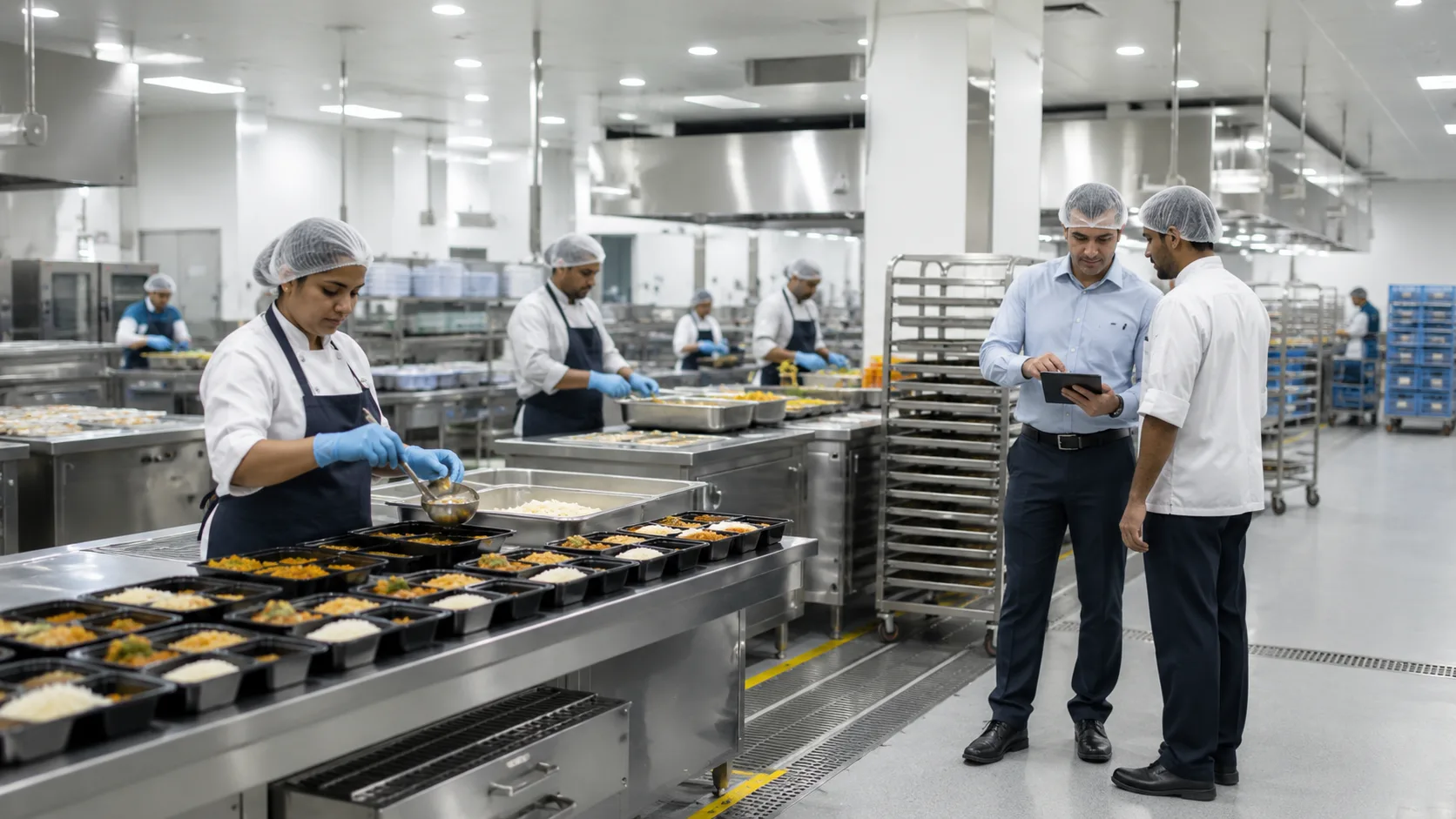
Connect Cooking, Service and Tray Return
Plan the movement of ingredients, cooked food, diners and returned trays as connected routes.
Build the Canteen Equipment Schedule by Duty
Confirm usable capacity, loading arrangements, cleaning time and utility requirements for every selected model.
Batch Cooking Kettles
Review kettles for the required soup, sauce or stew batch. Confirm usable working volume, heating method, discharge arrangement and utility demand.
Review Tilting Kettle Options →Steamers & Steamer Cabinets
Compare pan arrangement and cooking batches against the rice or steamed-food menu. Confirm the raw ingredient quantity and cooking cycle for the actual model.
Review Steamer Options →Commercial Conveyor Dishwashers
Calculate the returned trays and utensils within the wash-up window. Include sorting, loading, unloading and staffing when checking machine capacity.
Review Conveyor Dishwashers →Serving Line Equipment
Plan tray pickup, portioning, replenishment and any payment point. Confirm pan formats and access for hot, cold and neutral stations.
Review Serving Equipment →Food Preparation Equipment
Match the required cut or mixing process to the ingredients and accepted output. Include changeovers and cleaning in the preparation schedule.
Review Preparation Equipment →Commercial Refrigeration
Size refrigeration from stockholding and the delivery schedule. Confirm temperature requirements and available models; a walk-in room is a separate scope item.
Review Refrigeration Equipment →Turn Shift Demand into an Equipment Brief
Collect these inputs before comparing equipment quotations or requesting layout revisions.
Demand and Site Inputs
- Diners per shift and actual service-window minutes
- Menu, portion sizes and cooking batch schedule
- Arrival pattern and serving-station staffing
- Tray dimensions and peak return period
- Available electricity, gas, steam, water and drainage
- Equipment access, cleaning space and expansion requirements
Quotation Items to Compare
- Model, quantity and usable capacity basis
- Included pans, racks, accessories and controls
- Declared connection loads and service requirements
- Equipment footprint and access clearances
- Delivery, installation and training scope
- Performance checks, warranty and spare-parts terms
A Worked Service-Rate Example
Illustrative planning example, not an equipment rating: 600 diners served in 30 minutes require an average of 20 meals per minute. If half arrive in the first 10 minutes, that interval requires 30 meals per minute. Check tray pickup, portioning and replenishment against the peak; adding a serving line only helps if staffing and downstream space support it.
Compare Canteen Quotations on the Same Operating Basis
A lower equipment price is only comparable when both proposals cover the same menu, shift demand and working conditions. Ask each supplier to state the operating assumptions behind the offered quantity and capacity.
Check the complete batch cycle
For a kettle or steamer, include loading, cooking, unloading and cleaning between batches. Record usable food quantity rather than vessel volume alone. Confirm which tasks can run at the same time with the available staff, utilities and preparation space.
Check replenishment and tray return separately
A serving counter needs enough food arriving at the right time. A dishwasher needs trays sorted and loaded at a rate the team can sustain. Compare holding capacity, transfer distance, loading arrangements and clean-item storage alongside the machine specification.
Separate equipment from site work
Request separate lines for equipment, accessories, delivery, installation assistance and commissioning. Identify who provides ventilation, utility distribution, drainage and building alterations. Record any assumptions that could change the final scope or price.
Use the commercial cooking equipment range and warewashing equipment range to build the initial schedule, then confirm each model against the same shift plan.
Factory Canteen Planning FAQs
Use explicit operating assumptions when comparing capacity and cost.
How many serving lines does a factory canteen need?
Divide the expected diners by the available service minutes to estimate the average required serving rate. Then check short arrival peaks, menu choices, portioning time, replenishment and staffing. Verify the proposed stations with a timed service trial; the average alone cannot determine the number of lines.
Should a canteen choose steam, gas or electric cooking equipment?
Compare the energy supplies actually available at the site, connection capacity, operating schedule, maintenance access and the menu. Confirm the consumption and connection requirements of each model before comparing operating cost.
What should be included in a factory canteen quotation?
Request an itemized list showing models, quantities, accessories, utilities, delivery terms and installation scope. Separate equipment supply from building work, ventilation, utility distribution and any third-party items so the budget can be compared on the same basis.
Prepare Your Factory Canteen Equipment List
Send your diners per shift, service window, menu, floor plan and available utilities. Include the busiest arrival period and tray-return schedule so capacity can be reviewed across the whole service.