Reliable equipment startup begins before the shipment reaches the kitchen. Check receiving access, utilities and the installation responsibilities for the actual models, then agree the commissioning and training scope. After handover, retain equipment identification and maintenance records so technical enquiries can be reviewed efficiently.
Use model-specific instructions and qualified local professionals. Installation guidance supports the supplied equipment; it does not authorize unqualified electrical, gas or other regulated work. Stop using equipment if a fault presents a safety risk.
Check the Site Before Equipment Arrival
Review the final equipment schedule against the receiving route and the installed utilities. Share access restrictions and unresolved site works before booking installation. Equipment should not be energized simply because it has been unpacked or placed in position.
- Confirm doors, corridors, lifting arrangements and the final positioning route.
- Check that the installation area and supporting surface are ready.
- Verify power, gas, water, drainage and ventilation against the relevant equipment documents.
- Allow access for service panels, removable components and cleaning.
- Identify the local professionals responsible for connection, inspection and approval.
Keep the approved layout available for the site team. If connections or equipment positions change, discuss the effect before modifying equipment. For unresolved layouts or interface positions, refer to kitchen design and equipment planning.
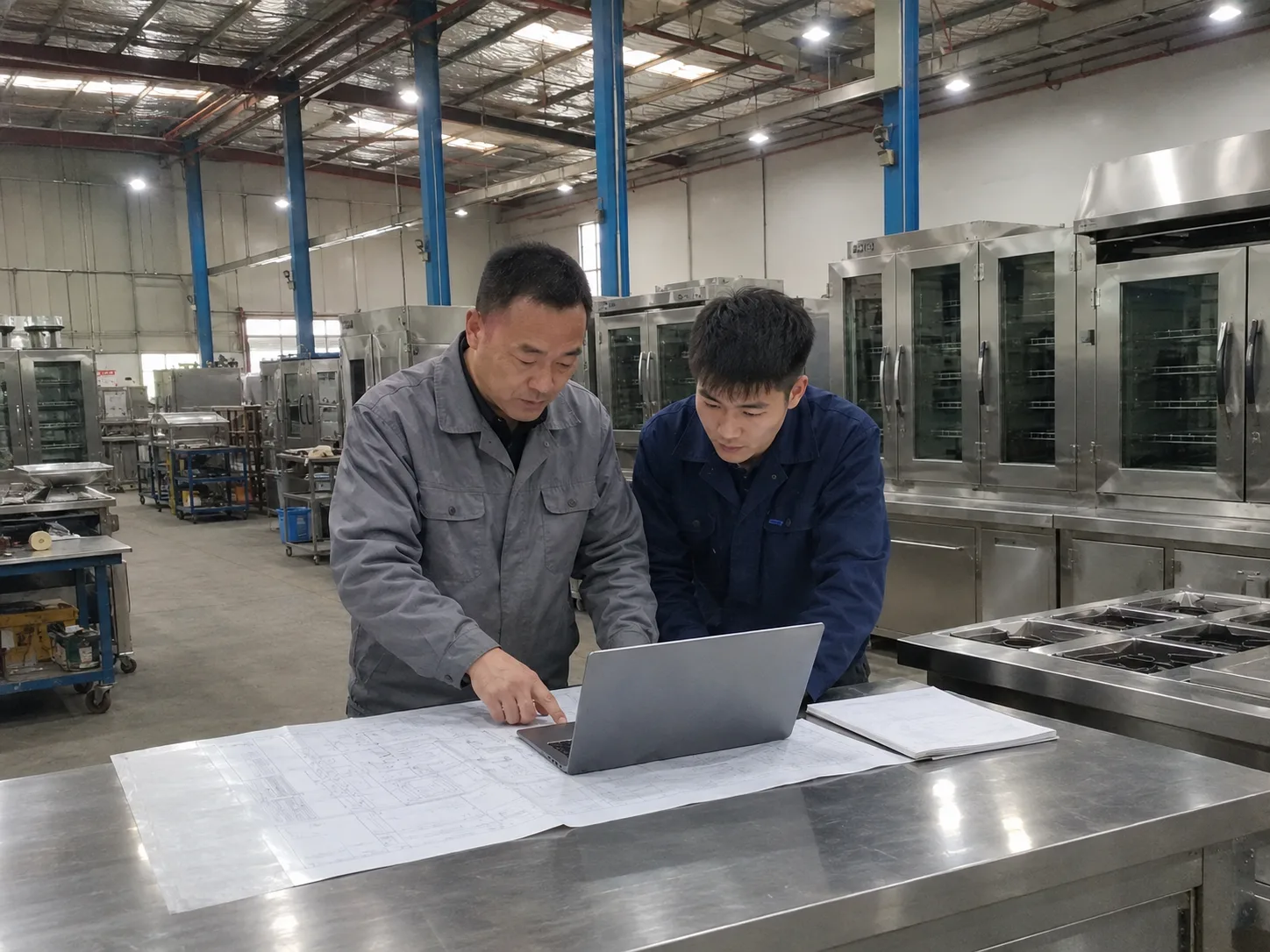
Mechanical, Electrical & Plumbing (MEP) Readiness Checklist
Prior to equipment delivery, verify on-site utility drop tolerances to ensure seamless commissioning and eliminate unscheduled installation delays:
- Electrical Line Stability: Confirm true 3-phase voltage balance (±5% tolerance) and dedicated neutral line grounding. High-capacity induction ranges and combi steamers require independent Type D circuit breakers sized for in-rush inductive motor starts.
- Gas Manifold Dynamic Pressure: Verify manifold operating pressure under peak kitchen fire load (Natural Gas: 1.74 - 2.50 kPa; LPG: 2.80 - 3.50 kPa). Inadequate gas pipe diameters cause flame rollout, thermal loss, and incomplete combustion.
- Water Softening & TDS Limits: Commercial steamers, combi ovens, and warewashers require pre-treated water (total hardness < 3°dH, silica < 15 ppm, chlorides < 30 ppm) to prevent rapid mineral scaling and heater element burnout.
- Ventilation & Thermal Clearances: Maintain a minimum 150mm rear air gap and 500mm top clearance for commercial refrigeration condensing units to ensure adequate heat rejection and prevent high-pressure compressor trips.
Agree Installation & Commissioning Responsibilities
The proposal should distinguish equipment placement, utility connection, startup checks and operator handover. Local licensed contractors carry out regulated connection work where required. Remote guidance, site attendance or supervised startup are separate arrangements and must be confirmed for the project.
| Activity | Information or action | Responsibility to confirm |
|---|---|---|
| Receiving inspection | Check identification, packing list, visible condition and loose parts | Buyer or designated receiving team |
| Positioning and assembly | Follow the approved location and applicable assembly instructions | Appointed installation team |
| Utility connection | Verify model requirements and complete required safety checks | Qualified local professionals |
| Startup checks | Follow the relevant model procedure and record observed operation | Responsible site team with agreed supplier support |
| Operator handover | Review operation, cleaning, safe shutdown and maintenance information | Buyer and agreed training provider |
Use the agreed model procedure for startup; there is no single universal sequence for every cooking, refrigeration or dishwashing machine. Where the project requires a performance check, define the product, load, operating conditions and acceptance criteria in advance. A brief unloaded demonstration does not establish performance under full kitchen duty.
Operator Training & Handover Records
Training should address the equipment that operators will actually use. Agree the format, participants, language requirements and available documents with the project team. Do not assume overseas site attendance or a particular training duration is included in every order.
Daily Operation
Review the model controls, intended loading, routine operation, safe shutdown and fault reporting. Operators should know which actions are permitted and which require an authorized technician.
Cleaning & Maintenance
Review the model instructions for cleaning, consumables, inspection and maintenance. Keep the relevant schedules with the equipment records and assign responsibility for completing them.
Retain manuals, equipment identification, applicable drawings, startup records and the agreed support contact. The manuals and documentation page explains the document categories to request. Confirm the version and availability for the exact model rather than applying another machine's instructions.
Preventive Maintenance Schedules & Spare Parts
Adhering to structured preventative maintenance protocols significantly extends equipment lifecycle, optimizes Total Cost of Ownership (TCO), and minimizes unplanned emergency downtime:
- Daily Protocol: Wash down AISI 304 surfaces using neutral food-safe sanitizers; empty and degrease fryer sediment zones and griddle grease collection drawers.
- Monthly Protocol: Inspect magnetic door gaskets on refrigeration units for thermal leakage; inspect burner aeration ports for carbon buildup; run chemical descaling cycles on steam boiler chambers.
- Quarterly Protocol: Clean air-cooled condenser coils with a soft fin brush; inspect electrical contactor terminal torque; lubricate manual and power-tilting gear drives using food-grade grease.
- Equipment Identification: Keep a clear photograph of the nameplate, model and serial number, and retain error codes under which faults occur.
- Component Compatibility: Verify exact part compatibility before ordering or fitting a replacement. A similar-looking component is not proof of compatibility.
The spare parts and support FAQ provides a starting point for identifying a request. Confirm parts availability, price, dispatch and delivery arrangements for the specific request.
Transparent Warranty Policy & Replacement Support
HSYL provides structured warranty coverage and technical assistance to ensure continuous operational uptime:
- Standard Factory Warranty: 12-month full coverage on core functional components including heating elements, compressors, digital controls and motors according to purchase contracts.
- Parts Replacement Support: Rapid dispatch of genuine replacement parts supported by express international logistics.
- Remote Technical Commissioning: Live video engineering support for local contractors during startup and diagnostic troubleshooting.
Emergency Service & Warranty Boundary: For warranty claims regarding refrigeration compressors or gas control valves, maintain logged records of operating temperatures, utility feeds and preventive descaling cycles to ensure expedited factory parts replacement. Warranty terms follow the applicable order documents and service terms.
Submit a Useful Technical Support Request
Include the model, serial number, purchase or project reference, destination and a concise description of the fault. Add clear photographs of the nameplate, affected component and displayed error. A short video can help describe an intermittent operating symptom when recording it is safe.
Explain when the issue started, what was happening immediately beforehand and whether it follows a particular load or operating cycle. Include any changes to site utilities or recent service work. Do not remove safety guards, bypass protective devices or repeat an unsafe test to obtain evidence.
Warranty duration, coverage, exclusions and the allocation of parts, labour and transport costs follow the applicable order documents and service terms. Support response and dispatch arrangements are confirmed for the actual request. This page does not replace those terms with a universal coverage or delivery promise.
Use the service enquiry page to begin the discussion and ask how to share model documents or videos. For a new project, review the commercial kitchen services overview so installation support is included in the equipment scope before the order is agreed.
Frequently Asked Questions
Is on-site installation included with every equipment order?
No. Confirm the scope in the quotation or contract. Site attendance, remote guidance, regulated utility connection, commissioning and training are separate responsibilities that must be agreed for the project.
What are the critical MEP connection tolerances required before startup?
Site utilities must maintain true 3-phase voltage balance (±5%), stable gas dynamic manifold pressure (Natural Gas 1.74-2.50 kPa, LPG 2.80-3.50 kPa), pre-softened water (hardness < 3°dH, chlorides < 30 ppm), and adequate heat-rejection clearances (150mm rear, 500mm top).
What information should I provide for a technical support request?
Provide the model, serial number, purchase or project reference, destination, fault description and any displayed error. Add clear nameplate and component photographs, together with relevant maintenance or utility changes.
How are warranty coverage and replacement parts confirmed?
Warranty duration, coverage, exclusions and cost responsibilities follow the applicable order documents and service terms. Part compatibility, availability and delivery arrangements are checked for the specific equipment and request.