Commercial Pizza Oven Price Guide: What Each Type Really Costs
Commercial pizza oven prices by type: deck, conveyor and rotary ovens compared on cost, hourly output, per-pizza expense and gas vs electric running costs.
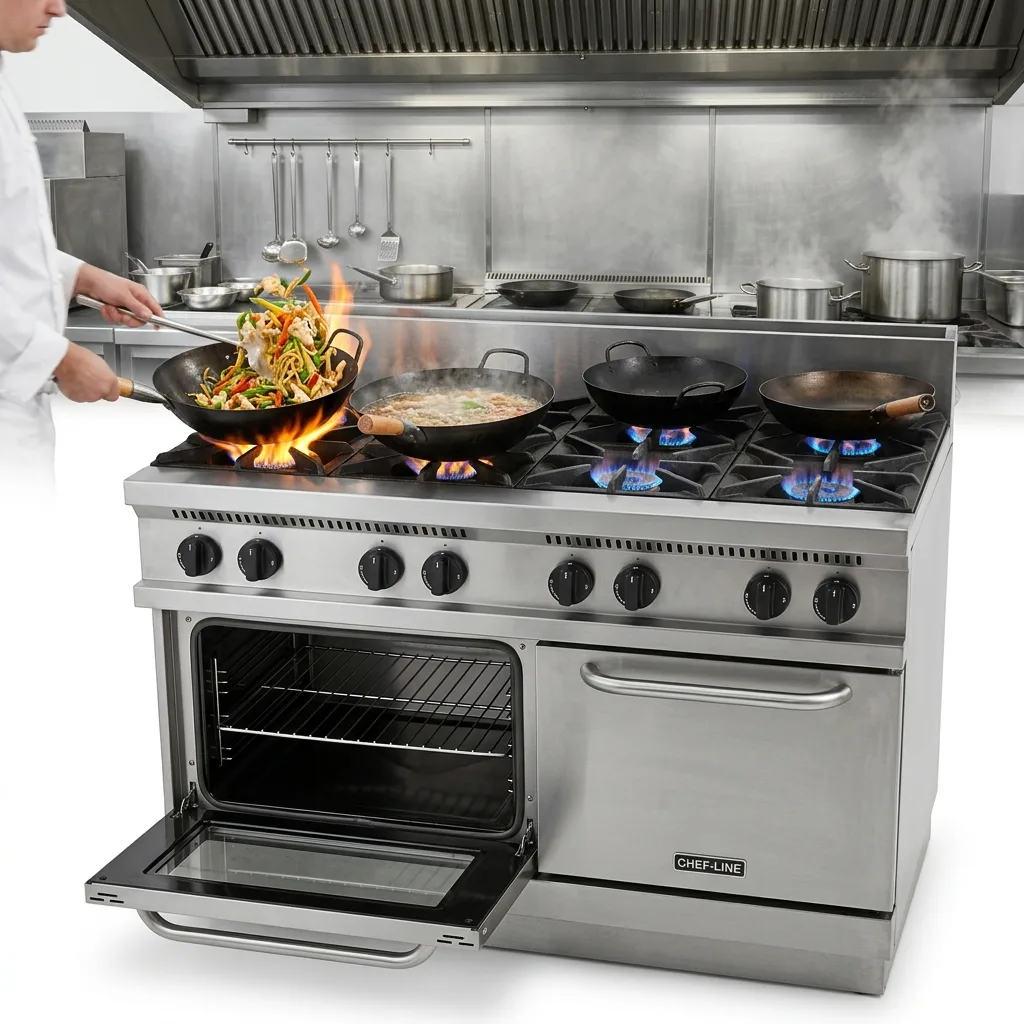
Quotes for commercial pizza ovens range from under $2,000 to more than $40,000, and the spread is not arbitrary. It maps almost directly onto three oven families — deck, conveyor, and rotary — each built for a different production volume and labor model. If you price the three against each other on purchase cost alone, you will almost always overbuy capacity or underbuy throughput. The better comparison is cost per pizza produced, which folds in output rate, energy, and the labor hours each oven type demands.
This guide breaks down what each type typically costs in 2026, how many pizzas per hour it realistically produces, what a pizza costs you in energy and labor terms, and how the gas-versus-electric decision changes your five-year running cost. All figures are market ranges for standard commercial configurations; final pricing moves with capacity, fuel type, control options, and certification requirements.
Key takeaway: Buy the cheapest oven that meets your peak-hour target, not the cheapest oven on the quote sheet. A $6,000 deck oven staffed by two people often costs more per pizza over five years than an $18,000 conveyor that one operator can run alone.
The Three Main Commercial Pizza Oven Types
Before comparing prices, fix the vocabulary. Suppliers sometimes blur categories — a "rotary deck oven" is not a conveyor, and a countertop deck unit is not an industrial line oven. The three families below cover roughly 95% of commercial pizza production.
Deck Ovens
Stone or steel decks, one to three chambers stacked. The operator loads, rotates, and unloads each pizza by hand. Typical purchase price: $1,500–$8,000 for a commercial single- or double-deck unit, depending on deck size, material, and controls.
Browse cooking equipment →Conveyor Ovens
A motorized belt carries pizzas through an impingement or radiant tunnel on a fixed time-and-temperature recipe. No manual handling during baking. Typical price: $5,000–$30,000, scaling with belt width (14–32 inches) and whether the unit is single or stacked.
Browse cooking equipment →Rotary Ovens
A rotating deck or rack turns inside a single chamber, evening out heat without the operator opening the door. Built for sustained high volume. Typical price: $10,000–$45,000 for commercial units; industrial line configurations for commissaries run higher.
Browse cooking equipment →Price, Capacity, and Cost Per Pizza Compared
The table below compares the three types on the numbers that actually drive a budget decision. Throughput figures assume 12-inch pizzas at typical bake times (deck: 6–8 minutes, conveyor: 4–6 minutes, rotary: 5–7 minutes) and realistic loading discipline, not brochure maximums.
| Factor | Deck Oven | Conveyor Oven | Rotary Oven |
|---|---|---|---|
| Typical purchase price | $1,500–$8,000 | $5,000–$30,000 | $10,000–$45,000 |
| Output (12" pizzas/hour) | 20–60 | 60–150+ | 80–200 |
| Labor during baking | 1–2 staff, hands-on | 1 loader, mostly unattended | 1 operator, batch loading |
| Skill required | High (rotation, hot spots) | Low (recipe-driven) | Medium |
| Energy use per hour | ~15–40 kW electric / 60–150k BTU gas | ~20–50 kW / 120–200k BTU | ~30–60 kW / 150–250k BTU |
| Consistency across staff | Operator-dependent | High, repeatable | High |
Now convert that to cost per pizza. Energy is a small line item — at $0.12/kWh, a 30 kW conveyor running loaded costs roughly $2.00–$3.60 per hour, or about $0.02–$0.05 per pizza at 80 pizzas/hour. Labor dominates. A deck oven producing 40 pizzas/hour with one dedicated pizzaiolo at $18/hour carries a labor cost of about $0.45 per pizza. A conveyor producing 100 pizzas/hour with one loader at $16/hour costs about $0.16 per pizza in labor. At 300 pizzas a day, that difference is roughly $87 daily — over $26,000 across a five-year ownership window, which comfortably exceeds the conveyor's higher purchase price. Run this math with your own wage rates and volume before you compare sticker prices.
Gas vs Electric: The Five-Year Running Cost
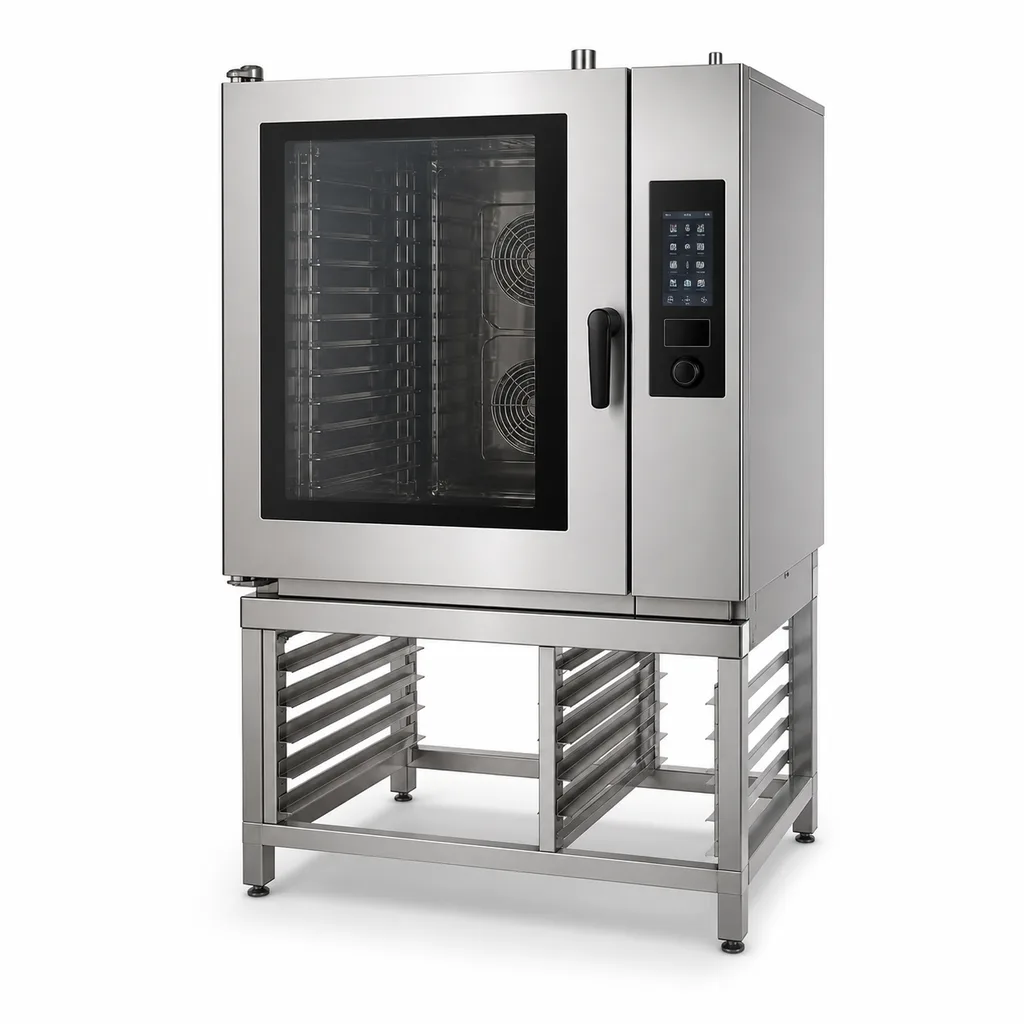
Purchase prices for gas and electric versions of the same oven typically sit within 10–20% of each other, so the decision is made on running cost and installation, not sticker price. Three points matter:
- Energy tariff. Where natural gas is available, gas ovens usually cost 10–25% less per hour to run than electric equivalents at typical North American or European tariffs. At 8 hours of daily operation, that is roughly $800–$2,500 per year, depending on oven size.
- Installation. Gas units need a supply line, shutoff, and — in most jurisdictions — Type I or II ventilation with interlocks. Electric units need a high-amperage dedicated circuit (often 3-phase, 208–240V). Retrofitting either into an existing building can cost $2,000–$8,000, sometimes more than the price gap between oven models. Check what your site already has before deciding.
- Maintenance. Gas burners need annual combustion checks and cleaning; electric elements are simpler but pricier to replace. Budget 2–4% of purchase price per year for either type as a maintenance reserve.
For a mid-size conveyor running 60 hours a week, a realistic five-year energy bill is $15,000–$35,000 — frequently more than the oven itself cost. That is why the fuel decision belongs in the budget spreadsheet, not in the installation contractor's hands after purchase.
Matching Oven Type to Your Operation
The right choice follows your peak-hour demand, not your daily total. Calculate the busiest 60 minutes of your week and work backward:
- Under 40 pizzas/peak hour (cafés, pubs, small restaurants): a double-deck oven at $2,500–$5,000 is the rational buy. Conveyor capacity would sit idle.
- 40–120 pizzas/peak hour (delivery-focused pizzerias, food courts): conveyor territory. Consistency matters more than craft when tickets stack up, and one operator can hold the line.
- 120+ pizzas/peak hour or wholesale production (central kitchens, frozen-pizza lines, high-volume restaurant kitchen operations): rotary ovens, often paired with a conveyor as backup, justify the $20,000+ entry price through sustained throughput.
Also weigh the menu. Neapolitan-style product at 400°C+ favors deck ovens with stone hearths; conveyor tunnels top out lower and suit pan, thin-crust, and delivery product.

Decision Checklist Before You Request Quotes
Walk through these points in order; each one eliminates options and narrows the price range you should accept:
- Fix your peak-hour target. Count covers or orders in your busiest hour and add 20% headroom. This single number determines oven type before price enters the discussion.
- Audit your utilities. Confirm available gas pressure or 3-phase amperage, and get a ventilation quote. A cheap oven with a $6,000 flue job is not a cheap oven.
- Price labor into the comparison. Multiply the staffing each oven type needs by your wage rate and annual hours. Add this to purchase price for a five-year total.
- Check certification for your market. ETL/UL, CE, or NSF listings affect both price and whether local inspectors will sign off. Never accept a quote without the certification named.
- Get quotes per configuration, not per model name. The same conveyor model spans $8,000–$25,000 across belt widths and stacking. Specify deck size, belt width, fuel, and controls so quotes are comparable.
- Ask about lead time and spare parts. A lower-priced import with a 12-week lead time and no local parts stock can cost more in downtime than it saves. Our equipment selection resources cover supplier vetting in more detail.
The pattern across hundreds of commercial kitchen projects is consistent: operators who buy on peak-hour math and five-year cost rarely regret the purchase; operators who buy the lowest quote almost always end up upgrading within three years. Price the pizza, not the oven.
Frequently Asked Questions
How much does a commercial pizza oven cost?
By type: deck ovens typically run $1,500–$8,000, conveyor ovens $5,000–$30,000, and rotary ovens $10,000–$45,000. Final pricing varies with capacity, fuel type, controls, and certification, so always quote per configuration, not per model name.
Which commercial pizza oven type is cheapest to run per pizza?
At volume, conveyor ovens usually win on cost per pizza because labor dominates. The article's worked example: a deck oven at 40 pizzas/hour with one $18/hour pizzaiolo costs about $0.45 per pizza in labor, versus about $0.16 per pizza for a conveyor at 100 pizzas/hour with a $16/hour loader — a difference worth roughly $26,000 over five years at 300 pizzas a day.
Is a gas or electric pizza oven cheaper over five years?
Purchase prices differ by only 10–20%, so running cost decides it. Where natural gas is available, gas models typically cost 10–25% less per hour to run, saving roughly $800–$2,500 per year at 8 hours of daily use. But factor in installation: retrofitting gas lines or a 3-phase circuit can add $2,000–$8,000.
How many pizzas per hour can each oven type produce?
Realistic figures for 12-inch pizzas: deck ovens 20–60 per hour, conveyor ovens 60–150+ per hour, and rotary ovens 80–200 per hour. Size your oven to your busiest peak hour plus 20% headroom, not to your daily total.
What size pizza oven does a small restaurant need?
If peak demand stays under 40 pizzas per hour, a double-deck oven at roughly $2,500–$5,000 is the rational choice — conveyor capacity would sit idle. Between 40 and 120 pizzas per peak hour, a conveyor is usually the better investment; above 120, consider a rotary oven.
Plan the Equipment Around Your Kitchen.
Share your menu, peak service demand, available space and site utilities. Tell us which equipment you are considering so we can review the requirements with you.