Commercial Griddle & Grill Machine
Engineering handbook on commercial griller and griddle machines. Analyzes polished carbon steel vs hard chrome plate thermal recovery, zone heating PID control, BTU/kW sizing, and high-volume burger/steak cookline productivity.
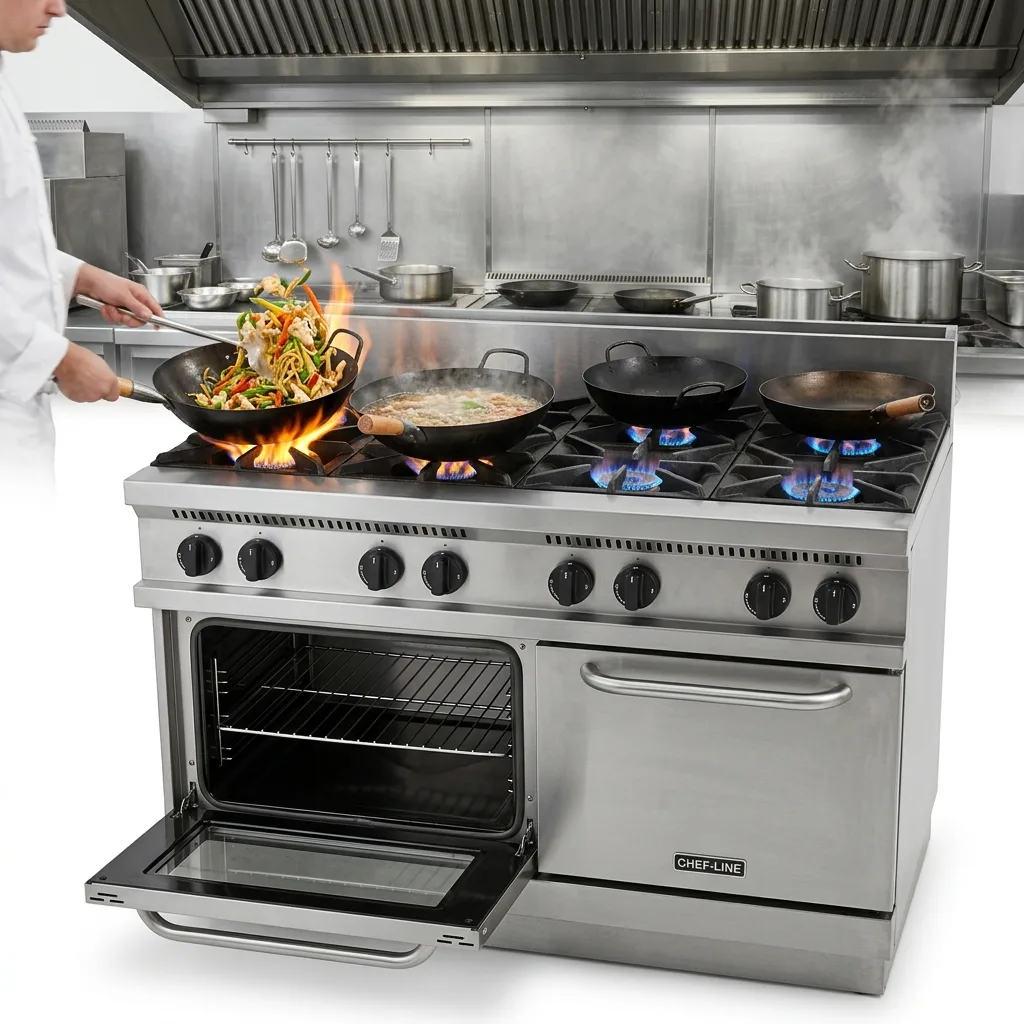
Executive Engineering Summary: Commercial Griddles & Flat-Top Grill Machines
The commercial flat-top griddle is the high-density thermal workhorse of restaurant cooklines, short-order breakfast diners, burger franchises, and institutional banqueting operations. From searing delicate smashburgers and flash-frying steaks to griddling pancakes and teppanyaki stir-fries, a commercial griller machine must deliver exceptional heat transfer, rapid temperature recovery between successive food loads, uniform heat distribution across its entire surface plane, and minimal radiant heat loss to the kitchen line. Achieving these thermal and operational standards requires a meticulous balance of plate metallurgy (hard chrome plating vs cold-rolled structural steel), plate thickness (12mm vs 20mm+), burner engineering (infrared vs cast-iron U-burners), and precision thermostatic zoning.
Plate Metallurgy: Mirror Hard Chrome vs Polished Structural Steel
The metallurgical composition of the cooking plate dictates thermal efficiency, flavor integrity, and operational labor:
- Hard Chrome Plated Steel Plates (50-60 Rockwell C): A precision-ground steel substrate coated with an industrial-grade electroplated chromium layer (typically 40 to 50 microns thick). The mirror-like finish exhibits an exceptionally low emissivity coefficient (ε ≈ 0.08 to 0.12 compared to ε ≈ 0.85 for carbon steel). As a result, hard chrome griddles reduce radiant heat emission into the kitchen by up to 30%, noticeably lowering air-conditioning loads and chef fatigue. The non-porous crystalline structure prevents food proteins from bonding to the surface, completely eliminating flavor transfer between delicate fish, bacon, and pancakes while slashing daily cleaning labor to under 5 minutes with cold water and a silicone scraper.
- Polished Cold-Rolled Carbon Steel (18mm to 25mm Thickness): The traditional heavy-duty standard. While requiring periodic seasoning with edible oils and having higher radiant heat dissipation, thick carbon steel possesses immense thermal mass. It withstands aggressive metal spatulas, abrasive cleaning bricks, and heavy surface pounding without risk of flaking or delamination.
Thermal Recovery Physics & Sensible/Latent Heat Sizing
When high-volume batches of refrigerated (4°C) or frozen (-18°C) beef patties are placed onto a hot griddle surface (180°C), thermal energy is rapidly conducted from the plate into the food. If the plate lacks adequate thermal mass or burner power, the surface temperature plummets below the critical Maillard browning threshold (140°C / 284°F), causing meat to stew in its own exuded juices rather than sear. The thermal energy required to recover the plate surface during high-volume production is calculated as follows:
Cookline Thermal Recovery Equation
The total heat energy Q required to bring a batch of food from storage temperature to searing temperature, accounting for moisture phase change, is expressed as:
Q_total = m · [cp,solid · ΔT₁ + hf + cp,liquid · ΔT₂ + Xevap · hfg]
Where:
• m = Mass of the food batch (kg)
• cp = Specific heat capacity of the food product (kJ/kg·°C)
• hf = Latent heat of fusion if thawing frozen product (kJ/kg)
• hfg = Latent heat of vaporization for exuded surface water (approx. 2260 kJ/kg)
• Xevap = Fraction of surface moisture flash-evaporated
To restore plate surface temperature within a rapid recovery window (Δt ≤ 45 seconds), the effective thermal input rate P must satisfy: P = Q_total / (η · Δt), where η is the plate conductive heat transfer efficiency (typically 65-75% for gas, 85-92% for embedded electric elements).
Heating Technologies: Micro-Pore Gas Burners vs Embedded Electric Elements
Thermal delivery systems determine temperature uniformity and utility efficiency across the griddle plate:
- High-Efficiency Gas U-Burners / Atmospheric Burners: Engineered with stainless steel tubular or cast-iron U-configurations spaced every 300mm (12 inches) across the plate width. Each burner is rated between 8 kW and 12 kW (27,000 to 40,000 BTU/hr). Dual rows of micro-pore flame ports provide continuous cross-fire aeration, eliminating cold dead zones between adjacent burner banks. Premium gas griddles incorporate modulating thermostatic gas valves that throttle fuel down rather than cycling abruptly ON/OFF, maintaining plate temperature within ±3°C of setpoint.
- Embedded Incoloy Electric Heating Elements: Constructed with heavy-gauge nickel-chromium resistance elements cast directly into aluminum diffuser plates or clamped securely beneath the steel griddle plate. Electric griddles offer near-instantaneous thermal feedback via embedded RTD sensors positioned just 2mm beneath the cooking surface, delivering up to 90% thermodynamic efficiency with zero combustion byproducts.
Grease Management & Ergonomic Structural Detailing
High-volume grilling generates substantial liquefied animal fat, grease vapors, and carbonized debris. Inadequate grease drainage causes pooling, which leads to smoking, flare-ups, and uneven searing. Professional griddles feature extra-wide front or side grease troughs (minimum 80mm to 100mm width) with wide-mouthed drainage chutes leading into large-capacity (8L to 15L) slide-out stainless steel grease drawers equipped with internal anti-splash baffles. High perimeter splash guards (100mm to 150mm tapered stainless walls) contain grease spatters while permitting unobstructed spatula maneuvering.
Technical Specification Matrix: Heavy-Duty Commercial Griddles
| Model Code | Surface Size (W×D mm) | Plate Metallurgy & Thickness | Power Input / Fuel Type | Independent Control Zones | Production Capacity (Patties/hr) |
|---|---|---|---|---|---|
| HS-GR900-CHR | 900 × 600 | Hard Chrome / 20mm Thickness | 30 kW Gas (102,000 BTU) | 3 Modulating Zones (each 300mm) | Up to 360 × 100g burger patties/hr |
| HS-EG120-EL | 1200 × 650 | Precision Polished Steel / 18mm | 16 kW Electric (400V 3-Phase) | 4 Thermostatic Zones (each 300mm) | Up to 480 × 100g burger patties/hr |
| HS-GG600-CB | 600 × 550 | Half-Grooved Half-Flat / 16mm | 18 kW Gas (61,000 BTU) | 2 Independent Dual Zones | Steak searing & breakfast combined |
| HS-CG100-CS | 1000 × 700 | Dual Surface Clamshell Automated | 24 kW Electric (Upper & Lower) | 2 Computerized Platen Zones | Up to 600 patties/hr (dual-sided sear) |
Systematic Troubleshooting & Preventative Maintenance Matrix
Engineering Matrix: Temperature Drift, Surface Carbonization & Pilot Ignition
| Symptom / Failure | Underlying Root Cause | Diagnostic Verification Step | Corrective & Preventative Action |
|---|---|---|---|
| Uneven surface temperature; dark spots and cold zones | Burner ports clogged with carbonized grease; thermostat probe out of calibration or unseated from well | Map surface with infrared pyrometer or surface probe across 9 grid points; check flame appearance through viewing port | Clean burner orifices with brass wire brush; recalibrate snap-action thermostat screw; ensure thermocouple bulb is seated firmly in underside well |
| Food sticking aggressively to chrome surface | Aggressive abrasive pads scratched micro-layer; thermal shock caused micro-cracking; burnt carbon glaze buildup | Inspect surface with oblique lighting for circular scratch tracks or flaking chrome edges | Prohibit wire brushes or pumice grill bricks on chrome; soak in mild alkaline detergent and clean with soft rubber squeegee; re-polish with food-grade chrome cream |
| Gas pilot flame extinguishes upon releasing knob | Thermocouple millivolt output degraded (<18 mV); interlock high-limit switch tripped or oxidized | Measure open-circuit DC millivolts of thermocouple using digital multimeter during pilot hold | Replace degraded thermocouple; clean pilot burner flame hood; ensure flame envelops top 10mm of thermocouple junction |
| Grease trough overflow and cabinet smoking | Drain chute blocked by solidified fat or food chunks; grease drawer drain filter missing | Inspect drain aperture diameter and check drawer fill level | Clear drain aperture with heat-resistant clearing tool; empty grease container when 75% full; verify drain slope integrity |
Metallurgical Hardness Testing & Micro-Finish Surface Topography
Surface micro-roughness directly dictates non-stick performance on commercial griddle plates. Standard cold-rolled carbon steel plates exhibit an average surface roughness (Ra) of 1.2 to 1.8 microns, featuring microscopic fissures where liquid animal fats and proteins embed and oxidize. Premium hard chrome plated griddles undergo multi-stage precision grinding and diamond-paste polishing, achieving a mirror surface roughness Ra ≤ 0.15 microns. This micro-smooth topography provides almost zero mechanical anchor points for cooked food, enabling chefs to turn delicate fish fillets, eggs, and crepes with zero tearing. Furthermore, the electro-deposited chromium matrix achieves a superficial surface hardness of 58 to 62 Rockwell C, resisting scratches from blunt stainless spatulas and preserving non-stick properties over a 10-year operational lifecycle.
Zone Temperature Isolation & Thermal Barrier Slots
In high-throughput multi-product cooking lines, different menu items demand drastically different surface temperatures simultaneously: 200°C for smashburgers, 160°C for pancakes, and 80°C for resting buns. Because steel exhibits high thermal conductivity (k ≈ 45 to 50 W/m·K), uncontrolled lateral heat conduction across a continuous steel plate creates severe thermal bleed, causing low-temperature zones to overheat. Advanced commercial griddles incorporate laser-cut thermal expansion and isolation slots (50mm deep relief cuts filled with ceramic insulation) between adjacent 300mm cooking zones. These thermal barriers reduce lateral conductive heat transfer by over 65%, allowing adjacent zones to maintain steady 80°C temperature differentials without thermal oscillation or nuisance thermostat tripping.
Featured Commercial Equipment Models
HS-GR900 Hard-Chrome Mirror-Finish Gas Griddle
20mm ultra-thick mirror chrome griddle plate delivering 30% lower radiant ambient heat, zero cross-flavor contamination, and three independently regulated 10 kW U-burners.
View Commercial Griddles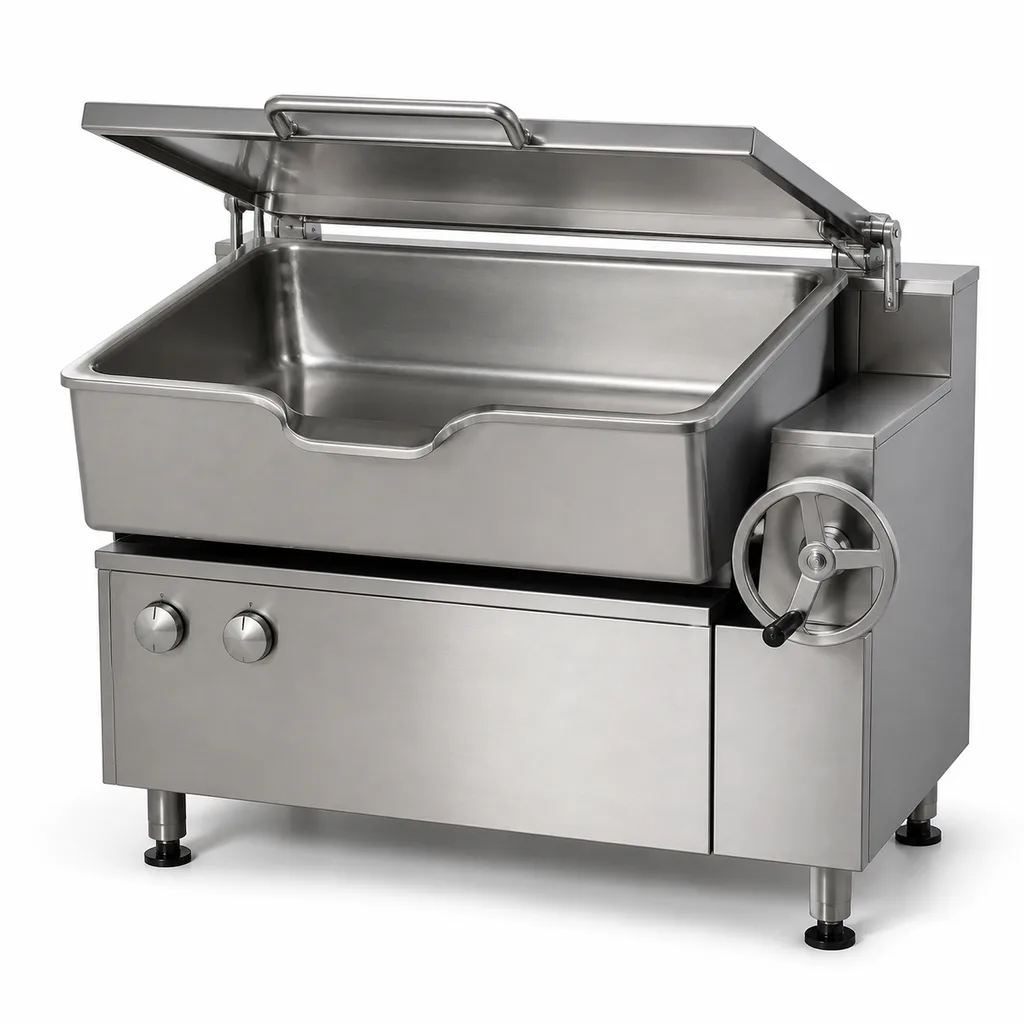
HS-EG120 High-Output Precision Electric Flat-Top Grill
1200mm commercial flat top grill with 4 discrete thermostatic heating zones, cast-in Incoloy elements, removable 10-liter stainless grease drawer, and perimeter grease guard.
View Commercial Griddles
HS-GG600 Countertop Grooved Ribbed Steak Griddle
Half-flat half-grooved steakhouse griddle engineered for definitive diamond sear marks. High-density heat conduction fins maintain surface temperature under continuous load.
View Commercial Griddles
HS-CG100 Clamshell Automated High-Speed Burger Grill
Dual-surface contact cooking system with auto-leveling motorized upper platens. Slashes cooking time by 60% with computerized gap settings and core temperature probes.
View Commercial GriddlesTurnkey Engineering Solutions & Applications
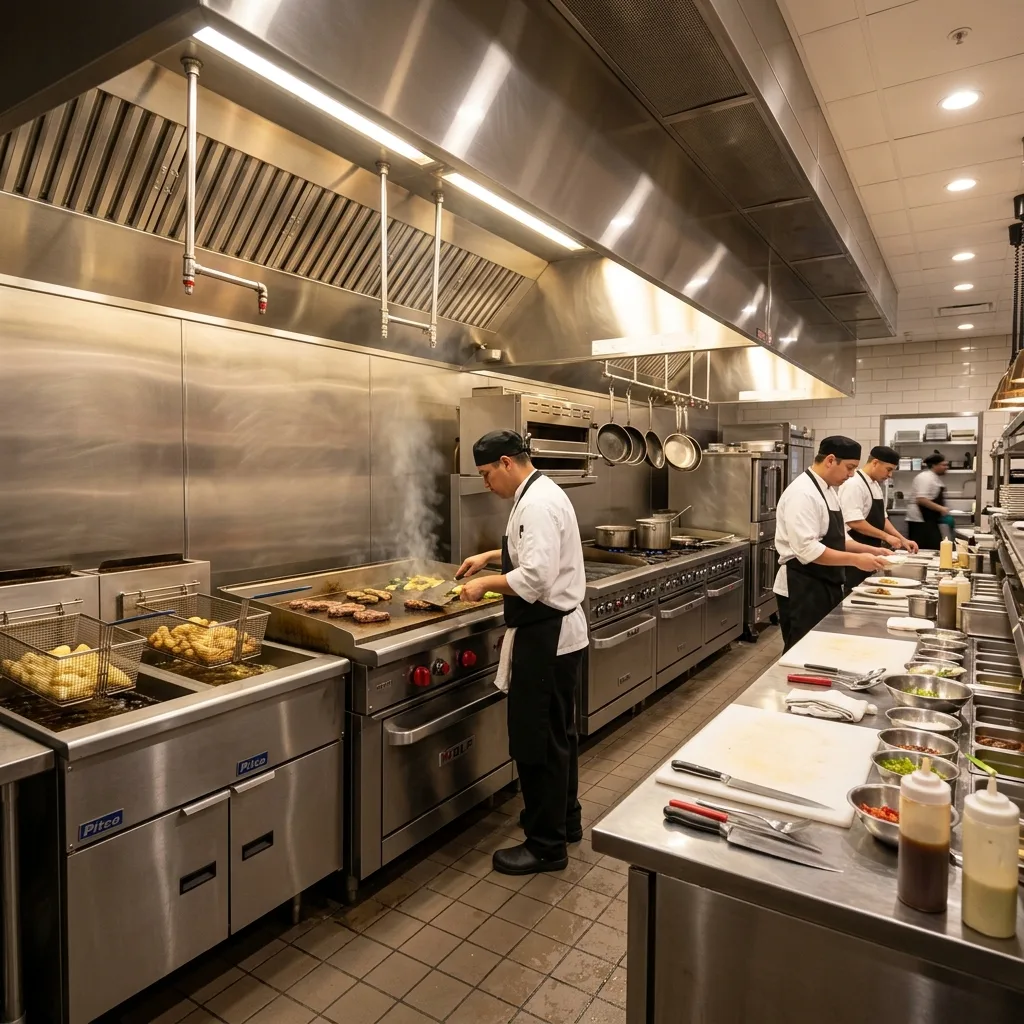
National Gourmet Burger Franchise High-Volume Cookline
Standardized 45 franchise locations with 1200mm 20mm hard-chrome gas griddles, cutting ambient kitchen temperatures by 5°C and reducing daily grill surface scraping labor by 40 minutes.
Explore Restaurant Solutions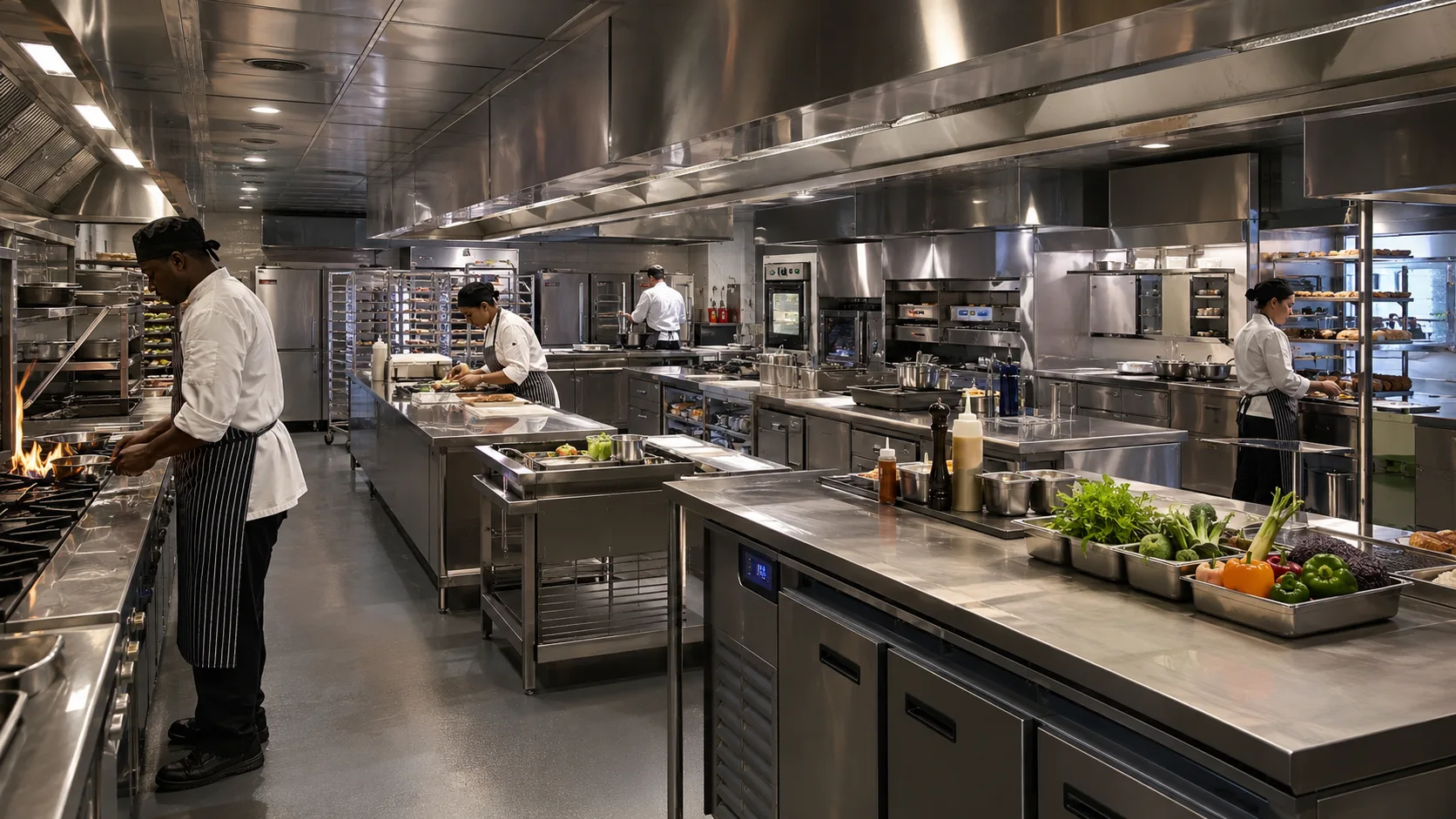
5-Star Hotel All-Day Dining Breakfast & Teppanyaki Counter
Supplied custom mirror-polished chrome cooking stations with perimeter induction holding rails and sub-counter refrigeration drawers for front-of-house chef show cooking.
Explore Hotel Solutions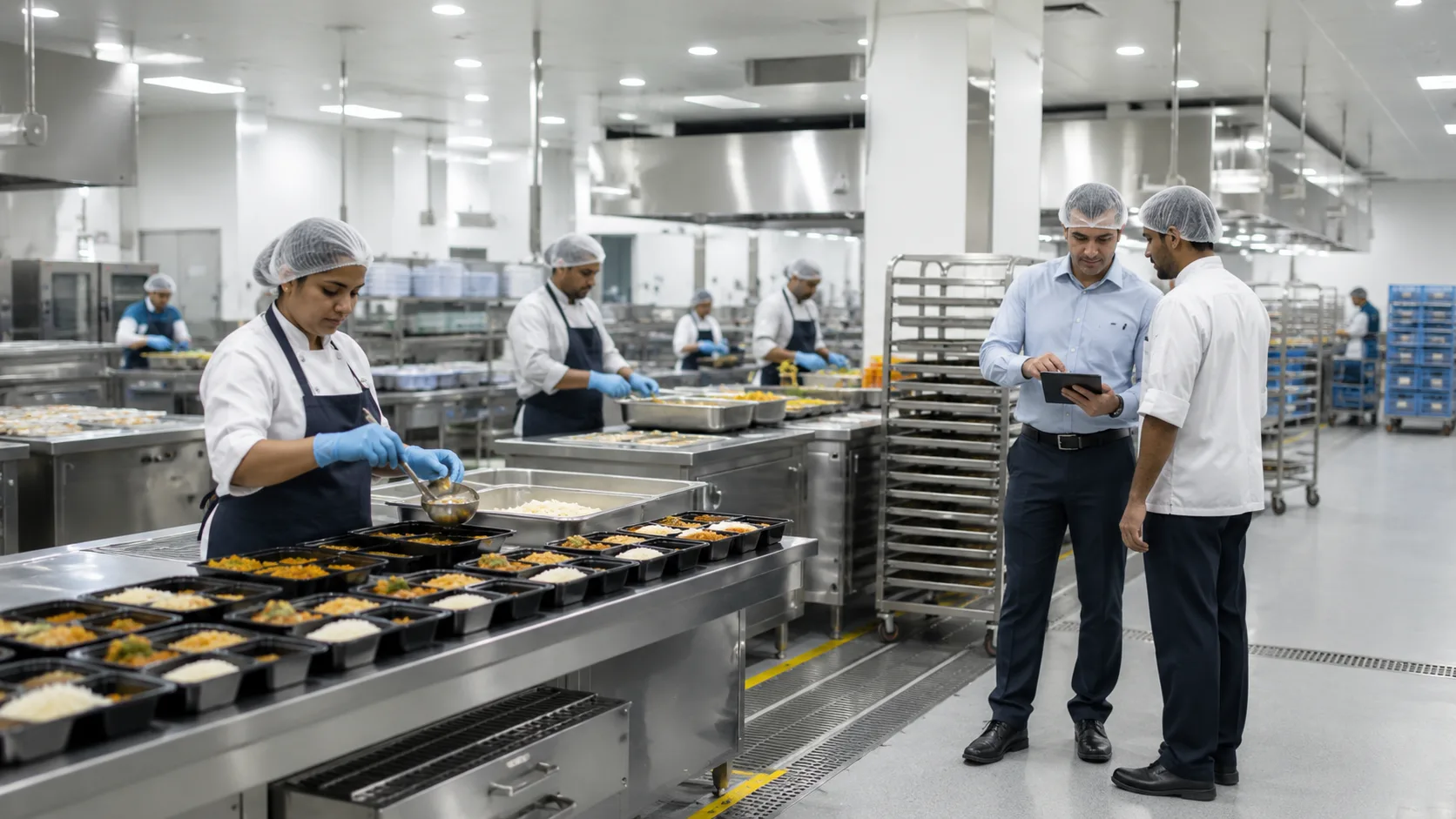
Industrial Employee Cafeteria Short-Order Breakfast Station
Configured dual 3-zone heavy-duty electric flat-top grills serving 1,200 short-order eggs, pancakes, and breakfast meats within a strict 90-minute peak morning window.
Explore School Solutions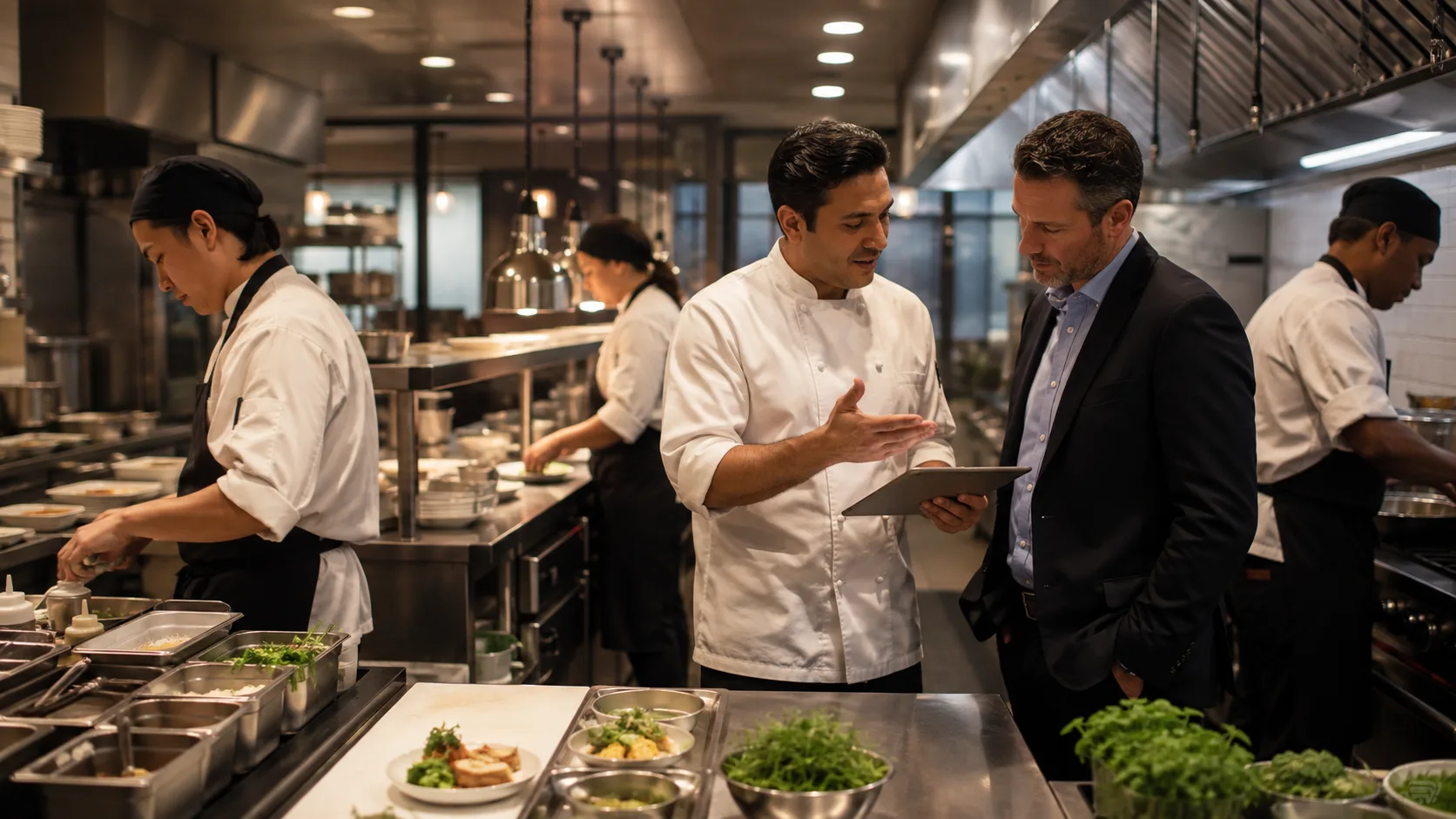
Stadium Concession Fast-Casual Grilling Line
Deployed 12 automated dual-surface contact clamshell griddles achieving 100% microbiological safety compliance and consistent 90-second cooking cycles for stadium event rushes.
Explore Restaurant SolutionsProcurement & Kitchen Integration Checklist
- Select Plate Material Based on Menu Diversity: Specify hard chrome for operations cooking fish, poultry, eggs, and delicate vegetables to eliminate flavor ghosting; select 20mm polished carbon steel for continuous high-impact steak and burger smashing.
- Audit Gas Pipe Sizing & Supply Pressure: Verify gas pipe diameter (minimum 3/4-inch to 1-inch supply) delivers adequate flow pressure (20 mbar natural gas / 37 mbar LPG) under full cookline simultaneous demand.
- Ensure Minimum 300mm Independent Temperature Zones: Avoid single-thermostat wide griddles; demand independent heating controls every 300mm to allow multi-temperature stage cooking and off-peak energy savings.
- Check Ventilation Capture Compatibility: Ensure griddle depth and grease generation class are matched to the overhead exhaust hood capture velocity (minimum 0.38 m/s at the lower canopy rim).
- Verify Waste Grease Storage Capacity: Ensure the removable grease drawer capacity supports a full operating shift without mid-service emptying risks.
Frequently Asked Questions
What are the primary benefits of a hard-chrome commercial griddle over standard polished steel?
Hard chrome plated griddles feature a micro-smooth mirror finish that drastically reduces radiant heat emission into the kitchen (up to 30% less heat radiation), keeping cooks cooler. The non-porous surface prevents food proteins from bonding, eliminating flavor transfer between delicate items (such as eggs and fish), and can be cleaned in under 5 minutes using water and a rubber scraper without abrasive chemicals.
Why is plate thickness important on a commercial flat-top grill?
A thicker plate (18mm to 25mm / 3/4" to 1") possesses significantly greater thermal mass. When cold or frozen hamburger patties are placed on a thick plate, the surface temperature recovers rapidly rather than dropping. This ensures instant searing, locks in juices, prevents meat from boiling in its own moisture, and maintains consistent production cycles during peak rushes.
What is the advantage of multiple independent heat zones on a commercial griddle?
Multi-zone griddles (typically controlled every 300mm / 12 inches) allow chefs to maintain discrete temperature profiles across the surface—for example, holding 200°C for burger searing on the left, 160°C for eggs in the center, and 80°C for holding buns on the right. During off-peak hours, unused zones can be turned off, cutting gas or electrical consumption by up to 50%.
How do I clean and maintain a chrome commercial griddle without damaging it?
Never use metal scrapers, abrasive grill bricks, wire brushes, or ice on a chrome griddle, as this will scratch or micro-fracture the chrome plating. Clean the hot surface (around 120°C) by pouring clean water, letting it steam, and scraping residues toward the drain with a flexible silicone or rubber squeegee. Polish periodically with food-grade chrome cleaner.
What causes a gas griddle pilot flame to repeatedly extinguish?
The most common cause is a degraded or misaligned thermocouple that fails to generate sufficient DC millivoltage (≥18 mV) to hold the safety valve magnet open. Other causes include a draft blowing the pilot out, a clogged pilot gas orifice, or an oxidized high-limit safety switch.
Plan the Equipment Around Your Kitchen.
Share your menu, peak service demand, available space and site utilities. Tell us which equipment you are considering so we can review the requirements with you.