Direct Answer / Key Takeaway: Plan combi-oven allergen changeovers around recipes, trays, utensils, cleaning access and release records. Avoid treating heat or appearance as validation.
A combi-oven allergen changeover involves more than selecting a different cooking program. The product, trays, racks, utensils, preparation bench, loading hands and unloading route all belong to the process. A shared cooking chamber needs a clearly defined role within the facility's allergen-control plan.
Start with the menu and the responsible food-safety team's approved requirements. This guide organizes the questions and records needed for a changeover. It does not establish that a shared oven can produce an allergen-free meal.
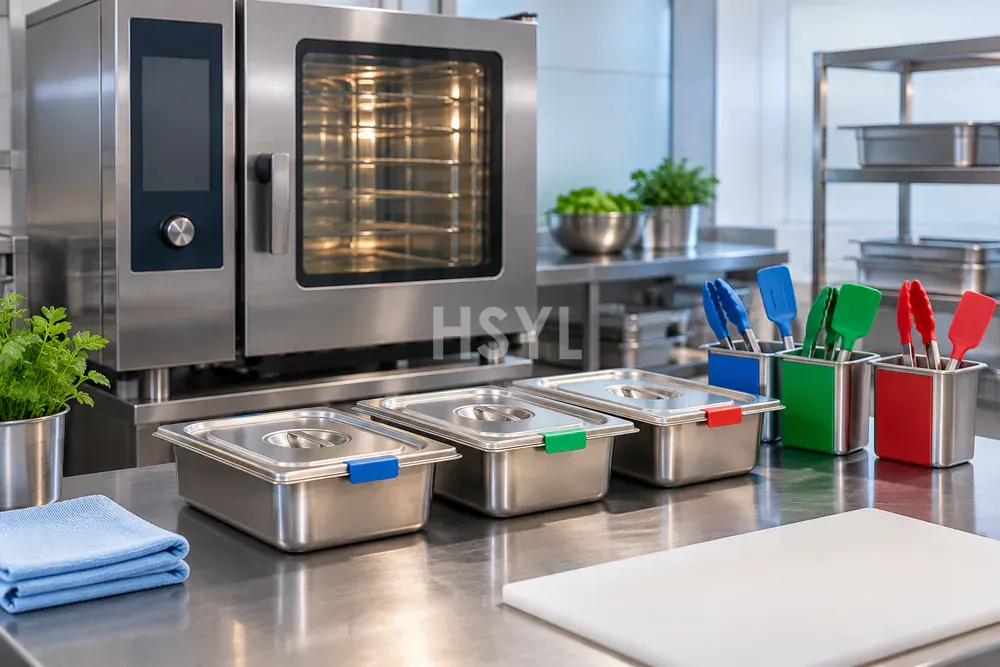
Trace the recipe through the oven work area
Identify the current recipe revision, ingredient information and substitutions. Record the items that contact the food before loading, during cooking and after unloading. Include lids, probes, racks, tongs and work surfaces rather than restricting the review to the oven cavity.
Follow the operator's movement as well. A cleaned tray can be placed on an uncontrolled bench or handled with equipment that belongs to another preparation task. Map the complete product journey so the changeover plan contains the actual contacts and handovers.
The Food Standards Agency guidance calls for current ingredient information and controls against allergen cross-contamination in its stated UK jurisdictions. The facility must apply the rules and approved practices relevant to its own operation.
Decide what can be controlled before promising a meal
Ask the responsible team to classify the proposed menu change and the controls required. Time separation, designated equipment or a separate production route may be appropriate only when the complete process and verification support the choice. The kitchen should not infer adequacy from an empty cavity or a visibly clean tray.
Heat, a routine program and visual inspection are not a generic validation of allergen removal. The cleaning method, access and verification need to be approved for the actual equipment, residues and food-safety plan. Obtain the machine manufacturer's instructions and confirm that the proposed treatment is permitted.
A changeover review can expose an overlooked interface
In an illustrative review, a kitchen has designated trays for a particular meal group but uses the same unloading tongs and landing bench for all products. The question is not whether the trays have a different colour. It is whether the complete contact route meets the approved control plan and what evidence allows the next production release.
Use this type of route review before a purchasing commitment. If separate utensils or work positions are required, include their storage, cleaning and identification in the equipment scope. A control that exists only in a written instruction but has no practical location is difficult to reproduce during service.
Write a release record that follows the actual change
- Identify the previous and next recipe or menu group.
- List the contact equipment and work positions within scope.
- Record the approved cleaning or segregation procedure used.
- Retain the required verification and its responsible reviewer.
- Identify exceptions, unresolved conditions and the released production status.
Record who performed the work and who made the release decision under the facility's plan. A tick beside oven cleaned is too broad if the plan also covers probes, accessories and unloading. Keep rejected or unresolved conditions visible and follow the approved escalation route.
When the recipe, accessories or equipment configuration changes, review the changeover again. A procedure validated for one arrangement should not silently be assumed to cover a different cavity load, new component or changed cleaning access.
Turn the control plan into equipment questions
Ask the supplier about accessible cleaning surfaces, removable parts, permitted procedures, approved accessories and documentation for the exact offered model. Explain the facility's intended menu and control requirements without asking a supplier to make an unsupported free-from guarantee.
The menu and equipment review should be tied to the current offered configuration and its controlled documents. Where an enquiry needs clarification, provide the actual recipe groups, approved control basis and contact-route review so the equipment discussion addresses a defined task.