Commercial Refrigeration Equipment Manufacturer
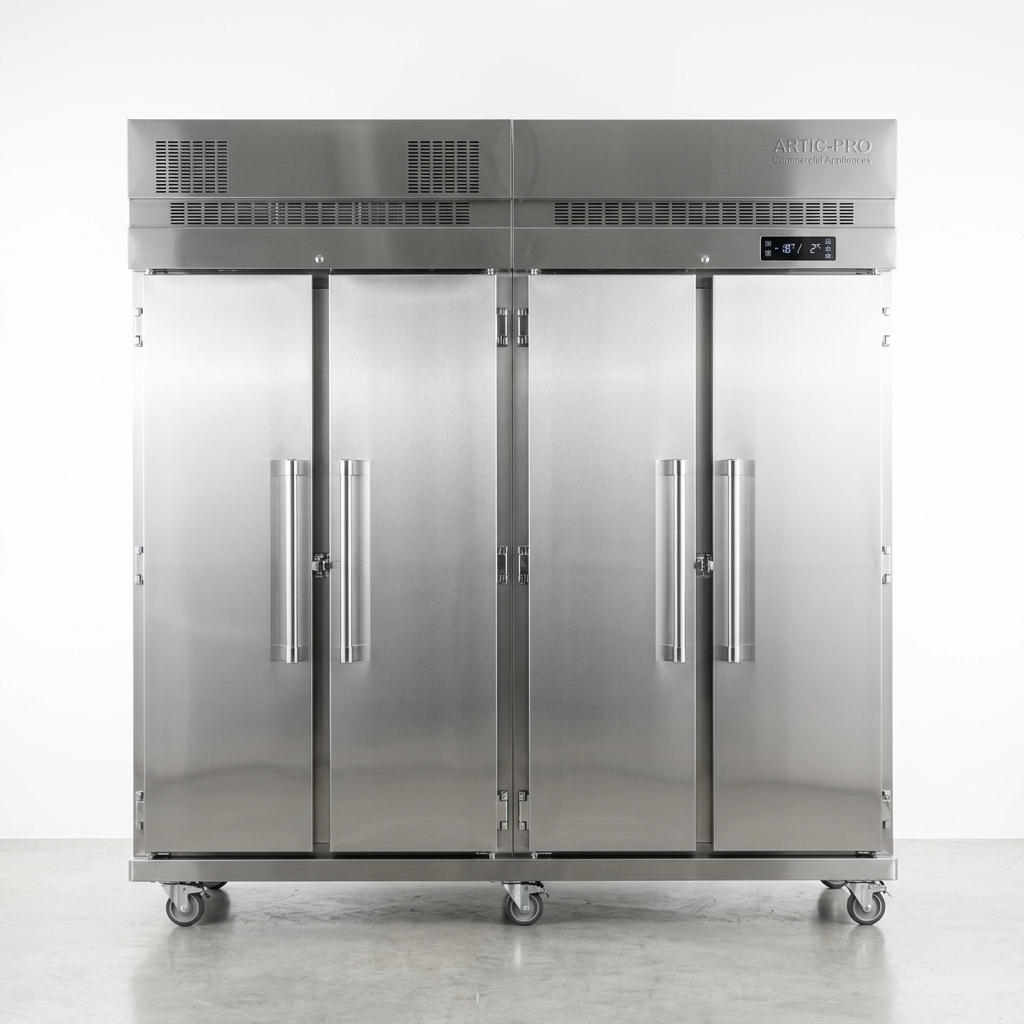
Cold chain equipment is sized by stored volume, pull‑down duty and workflow position — not by nominal litre capacity. Whether you need upright storage refrigerators for a central kitchen receiving bay, undercounter units integrated into a preparation island, or blast chillers for cook‑chill production with HACCP time‑temperature logging, the model is selected around your ingredient turnover, door opening frequency, ambient conditions and hygiene protocol. Refrigeration is never a stand‑alone specification: it must integrate with receiving, preparation, cooking and dispatch flows.
Specify the Cold Chain Before Selecting the Model
Commercial refrigeration specification follows five decision points unique to cold storage:
- Stored volume and turnover — raw ingredient volume, shelf life and pull‑down frequency
- Compressor type and ambient rating — tropicalised compressor for kitchens above 38 °C ambient
- Door configuration — solid or glass, hinged or sliding, and opening direction per workflow
- HACCP logging and alarm — temperature recording interval, probe position, remote alert capability
- Integration position — receiving bay, prep zone, cook line or dispatch area
Commercial Refrigeration & Cold-Chain Sizing Matrix
Temperature control bands, compressor configurations, and insulation specifications engineered for high-ambient commercial kitchens.
| Cold-Chain Function | Operating Temp Range | Chamber & Capacity Spec | Compressor & Eco Refrigerant | Climate Class & Ambient Rating | HACCP Defrost & Control Logic |
|---|---|---|---|---|---|
| Rapid Pull-Down (Blast Chilling) | +90°C to +3°C (90 min) / -18°C (240 min) | Roll-In Trolley Blast Chiller (10-40 GN 1/1) | Copeland Scroll / Embraco Heavy-Duty, R452A / R404A | Climate Class 5 (43°C Ambient / 40% RH) | Multi-point core probe insertion, auto-switch to storage hold, USB HACCP curve export |
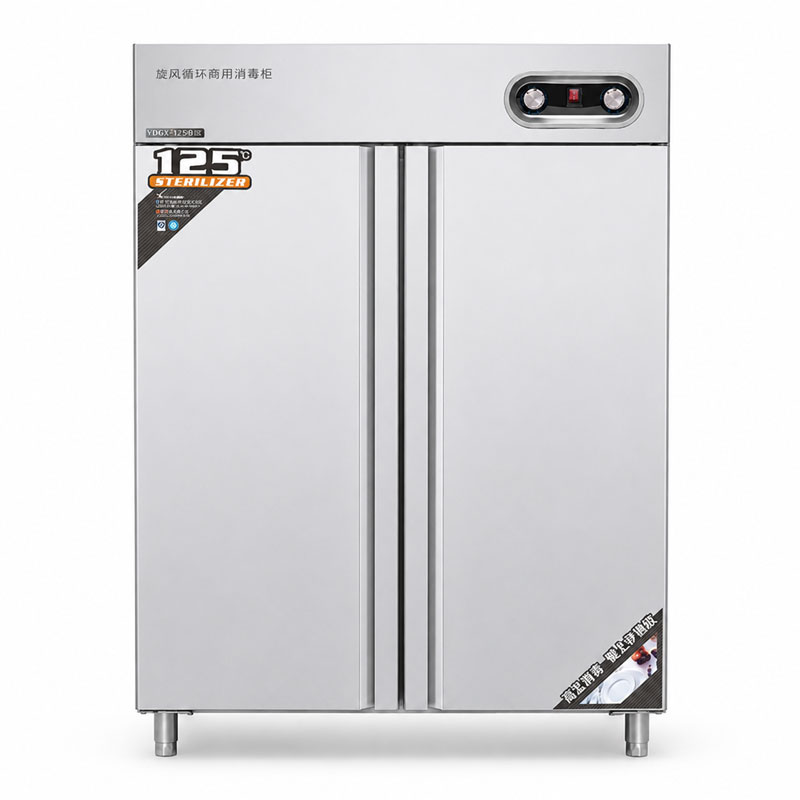
| Upright Fresh Storage (Chiller) | -2°C to +8°C | 2-Door / 4-Door Solid Reach-In (500L - 1,200L) | Embraco / Secop Inverter, R290 Eco Refrigerant | Climate Class 4/5 (40°C Ambient), 70mm Cyclopentane | Intelligent smart-cycle hot gas defrost, Dixell microcomputer thermostat, magnetic gasket |
| Low-Temp Storage (Freezer) | -18°C to -22°C | 2-Door / 4-Door Reach-In Solid Door (500L - 1,200L) | High-Torque Hermetic Compressor, R290 / R404A | Climate Class 5 (43°C Ambient), Heated Door Perimeter Wire | Electric heater timed auto-defrost with safety thermal cut-off, interior LED illumination |
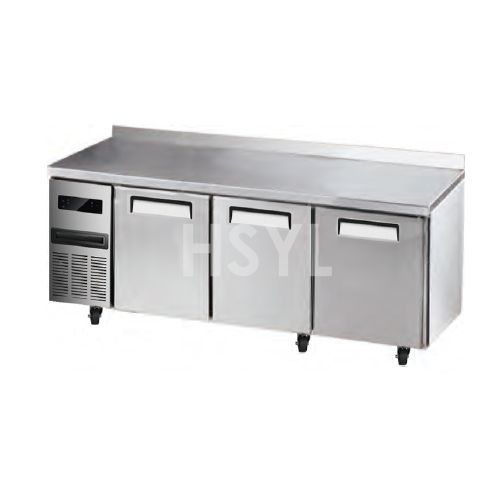
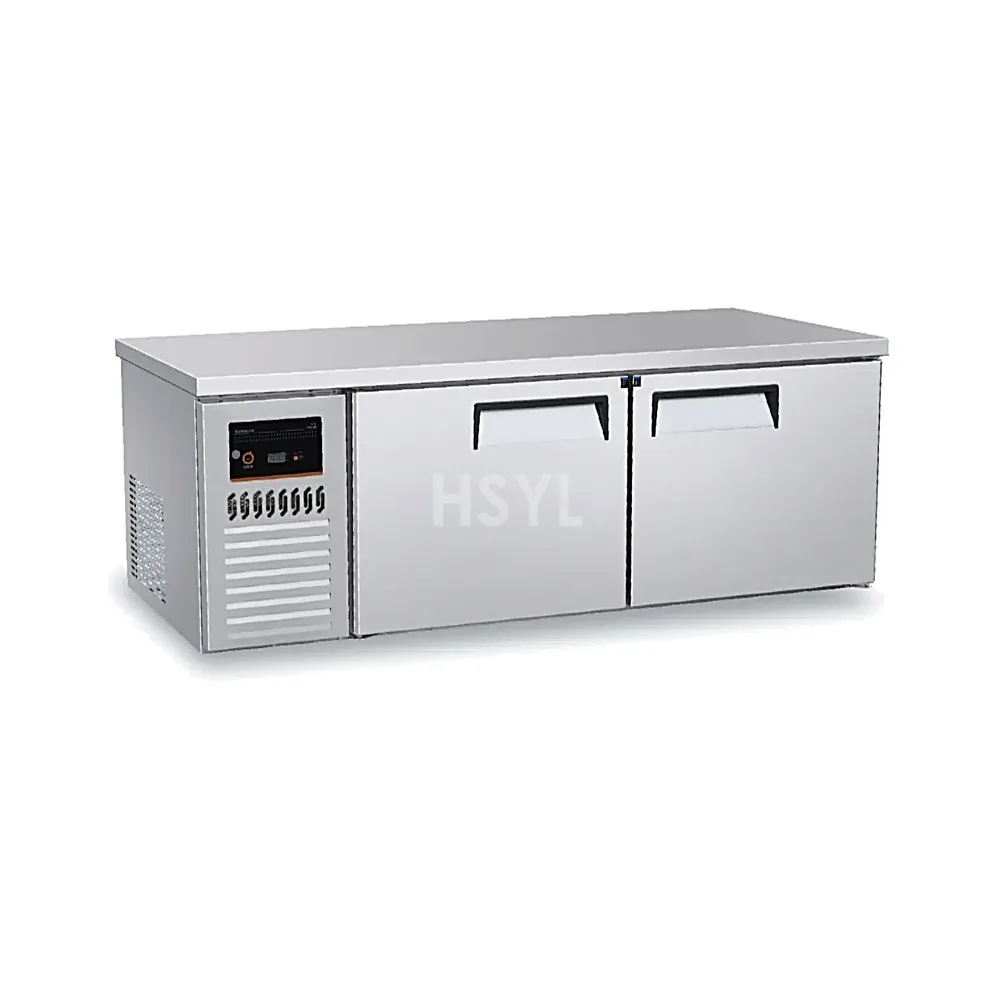
| Line Prep Counter / Chef Base | Base: 0°C to +8°C / Wells: +2°C to +8°C | Refrigerated Saladette / Pizza Counter (1.2m - 2.0m) | Compact Side/Bottom Mount Condensing Unit, R290 | Climate Class 4 (38°C Ambient), Ventilated Airflow | Cold-wall air curtain across ingredient GN pans, heavy-duty drawer slides (60kg load) |
Commercial Undercounter & Merchandising Refrigerators
Precision temperature preservation engineered for commercial prep lines and front-of-house beverage displays.
Direct-Cooling Workbench Refrigerators
Heavy-duty QDUR and XSDUR series undercounter prep refrigerators combining food prep workbenches with direct cooling.
View QDUR / XSDUR WorkbenchesE-Series Display Refrigerators
Commercial vertical glass-door merchandisers featuring low-E glass, energy-efficient compressors, and LED illumination.
View E-Series ShowcaseCommercial Refrigeration Specification Matrix (Climate Class & Component Standards)
| Equipment Series | Operating Temp Range | Ambient Climate Rating | Compressor & Controller | Insulation & Liner Spec | Export Voltage / Refrigerant |
|---|---|---|---|---|---|
| Upright Reach-In Chiller (2/4/6-Door) | −2°C to +8°C (28°F to 46°F) | Climate Class 4 / Class 5 (up to 40°C / 104°F) | Embraco / Secop + Dixell Digital Thermostat | 60 mm Cyclopentane PU + AISI 304 Coved Liner | 220–240V/50Hz or 115V/60Hz; R290 / R134a |
| Upright Reach-In Freezer | −18°C to −22°C (0°F to −8°F) | Climate Class 5 Heavy Cookline Duty | Embraco / Copeland + Auto Hot-Gas/Electric Defrost | 70 mm High-Density Foam + Anti-Sweat Door Frame Heater | 220–240V/50–60Hz; R290 / R404A |
| Undercounter & GN Prep Counter | 0°C to +5°C (NSF/ANSI 7 Prep) | 38–40°C Cookline Ambient | Forced-Air Fin Evaporator w/ Epoxy Anti-Corrosion Coat | 50 mm PU + 1.0–1.2 mm AISI 304 Reinforced Worktop | 220–240V/50Hz or 115V/60Hz; 20GP/40HQ Stackable |
| BEC Series Blast Chiller / Shock Freezer | +70°C → +3°C (≤90m) / −18°C (≤240m) | tropicalized Condensing Unit | Copeland Scroll + Multi-Point Core Temp Probe | 75 mm High-Density PU + Radiused Hygienic Interior | 220V/1Ph or 380–400V/3Ph; R404A / R452A |
Commercial Refrigeration Equipment
Refrigeration Equipment Questions
How do I size a commercial walk-in cold room?
Work backward from your daily ingredient volume, not from available space. Calculate the total kg of raw material arriving per day, plus 30% for peak days, then apply a shelving utilisation factor (typically 60% — the rest is aisle space). A 100-cover restaurant kitchen processing 80 kg of fresh ingredients daily typically needs a 6–8 m² cold room. Always allow for door swing clearance, strip curtains and internal lighting position.
What temperature range should a commercial refrigerator maintain?
Refrigerated storage must maintain 0–4 °C for fresh ingredients per HACCP guidelines. Freezer storage should hold at −18 °C or below. Rapid pull-down (blast chilling) must bring cooked food from +70 °C to below +3 °C within 90 minutes. These are the three temperature regimes that drive compressor sizing, not the nominal litre capacity of the cabinet.
Do I need a blast chiller or is a regular freezer sufficient?
If your kitchen practices cook-chill production — cooking in bulk then cooling for later service — a blast chiller is mandatory for food safety, not optional. Regular freezers cool too slowly; food spends too long in the 5–60 °C danger zone. For kitchens cooking à la minute with no advance production, a regular freezer is sufficient. The decision is purely about production method and HACCP plan, not budget.
Planning & Selection Resources
Plan Your Kitchen with an Engineering Team
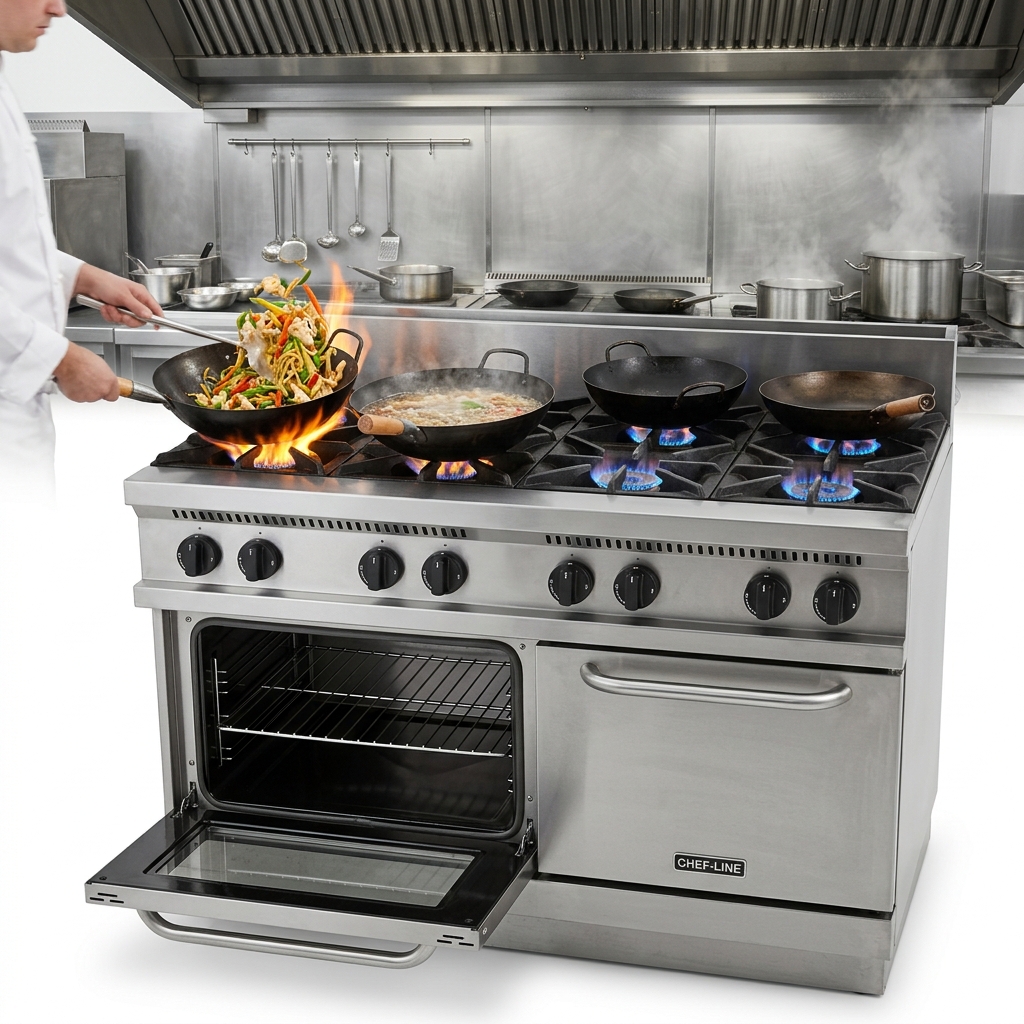
Send your menu, meal volume, floor plan and utility conditions. We will identify the equipment logic, layout questions and technical data required before quotation.