Direct Answer / Key Takeaway: Compare ladling, draw-off and tilting around the finished recipe, receiving containers and cleaning work; verify each feature in the actual kettle quotation.
Two kettles can hold the same nominal volume and leave the kitchen with very different unloading work. Before paying for a discharge feature, follow the finished food from the vessel into the next container. That route determines whether a valve, a tilting vessel or another permitted method solves the actual problem.
Begin with the awkward recipe
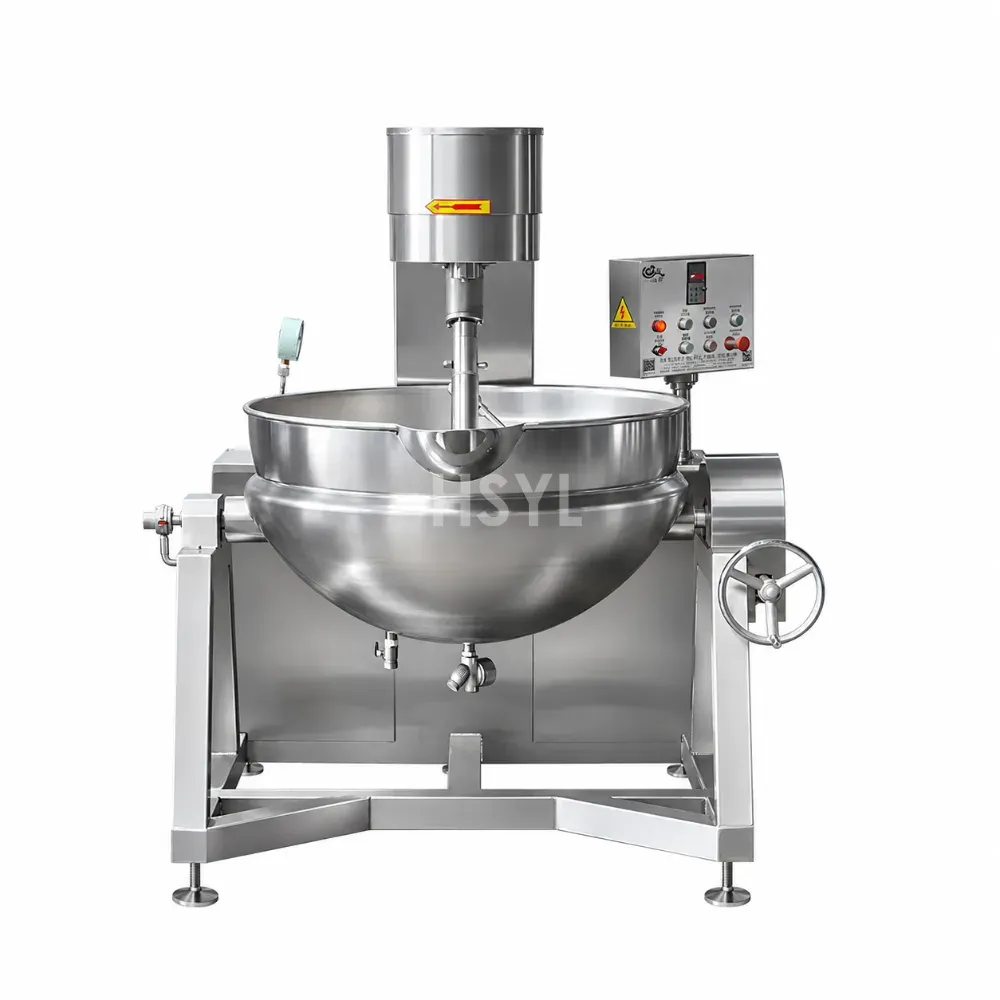
List the largest pieces, thickness and consistency of the products being purchased for. A broth and a stew containing vegetables should not be treated as the same discharge task. Include the end of the batch, when the remaining food may be harder to retrieve than the first container.
Ask the supplier to demonstrate the proposed arrangement with a representative product or an agreed suitable assessment material. For a valve proposal, examine the real passage and the manufacturer's cleaning instructions rather than relying on the connection's nominal size. Establish how pieces, thick sauce and the final residue are handled without an operator improvising access.
Evaluate the receiving side of a tilt
A tilting proposal needs the actual pouring path, receiving-pan position and control method. Check how the operator starts, slows and stops the pour and how containers are exchanged. Include the clearance needed to return the vessel to its normal position. Motorized movement does not remove the need to assess splash, trapping and hot-food handling risks.
Confirm the arrangement included in the quotation. The catalog's HTG80G and HTG80E entries identify nominal 80 L jacketed appliances; that capacity entry alone does not establish a particular tilt drive or draw-off assembly. Request those details separately when reviewing the proposed kettle specification.
Buy the cleaning access as well as the movement
Ask the staff who will clean the equipment to review the removable parts, tools and approved sequence. A valve that empties thin soup conveniently may add a separate disassembly task. A tilting vessel still needs access to the bowl, lip and surrounding receiving area. Neither option should be credited with a labor saving until those tasks are included.
Identify who supplies replacement seals or other model-specific wear parts, and ask for the relevant parts information. Keep routine operator cleaning separate from work reserved for an authorized service person. The site's hygiene procedures should reflect the selected discharge assembly. The hygiene guides provide background for reviewing how the equipment-care tasks fit that process.
Make the offer comparable
Require each bidder to name the supplied discharge components, receiving accessories, installation work and exclusions. Compare the complete route at the same recipe quantity and container arrangement. If one proposal leaves manual finishing or transfer work, include that work in the evaluation.
The purchase decision should identify which recipes the arrangement supports and any restriction discovered during review. Do not replace those observations with an assumed percentage reduction in labor or a promise that powered pouring eliminates hot-food hazards.