Direct Answer / Key Takeaway: Industrial specification review of Central Kitchen Packaging Sealer evaluating gas vs electric operating costs and recovery. Inspect engineering.
Optimizing commercial kitchen reliability requires rigorous alignment between equipment performance and facility operational demands. This document provides an exhaustive technical breakdown of Standard Duty Central Kitchen Packaging Sealer configurations across gas vs electric operating cost & recovery comparison, detailing empirical sizing models, MEP rough-ins, and preventive maintenance protocols.
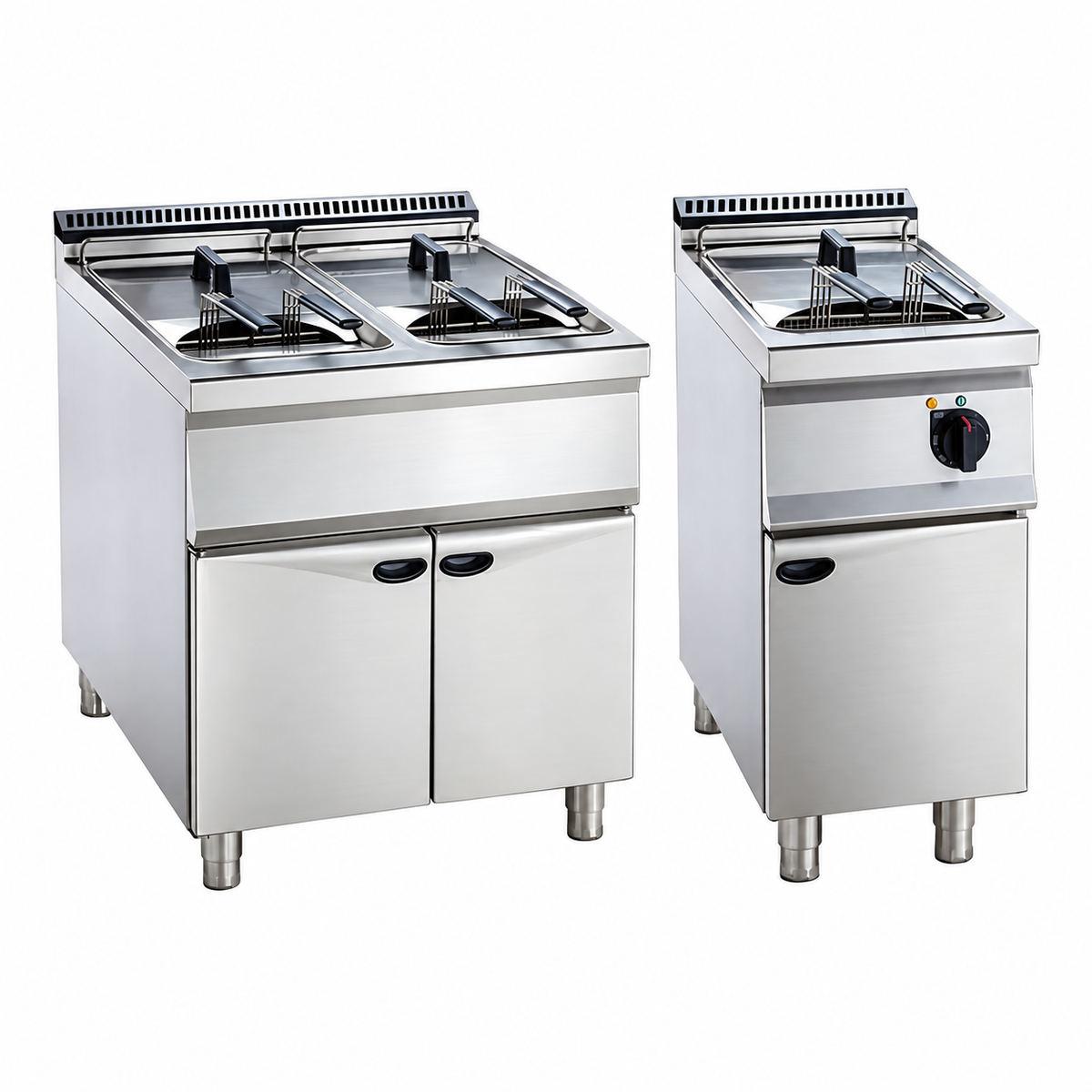
1. Commercial Brigade Deployment & Kitchen Line Harmony: Gas vs Electric Operating Cost & Recovery Comparison
Gas vs. Electric Energy Economics, Efficiency & Utility TCO Analysis:
Procurement evaluations between gas and electric commercial kitchen machinery require rigorous modeling of local utility rate tariffs against thermal conversion efficiency. Atmospheric natural gas burners deliver typical thermal transfer efficiencies of 40% to 50%, with the remaining sensible heat lost to exhaust flues and ambient air, whereas heavy-duty electric elements achieve 85% to 90% and commercial induction exceeds 90% efficiency. Consulting engineers calculate the operational breakeven threshold: Operating Cost/Hour = (Rated kW * Electricity Tariff $/kWh) versus ((Rated BTU/hr / 100,000) * Gas Tariff $/therm). While electric appliances deliver faster temperature recovery and reduce air conditioning loads, they demand expensive 3-phase high-amperage facility service upgrades. Conversely, gas appliances require investment in NFPA 96-compliant Type I commercial exhaust canopies, continuous dedicated make-up air (MUA) fan systems, and automated fire suppression interlocks, which significantly elevate upfront MEP capital expenditure (CAPEX).
When sizing equipment for peak production hours, facility planners must reference verified central kitchen planning guidelines to ensure capacity reserves remain aligned with scheduled shift turnover targets.
2. Physical Specification Matrix & Institutional Performance Tiers
To assist engineering procurement teams, the matrix below details metallurgical standards, utility ratings, and structural tolerance thresholds for commercial versus heavy-duty Standard Duty Central Kitchen Packaging Sealer configurations:
| Engineering Parameter | Standard Commercial Spec | Heavy-Duty Institutional Spec | Engineering Variance Threshold |
|---|---|---|---|
| Material Construction | AISI 304 interior/exterior (1.0 mm), double-wall polyurethane insulation (45 mm), perimeter bumper | AISI 304 (1.2-1.5 mm), 160 mm non-marking polyurethane casters, active battery-assisted heat retention, tow hitch | Thermal drop rate <= 1.2 deg C per hour without auxiliary electric heating engaged |
| Primary Engineering Feature | Thermal Barrier: High-efficiency closed-cell cyclopentane insulation foam completely filling double-wall cavities | Reinforced industrial assembly with seamless continuous laser welds | Zero structural deflection under maximum rated loading |
| Operational Subsystem | Mobility Running Gear: Heavy-duty 160 mm diameter ball-bearing swivel casters with total-lock foot brake systems | High-efficiency heavy-duty components with dynamic feedback telemetry | Energy efficiency index within top 10% commercial benchmark |
| Sanitary & Safety Rating | Door & Latching: 270-degree swing-back doors with positive-locking paddle latches and magnetic transport hold-backs | IPX5 washdown protection with NSF/ANSI cleanability rating | Hermetic perimeter sealing preventing microbial colonization |
3. Thermodynamics, Fluid Dynamics & Operating Mechanics
Cold-Chain Cook-Chill Logistics & Kinetic Transport Integrity: Central institutional kitchens rely on standardized GN pan logistics utilizing insulated transport dollies and heavy-duty stainless mobile racks. Cook-chill meals packaged at +2 deg C must maintain core temperatures below +4 deg C across multi-hour truck transit to remote satellite serving stations. Polyurethane foamed cart bodies provide exceptional thermal resistance, while heavy-duty vulcanized elastic rubber casters absorb road shock and vibration, preventing food spillage and mechanical fatigue during high-volume institutional distribution.
In institutional catering environments, equipment longevity is heavily governed by surface passivation and corrosion resistance. Units fabricated from high-grade austenitic stainless steel must maintain an uncompromised chromium oxide passivated boundary layer. Regular chemical cleaning with non-abrasive detergents prevents pitting attack from chlorinated sanitizers and atmospheric chlorides.
Understanding these thermodynamic and mechanical principles allows consulting engineers to optimize cycle times, reduce utility peak draw, and eliminate premature component fatigue.
4. Rigorous Capacity Derivation & Meal Turnover Equations: Satellite Transport Meal Density Sizing
Determining optimal unit capacity demands empirical engineering formulations rather than rule-of-thumb approximations. Planners apply the following equation to size continuous throughput:
Fleet Carts Required = [Total Satellite Facility Meals * Container Volume (0.0035 m3/meal)] / [Cart Usable GN Pan Volume (m3) * Packing Factor (0.88)]
Transporting 1,200 cook-chill meals to 3 satellite hospitals: Total bulk volume = 4.2 m3; A 24-tier insulated transport cart holds 0.42 m3; Required fleet = 4.2 / (0.42 * 0.88) = 11.3 carts (specifying 12 heavy-duty insulated transport carts).
Practical sizing engineering requires accounting for the hidden ware factor. Beyond customer dining covers, back-of-house food preparation items (hotel pans, sheet trays, mixing bowls, and prep utensils) contribute an additional 15% to 20% to total kitchen processing loads. Furthermore, thermal transfer times for bulk foods follow the transient conduction square-law relationship (t is proportional to x^2), meaning doubling product depth from 50 mm to 100 mm in pans roughly quadruples core pull-down or heating times. Sizing calculations must incorporate these empirical variables to ensure uninterrupted kitchen workflow.
Employing this sizing method protects the kitchen from meal bottlenecks, prevents premature thermal and mechanical failure, and guarantees compliance with HACCP time-temperature critical control points (CCP).
5. Facility Interface Engineering, Utility Rough-Ins & Clearances
Mechanical, electrical, and plumbing infrastructure must be properly prepared prior to equipment delivery. The following engineering specifications govern site hookups for Standard Duty Central Kitchen Packaging Sealer:
- Power & Electrical Connection: Mobile battery models recharge via standard 220V 1N~ shore power cable; passive models require zero power.
- Water Supply & Treatment: No water plumbing; seamless coved interior floor with drain plug enables high-pressure hose washdown.
- Wastewater & Drainage Air Gap: Discharges must connect to temperature-resistant indirect waste lines with an unobstructed physical air gap, conforming to FDA Food Code Chapter 4 backflow mandates.
- Ventilation, Clearances & Environment: Min 1800 mm corridor widths for dual-trolley passing; level docking thresholds with zero vertical lip to prevent wheel caster jamming.
Critical Field Installation Redlines & Contractor Pitfalls: During jobsite rough-ins, engineering teams must enforce the following compliance boundaries to prevent premature equipment failure and voided warranties:
- Corridor Turning Clearance: Transport corridors must provide minimum 1,800 mm width and 2,200 mm 90-degree turning radius to prevent heavy insulated bulk carts from striking wall corners.
- Ramp Incline Angle Limits: Never transit loaded carts (> 200 kg) on floor ramps exceeding 8 degrees (14% slope); steep inclines create runaway risk and operator crush hazards.
- Axle String & Debris Clearing: Clean floor debris (packing string, plastic wrap) from caster axles weekly; bound axles flat-spot polyurethane tires, transferring severe vibration to food pans.
6. Quality Verification Audits, FAT Dossiers & Certifications
Factory acceptance protocols establish that equipment performance conforms to engineering shop drawings and international safety standards. Auditing teams verify factory acceptance testing and compliance verification across the following tests:
- Chamber Thermal Retention Test: 85 deg C hot water mass loaded; temperature loss measured <= 1.1 deg C/hr over 6-hour test.
- Caster Roll & Obstacle Impact Endurance: Cart loaded with 250 kg tested over 10 km obstacle track verifying zero bearing play.
- Door Slam & Magnetic Latch Life Cycle: Paddle door latch cycle tested 10,000 times verifying positive hermetic retention.
- Perimeter Bumper Energy Absorption Test: 250 kg moving cart impacted at 5 km/h against concrete barrier verifying zero chassis damage.
To satisfy commercial health department and third-party food safety audits, modern commercial appliances incorporate automated HACCP data logging. The onboard microcomputer logs real-time time-temperature decay profiles, cycle durations, and sanitizing rinse parameters with cryptographic timestamps. Facilities personnel can export encrypted audit logs via USB or Modbus/Ethernet IoT interfaces, providing verifiable compliance dossiers to satisfy municipal health inspectors during unannounced regulatory audits.
7. Diagnostic Logic, Failure Modes & Root Cause Troubleshooting
Microprocessor control boards continuously monitor operational health. When anomalous readings occur, technicians should apply the corrective protocols detailed in this diagnostic matrix:
| Fault Code | Root Cause Diagnostic | Corrective Maintenance Procedure |
|---|---|---|
| L01 | Thermal Loss Rate Exceeding Threshold | Cabinet core temperature loss exceeds 1.8 deg C/hr; inspect silicone perimeter door gasket seal. |
| L02 | Polyurethane Caster Tread Delamination | Rough concrete ramp transit damaged wheel tread; replace caster with high-rebound vulcanized wheel. |
| L03 | Tow Hitch Locking Latch Fatigue | Multi-cart convoy tugging created hitch pin play; torque mounting bracket bolts to 45 N.m. |
8. Preventive Service Schedules & Long-Term Asset Protection
Planned maintenance protocols reduce catastrophic component failures and stabilize utility efficiency. Maintenance personnel must execute inspections per the following intervals:
| Maintenance Interval | Inspection Scope & Component Target | Acceptable Operating Standard |
|---|---|---|
| Daily Shift End | Power-wash interior coved chamber with sanitizing spray, leave doors ajar to air dry | Chamber interior fresh and odor-free, floor drain plug clear of food crumbs |
| Weekly Operational | Inspect polyurethane caster treads for embedded gravel or wire, test foot brakes | Casters roll silently and smoothly, wheel brakes lock firmly on 10-degree ramp |
| Monthly Lubrication | Grease caster swivel ball-bearings via grease zerk nipples with water-resistant grease | Smooth 360-degree swivel action without friction squeak or mechanical resistance |
| Annual Overhaul | Inspect silicone perimeter door gasket seals, check tow hitch structural mounting bolts | Door gaskets supple with positive seal contact, tow hitch bolts torqued to 45 N.m |
All mechanical maintenance interventions must utilize NSF H1 certified food-grade synthetic lubricants on drive bearings and moving pivot hinges. Electrical connections, magnetic contactors, and grounding continuity must be re-torqued and tested annually using calibrated digital multimeters to prevent thermal resistance hot spots.
Recommended First-Year Commissioning & Preventative Spares Kit: For international projects and remote institutional complexes, maintaining an on-site critical spares inventory avoids catastrophic service interruptions:
| Part Description | Recommended Quantity | Engineering Maintenance Function |
|---|---|---|
| Vulcanized Heavy-Duty Swivel Casters | 2 Pieces | Precision double-ball race swivel casters with non-marking polyurethane tread. |
| Silicone High-Temp Door Perimeter Seal | 1 Set | Ensures thermal insulation holding hot meals > 65 deg C across 4-hour satellite transit. |
| Drop-Pin Towing Hitch Assembly | 1 Set | Heavy-gauge steel tow bracket allowing multi-cart tugger train coupling in central kitchens. |
| Internal Pan Slide Locking Rod Set | 2 Sets | Stainless vertical retaining rods preventing Gastronorm pans from sliding out on transport ramps. |
9. Marine Container Packaging, Shock Telemetry & Export Standards
International export packaging must withstand cross-ocean container shipping, tropical humidity cycling, and intermodal transport vibration. Factory crating standards for Standard Duty Central Kitchen Packaging Sealer specify:
- Caster Transit Wheel Chocks: Polyurethane casters locked into custom grooved timber floor chocks inside crate.
- Perimeter Rubber Bumper Transit Wrapping: Thick corrugated buffer wrap taped around perimeter protective bumper.
- Interior Pan Shelf Retaining Clamps: Internal stainless pan guide runners braced with wooden spacers against rattling.
- ISPM-15 Heat-Treated Export Crate: Heavy timber structural crate engineered for container forklift handling.
For comprehensive wiring schematics, spare parts exploded diagrams, and maintenance schedules, consult the official technical documentation and installation manuals provided by HSYL engineering.