Direct Answer / Key Takeaway: Describe a kettle leak by its visible location, operating stage and actual heating arrangement, while keeping jacket, food-path and service interventions separate.
Liquid beneath a kettle does not identify a failed jacket seal. It may have arrived from the food path, a cleaning task or another connected part of the installation. Treat an unexplained leak as a condition to assess through the appliance's shutdown and service instructions, then give the service team a location-based description. Do not continue a hot trial merely to obtain a better photograph.
Locate the first visible point
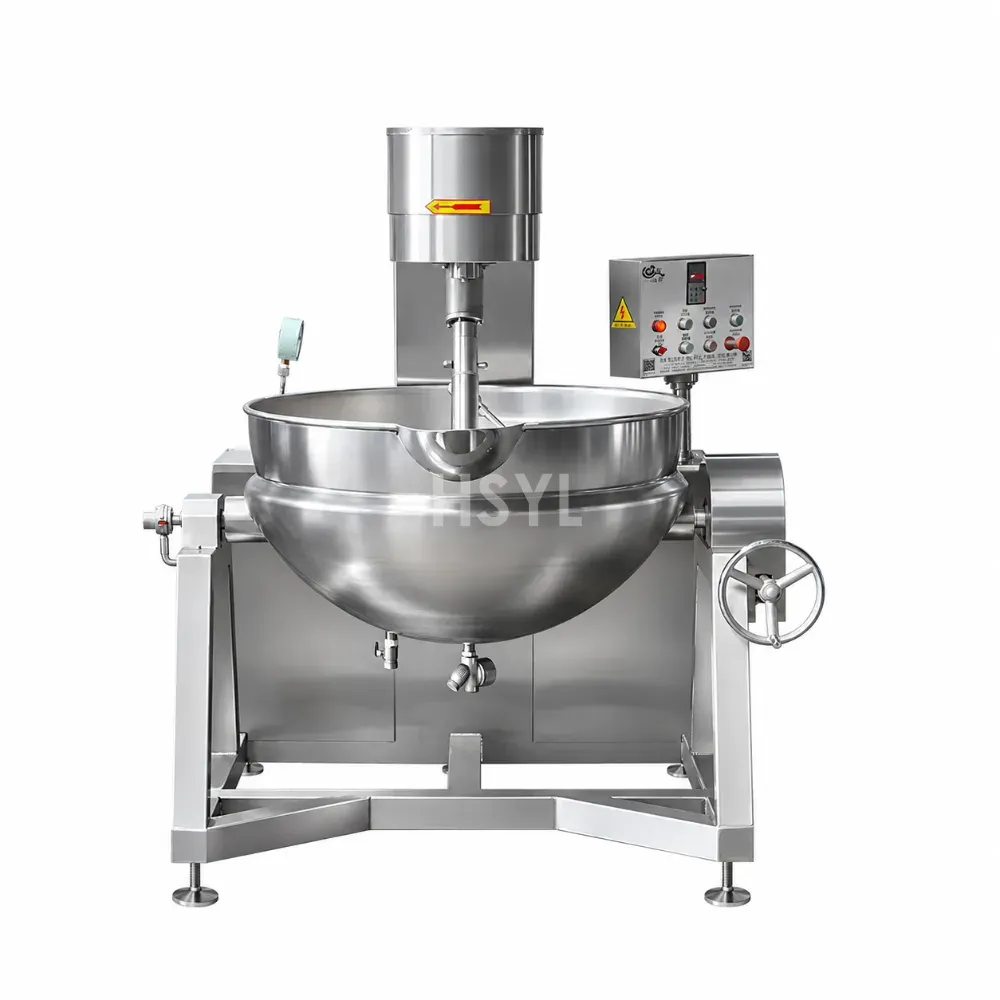
From a safe position, describe where liquid first becomes visible: beneath a discharge fitting, at the vessel support, near a connection or on the floor after unloading. A floor puddle shows a destination, not necessarily the source. Note whether adjacent equipment or cleaning water could have reached the same area.
Use photographs taken without opening panels or moving hot equipment. Include a wider view that identifies the side of the appliance, then a closer view if safely available. Keep clear of hot surfaces and any uncertain liquid; do not touch or taste it to identify its composition.
Record the stage of operation
State whether the observation occurred during filling, heating, holding, unloading, cooling or cleaning. Note whether the vessel was stationary or moving, if the actual design includes movement. Describe the last normal batch and the first affected one. These details are more useful than an unsupported label such as trunnion failure.
Preserve the actual model identity. The catalog separately describes HTG80G as a gas jacketed boiling pan and HTG80E as a thermal-oil electric jacketed kettle. A general jacketed kettle family name therefore does not prove that every delivered appliance contains the same jacket medium or pressure components.
Keep the food path and jacket service distinct
A removable food-contact valve, where supplied, has its own approved cleaning and assembly procedure. A heating jacket is a different system. Staff should not add water, tighten an unidentified fitting or substitute a generic seal simply because another kettle uses that practice.
Give the service person the current manual and any recent cleaning, part replacement or relocation history. Component identification and the decision to open or test a system belong to the authorized assessment. If the leak may have affected food, the kitchen's responsible person must also decide how the affected batch is handled under its procedures.
Make the repair and return to use traceable
Order parts only after the exact assembly and part identity have been confirmed. A gasket's outside appearance is not enough to select its material or specification. Record the authorized work, any related installation correction and the checks required before the appliance returns to service.
Keep the result in the equipment documentation with the original observation. The useful closure is that the identified leak and its cause were addressed through the approved process, rather than a claim that replacing the first visible seal solved every possible source.