Direct Answer / Key Takeaway: Translate a kettle‘s stated capacity into an accepted recipe batch using fill limits, stirring, product density and the actual discharge method.
The capacity written beside a cooking kettle is not automatically the quantity of finished sauce a kitchen can transfer into containers. The product must be loaded, moved during cooking and discharged without exceeding the equipment's stated limits. Define the recipe batch before treating vessel litres as production output.
Ask what the stated litres represent
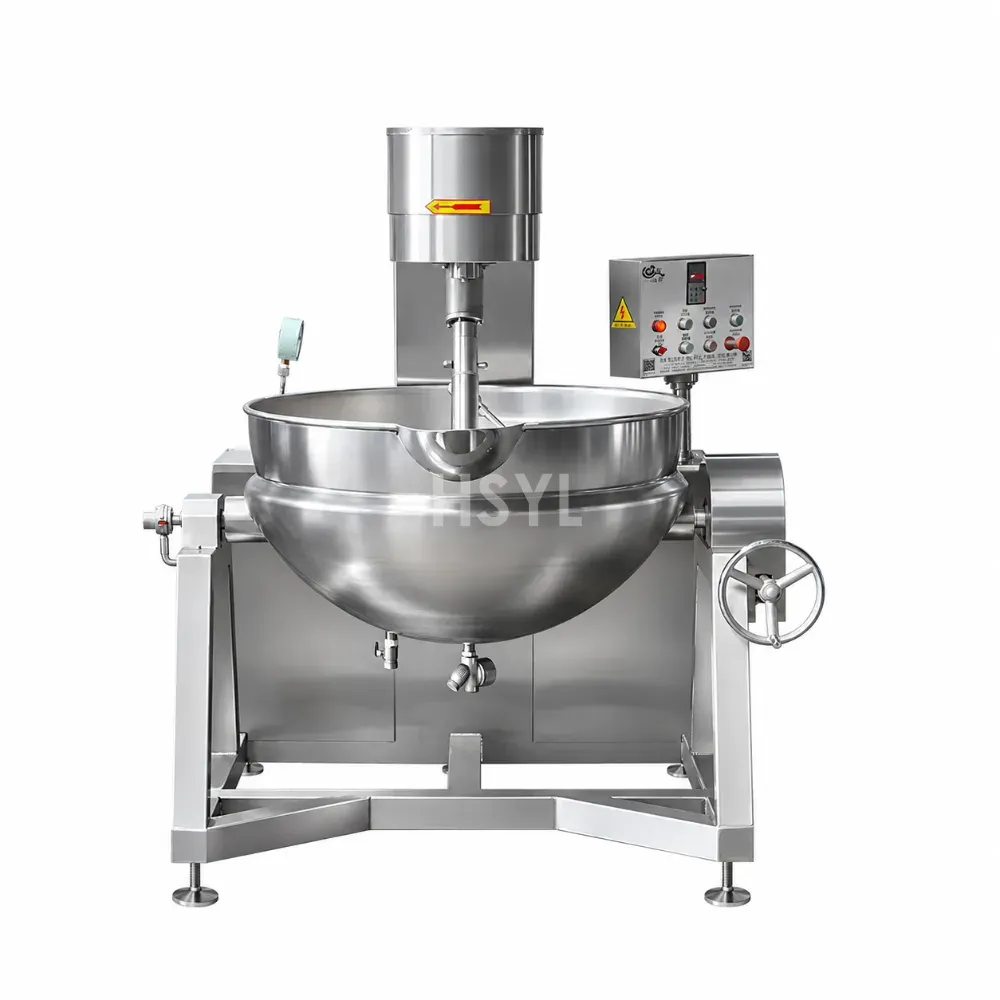
The catalog identifies HTG80G and HTG80E as 80 L jacketed units with different heating arrangements. Specify the actual jacketed kettle configuration in the quotation rather than assigning one design to the entire equipment family. This is a model-specific capacity label. It does not, by itself, establish the permitted working fill for every recipe or confirm that both units have the same discharge equipment.
Obtain the maximum and any minimum operating conditions for the supplied vessel. The batch must leave the space required by the instructions and the food's behavior. A product that expands, foams or is actively stirred cannot be assessed from the empty vessel's volume alone.
Keep volume and saleable weight separate
A litre of one sauce need not have the same mass as a litre of another product. Weigh the recipe ingredients and the usable finished output, noting any additions, evaporation or material left behind. Do not convert vessel litres to finished kilograms using an assumed universal density.
Check the intended consistency at the point of transfer. A thin soup and a viscous filling can impose different stirring and handling conditions. If an agitator is proposed, confirm its supplied arrangement and the product range the manufacturer accepts rather than assuming every jacketed kettle includes one.
Follow the batch through discharge
Describe how the product leaves the actual unit. A tilting vessel, a draw-off outlet and a pumped transfer each require a different receiving arrangement. Use only the features included in the offered model. Where a kettle tilts, reserve the required movement and receiving space; where an outlet is used, confirm that the recipe can pass through it in the intended condition.
Include the receiving container and staff handling method in the assessment. If the kitchen can cook a batch but cannot empty it into the next process efficiently, the vessel remains occupied. Counting only the heating period will overstate the number of batches available during service.
Write a usable batch statement
- Name the recipe and the material condition used in the assessment.
- State the charged quantity and the equipment's applicable fill boundary.
- Record the usable finished quantity and the defined quality endpoint.
- Identify the stirring and discharge arrangement actually supplied.
- Include the time until the vessel is ready for its next approved batch.
Keep that record with the quotation and operating instructions. If the recipe or receiving container changes, revisit the affected steps before scaling production. The resulting usable batch is a demonstrated kitchen condition, not a new universal capacity rating for every product cooked in that kettle.