Direct Answer / Key Takeaway: Measure commercial dishwasher rewash rate with a defined denominator, rack mix and inspection record. Test one correction and retain sanitation checks.
Commercial dishwasher rewash rate is a useful operating measure when the kitchen defines it consistently. It reveals how much work returns through the wash process instead of reaching the agreed clean-release point. Without a clear denominator and inspection record, however, the number can change simply because the rack mix or counting method changed.
Use the measure to organize a controlled review. It can support a washing-process investigation, but it cannot independently prove sanitizing performance or identify the cause of a problem.
Define the unit before collecting data
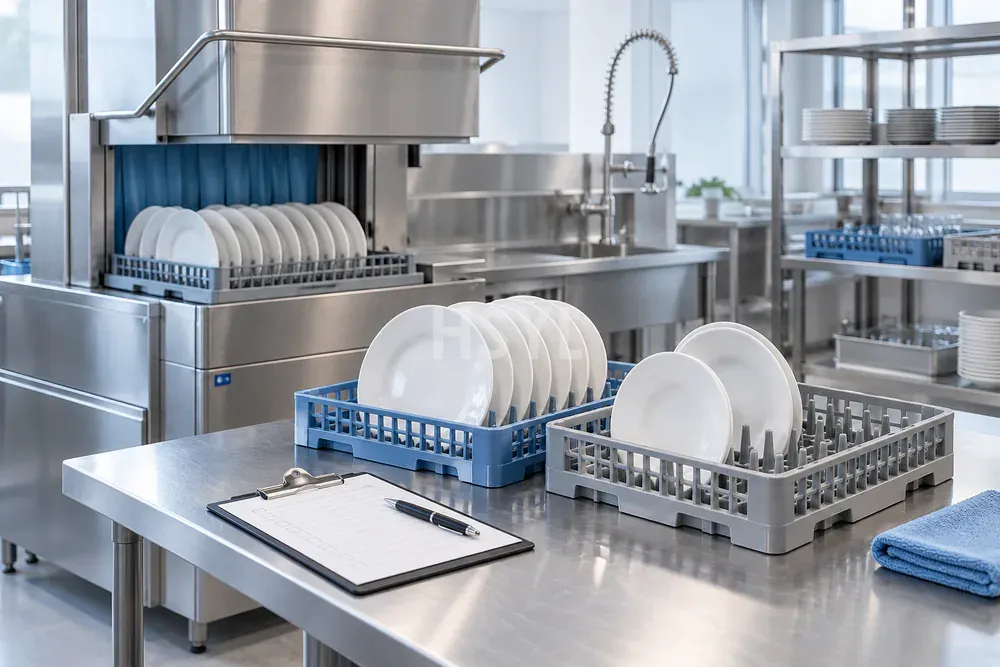
Choose item-level or rack-level reporting and keep it visible. If one plate is rejected from an otherwise accepted rack, an item-level record and a whole-rack rewash record describe different workloads. Both can be useful; silently switching between them makes comparisons unreliable.
For item-level reporting, divide the number of inspected items requiring another approved wash by the total inspected items, then multiply by 100. Define which defects trigger rejection and which items were actually inspected. The inspection method should be approved by the person responsible for wash quality and sanitation.
An illustrative sample contains 240 inspected plates, with 18 requiring another wash. The reported plate rewash rate is 18 divided by 240, multiplied by 100: 7.5 percent. This is an arithmetic example, not an industry target or an HSYL acceptance standard.
Keep the conditions beside the percentage
| Record field | Purpose |
|---|---|
| Item and rack type | Shows what the measurement represents |
| Return and preparation condition | Preserves the starting workload |
| Operating period | Separates startup, peak and later service |
| Observed rejection | Links the decision to evidence |
| Machine and program | Identifies the process actually used |
| Correction and retest | Makes the improvement traceable |
Retain the rack loading, approved pre-treatment, operator and relevant machine records. If a delivery of different tableware appears halfway through the study, mark the change. A pooled percentage may hide a problem concentrated in one shape, one loading arrangement or one service interval.
Photographs can support consistent classification, provided they do not replace the site's release criteria. Record the location and type of visible residue without guessing its chemistry from an image.
Make a narrow, controlled comparison
Choose one evidenced question. For example, does a manufacturer-approved loading correction change the result for the same identified plate set? Run a comparable observation with the same preparation and operating conditions as far as practical. Preserve the first result rather than replacing it with the improved figure.
The Hobart care guidance discusses loading and routine machine care for its equipment. Apply the exact offered machine's controlled instructions when selecting a correction; one brand's instructions are not a universal procedure.
Collect the correction's accepted output and complete-cycle workload as well as its rewash percentage. A change that reduces rejects but greatly increases sorting time may move the constraint elsewhere. The kitchen needs the practical effect on service-ready output.
Keep sanitation verification separate
A plate that appears clean is not automatically evidence that the approved sanitizing process was achieved. Continue the required machine, chemistry or temperature verification applicable to the installed system and jurisdiction. Do not use a lower visible-rewash percentage to remove those controls.
Escalate abnormal results through the site's operating and service procedure. If evidence points to a machine condition requiring maintenance, retain the observation, exact model and operating records for the qualified service provider. The review should not become an invitation to improvise electrical, chemical or safety-system adjustments.
Use the record for a purchasing decision
Compare results by relevant tableware group and service window. If replacement equipment is being considered, give the supplier the defined item set, preparation process, rack plan, inspected output and available utilities. Ask for a representative demonstration with the same release criteria.
This converts a complaint that the dishwasher washes badly into a usable, auditable equipment requirement. It also preserves the distinction between the machine's rated cycle and the actual accepted output delivered by the dishroom.