Direct Answer / Key Takeaway: Review mixed-metal joints on stainless steel kitchen equipment using material records, wetting conditions and connection details before choosing a remedy.
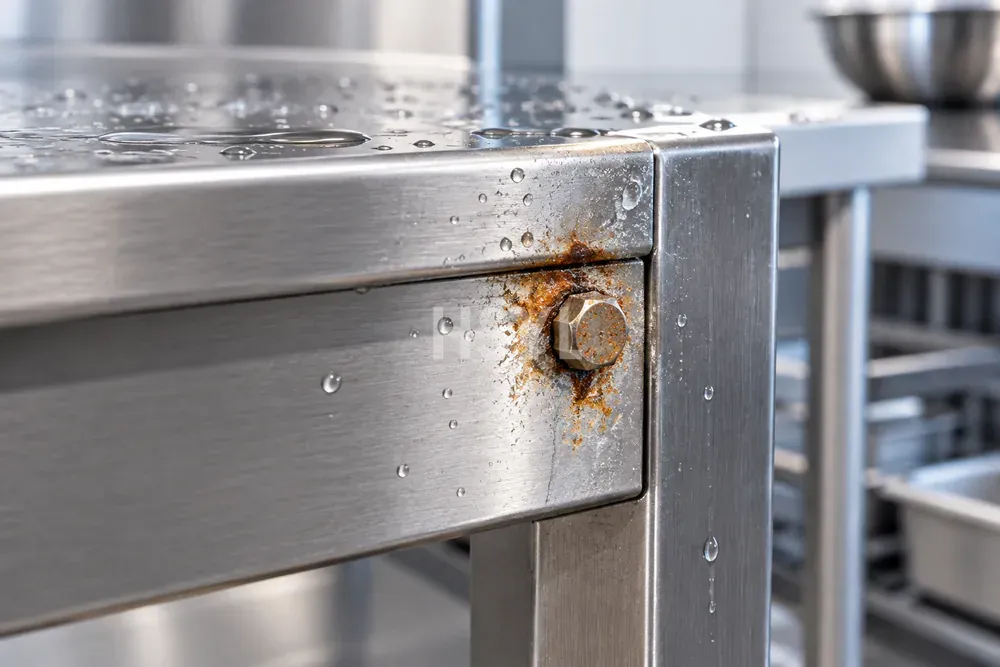
Rust beside a stainless steel kitchen equipment joint does not, by itself, establish galvanic corrosion. A useful investigation begins with the materials, the connection and the exposure conditions. Replacing a visible fastener before identifying the assembly can conceal evidence while leaving the underlying problem unresolved.
The worldstainless guide to contact with other metallic materials explains that galvanic corrosion depends on an electrochemical couple, an electrically conductive connection and an electrolyte linking the surfaces. Wetting conditions and the relative exposed areas also influence the risk. A mixed-metal appearance alone is therefore an incomplete diagnosis.
Identify the assembly, not just the main sheet
Record the equipment item, joint location and drawing revision. Identify the specified and supplied materials for the sheet, frame, bracket, fastener, washer and any insert. Use traceable purchasing or fabrication records where available. Appearance and a generic “stainless steel” label do not identify every component.
Photograph the complete assembly before close-up details. Show which surface is affected, how the components meet and whether the mark extends beyond the contact point. Record earlier repairs or substitutions, including changes made during installation. A replacement bolt with no recorded material specification creates a gap in the investigation.
Map the exposure around the joint
Describe what reaches the joint during normal use and cleaning. Note splash sources, condensation, trapped moisture, chemical product use and the actual drainage path. Include cleaning product identity and the method used, without assuming a chemical caused the damage merely because it was present.
| Review item | Useful record | Question for the reviewer |
|---|---|---|
| Materials | Part specification and supplier documentation | Do the installed parts match the approved assembly? |
| Connection | Joint section and photographs | What contact and isolation arrangements actually exist? |
| Wetting | Operating and cleaning observations | Where does liquid remain, and for how long? |
| History | Installation, substitution and repair dates | Did the condition follow a documented change? |
| Damage | Consistent photographs and inspection notes | Which component is deteriorating, and is it progressing? |
The purpose of these records is to support a materials review. They do not convert a photograph into a confirmed corrosion mechanism.
Keep the diagnosis separate from the repair decision
A qualified reviewer may need to distinguish a galvanic mechanism from contamination, crevice attack or other surface damage. Avoid assigning one cause to every orange mark. Record the observation first, then the conclusion and the evidence supporting it.
For example, a hypothetical sink frame shows staining near a replaced bracket after a period of frequent washdown. The chronology is worth investigating, but it does not prove that the bracket is responsible. Check its specification, the joint arrangement and the local exposure before deciding what to replace.
Review proposed changes as part of the equipment design
A proposed material substitution, isolation detail or moisture-control change needs review for the actual assembly. Check mechanical stability, cleanability, food-contact suitability where relevant, and the ability to inspect the joint afterward. A washer or coating selected from a generic internet recommendation may not suit the equipment's duty.
Do not add a coating or insulating part without considering the appliance's electrical bonding requirements and other safety functions. Any change affecting those functions belongs with the manufacturer and qualified installation personnel. A corrosion remedy must not undermine the equipment's approved construction.
Define the follow-up inspection before releasing the correction. Retain the revised component specification, repair method, photographs and comparison dates. Repeated observations under comparable conditions are more informative than an immediate photograph of a newly cleaned joint.
Make procurement records useful for future review
When ordering custom stainless steel kitchen equipment, ask for the relevant component materials and joint details to appear in the approved fabrication records. Link substitutions to a revision and responsible approval. This gives the operator a practical basis for investigating a later joint problem instead of relying on the name of the main sheet material.