Direct Answer / Key Takeaway: Comprehensive engineering manual for Dishwasher Booster Heater sizing for 300-bed hospital cook-chill workflows. Check MEP hookups and factory specs from HSYL.
Mission-critical commercial food service relies upon uncompromising equipment architecture. For facility directors and project engineers evaluating Standard Duty Dishwasher Booster Heater, this technical review delivers in-depth analysis across sizing for 300-bed hospital cook-chill operations, addressing dimensional tolerances, utility infrastructure, and regulatory quality assurance standards.
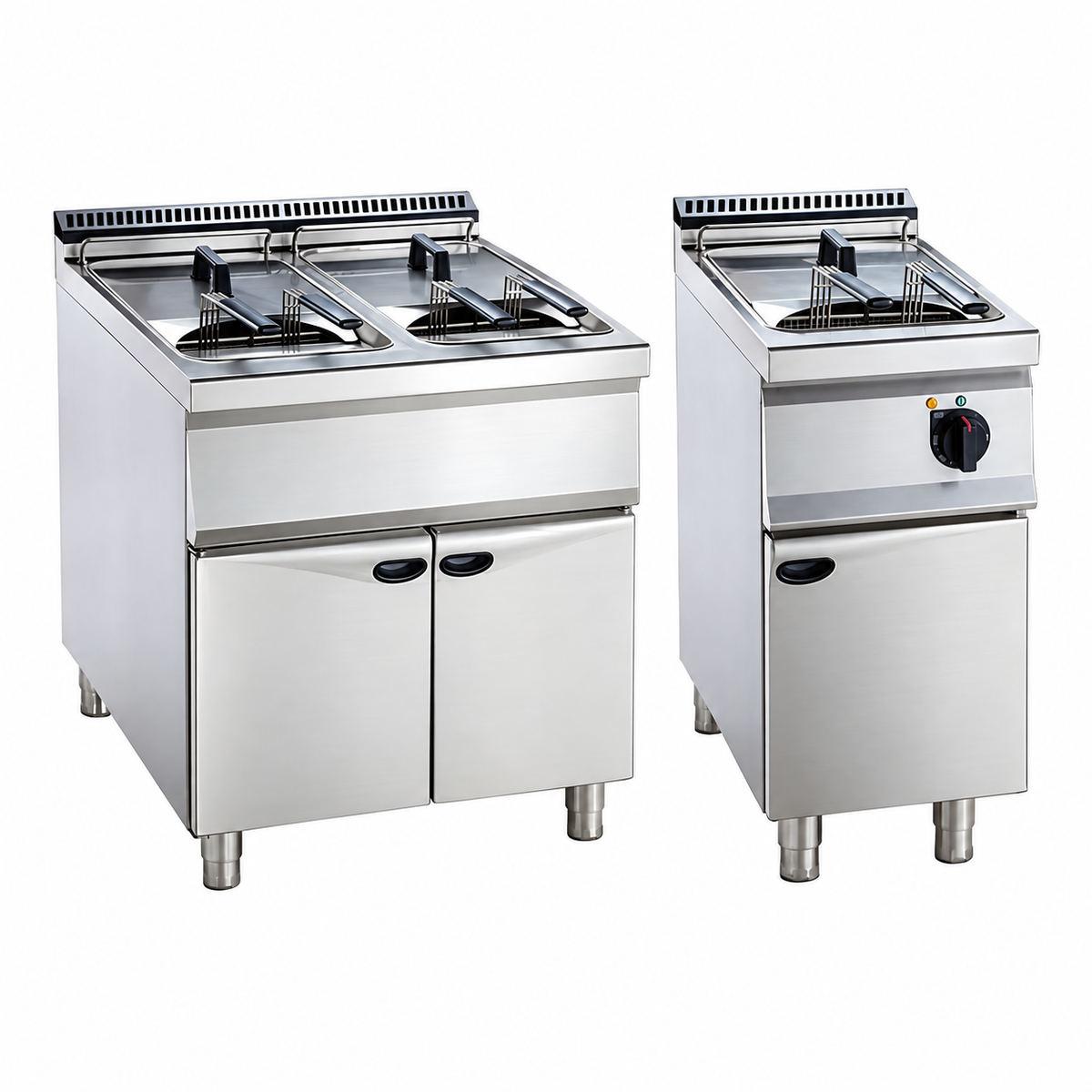
1. Facility Context, Ergonomics & Station Optimization: Sizing for 300-Bed Hospital Cook-Chill Operations
Acute-Care Hospital Cook-Chill Sizing & Patient Census Sizing Metrics:
In institutional healthcare food service facilities, thermal and refrigeration sizing is fundamentally dictated by clinical patient census dynamics. Hospital dietary engineers calculate capacity using the patient census formula: Total Daily Meals = (Licensed Bed Count * Occupancy Rate * 3 Meals/Day) + Retail Staff Cafeteria Factor (adding 30% to 50% auxiliary volume). For a 300-bed hospital operating at standard 85% occupancy, base patient load equals 765 daily meals, swelling to over 1,140 meals when factoring in multi-shift nursing and medical staff dining. Back-of-house spatial allocation standards mandate 1.0 to 1.2 square feet of dedicated kitchen floor space per daily meal produced. Workstation integration requires strict linear HACCP zoning—separating raw receiving and dirty preparation from thermal cooking lines, blast chillers, and clean tray assembly belts—while providing designated allergen-free and therapeutic preparation zones compliant with IDDSI (International Dysphagia Diet Standardisation Initiative) texture-modified puree guidelines.
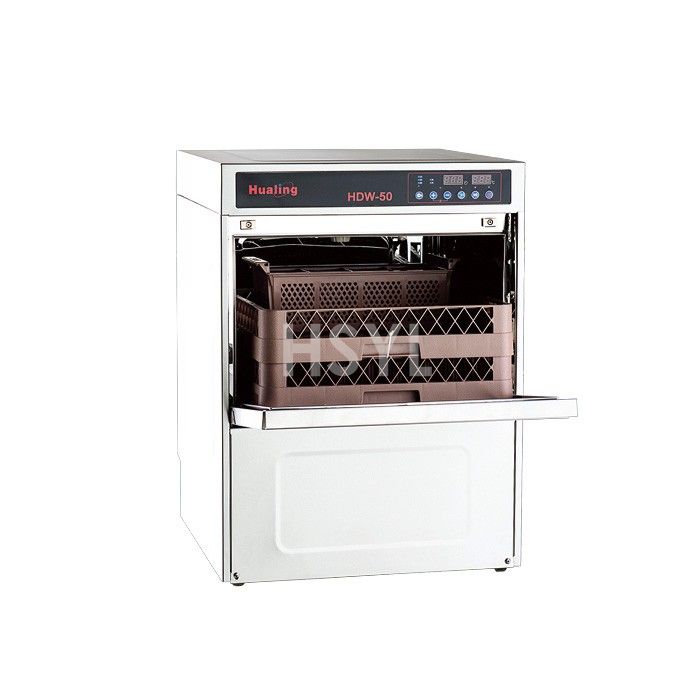
When sizing equipment for peak production hours, facility planners must reference verified undercounter commercial dishwasher parameters to ensure capacity reserves remain aligned with scheduled shift turnover targets.
2. Comprehensive Technical Specifications & Material Benchmarks
Engineering evaluation requires contrasting component fabrication, power consumption, and mechanical duty ratings. The comparative table below outlines operational parameters for Standard Duty Dishwasher Booster Heater:
| Engineering Parameter | Standard Commercial Spec | Heavy-Duty Institutional Spec | Engineering Variance Threshold |
|---|---|---|---|
| Material Construction | Food-grade cation exchange resin, fiberglass reinforced polymer (FRP) vessel, digital flow meter head | Duplex alternating twin-tank continuous soft water supply, AISI 304 bypass valve manifold, brine float valve | Treated water hardness consistently maintained under 15 ppm CaCO3 (< 1 grain/gallon) |
| Primary Engineering Feature | Control Valve: Automatic microprocessor-driven 5-cycle valve head with water-metered volumetric regeneration | Reinforced industrial assembly with seamless continuous laser welds | Zero structural deflection under maximum rated loading |
| Operational Subsystem | Brine Management: Heavy-duty polyethylene brine tank with safety salt grid and air-check float valve assembly | High-efficiency heavy-duty components with dynamic feedback telemetry | Energy efficiency index within top 10% commercial benchmark |
| Sanitary & Safety Rating | Monitoring Telemetry: Real-time digital display indicating remaining soft water capacity and instantaneous flow rate | IPX5 washdown protection with NSF/ANSI cleanability rating | Hermetic perimeter sealing preventing microbial colonization |
3. Fundamental Engineering Mechanics & Subsystem Architecture
Ion-Exchange Water Demineralization & Scaling Mitigation: Commercial dishwashing performance is directly dictated by incoming water chemistry. High total dissolved solids (TDS) and calcium/magnesium carbonate hardness create lime scale deposition on boiler heating elements, dropping thermal conductivity by up to 30% per millimeter of scale. Dual-column ion-exchange water softeners substitute sodium ions for divalent calcium and magnesium, while downstream commercial reverse osmosis (RO) systems demineralize rinse water, eliminating spotty glass mineral haze and slashing chemical detergent consumption by 40%.
In institutional catering environments, equipment longevity is heavily governed by surface passivation and corrosion resistance. Units fabricated from high-grade austenitic stainless steel must maintain an uncompromised chromium oxide passivated boundary layer. Regular chemical cleaning with non-abrasive detergents prevents pitting attack from chlorinated sanitizers and atmospheric chlorides.
Understanding these thermodynamic and mechanical principles allows consulting engineers to optimize cycle times, reduce utility peak draw, and eliminate premature component fatigue.
4. Empirical Sizing Dynamics & Quantitative Capacity Modeling: Ion-Exchange Softener Capacity Sizing
Sizing production machinery requires rigorous quantitative modeling to match kitchen peak load demands. The governing mathematical formulation below establishes throughput targets:
Softener Resin Volume (L) = [Daily Water Usage (L) * Water Hardness (ppm CaCO3)] / [Exchange Capacity (50 g CaCO3/L Resin)]
For a dishroom consuming 3,500 Liters daily of 280 ppm hardness water: Total hardness load = 980 g CaCO3; Required resin volume = 980 / 50 = 19.6 Liters resin (specifying a 25L commercial duplex water softening system).
Practical sizing engineering requires accounting for the hidden ware factor. Beyond customer dining covers, back-of-house food preparation items (hotel pans, sheet trays, mixing bowls, and prep utensils) contribute an additional 15% to 20% to total kitchen processing loads. Furthermore, thermal transfer times for bulk foods follow the transient conduction square-law relationship (t is proportional to x^2), meaning doubling product depth from 50 mm to 100 mm in pans roughly quadruples core pull-down or heating times. Sizing calculations must incorporate these empirical variables to ensure uninterrupted kitchen workflow.
Employing this sizing method protects the kitchen from meal bottlenecks, prevents premature thermal and mechanical failure, and guarantees compliance with HACCP time-temperature critical control points (CCP).
5. Mechanical, Electrical & Plumbing (MEP) Rough-In Criteria
Successful field commissioning demands strict adherence to facility utility rough-in boundaries. Contractors and installation engineers must verify the following interface criteria for Standard Duty Dishwasher Booster Heater:
- Power & Electrical Connection: Standard 220-240V 50Hz single phase 50W auxiliary power for control valve motor and electronics.
- Water Supply & Treatment: DN20 to DN32 raw water inlet (min 200 kPa pressure); DN25 dedicated air-gapped drain line for brine discharge.
- Wastewater & Drainage Air Gap: Discharges must connect to temperature-resistant indirect waste lines with an unobstructed physical air gap, conforming to FDA Food Code Chapter 4 backflow mandates.
- Ventilation, Clearances & Environment: Min 500 mm side clearance around ion-exchange salt brine tanks for bag loading; drain connection for regenerant brine rinse cycle.
Critical Field Installation Redlines & Contractor Pitfalls: During jobsite rough-ins, engineering teams must enforce the following compliance boundaries to prevent premature equipment failure and voided warranties:
- Brine Tank Salt Quality: Use only high-purity (99.5%) evaporated pellet salt in water softener brine tanks; rock salt with insolubles fouls resin beads and injector jets.
- Chlorine Sanitizer Concentration: On low-temperature dishwashers, verify chemical titrations yield 50-100 ppm available chlorine; overdosing (> 200 ppm) rapidly corrodes 304 stainless wash arms.
- RO Membrane Pre-Filtration: Reverse osmosis systems must have upstream carbon filtration to eliminate free chlorine; chlorine oxidizes and destroys thin-film composite (TFC) membranes.
6. Factory Acceptance Testing (FAT) & Regulatory Compliance
Quality verification at the factory gate prevents costly field rework and operational commissioning delays. Before dispatch, Standard Duty Dishwasher Booster Heater undergoes structured testing per factory acceptance testing and compliance verification:
- Hydrostatic Pressure Vessel Burst Proof Test: FRP resin pressure tank hydrostatically tested to 10.0 bar for 15 minutes.
- Automatic 5-Cycle Valve Cam Motor Function: Tested through Backwash, Brine Draw, Slow Rinse, Rapid Rinse, and Brine Refill.
- Chemical Resistance & NSF 61 Media Audit: Ion exchange resin certified for drinking water compliance with zero chemical leaching.
- Flow Meter Pulse Calibration Test: Measured against calibrated water meter verifying accuracy within +-1.5% across 5-50 L/min.
To satisfy commercial health department and third-party food safety audits, modern commercial appliances incorporate automated HACCP data logging. The onboard microcomputer logs real-time time-temperature decay profiles, cycle durations, and sanitizing rinse parameters with cryptographic timestamps. Facilities personnel can export encrypted audit logs via USB or Modbus/Ethernet IoT interfaces, providing verifiable compliance dossiers to satisfy municipal health inspectors during unannounced regulatory audits.
7. Operational Troubleshooting, Error Codes & Field Remedies
Rapid fault isolation restores meal production lines and protects equipment longevity. The diagnostic table below outlines field troubleshooting procedures for Standard Duty Dishwasher Booster Heater:
| Fault Code | Root Cause Diagnostic | Corrective Maintenance Procedure |
|---|---|---|
| W01 | Resin Bed Hardness Breakthrough Alert | Effluent water hardness exceeds 25 ppm; check brine tank salt level and verify regeneration cycle. |
| W02 | Brine Tank Float Valve Air Lock | Control valve fails to draw brine during regeneration; clean injector nozzle and throat assembly. |
| W03 | Electronic Flow Meter Turbine Stall | Debris in inlet line jammed flow sensor paddle wheel; isolate bypass and clean strainer. |
8. Scheduled Maintenance Regimen & Longevity Engineering
Extending operating lifespan and safeguarding food hygiene requires disciplined preventive maintenance. Adhere to the following scheduled servicing regimen:
| Maintenance Interval | Inspection Scope & Component Target | Acceptable Operating Standard |
|---|---|---|
| Weekly Operational | Check brine tank solar salt tablet level, ensure salt level is above brine liquid line | Salt dry at top of tank, zero hard salt bridging formation over bottom grid |
| Monthly Water Testing | Test softened water hardness with EDTA titration kit at test cock outlet | Effluent water tests < 15 ppm CaCO3 (< 1 grain/gallon), verifying total softening exchange |
| Quarterly Inspection | Clean control valve brine injector nozzle and screen, inspect brine tube fittings | Injector throat clear of salt silt, brine tubing air-tight with zero vacuum draw leaks |
| Annual Overhaul | Sanitize resin bed with chlorine-free resin cleaner, replace valve piston spacer kit | Full exchange capacity restored, internal valve seals smooth without internal bypass |
All mechanical maintenance interventions must utilize NSF H1 certified food-grade synthetic lubricants on drive bearings and moving pivot hinges. Electrical connections, magnetic contactors, and grounding continuity must be re-torqued and tested annually using calibrated digital multimeters to prevent thermal resistance hot spots.
Recommended First-Year Commissioning & Preventative Spares Kit: For international projects and remote institutional complexes, maintaining an on-site critical spares inventory avoids catastrophic service interruptions:
| Part Description | Recommended Quantity | Engineering Maintenance Function |
|---|---|---|
| Food-Grade Cation Ion-Exchange Resin | 1 Sack | High-capacity polystyrene resin beads replacing scale-forming calcium with sodium ions. |
| Water Softener Multi-Port Valve Piston | 1 Set | Internal directional piston controlling backwash, brine draw, and service cycles. |
| Thin-Film Composite (TFC) RO Membrane | 1 Piece | High-rejection semi-permeable membrane filtering total dissolved solids (TDS) under 20 ppm. |
| High-Accuracy Digital TDS Sensor Probe | 1 Piece | Continuously monitors incoming and permeate water conductivity to protect boiler elements. |
9. International Freight Crating & Ocean Transit Engineering
Global ocean freight exposes heavy commercial appliances to harsh maritime conditions, dynamic vessel motion, and rough port handling. To guarantee pristine arrival of Standard Duty Dishwasher Booster Heater, export logistics incorporate:
- FRP Tank Resin Moist Packaging: Ion exchange resin shipped in sealed moist condition preventing bead cracking.
- Control Valve Electronic Head Padding: Microprocessor valve actuator head surrounded by contoured cell foam.
- Brine Tank Nested Freight Packaging: Resin tank and accessory tubing nested inside polyethylene brine tank.
- Heavy-Duty Corrugated Export Crate: High-burst carton strapped to ISPM-15 wooden pallet base.
For comprehensive wiring schematics, spare parts exploded diagrams, and maintenance schedules, consult the official technical documentation and installation manuals provided by HSYL engineering.