Direct Answer / Key Takeaway: Plan factory canteen shift-change meal service with arrival waves, cooking releases, refill timing, serving positions and tray returns on one timeline.
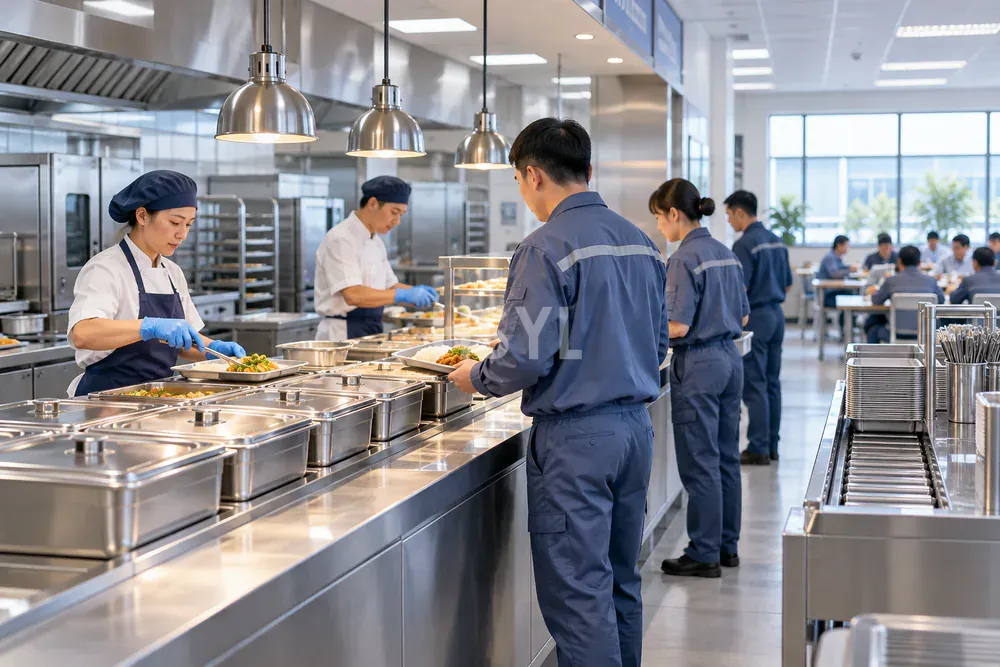
Factory canteen shift-change meal service is driven by the arrival wave, not only the number of employees in the building. Several teams can arrive within a short interval while another shift is still returning trays. Cooking, holding, replenishment, serving and washing must therefore be planned on a common timeline.
Begin with the actual authorized meal windows and observed arrivals. Distinguish the production schedule from the serving deadline so the equipment brief describes when accepted food and clean service items are needed.
Measure arrivals by interval
Record the number of diners reaching the service entry during consistent intervals, with the shift or work-area grouping relevant to planning. Include late releases, breaks and overlap where they occur. A daily total averages away the concentration that the canteen must actually manage.
Keep the observation's date, staffing and menu conditions. If a special event changes attendance, identify it rather than treating that wave as a normal requirement without review.
Connect each menu release to the service position
List the prepared components, required accepted cooking releases, approved holding arrangement and refill route. Identify when the first service load is ready and when replacement pans must reach the serving position.
Use the menu and food-safety requirements authorized for the operation. The equipment plan should support those conditions rather than assuming that making all food earlier solves a serving problem. Keep product identity, approved handling and exception responsibility visible.
| Timeline | What to record |
|---|---|
| Diner arrival | Observed groups and interval counts |
| Cooking release | Accepted product and service-ready time |
| Refill | Pan identity, movement and replenishment work |
| Serving | Completed diners and the limiting position |
| Returns | Tray wave, sorting and clean-item availability |
Compare demand with observed complete service
In an illustrative observation, 180 diners arrive during fifteen minutes, corresponding to an average arrival rate of twelve diners per minute within that window. If the identified serving process completes nine diners per minute under the same assumed conditions, a persistent gap would add to the queue. These are planning inputs, not an HSYL line rating or a prediction for another canteen.
Measure the actual service positions before proposing a change. The constraint might be an approved identification step, a menu choice, portion release or another evidenced task. Follow complete diners through the defined handover rather than counting plates passing a single station.
Keep queues safe and workable under the site's approved layout. A faster single serving position is not sufficient if it moves the problem into payment, seating or tray return.
Trial a defined peak-window change
Choose one recorded issue and test a narrow operational change, such as a revised refill handover or a separately supported service position. Retain the relevant menu mix, arrival basis and staffing record.
Measure completed service, queue age, missed refills, errors and the next task's workload. Do not remove an approved food or identity check to create an attractive speed figure. A result must describe the complete released service condition.
Include the return wave and reset
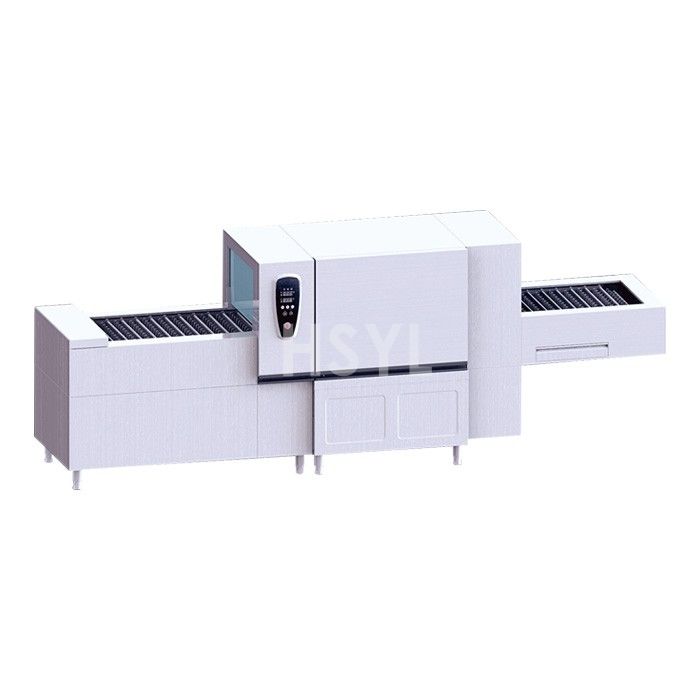
Map trays and tableware back to the approved wash process. Record when clean items and handling equipment become available for the next shift. Production capacity can be limited by shared pans, carts or clean stock even when cooking equipment has spare occupied time.
Retain cleaning and preparation between waves. If the same equipment serves breakfast, lunch and another shift release, its full day includes those transitions, not just the busiest cooking batch.
Prepare an equipment enquiry with a service wave
Provide the observed arrivals, menu, service windows, cooking and refill records, return load and available site interfaces. The factory canteen equipment discussion can then address a defined duty and layout.
A useful proposal states which configuration and workflow were assessed. The canteen's objective is accepted meals delivered within its approved service plan, with the supporting return cycle kept visible.