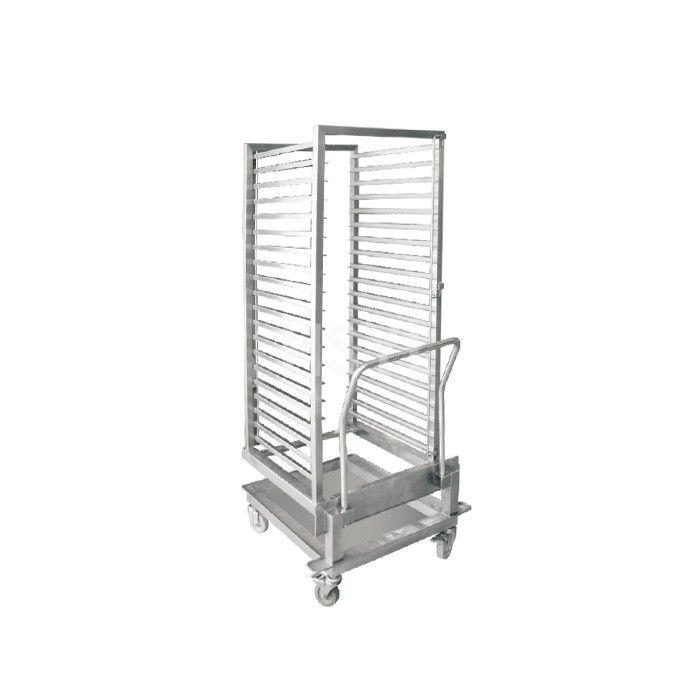
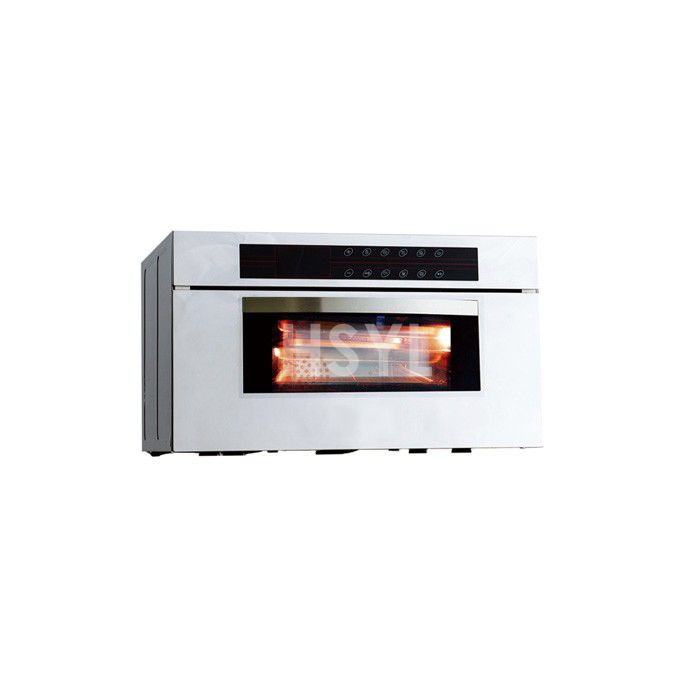
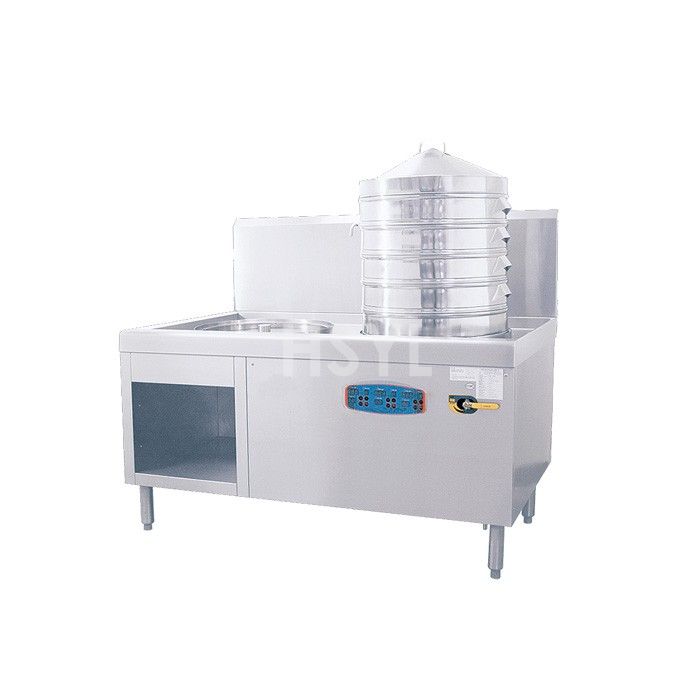
For a commercial food steamer, begin with the food container rather than the cabinet door count. A pan that moves directly from preparation into steaming and holding creates a different workflow from a tray that must be emptied and repacked. The useful buying question is: where will staff transfer food, and can the selected steamer remove that transfer without compromising the finished dish?
Follow one representative batch from preparation to service
- Preparation: name the food, portion or batch weight, container dimensions and fill depth. Include handles, rims and lids when checking whether a container fits.
- Loading: ask how many of those loaded containers fit the exact rack arrangement without blocking the intended steam path. An empty-pan count is not the same as a usable loaded count.
- Unloading: show where a hot pan or basket can be set down safely. Record whether the operator has to transfer food into another vessel and how long that step takes.
- Holding or service: identify the next appliance or station. If its pan format differs, include the transfer, cleaning and food-handling work in the comparison.
Trace this route for two dishes that share the busiest service period. A cabinet can fit each dish separately and still fail the schedule if they need different steam times in one common chamber. Ask whether the proposed model provides truly independent compartments or only separate doors into a shared process.
Use the container to shortlist an equipment family
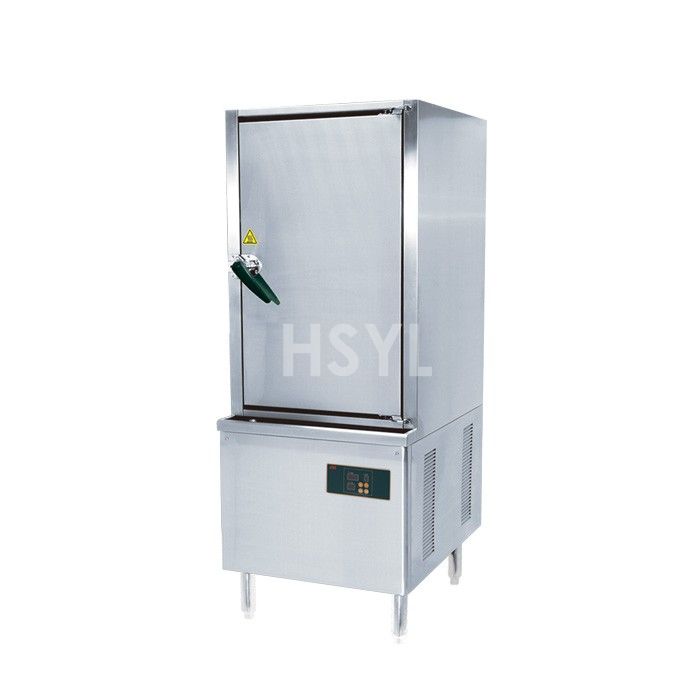
HSYL publishes several steamer families with different interfaces. The HSC cabinet range is a starting reference for GN-pan workflows; the HSO electric and gas cabinet range is a starting reference for 400 × 600 mm trays; the HDUS/HSUS Chinese steamer range is relevant when the task uses baskets or open-vessel steaming. This is a routing aid, not a claim that every model in a family accepts every size or load. If your kitchen uses a different vessel, request a dimensioned rack drawing before choosing a family.
The steamer cabinet guide explains the broader family differences. Use the commercial steamer range to identify candidate models, then ask for the current model sheet. Do not infer internal clearances from the exterior photograph.
Make the supplier demonstrate the hand-off
Give each supplier the same two dishes, actual containers and service deadline. Request a loaded run that records when each batch enters and leaves, the accepted finish, unloading time and any repacking. If the same container cannot continue to the next station, compare the extra handling with the cabinet's other benefits. This test answers a different question from an empty steam-up or a single full-load demonstration.
Before a quotation is final, match the proposed model's water quality, drain, descaling access and electrical or gas connections to the site drawing. Ask who supplies any rack adapters and whether they are included. Send HSYL your container dimensions, two-dish service sequence and utility schedule so the recommendation can name a specific configuration and its remaining checks.