Direct Answer / Key Takeaway: Industrial specification review of Roll-in Commercial Steamer sizing for 300-bed hospital cook-chill workflows. Check MEP hookups and factory specs from HSYL.
Optimizing commercial kitchen reliability requires rigorous alignment between equipment performance and facility operational demands. This document provides an exhaustive technical breakdown of Standard Duty Roll-in Commercial Steamer configurations across sizing for 300-bed hospital cook-chill operations, detailing empirical sizing models, MEP rough-ins, and preventive maintenance protocols.
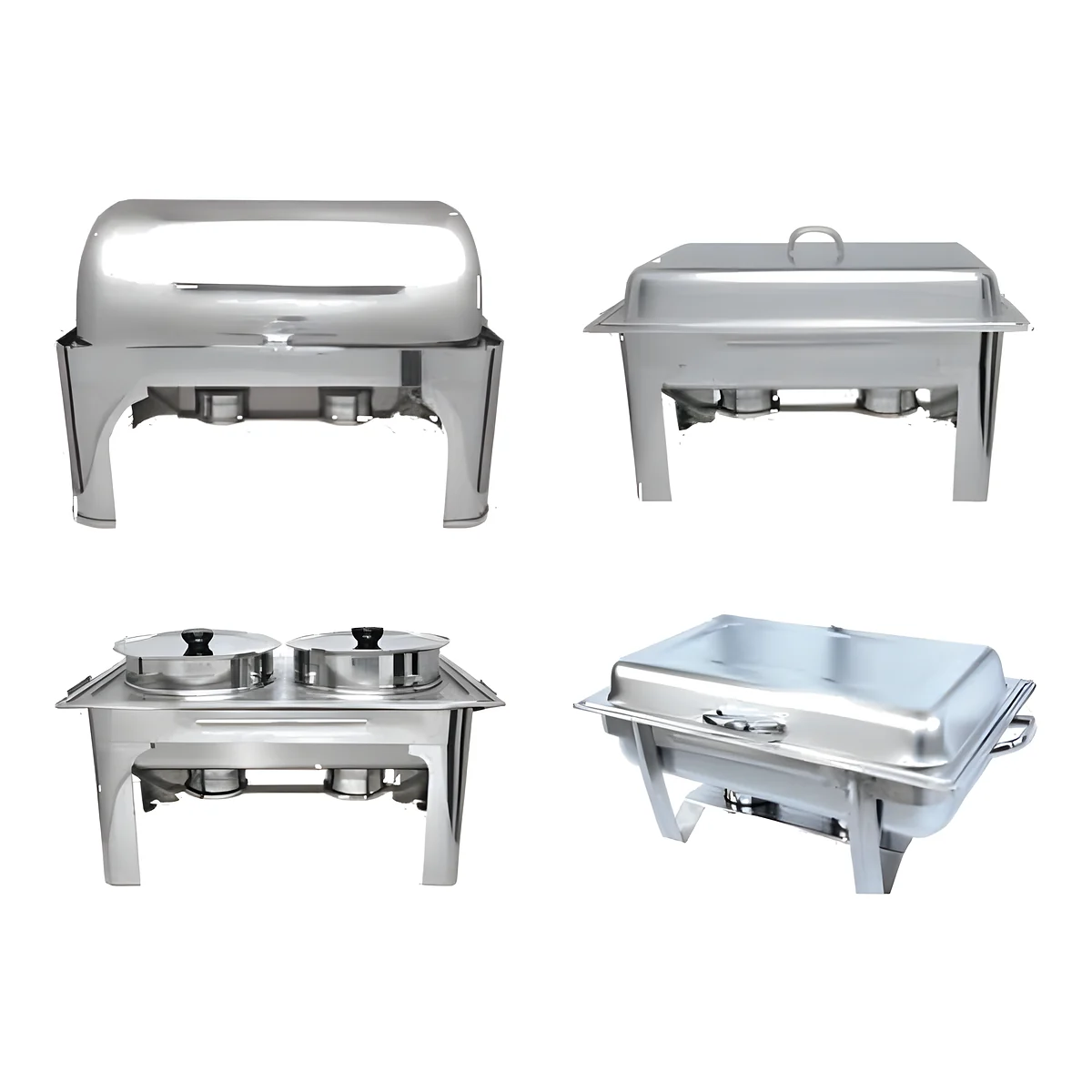
1. Commercial Brigade Deployment & Kitchen Line Harmony: Sizing for 300-Bed Hospital Cook-Chill Operations
Acute-Care Hospital Cook-Chill Sizing & Patient Census Sizing Metrics:
In institutional healthcare food service facilities, thermal and refrigeration sizing is fundamentally dictated by clinical patient census dynamics. Hospital dietary engineers calculate capacity using the patient census formula: Total Daily Meals = (Licensed Bed Count * Occupancy Rate * 3 Meals/Day) + Retail Staff Cafeteria Factor (adding 30% to 50% auxiliary volume). For a 300-bed hospital operating at standard 85% occupancy, base patient load equals 765 daily meals, swelling to over 1,140 meals when factoring in multi-shift nursing and medical staff dining. Back-of-house spatial allocation standards mandate 1.0 to 1.2 square feet of dedicated kitchen floor space per daily meal produced. Workstation integration requires strict linear HACCP zoning—separating raw receiving and dirty preparation from thermal cooking lines, blast chillers, and clean tray assembly belts—while providing designated allergen-free and therapeutic preparation zones compliant with IDDSI (International Dysphagia Diet Standardisation Initiative) texture-modified puree guidelines.
When sizing equipment for peak production hours, facility planners must reference verified steam-jacketed tilting kettle capacity guides to ensure capacity reserves remain aligned with scheduled shift turnover targets.
2. Physical Specification Matrix & Institutional Performance Tiers
To assist engineering procurement teams, the matrix below details metallurgical standards, utility ratings, and structural tolerance thresholds for commercial versus heavy-duty Standard Duty Roll-in Commercial Steamer configurations:
| Engineering Parameter | Standard Commercial Spec | Heavy-Duty Institutional Spec | Engineering Variance Threshold |
|---|---|---|---|
| Material Construction | AISI 304 (1.5 mm), 380V-415V (24-36 kW) or Direct Steam 1.5-3.0 bar, 100-200L volume | AISI 316L inner kettle liner (2.0-3.0 mm), 380V-415V (45-60 kW), motorized tilting, variable speed scrape mixer | Pressure vessel hydrostatically tested to 1.5x design pressure per ASME Section VIII Div 1 |
| Primary Engineering Feature | Steam Jacket Rating: Full-hemispherical jacket with integrated vacuum relief valve and safety relief valve | Reinforced industrial assembly with seamless continuous laser welds | Zero structural deflection under maximum rated loading |
| Operational Subsystem | Agitator Mechanics: Heavy-duty planetary mixer with food-grade PTFE wall-scraping blades (0-60 RPM) | High-efficiency heavy-duty components with dynamic feedback telemetry | Energy efficiency index within top 10% commercial benchmark |
| Sanitary & Safety Rating | Tilting Mechanism: Self-locking worm gear reducer with motor-driven pour control up to 90 degrees | IPX5 washdown protection with NSF/ANSI cleanability rating | Hermetic perimeter sealing preventing microbial colonization |
3. Thermodynamics, Fluid Dynamics & Operating Mechanics
Latent Heat Condensation & Pressurized Jacket Dynamics: Steam-jacketed kettles and pressure steamers utilize the latent heat of saturated steam condensing on internal vessel walls at pressures up to 50 psi (3.4 bar), yielding jacket temperatures up to 135 deg C. Unlike direct gas burner heating which creates localized thermal hotspots and product scorching, condensing steam transfers heat with an exceptional heat transfer coefficient exceeding 6,000 W/m2K uniformly across the entire hemispherical basin. Automatic thermostatic air vents continuously purge non-condensable atmospheric air, ensuring 100% pure saturated steam contact.
In institutional catering environments, equipment longevity is heavily governed by surface passivation and corrosion resistance. Units fabricated from high-grade austenitic stainless steel must maintain an uncompromised chromium oxide passivated boundary layer. Regular chemical cleaning with non-abrasive detergents prevents pitting attack from chlorinated sanitizers and atmospheric chlorides.
Understanding these thermodynamic and mechanical principles allows consulting engineers to optimize cycle times, reduce utility peak draw, and eliminate premature component fatigue.
4. Rigorous Capacity Derivation & Meal Turnover Equations: Steam Thermal Transfer Mass Sizing
Determining optimal unit capacity demands empirical engineering formulations rather than rule-of-thumb approximations. Planners apply the following equation to size continuous throughput:
Required Steam Duty (kg/hr) = [Food Batch Mass (kg) * Specific Heat (3.8 kJ/kgK) * Delta-T (75K)] / [Latent Heat of Steam (2257 kJ/kg) * Jacket Efficiency (0.84)]
For a 250L tilting kettle boiling soup from 20 to 95 deg C in 45 minutes: Net thermal requirement = 250 * 3.8 * 75 = 71,250 kJ; Required continuous steam supply = 71,250 / (2257 * 0.84 * 0.75 hr) = 50.1 kg/hr steam at 1.5 bar.
Practical sizing engineering requires accounting for the hidden ware factor. Beyond customer dining covers, back-of-house food preparation items (hotel pans, sheet trays, mixing bowls, and prep utensils) contribute an additional 15% to 20% to total kitchen processing loads. Furthermore, thermal transfer times for bulk foods follow the transient conduction square-law relationship (t is proportional to x^2), meaning doubling product depth from 50 mm to 100 mm in pans roughly quadruples core pull-down or heating times. Sizing calculations must incorporate these empirical variables to ensure uninterrupted kitchen workflow.
Employing this sizing method protects the kitchen from meal bottlenecks, prevents premature thermal and mechanical failure, and guarantees compliance with HACCP time-temperature critical control points (CCP).
5. Facility Interface Engineering, Utility Rough-Ins & Clearances
Mechanical, electrical, and plumbing infrastructure must be properly prepared prior to equipment delivery. The following engineering specifications govern site hookups for Standard Duty Roll-in Commercial Steamer:
- Power & Electrical Connection: Dedicated 3-phase supply for electric boiler / hydraulic tilt motor with emergency mushroom stop switch.
- Water Supply & Treatment: Treated softened water inlet for steam generation; high-capacity floor trough drain for washdown effluent.
- Wastewater & Drainage Air Gap: Discharges must connect to temperature-resistant indirect waste lines with an unobstructed physical air gap, conforming to FDA Food Code Chapter 4 backflow mandates.
- Ventilation, Clearances & Environment: Dedicated drainage floor trough with stainless grating beneath tilting kettle spout; safety relief valve discharge piped downward within 100 mm of floor.
Critical Field Installation Redlines & Contractor Pitfalls: During jobsite rough-ins, engineering teams must enforce the following compliance boundaries to prevent premature equipment failure and voided warranties:
- Safety Relief Valve Discharge: Steam jacket relief valve discharge pipe must be plumbed downward to within 100 mm of floor drain; never cap or reduce pipe diameter.
- Pouring Trough Overhang: Tilting kettle lip must overhang floor drainage trough by at least 150 mm throughout full 90-degree tilt arc to prevent boiling wash splash onto chef footwear.
- Saturated Steam Dryness: Verify incoming steam dryness fraction exceeds 0.95; wet boiler steam causes water hammer and halves the thermal heat transfer coefficient.
6. Quality Verification Audits, FAT Dossiers & Certifications
Factory acceptance protocols establish that equipment performance conforms to engineering shop drawings and international safety standards. Auditing teams verify factory acceptance testing and compliance verification across the following tests:
- Hydrostatic Pressure Vessel Proof Test: Steam jacket pressurized to 4.5 bar (1.5x working pressure) for 30 minutes with zero deformation.
- Steam Safety Relief Valve Pop-Off Calibration: Pressure relief valve verified lifting precisely at 3.0 bar (+-0.1 bar).
- Motorized Kettle Tilting Smoothness: 90-degree full tilt and return cycle tested under 250 kg water load with zero gear binding.
- Scrape Agitator Contact Uniformity: Visual chalk rub test ensuring PTFE scraper blades maintain 100% continuous contact with kettle liner.
To satisfy commercial health department and third-party food safety audits, modern commercial appliances incorporate automated HACCP data logging. The onboard microcomputer logs real-time time-temperature decay profiles, cycle durations, and sanitizing rinse parameters with cryptographic timestamps. Facilities personnel can export encrypted audit logs via USB or Modbus/Ethernet IoT interfaces, providing verifiable compliance dossiers to satisfy municipal health inspectors during unannounced regulatory audits.
7. Diagnostic Logic, Failure Modes & Root Cause Troubleshooting
Microprocessor control boards continuously monitor operational health. When anomalous readings occur, technicians should apply the corrective protocols detailed in this diagnostic matrix:
| Fault Code | Root Cause Diagnostic | Corrective Maintenance Procedure |
|---|---|---|
| E09 | Boiler Water Level Conductive Probe Fault | Mineral scaling on high/low conductive probes; clean probe tips to prevent false low-water dry firing. |
| E15 | Steam Jacket Safety Pressure Valve Weeping | Jacket pressure exceeded 3.2 bar or seat seal worn; test relief lever and check steam trap. |
| E20 | Scraper Mixer VFD Motor Overload | Excessive food viscosity or foreign object jam; inspect paddle clearance and motor torque settings. |
8. Preventive Service Schedules & Long-Term Asset Protection
Planned maintenance protocols reduce catastrophic component failures and stabilize utility efficiency. Maintenance personnel must execute inspections per the following intervals:
| Maintenance Interval | Inspection Scope & Component Target | Acceptable Operating Standard |
|---|---|---|
| Daily Shift End | Flush kettle interior with clean warm water, wipe tilting lip and scraper blades | Kettle interior mirror-clean, scrapers free of food residue, drain plug valve seated |
| Weekly Operational | Test steam safety relief valve manual lift lever, grease trunnion pivot bearings | Relief valve releases freely without sticking, trunnions lubricated with high-temp grease |
| Monthly Descaling | Perform citric acid descale of internal steam boiler elements and water probes | Boiler element tubes free of lime scale, conductive probe tips clean and sensitive |
| Annual Overhaul | Inspect worm gear gearbox backlash, replace jacket vacuum relief valve seat | Gear backlash within 0.5 mm, vacuum valve seals tight preventing jacket implosion |
All mechanical maintenance interventions must utilize NSF H1 certified food-grade synthetic lubricants on drive bearings and moving pivot hinges. Electrical connections, magnetic contactors, and grounding continuity must be re-torqued and tested annually using calibrated digital multimeters to prevent thermal resistance hot spots.
Recommended First-Year Commissioning & Preventative Spares Kit: For international projects and remote institutional complexes, maintaining an on-site critical spares inventory avoids catastrophic service interruptions:
| Part Description | Recommended Quantity | Engineering Maintenance Function |
|---|---|---|
| Spring-Loaded Pressure Relief Valve | 1 Piece | Factory-calibrated 50 psi safety valve protecting steam jacket structural envelope. |
| Thermostatic Air Vent Capsule | 2 Pieces | Automatically purges air from steam jacket to maintain 100% saturated steam contact. |
| Worm Gear Bronze Drive Pinion | 1 Set | Guarantees smooth, non-slip manual or motorized tilting during hot liquid pouring. |
| Steam Trap Bimetallic Inverted Element | 1 Piece | Discharges liquid condensate continuously without steam blow-through. |
9. Marine Container Packaging, Shock Telemetry & Export Standards
International export packaging must withstand cross-ocean container shipping, tropical humidity cycling, and intermodal transport vibration. Factory crating standards for Standard Duty Roll-in Commercial Steamer specify:
- Tilting Trunnion Transit Clamps: Structural steel transit brackets bolting kettle body securely to chassis frame.
- Agitator Arm Foam Enclosure: Mixer assembly strapped and padded with high-density polyurethane foam.
- Pressure Relief Valve Protective Cap: Valve discharge ports threaded with plastic blanking caps to prevent dirt ingress.
- ISPM-15 Certified Timber Crate: Heavy timber skid base engineered for overhead crane sling lifting.
For comprehensive wiring schematics, spare parts exploded diagrams, and maintenance schedules, consult the official technical documentation and installation manuals provided by HSYL engineering.