Direct Answer / Key Takeaway: Define a small blast-freezing duty from actual food portions, containers, starting condition and the full batch-to-storage sequence before accepting pan-count capacity.
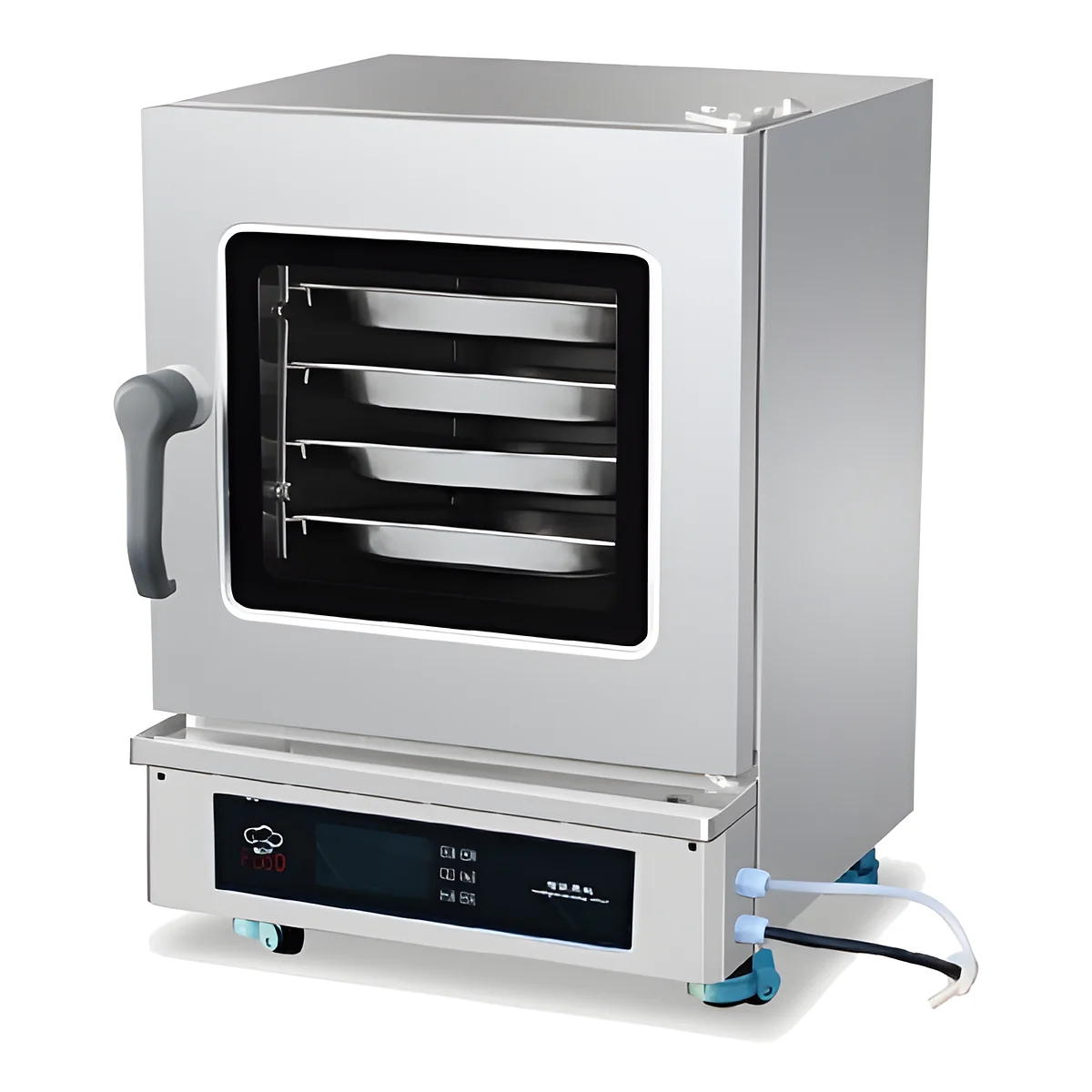
A small blast freezer should be selected for the food portions and batch pattern it must actually freeze. A pan count does not establish the quantity, shape or starting condition of food represented by a freezing rating.
Have the responsible food-process people define the intended freezing outcome, time-history boundary, checking method and response to a batch that does not meet it. Identify any preceding cooling or other required process separately. Do not treat a machine's example start/end temperatures as a universal food rule.
Describe one real portion load
| Load definition | Information to give the supplier |
|---|---|
| Food | Actual product/preparation and relevant form, not a general 'food' category |
| Portion geometry | Mass, thickness/shape and distribution of individual portions |
| Container or packaging | Actual material, dimensions and permitted covering/closure |
| Starting condition | The represented condition and the defined beginning of the process history |
| Arrangement | Supported pan/position pattern and relevant measurement locations |
Ask what evidence supports freezing this defined load in the exact offered configuration. Keep the physical pan fit and carrying limit separate from the freezing duty. A thin spread of portions does not automatically represent a thick package of the same total mass.
Use the concurrent food-load planning approach to describe the physical batch, with the actual freezing duty established separately. A chilling example must not supply a freezing capacity or endpoint by substitution.
Then follow the complete batch sequence: permitted preparation, loading, supported freezing programme, endpoint verification, unloading and transfer to suitable receiving storage. Include reset or defrost work required before the next intended batch. The cycle display alone may not represent the interval until the freezer is ready again.
For repeated use, obtain support for the intended succession of batches. A model's occasional freezing capability and a dedicated repeated-freezing arrangement can have different scope. Confirm the actual duty instead of assuming every unit with a freezing button handles the same repetition.
If an assessment is required, agree representative conditions and food protection with the supplier and competent process team. Accept the supported portion/load envelope and repetition pattern; leave changed thickness, packaging or starting condition subject to review. The useful result is a workable path to verified frozen product and receiving storage, not a maximum number of empty pans.