Direct Answer / Key Takeaway: Test commercial refrigerator door-opening recovery with representative stock, a defined access sequence and separate air and food-temperature records.
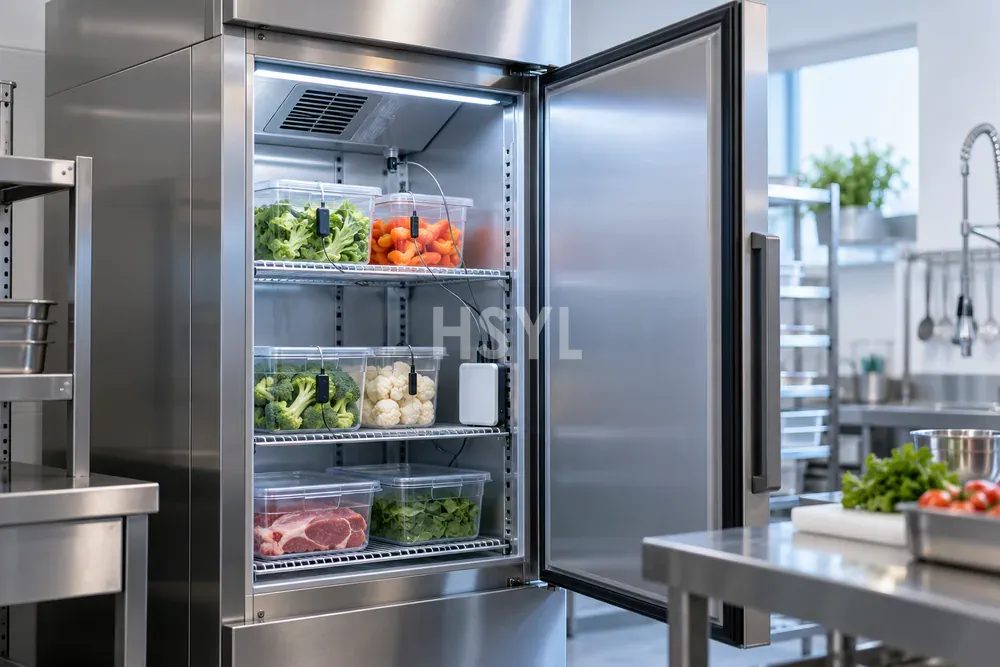
A commercial refrigerator door-opening recovery test evaluates a defined service condition, not merely the cabinet's return to a displayed setpoint. The kitchen needs to know how its actual access pattern and stock arrangement affect the stored food and the next operation.
Agree the exact cabinet configuration, permitted load and food-safety criteria before the trial. Separate cabinet air observations from food or approved representative-product measurements. They describe different parts of the condition being assessed.
Describe the access pattern the kitchen uses
Observe a relevant service window and record each opening's purpose, duration and sequence. Note the stock removed or replenished and the people sharing the cabinet. Replenishment with a newly introduced load is a different condition from repeated removal of stored stock.
Keep the surrounding environment identifiable: cabinet location, ventilation clearances, ambient conditions and adjacent work. Use the model's approved installation and operating conditions. A trial outside those conditions should be recorded as such rather than quietly converted into a rated-performance comparison.
Choose representative stock and measurement positions
Use the actual permitted shelf and container arrangement or an approved representative load. Record its initial condition, distribution and amount. Avoid a nearly empty demonstration when the normal cabinet holds a different load that occupies the usable air and access paths.
Choose measurement locations with the supplier and responsible food-safety team. Keep probe or logger identity, placement, recording interval and relevant verification evidence. The NIST thermometer resource describes verification and traceability concepts; suitability still depends on the actual measurement need and method.
| Record | Why it is retained |
|---|---|
| Air observation | Shows the monitored cabinet condition |
| Food or approved representative load | Relates the trial to stored-product requirements |
| Door event | Connects a change with actual access |
| Stock movement | Separates withdrawal from replenishment |
| Operating event | Identifies relevant machine states under the approved record |
Run the defined sequence
Establish the agreed initial condition through the permitted operating procedure. Then reproduce the identified access pattern while retaining actual event times. Do not force unusual operation, obstruct the equipment or defeat a door or control function to manufacture a dramatic test.
For an illustrative study, a kitchen observes six stock withdrawals and two replenishment events during its selected service window. The trial sheet identifies them separately and links them to the measurement record. Those counts are sample inputs, not an industry test standard or an HSYL recovery claim.
Continue observations through the agreed completion boundary. Define what recovery means for this decision: it may include an approved monitored condition and the food requirement, rather than a single display value. The responsible team should establish the criterion before reviewing the attractive parts of the curve.
Compare only compatible conditions
If two configurations or arrangements are being compared, retain the same relevant access pattern, stock basis, environment and measurement method. Explain unavoidable differences. A different product load or operating event can make an apparently faster result unsuitable for a purchasing conclusion.
Use applicable food-management requirements throughout. Government chilling guidance is background for the responsible food-business team; the trial must remain within the requirements governing the operation.
Connect the record to cabinet selection
Provide the supplier with the access log, stock arrangement, measured conditions and accepted-result definition. Ask which offered configuration and installation conditions the demonstration represents and what must be confirmed at the site.
Use this evidence with the commercial refrigeration equipment discussion. A repeatable service-load test gives the purchaser a more useful basis than a recovery-time number with no stated door sequence, load or product measurement.