A commercial meat mixer is sized by a division, not a litre count: kilograms of mix per batch, divided by the minutes per batch cycle — loading, mixing and discharge together — which gives the kg/min throughput the production plan actually runs on. Around that number sit two decisions: the mixing architecture (bowl or hopper), and the downstream machines the mixer has to feed at rhythm. The food preparation equipment range carries the 100 L class that anchors this guide.
Throughput Is Batch Math, Not Bowl Litres
The catalogue number is volume; the planning number is throughput. A 100 L drum in this class typically takes a working batch in the region of 60–75 kg of meat and ingredients (typical loading for the class, NOT VERIFIED — confirm the rated batch weight per model in the RFQ), and the cycle is the whole turn: load, mix to the recipe's endpoint, discharge, and the changeover clean between product types. The mixing step itself is only part of that clock — a mixer that agitates quickly but discharges slowly and cleans badly produces less per hour than its motor rating suggests. Size against the day's total mixed volume and the busiest consecutive hours, then divide: that is the machine class the operation needs, before any litre figure is compared.
Bowl or Hopper: The Architecture Decision
Two architectures cover commercial meat mixing. The bowl-style machine descends from the bakery mixer: a removable bowl that lifts away from the drive, which makes loading and discharge simple and lets a kitchen run multiple bowls in rotation between recipes — at the cost of cycle time and alignment discipline. The hopper-style machine is the meat-trade standard: a fixed mixing chamber with paddle or twin spiral shafts, often reversible for discharge, mixing at the moderate speeds (commonly in the 40–80 r/min class for twin-paddle machines, NOT VERIFIED) that distribute seasoning without mashing the meat structure. The choice follows the product: delicate particle definition — dumpling fillings, meatball mixes, burger blends — favours the gentle twin-paddle action; heavy continuous throughput favours the fixed chamber with its faster turnaround. Cleaning access decides close behind: whichever architecture is chosen, the paddles must come off or open up for the wash–rinse–sanitize cycle, because a mixer is a food-contact machine on the same hygiene schedule as any slicer.
The 100 L Class: The HLM-100 in Real Numbers
The HLM-100 commercial meat mixer is the 100 L reference in this range: a 100 L mixing volume, 1290 W of drive power, and a 175 kg net weight that puts it firmly in the fixed-floor machine class rather than the countertop. The specification that matters most for export and mixed-site buyers is the dual voltage rating — 110 V/60 Hz and 230 V/50 Hz — which lets the same machine run on North American and European/Asian supplies without a rebuild. Its footprint and batching duty place it in the central-kitchen tier: enough drum volume for serious batch work, small enough to stand in a prep room rather than a processing hall.
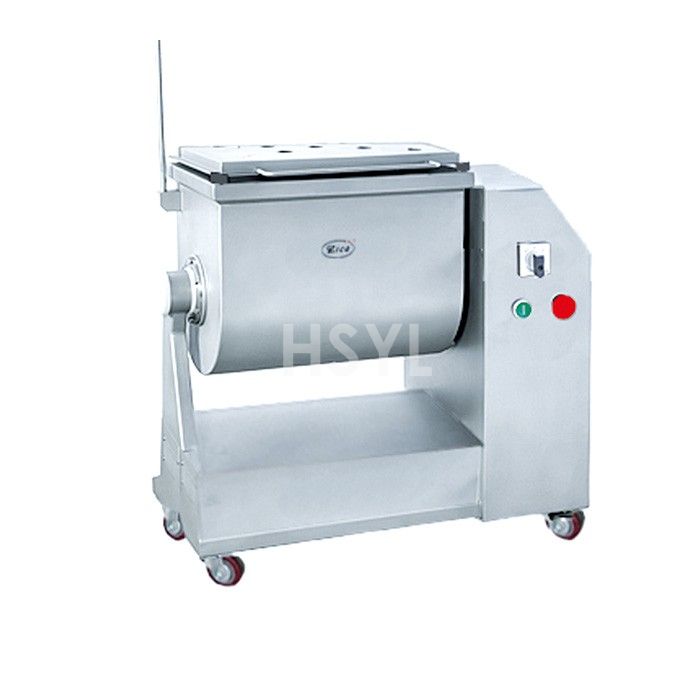
Match the Downstream, Not Just the Recipe
A mixer never works alone: its batches feed the next machine, and the rhythm has to line up. A burger operation running a manual patty press consumes mix at hand pace — the mixer's job is to deliver consistent, evenly seasoned blend in batches sized to the press station's hour, as covered in the patty press portion control guide. Sausage and dumpling lines consume faster and demand batch-to-batch consistency in texture, not just flavour. The general method for proving any prep machine's real output before purchase — the ingredient cut, the changeover and the witnessed capacity test — is laid out in the food preparation machine capacity test guide.