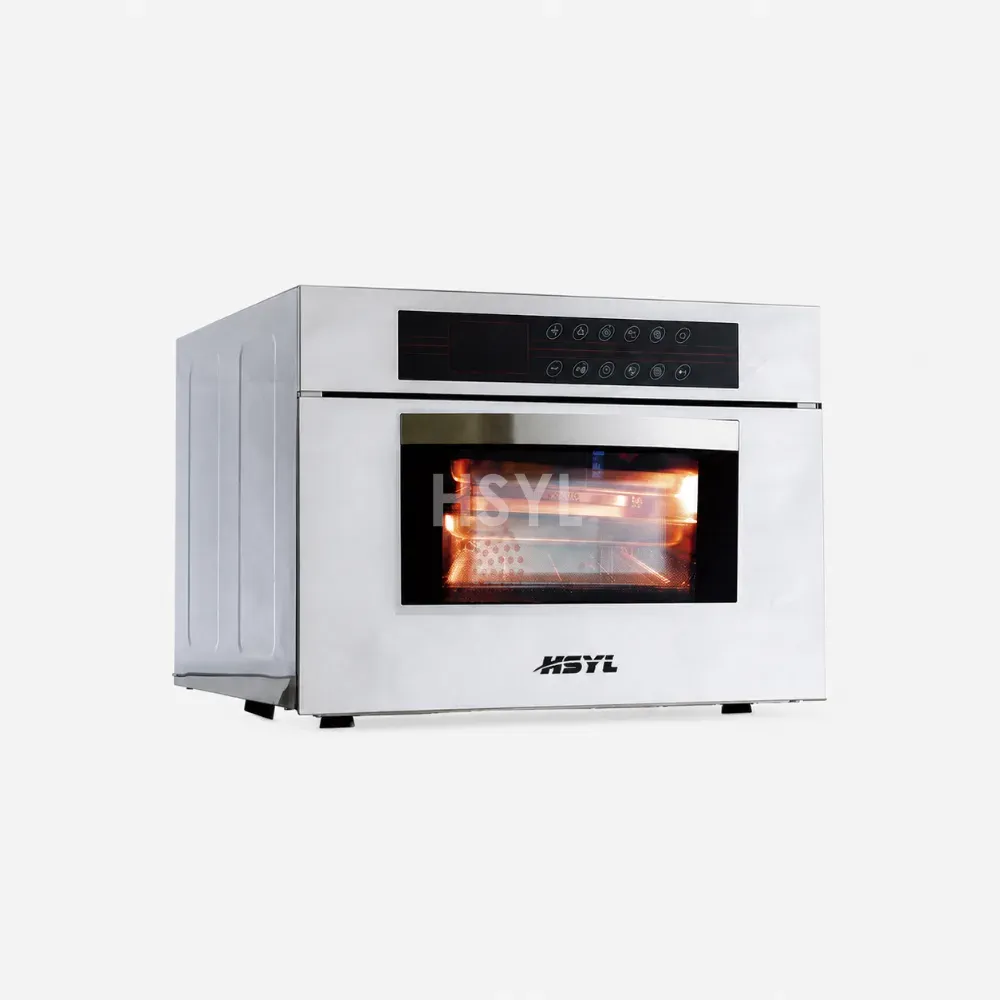
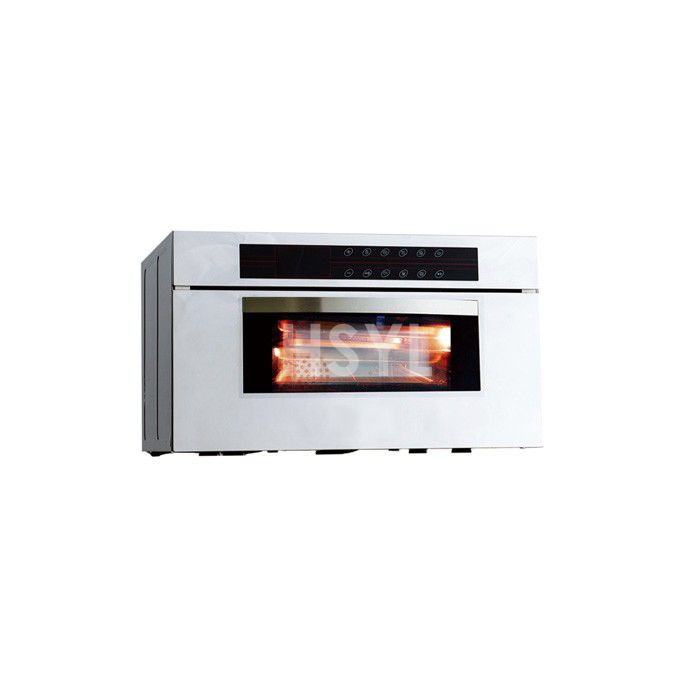
Direct Answer / Key Takeaway: Evaluate frozen pizza baking equipment with a repeatable trial covering product state, loading, cooking results, recovery and inspection records.
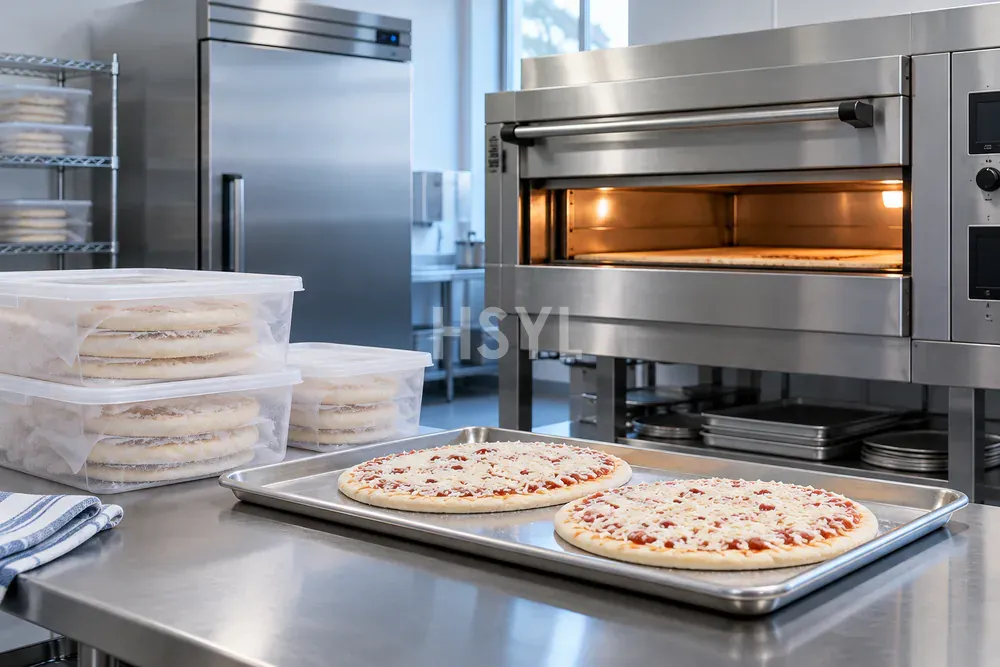
Frozen pizza baking equipment should be evaluated with the product that will actually be sold. A photograph of browned cheese or a successful single pizza does not establish repeatable production. The test must describe the product's initial state, the load presented to the oven and the accepted result, then repeat those conditions through a realistic service sequence.
Frozen dough bases, partially prepared pizzas and fully assembled frozen products are different test materials. Start by agreeing the product specification and approved cooking process with the responsible food-safety and production staff. This article explains how to organize the equipment trial, not a universal recipe.
Make the test product identifiable
Record supplier or internal recipe revision, dimensions, mass, dough or base condition, topping composition and the intended storage state. Include the transport from cold storage to loading. If the first sample has been on a bench much longer than later samples, the trial no longer compares equivalent starting conditions.
Use representative samples from the intended supply. A special demonstration batch with a lighter topping load can produce a convincing display while avoiding the real production problem. Keep product identity and handling time alongside the equipment settings rather than reconstructing them after the test.
Agree acceptance before switching on the oven
Write separate criteria for product safety, eating quality and production consistency. The responsible team should specify the cooking validation and inspection method. Colour, crust texture, base condition, topping distribution and portion integrity can be useful quality observations, but they do not replace the approved food-safety checks.
The FDA Food Code 2026 is a model offered for jurisdictional adoption. Use the requirements governing the destination kitchen and its validated product process rather than presenting one temperature or time as a worldwide rule.
Test a sequence, not a photograph
Begin with the agreed warm-up and stabilization conditions for the offered machine. Run the intended loading pattern, including the largest routine batch and the transition between successive releases. Record accepted and rejected products separately. Count a remake as additional work, not as another successful saleable unit.
- Identify each release and its product starting condition.
- Record equipment setting, actual loading and interruptions.
- Apply the agreed safety and quality inspection to representative products.
- Note differences between positions and successive releases.
- Include unloading, checks, cutting and packing in the finished-output record.
Use a simple trial sheet with a clear denominator
| Field | What to enter |
|---|---|
| Presented load | Products and loading positions for this release |
| Accepted output | Products meeting the agreed criteria |
| Rejected output | Products and observed reason for rejection |
| Elapsed sequence time | Defined start and finish points, including interruptions |
| Process conditions | Recipe revision, starting state and operating setting |
In an illustrative example, a trial presents 24 pizzas across several releases and accepts 22. The accepted-output fraction is 22 divided by 24, or about 91.7 percent. That number is only an example of reporting: it is not a target, a safety criterion or a claim about an HSYL oven. Explain the two rejections and retest any proposed correction.
Investigate position and recovery effects
Compare the first and later releases, and the different positions used within the oven. If results drift during continuous loading, document the pattern before changing several settings at once. Ask whether the difference is related to preparation, initial product condition, loading or the equipment's behaviour under the defined duty.
Change one controlled factor for a comparison run and retain the earlier record. A higher setting that fixes one product but damages another may not solve the complete menu requirement. The supplier needs the full accepted-result envelope, not only the most successful sample.
Turn the trial into a purchasing decision
The final report should identify the exact offered configuration, recipe revision, utilities, test load, accepted output and unresolved conditions. Separate functions actually demonstrated from those still requiring site verification. Agree how a later factory or site test will reproduce the useful parts of the trial.
Bring that report to the equipment discussion with the pizza dimensions, product specification and service demand. It gives the purchaser a traceable basis for comparing offers and prevents a frozen-product trial from becoming an unsupported headline capacity claim.