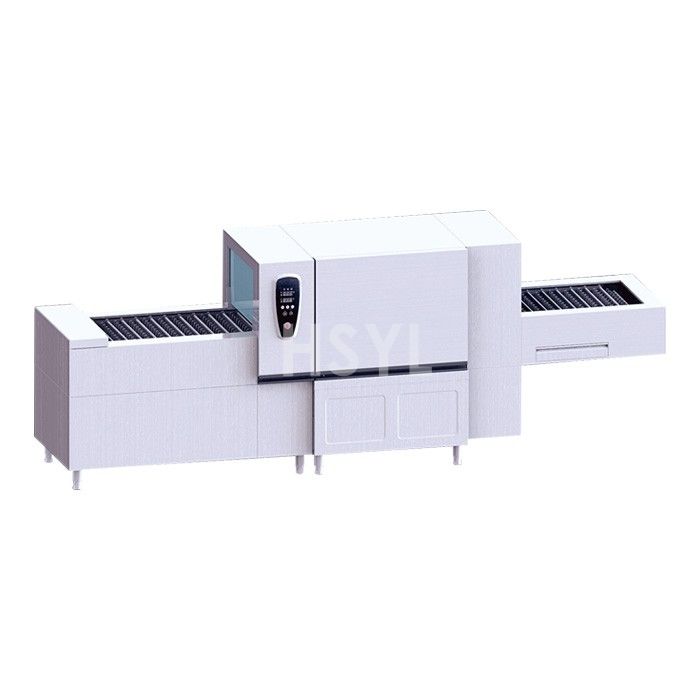
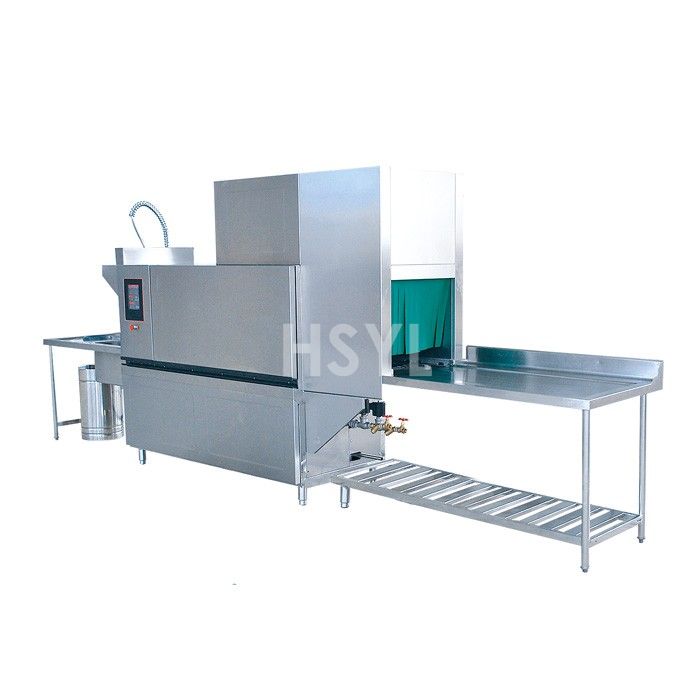
At the conveyor tier, the same dishwasher ships two ways, and the difference is how it heats its wash and final rinse. A steam-heated machine draws a small electrical load and takes hot steam from the building's boiler plant; an electric-heated machine carries its own elements and does the whole job from the electrical board. On the HDW260 the two versions are documented on identical frames at identical throughput — the HDW260-SL-R steam-heated runs 10 kW of electricity plus 70 kg/h of steam, and the HDW260-EL-R electric-heated runs a straight 45 kW — so the decision is not about washing power at all. It is about which utility your site can deliver.
How Each One Heats
The steam-heated machine offloads the heavy lifting to the building. Its 10 kW electrical load runs the pumps, controls and motors, while 70 kg/h of site steam supplies the heat for the wash tank and the sanitizing rinse. That is the route for a hotel or central kitchen that already runs a boiler for cooking and hot water — the dishwasher simply taps an existing service, and the electrical board barely notices the machine.
The electric-heated machine is self-contained. Its 45 kW load powers internal elements that heat the wash and the rinse directly, with no steam plant and no boiler to feed. That is the route for an all-electric kitchen, or any site where running a steam line to the dishroom would be a project in itself. The trade is simple: you carry the full energy bill on the electrical supply instead of splitting it across two utilities.
The Two Versions Side by Side
| Factor | HDW260-SL-R (Steam) | HDW260-EL-R (Electric) |
|---|---|---|
| Electrical load | 10 kW | 45 kW |
| Steam demand | 70 kg/h | None |
| Throughput | 260 baskets/h | 260 baskets/h |
| Frame | 2632 × 810 × 2030 mm | 2632 × 810 × 2030 mm |
| Rinse water | 320–400 L/h | 320–400 L/h |
| Depends on | Existing steam boiler | Electrical board capacity |
Note what the table says as loudly as what it omits: throughput, basket size, rinse water and footprint are identical. The only real difference is the energy path, which means this decision is made by the building, not by the menu.
Three Checks That Pick the Version
- Is there already a steam boiler? If the kitchen runs a boiler for cooking, hot water or other steam equipment, the steam version plugs into an existing service and cuts the electrical draw from 45 kW to 10 kW. If there is no boiler, adding one to serve a single dishwasher is rarely worth it — go electric.
- What is the electrical headroom? A 45 kW load is a serious commitment to the board. Where the supply is already tight, the steam version's 10 kW draw can be the difference between a straightforward install and an electrical upgrade.
- What does energy cost locally? The running comparison is not steam-versus-electric in the abstract, it is the site's steam cost against its electricity tariff, each multiplied by the machine's draw. A cheap-steam site favors steam; a cheap-electricity site favors electric. Neither number is on the spec sheet — pull it from the utility bill.
One clarification that prevents a common mix-up: both of these are high-temperature machines. Steam and electric here are two ways to reach the same hot sanitizing rinse, not a choice between heat sanitizing and chemical sanitizing. That earlier question — heat or chemical — is settled separately in the high-temp vs low-temp guide.
Related Equipment & Systems
Once the heat source is settled, the machine still has to fit the room — the rack conveyor site planning guide works through footprint, water, drain and exhaust for the same machines. The full line sits under commercial dishwashing equipment.