Direct Answer / Key Takeaway: Standardize commercial kitchen color-coding across prep tables, cutting boards, knives, and sanitation tools. Engineering guide to HACCP CCP cross-contamination control.
Within high-volume institutional food production environments engineered through our Hygiene & HACCP Hub, systematic color-coding represents the primary visual defense against cross-contamination and food allergen emergencies. In commercial commissaries, hospitals, and educational catering facilities preparing thousands of meals daily, linguistic barriers and fast-paced shift rotations make written instructions vulnerable to human error. Standardizing visual chromatic protocols across cutting boards, chef knives, storage containers, mop handles, and sanitizing rags transforms abstract HACCP principles into immediate, error-proof operational habits. This technical guide outlines international color-coding standards, physical segregation hardware, allergen segregation protocols, and audit inspection compliance requirements.
1. The International 6-Color Standard Matrix for Food Contact Tools
Leading international food hygiene bodies—including the UK Chartered Institute of Environmental Health (CIEH), the US FDA Food Code, and ISO 22000—enforce an unambiguous 6-color standard across direct food contact implements.
| Color Code | Designated Food Group & Workstation | Primary Biological Pathogens Controlled | Operational Material Standards |
|---|---|---|---|
| Red | Raw Red Meat (Beef, pork, lamb, game) | Salmonella enterica, Escherichia coli (STEC), Clostridium perfringens | High-density polyethylene (HDPE) non-porous boards; color-molded polypropylene knife handles |
| Yellow | Raw Poultry & Fowl (Chicken, turkey, duck) | Campylobacter jejuni, Salmonella serovars | Non-absorbent HDPE boards; micro-grooved anti-slip surfaces; stainless steel blades |
| Blue | Raw Seafood & Fish (Finfish, shellfish, crustaceans) | Vibrio parahaemolyticus, Anisakis simplex, Norovirus | Antimicrobial HDPE boards; dedicated seafood wash basins |
| Green | Salad, Fruits & Raw Vegetables | Listeria monocytogenes, Cyclospora, Norovirus, pesticide residues | Double-sided smooth HDPE boards; dedicated green-handled vegetable preparation knives |
| Brown | Cooked Meats & Ready-to-Eat Proteins | Staphylococcus aureus, Clostridium botulinum, spore-forming pathogens | High-temp dishwasher safe boards (up to 85°C); separate slicing stations |
| White | Bakery, Pastry & Dairy Products (Bread, cheese) | Bacillus cereus, mold spores, dairy cross-contact | Smooth high-molecular-weight polyethylene; stain-resistant polymer handles |
2. The Purple Allergen Protocol: Big-9 Allergen Segregation
Under modern food safety laws—such as the FDA Food Allergen Labeling and Consumer Protection Act (FALCPA), the FASTER Act (sesame), and EU Regulation 1169/2011—preventing allergen cross-contact is as critical as controlling pathogenic bacteria. A trace amount of peanut protein, gluten, shellfish, or sesame can trigger fatal anaphylaxis.
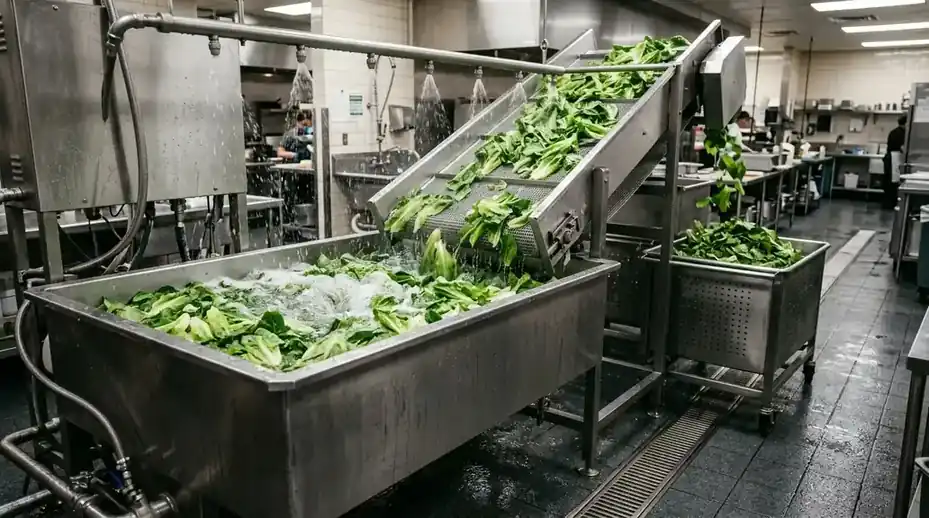
The culinary industry standard mandates Purple as the universal signifier for allergen-free preparation:
- Dedicated Purple Tool Kits: Kitchens must deploy sealed purple tool caddies containing purple cutting boards, chef knives, tongs, silicone spatulas, and measuring cups used exclusively for validated allergen-sensitive meal preparation.
- Physical Spatial Isolation: Allergen-free plating must occur at an isolated stainless steel table equipped with a dedicated purple handwashing and sanitation station, separated by at least 2 meters from open flour dusting or nut prep lines.
- Storage Identification: Allergen-containing dry ingredients and prepped pans must bear bold purple Cambro color-coded lids or allergen-alert stickers to eliminate accidental ingredient confusion during peak meal rushes.
3. Secondary Color Coding: Sanitation Hardware and Janitorial Tools
Cross-contamination frequently occurs when janitorial tools are cross-utilized between restroom sanitation and commercial cooklines. The British Institute of Cleaning Science (BICSc) establishes a rigid color protocol for all cleaning hardware:
| Sanitation Color | Permitted Operational Zone | Prohibited Zones | Required Equipment Hardware |
|---|---|---|---|
| Red (Janitorial) | Toilets, urinals, sanitary washrooms | Kitchen, dining, bar, food storage areas | Red mop heads, red buckets, red microfiber cloths |
| Yellow (Janitorial) | Washroom surfaces, sinks, mirrors, tiles | Kitchen food contact surfaces, dishwashers | Yellow spray bottles, yellow scrub brushes |
| Green (Kitchen) | General kitchen floors, prep tables, cookware | Restrooms, outdoor waste dumpsters | Green squeegees, green heavy-duty floor scrubbers |
| Blue (Front of House) | Dining room tables, service counters, bar tops | Back-of-house raw prep stations, restrooms | Blue microfiber wipes, blue service bus tubs |
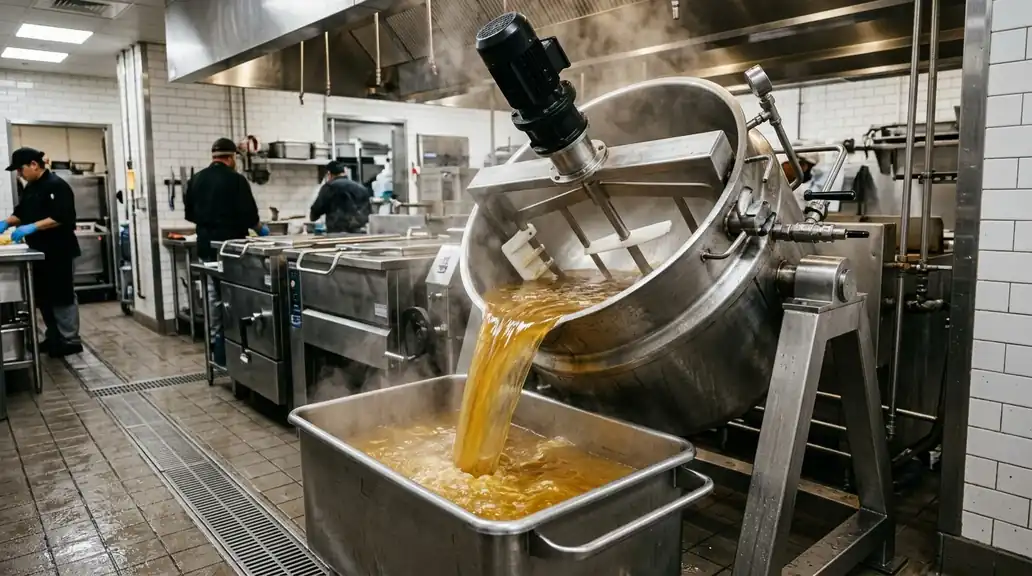
4. Stainless Storage and Storage Racking Hardware
Loose cutting boards stacked flat on stainless work surfaces create dark, damp moisture pockets where bacterial colonies flourish. Proper implementation requires engineered storage hardware:
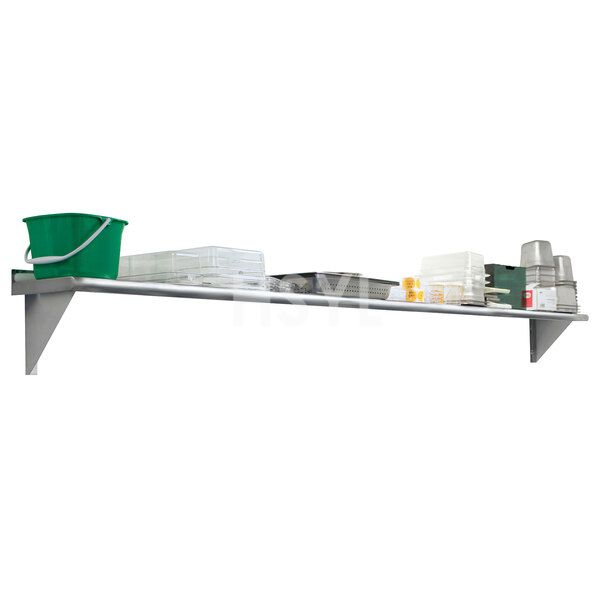
- Stainless Steel Board Drying Racks: Heavy-gauge AISI 304 wire racks that hold cutting boards vertically with 25mm air spacing between boards, ensuring complete convection air-drying after exiting the 82°C dish machine rinse.
- Wall-Mounted Knife Organizers: Magnetic bars or enclosed stainless knife scabbards color-indexed to match knife handle groupings. Magnetic bars must be wiped clean daily with sanitizing solutions.
- Board Resurfacing or Replacement Thresholds: Deep knife gouges exceeding 1.0mm harbor bacteria that high-temp dishwashing cannot penetrate. Any cutting board showing deep scoring or warping must be mechanically planed down or discarded.
5. 5-Year Compliance Audit & Maintenance TCO Analysis
Implementing a comprehensive color-coded food defense system generates measurable financial dividends by eliminating food safety recalls, allergen lawsuits, and tool inventory loss.
| Financial Parameter | Uncontrolled Tool Inventory | Systematic Color-Coded Kitchen | 5-Year Financial Variance |
|---|---|---|---|
| Allergen Lawsuit Exposure / Insurance | $15,000 / yr (High-risk liability profile and settlement exposure) | $2,200 / yr (Validated audit-ready allergen isolation system) | -$64,000 (85% reduction) |
| Tool Replacement & Knife Burn Rate | $4,800 / yr (Lost, misplaced, or abused cutlery and boards) | $1,900 / yr (Zoned accountability and vertical drying racks) | -$14,500 (60% reduction) |
| Food Spoilage from Cross-Contact | $8,200 / yr (Contaminated batches discarded post-prep) | $900 / yr (Strict physical segregation protocols) | -$36,500 (89% reduction) |
| Audit Non-Conformance Fines | $3,500 / yr (Health department demerits for board cross-use) | $0 / yr (Flawless chromatic audit presentation) | -$17,500 (100% elimination) |
| Total 5-Year Operating Cost | $157,500 | $25,000 | Net 5-Year Savings: $132,500 |
Engineering Specification Checklist for Health Inspection Audits
- Provide wall-mounted chromatic reference charts laminated in food-grade polycarbonate above every preparation station.
- Verify that cutting boards are certified to NSF Standard 2, manufactured from non-porous HDPE with antimicrobial additives.
- Ensure that knife blades are forged from German or Japanese high-carbon stainless steel with hermetically sealed polymer handles that exhibit zero gap or rivet crevices.
- Install dedicated color-coded janitorial hanging racks in discrete utility closets isolated from food processing flows.
6. ATP Bioluminescence Swab Auditing & Validation Metrics
Implementing a color-coded utensil program requires empirical biological validation to verify that cross-contamination control points are actively operating within acceptable thresholds. Commercial commissaries utilize Adenosine Triphosphate (ATP) bioluminescence hygiene monitoring systems to quantify organic residue on food contact surfaces. Surfaces are swabbed immediately post-sanitization, yielding Relative Light Unit (RLU) readings. An audit-compliant commercial cutting board or chef knife must register below 30 RLU. Readings between 30 and 100 RLU trigger immediate re-wash and re-sanitizing procedures, while readings exceeding 100 RLU necessitate tool quarantine, deep ultrasonic descaling, or physical surface planing. Maintaining daily digital ATP audit logs provides indisputable forensic evidence during third-party HACCP and ISO 22000 surveillance inspections.
7. Chemical Disinfection Kinematics: Quat vs. Chlorine vs. Peracetic Acid
Color-coded implements must interact with compatible chemical sanitizing solutions calibrated to exact contact times and parts-per-million (PPM) concentrations. Quaternary Ammonium Compounds (Quat) are standardized at 200–400 PPM with a mandatory 60-second immersion dwell time, offering excellent neutral pH stability for high-density polyethylene boards and polymer knife handles. Sodium hypochlorite (chlorine) solutions operating at 50–100 PPM provide rapid broad-spectrum bactericidal action in 30 seconds but require careful concentration monitoring; concentrations exceeding 200 PPM induce pitting corrosion on stainless steel chef knife blades and degrade colored handle pigments. Peracetic acid (PAA) at 100–200 PPM delivers superior efficacy against fungal spores and biofilms in cold processing environments (below 10°C) without leaving chemical residues that could compromise allergen-sensitive food batches.
Equip Your Commercial Kitchen with Compliant Stainless Stations from HSYL
Planning an institutional dining facility or central production commissary? HSYL manufactures turnkey stainless steel prep tables, wall-mounted rack systems, and integrated color-coded workstations engineered to meet strict international hygiene standards. Contact our commercial kitchen engineering consultants to configure your facility layout and receive a tailored quote.