Direct Answer / Key Takeaway: Compare NSF/ANSI 2 and NSF/ANSI 7 commercial kitchen sanitation standards. Detailed guide covering food contact surfaces, coved radii, and refrigeration thermal tests.
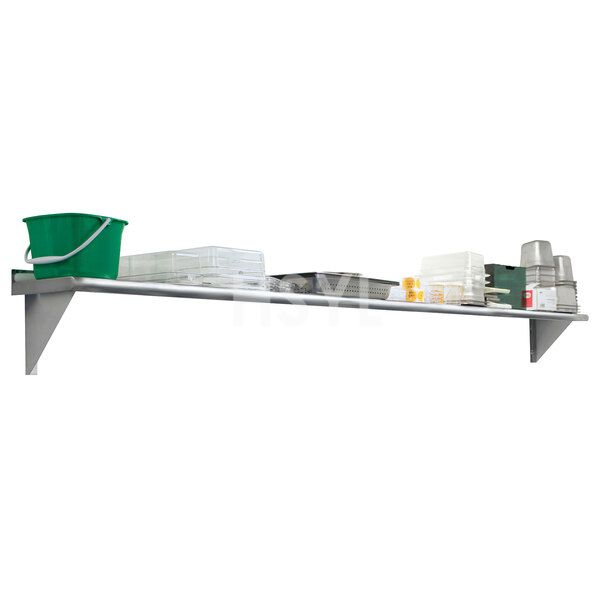
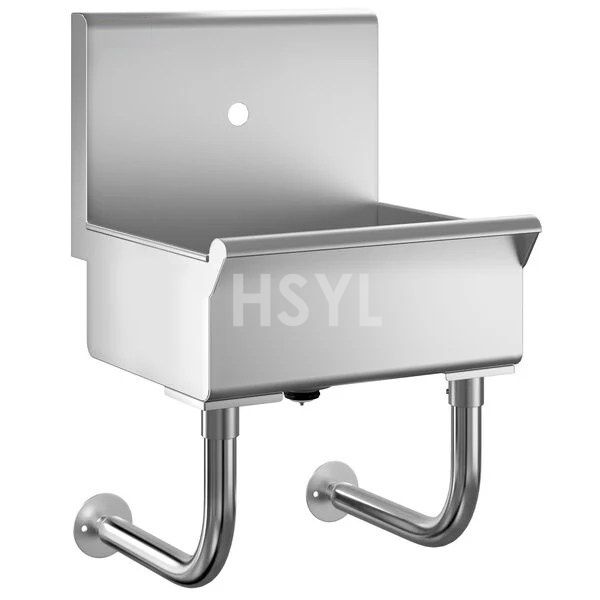
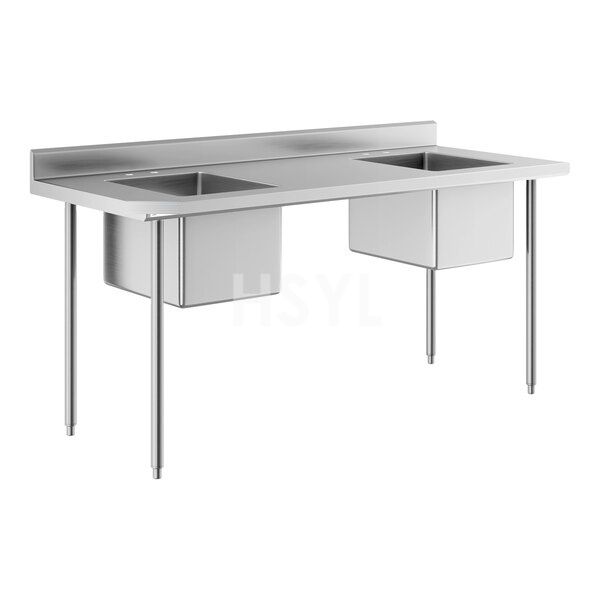
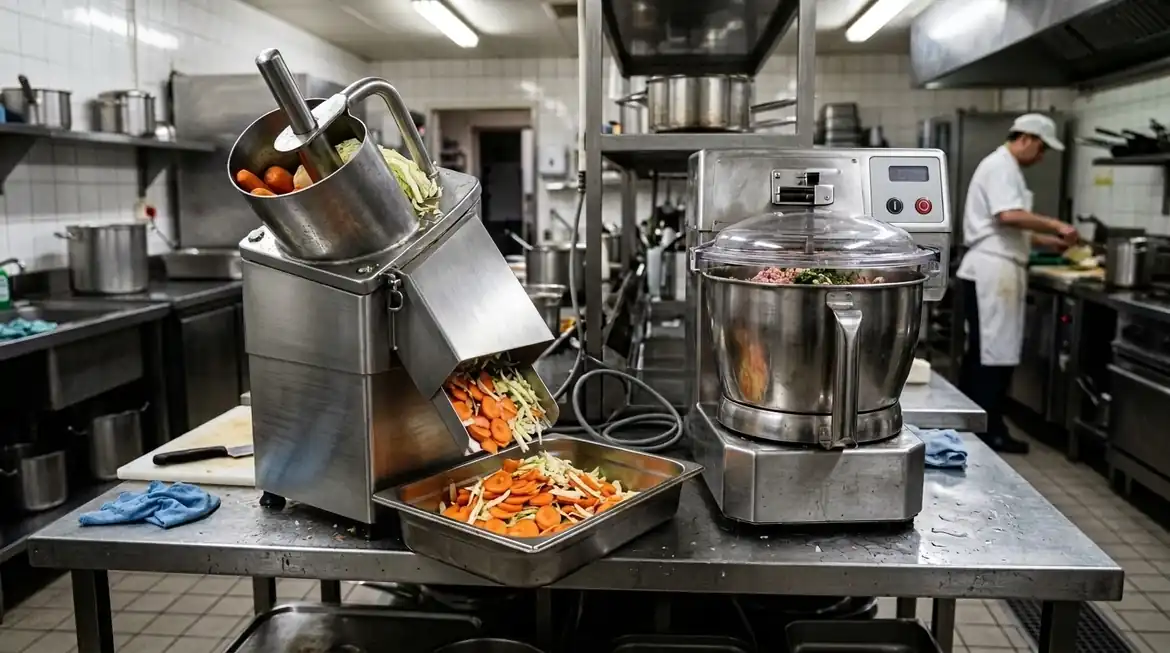
When specifying commercial foodservice hardware within our Hygiene & HACCP Hub, procurement directors, health inspectors, and mechanical consultants must distinguish between two fundamental sanitary benchmarks: NSF/ANSI Standard 2 and NSF/ANSI Standard 7. While both regulatory frameworks govern cleanability, material toxicity, and biological safety, they target completely distinct operational physics. NSF/ANSI 2 focuses on non-refrigerated food equipment—including stainless prep tables, three-compartment sinks, steam-jacketed kettles, and shelving—mandating metallurgical purity and physical joint cleanability. In contrast, NSF/ANSI 7 governs commercial refrigerators and freezers, imposing strict thermodynamic holding curves that prevent perishable food from entering the bacterial danger zone. Selecting equipment that misinterprets these standards invites failed health inspections, insurance voids, and premature component degradation.
1. Scope and Regulatory Jurisdiction: Mechanical vs. Thermodynamic Standards
The regulatory boundary between NSF/ANSI 2 and NSF/ANSI 7 reflects the divergence between physical surface geometry and thermodynamic performance under severe commercial kitchen operating loads.
| Evaluation Criterion | NSF/ANSI Standard 2: Food Equipment | NSF/ANSI Standard 7: Commercial Refrigerators |
|---|---|---|
| Governing Scope | Worktables, sinks, steam cookers, cookware, manual food prep machinery, food transport carts | Reach-in refrigerators, undercounter chillers, refrigerated prep tables, display cases, blast chillers |
| Core Engineering Focus | Hygienic metallurgy, weld grinding, radius crevice prevention, toxicity migration, washability | Thermodynamic pull-down, air curtain kinetics, evaporator coil defrosting, compressor heat rejection |
| Critical Testing Mandate | Mechanical impact resistance, corrosion immersion tests, dye penetration tests for microscopic cracks | Ambient pull-down test at 30°C (86°F) and 40°C (104°F) ambient; temperature maintenance ≤4°C (38°F) |
| Primary Component Standards | AISI 304/316 metallurgy, NSF-listed leveling feet, silicone gasket certifications (FDA 21 CFR) | Embraco/Secop hermetic compressors, Carel/Dixell microprocessors, magnetic compression gaskets |
2. NSF/ANSI 2 Engineering Mandates: Metallurgy, Welds, and Cleanability
Equipment evaluated under NSF/ANSI 2 is categorized into three distinct operational exposure zones: Food Zone, Splash Zone, and Non-Food Zone. Each zone imposes progressively stringent fabrication requirements:
- Food Zone Construction: Any surface directly contacting consumable food must be constructed from corrosion-resistant austenitic stainless steel (minimum AISI 304, 18/8 grade) or food-grade plastics with zero toxic leachability. Aluminum is strictly restricted from direct contact with acidic or saline food matrices.
- Internal Radius Rules (Coved Corners): All internal angles in sinks, wells, and drawers must feature a continuous die-formed coving radius of at least 6.35mm (1/4-inch). Field-welded 90-degree butt joints are non-compliant because bacterial biofilms cannot be scrubbed out of sharp corners during routine shift sanitation.
- Seamless Welds and #4 Sanitary Finish: All stainless sheet joints must be continuously TIG-welded, fully ground flush, and passivated to achieve a surface roughness average (Ra) below 0.8 micrometers (#4 sanitary finish). Rivets, exposed screw threads, and lap joints are strictly prohibited in the direct food contact zone.
3. NSF/ANSI 7 Thermodynamic Performance Mandates for Refrigeration
Unlike standard domestic or light commercial appliances evaluated under UL or IEC basic electrical safety codes, NSF/ANSI 7 certifies cold-chain integrity under extreme real-world commercial kitchen conditions. Under NSF 7, commercial refrigerators must hold all internal food zones below 4°C (40°F) while operating in an aggressive 30°C (86°F) to 40°C (104°F) ambient kitchen test chamber with open doors.
| Refrigeration Class | NSF/ANSI 7 Temperature Target | Operational Stress Profile | Key Compressor & Coil Engineering |
|---|---|---|---|
| Class 1: Storage Refrigerators | Internal air ≤3.3°C (38°F), food mass ≤4.0°C (40°F) | Closed door holding with periodic 15-second service door openings | Forced-air ceiling evaporators; Embraco heavy-duty condensing units |
| Class 2: Salad / Sandwich Prep Tables | Top open pan temperature ≤4.0°C (40°F) | Continuous open-top pan wells exposed to hot ambient kitchen convection | Patented cold-wall ducted airflow; wrapped copper refrigeration lines around pan rails |
| Class 3: Commercial Freezers | Internal core temperature ≤-18°C (0°F) | High moisture loading; heavy ice accumulation mitigation | Electric defrost cycle timers; heated drain lines and condensation-free perimeter heaters |
4. Harmonization: CE, UL, ETL Sanitation and NSF Equivalent Marks
Global procurement requires navigating regional certification marks. In North America, equipment must bear a recognized Sanitation Mark verifying compliance with NSF/ANSI standards:
- NSF Blue Mark: Tested and certified directly by NSF International.
- ETL Sanitation Mark (Intertek): Tested and certified to the exact same NSF/ANSI 2 or NSF/ANSI 7 standard benchmarks by an OSHA-recognized Nationally Recognized Testing Laboratory (NRTL). Legally identical to the NSF mark across US and Canadian health jurisdictions.
- UL Classified to NSF Standards: Evaluated by Underwriters Laboratories against NSF/ANSI requirements.
- European CE Marking (Machinery Directive 2006/42/EC & EN 1672-2): In Europe, food machinery hygiene is governed by EN 1672-2 (Food processing machinery - Basic concepts - Hygiene requirements). While broadly harmonized with NSF cleanability principles, European standards prioritize clean-in-place (CIP) and microbial swab validation rather than prescriptive geometry metrics.
5. 5-Year Compliance Audit & Maintenance TCO Analysis
Procuring non-certified commercial kitchen equipment or unbranded domestic units in commercial environments incurs devastating operational penalties:
| Cost Category | Non-Certified Generic Equipment | NSF/ANSI 2 & 7 Certified Commercial Gear | 5-Year Financial Variance |
|---|---|---|---|
| Health Inspection Violation Penalties | $7,200 / yr (Repeated red-tag notices, forced re-inspections) | $0 / yr (Instant municipal inspector sign-off) | -$36,000 (100% elimination) |
| Perishable Food Spoilage Losses | $9,500 / yr (Compressor collapse during 38°C peak kitchen heat) | $1,200 / yr (Rock-solid NSF 7 pull-down holding) | -$41,500 (87% reduction) |
| Sanitation & Descaling Maintenance | $5,400 / yr (Difficult deep-cleaning around rough square seams) | $2,100 / yr (Rapid coved wipe-down protocol) | -$16,500 (61% reduction) |
| Insurance Liability Premium Variance | $3,800 / yr (Surcharge for unlisted commercial kitchen gear) | $0 / yr (Standard institutional commercial policy tier) | -$19,000 (100% elimination) |
| Total 5-Year Operating Cost | $129,500 | $16,500 | Net 5-Year Savings: $113,000 |
Engineering Specification Checklist for Procurement Teams
- Verify that all prep tables, sinks, and thermal equipment possess an active certification plaque referencing NSF/ANSI Standard 2.
- Examine refrigerated salad stations to confirm compliance with NSF/ANSI 7 Type II ratings if ambient kitchen temperatures exceed 27°C (80°F).
- Inspect all drain line connections and evaporator condensation pans to guarantee electric vaporization or mandatory indirect drainage with air gaps.
- Ensure all custom stainless steel work surfaces specify 1.2mm (18-gauge) to 1.5mm (16-gauge) AISI 304 with fully ground seamless welds.
6. Metallurgical Purity and Chemical Corrosion Resistance Testing
Under NSF/ANSI Standard 2, sanitation compliance extends beyond visual inspection into quantitative chemical and metallurgical validation. Food contact surfaces undergo rigorous copper sulfate testing (ASTM A380) to detect free iron particles embedded during metal stamping or press-brake bending operations. Any localized surface iron contamination triggers immediate rust bloom upon exposure to hypochlorite sanitizers. additionally, polymer components such as cutting boards, silicone scraper blades, and nitrile conveyor belts must exhibit zero toxic migration and comply with FDA 21 CFR 177.2600 for repeated food exposure. In commercial dishwashing environments where aggressive alkaline wash detergents (pH 11.5–12.5) and acidic rinse aids (pH 2.0–3.0) operate under high temperature (82°C / 180°F), materials certified under NSF 2 are guaranteed to resist pitting corrosion and stress corrosion cracking over a minimum 10-year operating horizon.
7. Field Inspection Failure Modes and Rectification Protocols
When environmental health inspectors audit commercial foodservice facilities, equipment non-compliance under NSF/ANSI 2 and 7 represents the most frequent trigger for administrative citations. The primary failure modes include: (1) field-installed screws penetrating food contact wells without sealed cap nuts, (2) deteriorated magnetic door gaskets losing elasticity and permitting warm ambient air infiltration into reach-in coolers, (3) cracked poly cutting boards with knife grooves exceeding 1.5mm harboring Listeria monocytogenes biofilms, and (4) condensate drain lines piped directly into municipal sewer lines without mandatory 50mm air gaps. Rectifying these non-conformances requires rigorous preventive maintenance: quarterly thermal imaging audits of refrigeration door seals, routine mechanical planning of cutting board surfaces, and retrofitting sanitary stainless air-gap funnels on all indirect waste lines.
Discuss Your NSF Compliant Kitchen Specifications with HSYL Engineers
Need assistance verifying compliance for high-volume kitchen tenders or custom stainless equipment packages? Our engineering specialists ensure all equipment manufactured for global export meets stringent NSF/ANSI 2 and NSF/ANSI 7 sanitation benchmarks. Contact our engineering technical team to review specification sheets and obtain certified equipment bids.