Direct Answer / Key Takeaway: Engineering guide to commercial kitchen temperature danger zone control (41F–135F). Critical parameters for hot holding, blast chilling, and rapid thermal reheating.
Within the thermodynamic parameters established in our Hygiene & HACCP Hub, controlling food temperature throughout the preparation, holding, cooling, and reheating cycle represents the single most critical defense against foodborne illness outbreaks. The Temperature Danger Zone (TDZ)—defined by the FDA Food Code as 4°C to 57°C (40°F to 135°F) and internationally under Codex Alimentarius as 5°C to 60°C (41°F to 140°F)—fosters exponential bacterial replication, where pathogens such as Clostridium perfringens and Bacillus cereus double their populations in under 20 minutes. Institutional banquet facilities, hospital commissaries, and school catering kitchens handling thousands of daily servings require heavy-duty thermal hardware engineered to traverse or bypass this danger zone rapidly. This technical specification manual details critical control point (CCP) benchmarks, thermodynamic cooling curves, blast chilling mechanics, and hot-holding equipment standards.
1. The Thermodynamic Danger Zone & Bacterial Growth Kinetics
Bacterial proliferation follows four distinct phases: lag, log (exponential), stationary, and decline. In the sweet spot of the danger zone (between 21°C and 52°C / 70°F and 125°F), vegetative pathogens rapidly enter the log phase, producing heat-stable enterotoxins that cannot be deactivated by subsequent boiling or reheating. The table below details critical threshold temperatures, regulatory benchmarks, and equipment mandates.
| Operational Phase | Regulatory Temperature Benchmark | Maximum Allowable Time Limit | Mandatory Equipment & Sensor Architecture |
|---|---|---|---|
| Cold Holding (Refrigerated) | Core temperature ≤4.0°C (40°F) [≤5.0°C EU/UK] | Continuous throughout service shelf life | NSF 7 heavy-duty refrigerators with ducted forced-air evaporators and digital dataloggers |
| Raw / Ambient Prep | Ambient temperature ≤15°C (59°F) or rapid return | Maximum 2 hours cumulative exposure | Refrigerated prep tables; glycol-chilled cold preparation rooms; batch-timer alerts |
| Thermal Cooking (Lethality CCP) | Poultry: 74°C (165°F); Ground Meat: 68°C (155°F); Whole Cut: 63°C (145°F) | Core hold for 15 seconds minimum | Combi ovens and steam-jacketed kettles with multi-point core temperature insertion probes |
| Hot Holding | Core temperature ≥57.0°C (135°F) [≥63.0°C EU/UK] | Maximum 4 hours before mandatory discard | Heated holding cabinets with humidified forced-air circulation; halo-heat holding wells |
| Two-Stage Cooling (FDA Rule) | Stage 1: 57°C to 21°C (135°F to 70°F) in ≤2 hrs; Stage 2: 21°C to 4°C in ≤4 hrs | Total 6 hours maximum cooling window | Commercial blast chillers with high-velocity evaporator fans and needle probes |
| Reheating for Hot Holding | Core temperature ≥74.0°C (165°F) throughout | Rapid transit within ≤2 hours | Heavy-duty retherm ovens or rapid steam cookers; warmers strictly prohibited for reheating |
2. Two-Stage Cooling Thermodynamics & Blast Chilling Mechanics
The greatest food safety hazard in commercial catering is cooling dense masses of hot food (such as 50-liter batches of beef stew, chili, or chicken stock) in standard walk-in coolers. Placing deep pans of hot liquid into a walk-in cooler causes three catastrophic thermodynamic failures: it forms an insulated crust that traps heat in the center for up to 18 hours, generates intense condensation that drops contaminated water droplets from ceilings onto food, and elevates the ambient cooler temperature above 10°C, endangering adjacent stored stock.
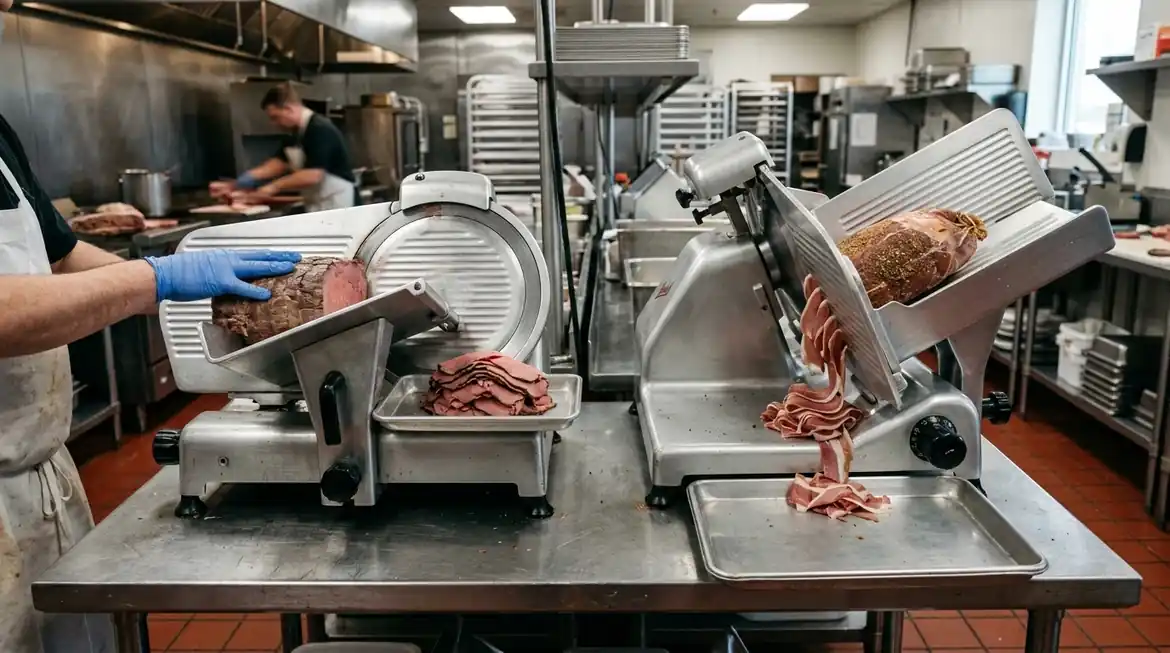
Institutional commissaries must deploy dedicated blast chillers engineered with high-velocity aerodynamic airflow:
- Blast Chilling Pull-Down: Blast chillers blast high-velocity air at -10°C to -18°C across shallow Gastronorm pans (maximum 50mm / 2-inch pan depth), pulling food cores from 70°C down to 3°C in under 90 minutes—shattering the 2-hour FDA benchmark.
- Shock Freezing: Delivers -35°C to -40°C air curtains that freeze food cores to -18°C in under 240 minutes, creating microscopic ice crystals that preserve cellular membrane integrity, eliminate thaw drip loss, and prevent microbial spore germination.
- Multi-Point Core Probes: Digital controllers utilize 3-point or 4-point insertion needle sensors to calculate real-time thermodynamic enthalpy and automatically drop into soft-holding mode once core targets are reached.
3. Hot-Holding Physics: Convection vs. Conductive vs. Halo-Heat
Maintaining cooked food above 57°C (135°F) or 63°C (140°F) for extended service windows requires precise heat delivery that prevents bacterial growth without dehydrating or overcooking delicate culinary textures.
| Holding Technology | Heating Mechanism | Thermal Uniformity | Moisture Retention Rate | Best Application |
|---|---|---|---|---|
| Dry Convection Holding | Calrod heating element with fan blower | Moderate (±4°C gradient) | Low (Food dries rapidly without pan covers) | Crispy fried food, breaded poultry, baked potatoes |
| Humidified Water-Pan Holding | Bottom immersion heating well with water vapor | High (±2°C gradient) | High (85%–95% relative humidity) | Carved roasts, bulk vegetables, rice, pasta |
| Low-Density Radiant (Halo Heat) | Controlled thermal cable wrapped around cavity walls | Ultra-High (±1°C precision) | Maximum (Zero moisture-robbing fans) | Prime rib holding, delicate braises, hospital tray plating |
4. IoT Temperature Datalogging & HACCP Automation
Manual paper logbooks are notoriously unreliable, susceptible to falsification, and incapable of sending emergency alerts during midnight refrigeration breakdowns. Modern compliance demands automated wireless IoT sensor telemetry:
- LoRaWAN / Bluetooth LE Probes: Wireless sensors placed inside walk-in freezers, prep refrigerators, and hot-holding carts broadcast core temperatures to cloud servers every 5 minutes.
- Automated Deviation Alerts: If a refrigeration compressor trips and ambient temperature crosses 4.5°C for more than 30 minutes, the system immediately dispatches automated SMS and email alarms to engineering duty managers.
- Audit-Ready PDF Compliance Reports: Software aggregates automated time-temperature graphs that can be exported instantly during health department audits, demonstrating 100% compliance without manual paperwork.
5. 5-Year Compliance Audit & Maintenance TCO Analysis
Investing in automated blast chillers and precision hot-holding equipment delivers massive operational returns by mitigating catastrophic foodborne illness liability and ingredient waste.
| Operational Cost Driver | Manual Kitchen / Traditional Cooling | Blast Chiller & Automated Thermal System | 5-Year Financial Variance |
|---|---|---|---|
| Food Spoilage & Discard Waste | $18,400 / yr (Discarded pans failing 2-stage cooling tests) | $2,100 / yr (Guaranteed 90-min core pull-down) | -$81,500 (88% reduction) |
| Manual Temperature Logging Labor | $7,200 / yr (Staff manually probing and recording clipboards) | $600 / yr (Automated wireless IoT datalogging) | -$33,000 (91% reduction) |
| Foodborne Illness Insurance Premiums | $9,500 / yr (High-risk manual tracking classification) | $4,800 / yr (Certified HACCP automated monitoring credit) | -$23,500 (49% reduction) |
| Energy Penalty on Walk-In Coolers | $4,200 / yr (Compressor overload cooling hot stew pans) | $1,500 / yr (Cold-only walk-in compressor duty) | -$13,500 (64% reduction) |
| Total 5-Year Operating Cost | $196,500 | $45,000 | Net 5-Year Savings: $151,500 |
Engineering Specification Checklist for Turnkey Temperature Controls
- Ensure that hot-holding equipment specifies dual Calrod or halo-heat heating elements capable of maintaining ≥65°C across all pans with doors fully closed.
- Mandate commercial blast chillers with core needle sensors and R448A/R452A eco-refrigerants engineered for rapid pull-down from 70°C to 3°C in 90 minutes.
- Install independent digital thermometer readouts on all refrigeration units accurate to ±1°C (±2°F), calibrated quarterly against ice-point standards.
- Prohibit rewarming or hot-holding equipment from ever being utilized as initial cooking devices or food rethermalization units.
6. Automated Evaporator Coil Defrost Cycles and Temperature Spikes
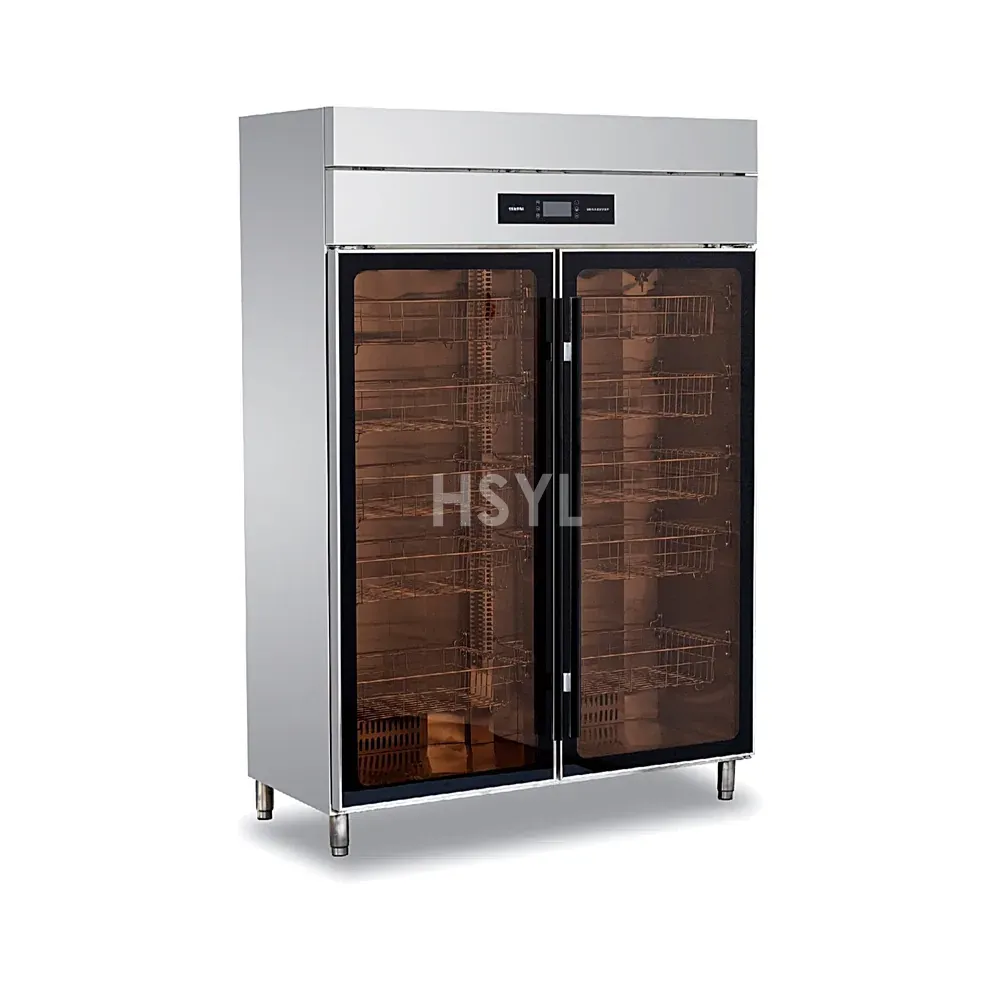
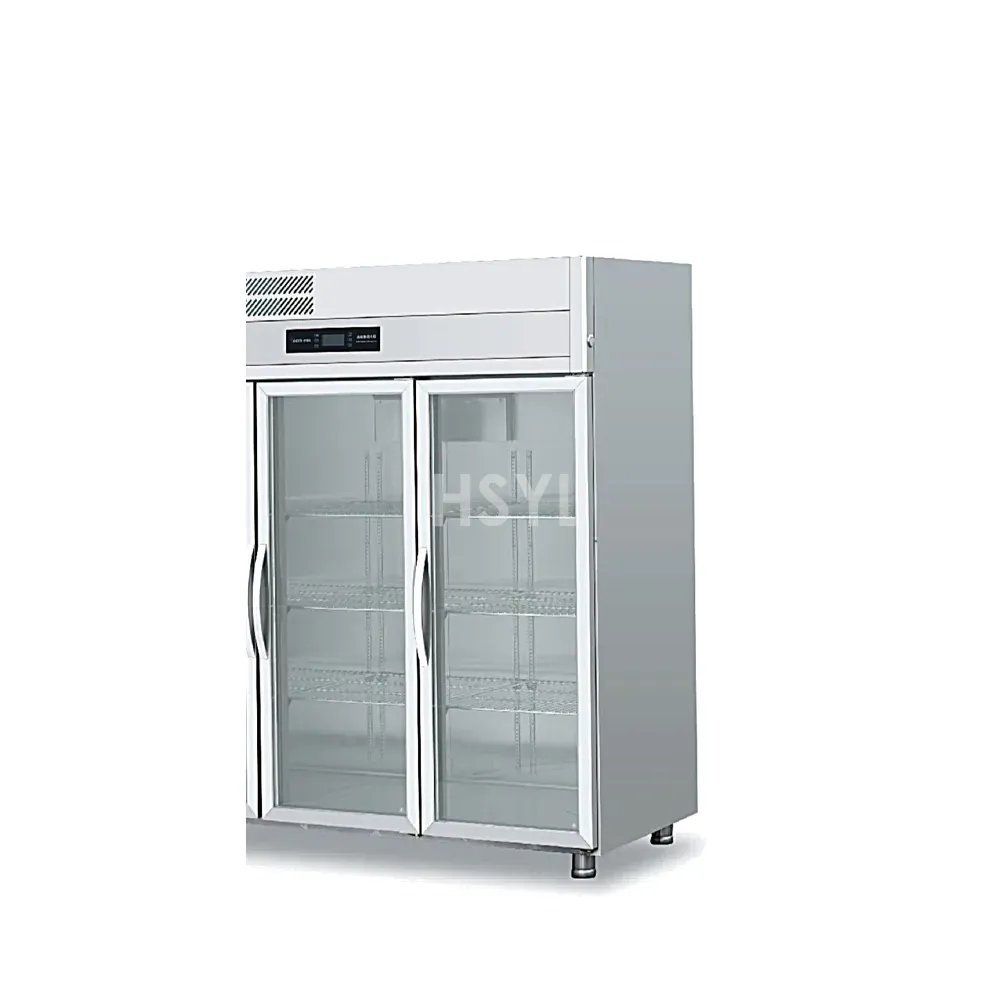
A critical engineering vulnerability in commercial walk-in and reach-in refrigeration is the periodic defrost cycle. Conventional electric defrost heaters elevate evaporator coil temperatures to melt accumulated frost, inadvertently causing cavity air temperatures to spike from 2°C to 12°C for 20 to 35 minutes. Under strict NSF/ANSI 7 and HACCP guidelines, this defrost temperature spike must not allow internal food core temperatures to rise above 4.0°C (40°F). Modern commercial refrigeration units engineered by HSYL utilize intelligent demand-defrost microprocessors (Carel / Dixell) paired with reverse-cycle hot gas defrost. Hot gas defrost melts frost in under 4 minutes—compared to 25 minutes for electric resistance heaters—reducing energy consumption by 70% and ensuring food mass temperatures remain completely flat with zero danger zone drift.
7. Vacuum Cooling and Rapid Thermal Penetration for Dense Liquids
While blast chillers excel at shallow pans of solid proteins, institutional kitchens processing 500-liter batches of viscous soups, gravies, and chili encounter thermal penetration barriers where the center of the liquid remains insulated. To overcome this limitation, advanced central commissaries deploy vacuum chillers and ice-wand immersion agitators. Vacuum cooling operates by reducing atmospheric pressure inside a sealed chamber below 6.1 mbar; at this pressure, water boils at 0°C, causing instantaneous flash-evaporation throughout the entire liquid volume. This thermodynamic phenomenon extracts latent heat of vaporization uniformly from the core to the surface simultaneously, cooling 200kg of boiling sauce down to 4°C in just 15 minutes. This technological breakthrough eliminates the bacterial germination window of spore-forming Clostridium botulinum entirely.
Engineer Your Thermal Safety Kitchen Architecture with HSYL
Looking to upgrade your institutional kitchen with high-performance blast chillers, precision combi ovens, or insulated hot-holding cabinets? HSYL engineers commercial kitchen equipment packages that satisfy international HACCP and NSF temperature benchmarks. Contact our kitchen engineering specialists to review your project capacity and request technical specifications.