Direct Answer / Key Takeaway: Comprehensive engineering manual for Heavy-Duty Stainless Worktable calculating hourly mass throughput and batch yields. Inspect engineering calculations,.
Mission-critical commercial food service relies upon uncompromising equipment architecture. For facility directors and project engineers evaluating Standard Duty Heavy-Duty Stainless Worktable, this technical review delivers in-depth analysis across capacity formula, addressing dimensional tolerances, utility infrastructure, and regulatory quality assurance standards.
1. Facility Context, Ergonomics & Station Optimization: Capacity Formula
Hourly Mass Throughput Formulations & Culinary Yield Calculations:
Precise capacity sizing in commercial kitchens replaces guesswork with rigorous mass-balance formulations governing food density and thermal batch time. Production throughput is calculated via the fundamental hourly formula: Output Capacity (kg/hr) = (Chamber Batch Load (kg) * Usable Pan Tiers * Finished Culinary Yield %) / ((Cooking Cycle Time (min) + Loading/Unloading Turnaround (min)) / 60). Designers establish raw ingredient bulk densities: bone-in chicken quarters average 4.5 kg per GN 1/1 hotel pan (65 mm depth); dense beef roasts achieve 8.0 kg per pan; roasted root vegetables load at 3.5 kg per pan. Furthermore, moisture loss and fat rendering impose empirical shrink factors (yields range from 75% for braised beef to 85% for steamed vegetables and 65% for high-temperature roasting). For an 8-minute turnaround cycle, a 10-tier GN 1/1 combi oven running a 32-minute chicken cycle delivers an effective processing speed of: (45 kg * 0.78 yield) / ((32 + 8) / 60) = 52.6 kg/hour of finished, ready-to-serve protein.
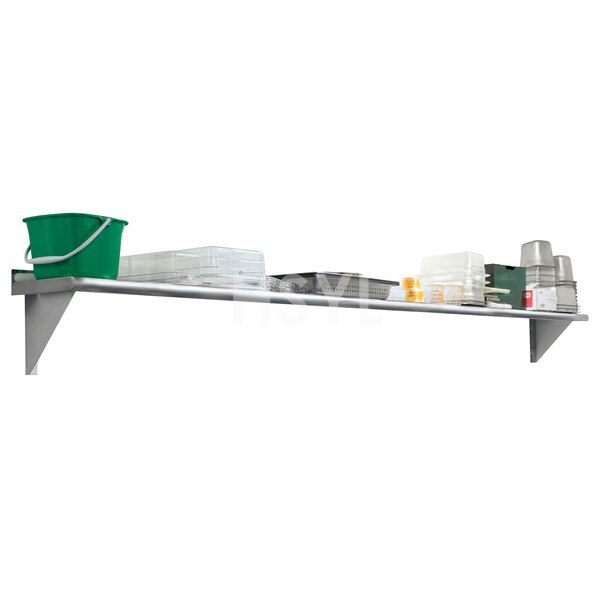
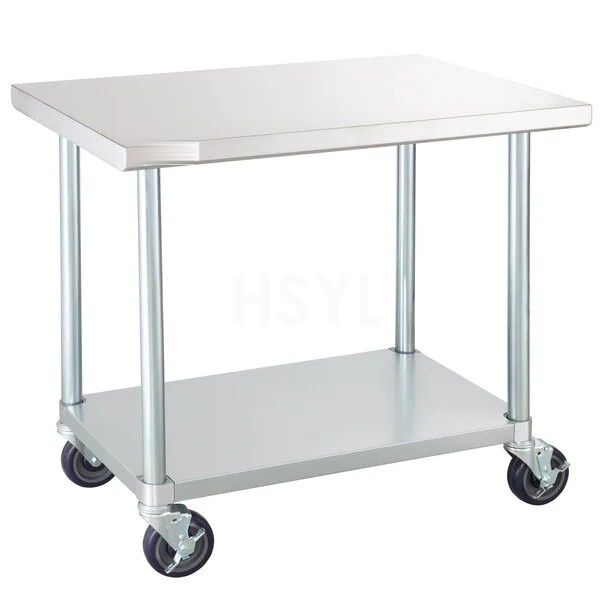
When sizing equipment for peak production hours, facility planners must reference verified heavy-gauge stainless steel preparation tables to ensure capacity reserves remain aligned with scheduled shift turnover targets.
2. Comprehensive Technical Specifications & Material Benchmarks
Engineering evaluation requires contrasting component fabrication, power consumption, and mechanical duty ratings. The comparative table below outlines operational parameters for Standard Duty Heavy-Duty Stainless Worktable:
| Engineering Parameter | Standard Commercial Spec | Heavy-Duty Institutional Spec | Engineering Variance Threshold |
|---|---|---|---|
| Material Construction | AISI 304 (1.2 mm / 18-gauge), tubular legs 38 mm OD, galvanized/SS undershelf, adjustable bullet feet | AISI 304 (1.5-2.0 mm / 14-gauge), 48 mm OD legs with welded gussets, marine edge, sound-deadened backing | Top surface planarity tolerance <= 1.0 mm/m, weld seams ground and polished to Ra < 0.8 um |
| Primary Engineering Feature | Substructure Reinforcement: Welded stainless hat-channels bonded with high-elasticity sound-deadening mastic | Reinforced industrial assembly with seamless continuous laser welds | Zero structural deflection under maximum rated loading |
| Operational Subsystem | Sanitary Edge Detail: 100 mm rear upstand with 45-degree bevel return and NSF-compliant 15 mm radius corners | High-efficiency heavy-duty components with dynamic feedback telemetry | Energy efficiency index within top 10% commercial benchmark |
| Sanitary & Safety Rating | Sink Basin Integration: Deep-drawn seamless AISI 304 bowl with rear basket strainer waste and overflow weir | IPX5 washdown protection with NSF/ANSI cleanability rating | Hermetic perimeter sealing preventing microbial colonization |
3. Fundamental Engineering Mechanics & Subsystem Architecture
Austenitic Metallurgy & Sanitary Fabrication: Commercial stainless preparation tables and sinks are manufactured from AISI 304 (18/10 chromium-nickel) austenitic alloy, exhibiting outstanding yield strength, chemical resistance, and non-magnetic characteristics. Formed sheet tops are reinforced with longitudinal stainless hat channels bonded with high-elasticity acoustic mastic to dampen noise and eliminate surface deflection under heavy point loading. All corner joints and bowl seams are joined via continuous automated TIG welding, followed by chemical acid pickling and mechanical grain polishing to a sanitary surface roughness (Ra < 0.8 um) to prevent biofilm anchorage.
In institutional catering environments, equipment longevity is heavily governed by surface passivation and corrosion resistance. Units fabricated from high-grade austenitic stainless steel must maintain an uncompromised chromium oxide passivated boundary layer. Regular chemical cleaning with non-abrasive detergents prevents pitting attack from chlorinated sanitizers and atmospheric chlorides.
Understanding these thermodynamic and mechanical principles allows consulting engineers to optimize cycle times, reduce utility peak draw, and eliminate premature component fatigue.
4. Empirical Sizing Dynamics & Quantitative Capacity Modeling: Static Structural Deflection Formulation
Sizing production machinery requires rigorous quantitative modeling to match kitchen peak load demands. The governing mathematical formulation below establishes throughput targets:
Permissible Load (kg/m2) = [Yield Strength of AISI 304 (205 MPa) * Top Thickness (mm)^2] / [Span Distance (m)^2 * Safety Factor (2.0)]
For a 1800 x 800 mm preparation table with 1.5 mm (16-gauge) 304 SS top and hat-channel box stiffeners: Maximum uniform distributed load = 320 kg; Centerline deflection under 200 kg point load remains under 1.2 mm.
Practical sizing engineering requires accounting for the hidden ware factor. Beyond customer dining covers, back-of-house food preparation items (hotel pans, sheet trays, mixing bowls, and prep utensils) contribute an additional 15% to 20% to total kitchen processing loads. Furthermore, thermal transfer times for bulk foods follow the transient conduction square-law relationship (t is proportional to x^2), meaning doubling product depth from 50 mm to 100 mm in pans roughly quadruples core pull-down or heating times. Sizing calculations must incorporate these empirical variables to ensure uninterrupted kitchen workflow.
Employing this sizing method protects the kitchen from meal bottlenecks, prevents premature thermal and mechanical failure, and guarantees compliance with HACCP time-temperature critical control points (CCP).
5. Mechanical, Electrical & Plumbing (MEP) Rough-In Criteria
Successful field commissioning demands strict adherence to facility utility rough-in boundaries. Contractors and installation engineers must verify the following interface criteria for Standard Duty Heavy-Duty Stainless Worktable:
- Power & Electrical Connection: No electrical power connection required; bonding lug provided for kitchen equipotential grounding grid.
- Water Supply & Treatment: DN15/DN20 hot & cold water to pre-rinse faucet; DN50 drain waste line with grease trap connection.
- Wastewater & Drainage Air Gap: Discharges must connect to temperature-resistant indirect waste lines with an unobstructed physical air gap, conforming to FDA Food Code Chapter 4 backflow mandates.
- Ventilation, Clearances & Environment: Flanged feet bolted to finished tile floor with stainless anchors; continuous anti-fungal RTV silicone sealant bead along table backsplash to wall interface.
Critical Field Installation Redlines & Contractor Pitfalls: During jobsite rough-ins, engineering teams must enforce the following compliance boundaries to prevent premature equipment failure and voided warranties:
- Chlorine Bleach Attack: Never use chlorine bleach or muriatic acid cleaners on 304 stainless steel; chlorides permanently pit the passive chromium oxide protective layer.
- Equipotential Earthing Bonding: In wet commercial prep zones, tables must be bonded to the building equipotential grounding grid to eliminate stray static and ground fault risks.
- Wall Flashing Silicone Bead: Tables butted against kitchen walls must have backsplashes sealed with continuous anti-fungal RTV silicone to prevent cockroach harborage behind sheet metal.
6. Factory Acceptance Testing (FAT) & Regulatory Compliance
Quality verification at the factory gate prevents costly field rework and operational commissioning delays. Before dispatch, Standard Duty Heavy-Duty Stainless Worktable undergoes structured testing per factory acceptance testing and compliance verification:
- Static Load Proof Deflection Test: 350 kg uniform distributed mass placed on tabletop; centerline deflection measured < 1.2 mm.
- Weld Seam Grain Roughness Verification: TIG corner and gusset weld joints ground and polished to surface roughness Ra < 0.8 um.
- Equipotential Grounding Continuity Test: Electrical bonding lug resistance to ground measured strictly under 0.05 Ohms.
- Sound-Deadening Mastic Adhesion Check: Acoustic damping backing peel test ensuring 100% void-free bonding to underside of sheet.
To satisfy commercial health department and third-party food safety audits, modern commercial appliances incorporate automated HACCP data logging. The onboard microcomputer logs real-time time-temperature decay profiles, cycle durations, and sanitizing rinse parameters with cryptographic timestamps. Facilities personnel can export encrypted audit logs via USB or Modbus/Ethernet IoT interfaces, providing verifiable compliance dossiers to satisfy municipal health inspectors during unannounced regulatory audits.
7. Operational Troubleshooting, Error Codes & Field Remedies
Rapid fault isolation restores meal production lines and protects equipment longevity. The diagnostic table below outlines field troubleshooting procedures for Standard Duty Heavy-Duty Stainless Worktable:
| Fault Code | Root Cause Diagnostic | Corrective Maintenance Procedure |
|---|---|---|
| F01 | Undershelf Corner Gusset Weld Fatigue | Overloading shelf past rated 150 kg rating causes weld cracking; inspect leg clamp set screws. |
| F02 | Adjustable Bullet Foot Thread Seizure | Chemical washdown ingress causes thread binding; lubricate with food-grade NSF H1 grease. |
| F03 | Splashback Wall Seal Silicone Degradation | Ablative sanitizers degrade perimeter silicone bead; strip and re-apply anti-fungal RTV silicone. |
8. Scheduled Maintenance Regimen & Longevity Engineering
Extending operating lifespan and safeguarding food hygiene requires disciplined preventive maintenance. Adhere to the following scheduled servicing regimen:
| Maintenance Interval | Inspection Scope & Component Target | Acceptable Operating Standard |
|---|---|---|
| Daily Shift End | Wipe tabletop surface using neutral detergent along stainless polishing grain lines | Surface free of chlorine bleach residue, food soil and water spots wiped dry |
| Monthly Operational | Inspect adjustable bullet feet threads, check table level with spirit bubble | Feet adjust smoothly, tabletop planar within 1.0 mm across entire working length |
| Quarterly Inspection | Inspect rear splashback silicone seal, verify undershelf set screw tightness | Silicone bead intact without mildew gaps, undershelf firmly clamped to all four legs |
| Annual Servicing | Polish stainless surface with 3M Scotch-Brite hand pad, inspect leg corner gusset welds | Restoration of passivated oxide layer, zero fatigue cracks at structural leg joints |
All mechanical maintenance interventions must utilize NSF H1 certified food-grade synthetic lubricants on drive bearings and moving pivot hinges. Electrical connections, magnetic contactors, and grounding continuity must be re-torqued and tested annually using calibrated digital multimeters to prevent thermal resistance hot spots.
Recommended First-Year Commissioning & Preventative Spares Kit: For international projects and remote institutional complexes, maintaining an on-site critical spares inventory avoids catastrophic service interruptions:
| Part Description | Recommended Quantity | Engineering Maintenance Function |
|---|---|---|
| Adjustable Stainless Bullet Feet | 4 Pieces | Heavy-gauge 304 threaded foot inserts providing 50 mm levelling adjustment. |
| Undershelf Die-Cast Corner Clamps | 4 Sets | Heavy-duty locking gusset collars securing shelf to tubular table legs. |
| Pre-Rinse Spring Valve Cartridge | 2 Sets | High-pressure ceramic disc cartridge resisting water hammer and hard water scale. |
| Lever-Handle Drain Waste Valve Set | 1 Piece | Rotary lever waste assembly with stainless strainer basket for fast sink evacuation. |
9. International Freight Crating & Ocean Transit Engineering
Global ocean freight exposes heavy commercial appliances to harsh maritime conditions, dynamic vessel motion, and rough port handling. To guarantee pristine arrival of Standard Duty Heavy-Duty Stainless Worktable, export logistics incorporate:
- Flat-Pack Knock-Down Packaging: Legs and undershelf packed underneath table top to reduce shipping volume by 65%.
- Heavy-Duty Edge Corner Protectors: 20 mm high-impact recycled plastic corner guards preventing transit corner denting.
- Surface Protective Laser Film: 80-micron UV-resistant polyethylene laser protective film shielding brushed finish.
- ISPM-15 Solid Wood Pallet: Strapped to solid timber pallet base with heavy polyester strapping and shrink wrap.
For comprehensive wiring schematics, spare parts exploded diagrams, and maintenance schedules, consult the official technical documentation and installation manuals provided by HSYL engineering.