Direct Answer / Key Takeaway: Schedule combi oven cleaning cycles with cooling, preparation, program duration, inspection and restart included. Protect the next approved production release.
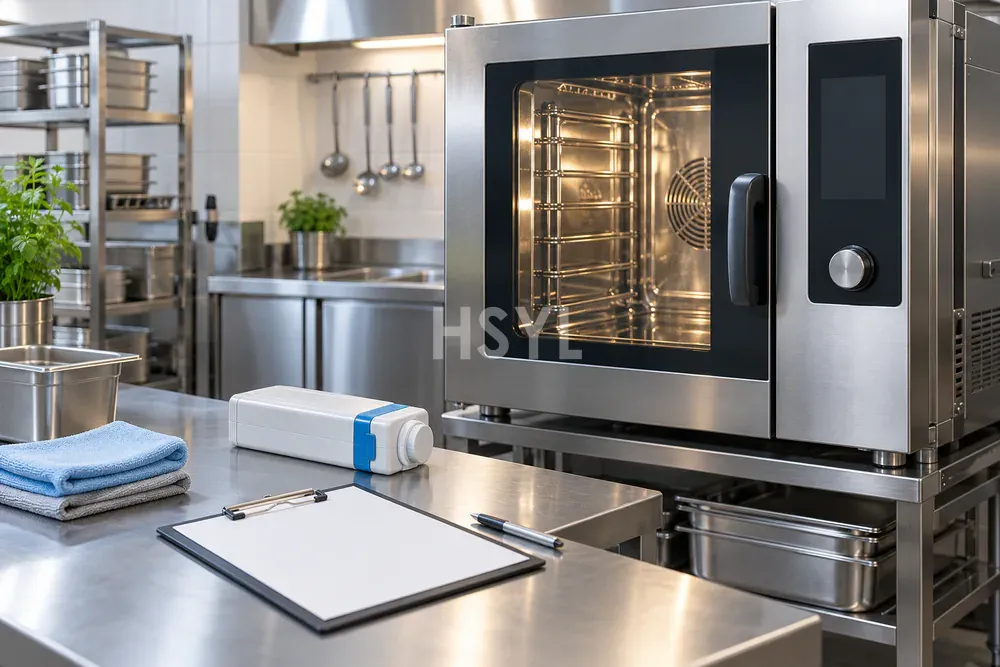
Combi oven cleaning cycle scheduling should reserve the complete interval during which the equipment is unavailable for its next approved cooking task. That interval can include preparation, permitted cooling conditions, the selected cleaning procedure, inspection and return to operation. A program's displayed duration alone may not describe the production gap.
Use the actual model's controlled operating and cleaning instructions as the starting point. The schedule should support those instructions, not shorten them to fit a meal deadline.
Build the cleaning window from observed work
Identify the procedure that applies
Record the machine configuration, menu load and cleaning program or permitted manual procedure selected under the manufacturer's instructions. Identify the approved products and accessories, who performs the work and what makes the equipment ready for the next task.
Document portals such as the RATIONAL download library illustrate the need for product-specific instructions. Obtain the equivalent current documents for the installed machine rather than applying a procedure from another brand.
Measure more than the program countdown
Observe the complete approved sequence. Include the permitted preparation steps, removal or handling of accessories, any required waiting condition, the cleaning operation and the authorized checks before restart. Record operator attendance separately from equipment occupation; they are different resources in the daily plan.
Use repeat observations under representative menu conditions. The longest routine interval may occur after a different food load from the normal morning program. Keep the reason for a longer sequence visible instead of replacing the measurement with an attractive average.
Place the next production release on the same timeline
Write the time the next menu must enter the oven and the preceding tasks that need the cavity. This shows whether cleaning fits between releases, belongs after a defined production block or requires a different approved menu arrangement. Include the time needed to restore the offered equipment to the next operating condition.
A simple planning example
Suppose an illustrative observation allocates 12 minutes to approved preparation, 38 minutes to the selected procedure and 10 minutes to the required inspection and return-to-operation work. The complete reserved interval is 60 minutes. These are hypothetical planning inputs, not a manufacturer program duration or a recommended cleaning procedure.
If the next cooking release is due before that interval ends, the schedule is unresolved. The response may be to change the production sequence, provide a suitable independently verified backup position or select another permitted operational arrangement with the responsible team. Removing an approved step to make the calendar fit is not a valid capacity calculation.
Keep a margin appropriate to observed interruptions and the service consequence. State how the margin was chosen; a universal percentage is unlikely to describe both a lightly used oven and a heavily loaded multi-shift operation.
Release a schedule the team can maintain
- Assign an owner to the cleaning window and another role where an independent release check is required.
- Keep the controlled instructions and approved consumables accessible to the people doing the work.
- Mark the equipment status so another operator does not assume the cavity is available.
- Record the actual beginning, completion and release times.
- Retain an interruption or failed release condition and follow the approved escalation route.
- Review the window when menu, load, staffing, accessories or machine configuration changes.
Use the record to discuss equipment selection. A kitchen evaluating one shared cavity against multiple production positions should include cleaning occupation in the comparison, alongside cooking and changeover time. Otherwise, the menu may appear to fit only because necessary downtime has disappeared from the plan.
For that wider decision, use the combi oven production-duty guide with the exact model information and your measured timeline. A useful equipment enquiry states both the cooking requirement and the approved work needed to keep the equipment ready for the following service.