Direct Answer / Key Takeaway: Plan combi oven production backup with menu priorities, compatible loads, shared-utility risks and a rehearsed transfer sequence for peak meal service.
Combi oven production backup should be designed around the meal that still has to be served when an intended cooking position is unavailable. Buying a second cavity is only part of that decision. The kitchen needs a menu priority, a permitted transfer process and evidence that the remaining arrangement can perform the essential work.
Start with a specific contingency: which position is unavailable, when the interruption occurs and what service obligation remains. The plan becomes testable when the team can identify the products, release times and resources affected.
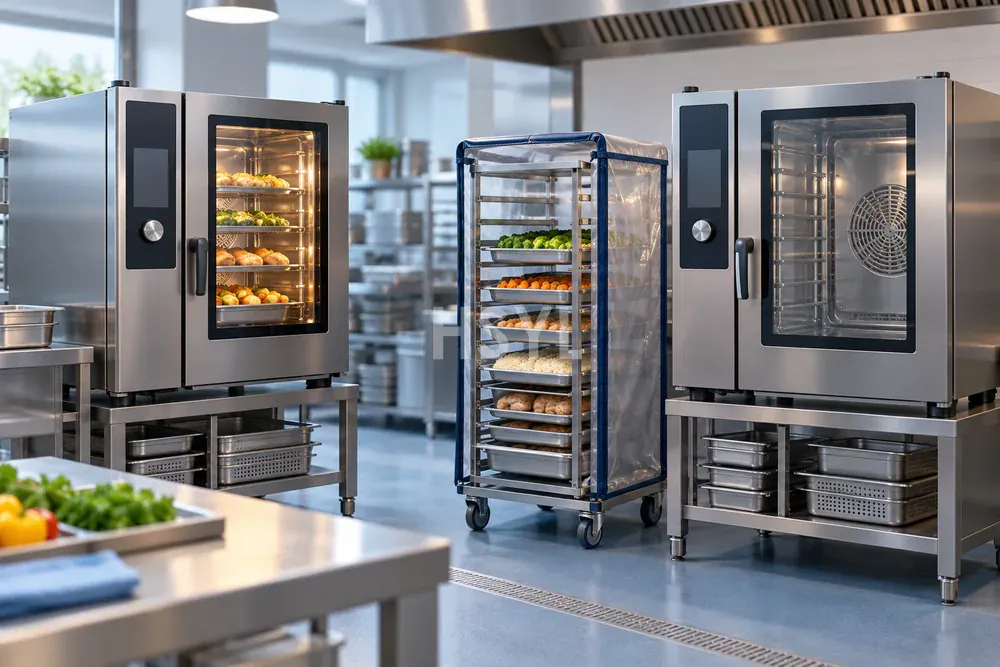
Classify the work that must continue
List the menu jobs assigned to each oven during the critical service window. Record their cooking families, preparation-ready times, container requirements and approved product results. Identify which jobs are essential, which can be rescheduled and which need an approved alternative menu decision.
Keep unfinished work visible. A tray already in a interrupted process may need a different disposition from a prepared tray that has not entered cooking. Those decisions belong to the facility's approved food-safety and production procedures; they should not be improvised by the person trying to keep the queue moving.
Check whether the backup can perform the assigned task
Confirm the exact remaining equipment, its accessories, usable loading arrangement and approved recipe conditions. Similar nameplate descriptions do not establish that every load can be transferred unchanged. Demonstrate any required alternative process before treating it as a routine fallback.
Include preparation, operator attendance, cleaning occupation and unload space in the backup timeline. A spare cooking position may still depend on an already occupied workbench or an employee assigned to another critical task.
| Dependency | Contingency question |
|---|---|
| Utilities | Could the same interruption affect both positions? |
| Accessories and containers | Does the backup have a validated compatible load? |
| People | Who operates and checks the transferred work? |
| Cleaning and preparation | When is the remaining equipment actually available? |
| Dispatch | Can accepted output reach the meal window? |
Rehearse the released scenario
Use a planned, safe exercise representing the agreed unavailable position. Do not create a hazardous fault to make the rehearsal realistic. Competent staff should use the approved operating conditions and record the simulated interruption boundary clearly.
An illustrative rehearsal might declare one oven unavailable before a lunch release, then transfer only the essential menu jobs to the verified alternative. Record the time each job becomes ready, its accepted result and the handover to service. This is a scenario method, not a claim that a particular two-oven combination maintains full production.
Measure the consequence rather than only the remaining oven's utilisation. Record delayed meals, rejected work, additional handling and jobs that could not be completed. If the contingency requires a reduced menu or another authorized service arrangement, preserve that decision in the released plan.
Check the common dependencies
Ask the responsible engineering team to identify dependencies shared by the equipment. Power supply, water treatment, drainage, ventilation or a common control arrangement may affect both positions. Whether independence is necessary, and how it is demonstrated, depends on the service consequence and actual design.
Keep the enquiry specific. Request the exact interfaces, configuration and supporting documents relevant to the contingency. A supplier's general description of two units is not a completed site assessment.
Keep the plan usable during service
Write who declares the contingency, who authorizes product disposition, which menu jobs take priority and where the current procedure is available. Identify the trigger for resuming normal service and the record required after an interruption.
Review the plan when menu, equipment, utilities or service windows change. The production-duty selection framework helps define the normal workload; a rehearsed contingency adds the evidence needed to decide what backup capacity is genuinely useful to the operation.