Direct Answer / Key Takeaway: Plan a commercial pot washing workflow for kettles, GN pans, baking trays and containers. Match handling, load fit, approved cleaning and clean return.
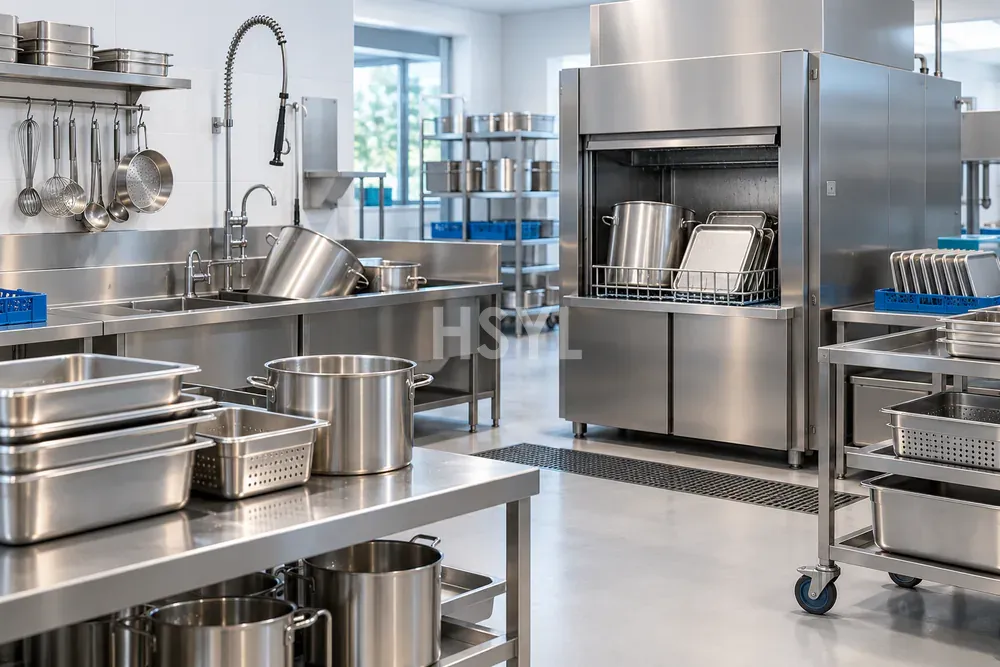
A commercial pot washing workflow begins when the cooking station finishes with a utensil and ends when that utensil is ready for its next approved use. The washing machine occupies only part of that route. Large pots, deep GN pans, baking trays and transport containers also need a workable way to arrive, be handled, drain and return to storage.
Build the wash area from the largest routine item and the busiest return wave. A machine that accommodates a small demonstration pan may still leave staff with an impractical route for the actual cookware used during batch production.
Follow one large item from cooking to clean return
At the cooking station
Record the utensil's dimensions, empty mass, condition on release and expected residue. Identify whether it can be moved by one person under the site's approved handling arrangements or whether mechanical assistance is needed. Include lids, inserts and detachable components as separate items when their treatment differs.
Record release time. A cluster of roasting pans arriving after a banquet batch creates a different demand from a steady stream of small utensils. The return record should identify both the peak quantity and the production station needing the clean items back.
At the receiving position
Provide a defined dirty-item landing point that does not block a working aisle or clean-item route. Check the actual item fit, drainage and handling height. A trolley can make transport easier while adding another parking and cleaning task; include that task in the layout.
Agree the approved preparation sequence for the material, residue and washing equipment. Model-specific instructions govern permitted treatments and loading. Do not create a chemical concentration, soak duration or temperature solely to make the line calculation convenient.
At the wash and unload positions
Check the complete loading envelope, including the way the item is carried and positioned. Opening size alone does not establish useful fit. Handles, rims, supports and the required orientation may affect whether an item can be loaded and removed safely through the approved procedure.
Manufacturer materials such as the Hobart prep washer operator resources illustrate why a selected model needs its own loading and operating information. Use the equivalent controlled documents for the equipment being purchased.
Test with the utensils that cause the workload
Create a representative load set rather than choosing only the easiest items. Include the largest routine utensil, a typical high-residue item and the accessories returned during the same wave. Define the approved inspection and release criteria with the person responsible for sanitation.
Record preparation time, loaded work, interruptions, unloading, inspection, drying or draining conditions and clean transfer. Count rejected items separately. A rapid wash followed by a long handling wait does not establish a fast complete return cycle.
Illustrative planning case: twelve identified GN pans and four large pots return after a production batch. The useful requirement is to restore that set by the next scheduled cooking release, with the agreed preparation, inspection and handling included. It is not simply sixteen pieces divided by the machine's advertised cycle.
Repeat a trial where the next cooking release creates real time pressure. Observe whether staff can keep the approved procedure and maintain clean/dirty separation without temporarily storing utensils in unsuitable places. The record should preserve any interruption rather than treating it as an exceptional event outside production.
Place clean return where the next task can use it
Identify a clean landing and storage arrangement suited to the utensils. Confirm the route back to cooking, the usable space for large items and the method of keeping inspected items separate from those awaiting correction. If clean utensils travel on a trolley, specify how the trolley itself is released for that role.
Mark ownership at the handover. The washer operator needs to know whether release means ready for storage, ready for production or still awaiting an additional approved step. A visible status prevents the next station from assuming that an item is complete merely because it has left the machine.
Ask suppliers to demonstrate the handling envelope
Send photographs and dimensions of the real utensils, the return wave, required return deadline, available staff and site layout. Ask the supplier to confirm machine fit, supports, approved orientation, access, utilities and cleaning instructions for the exact offer.
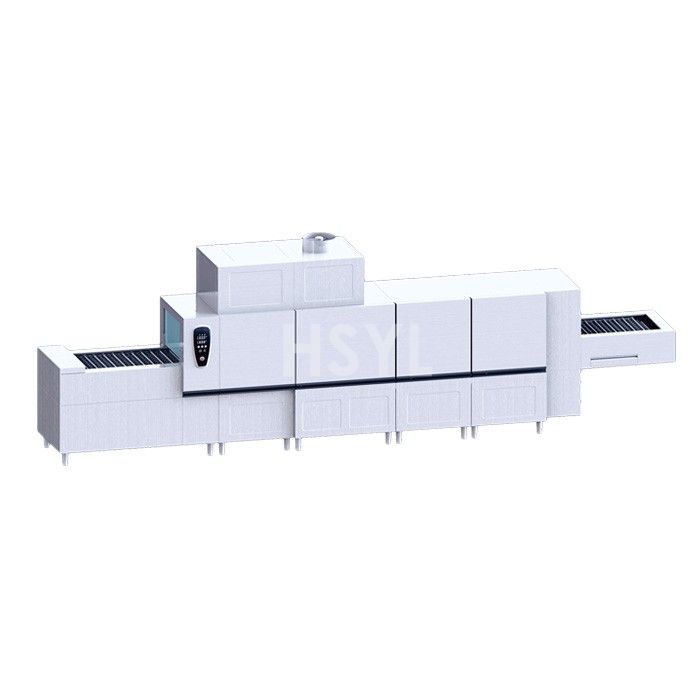
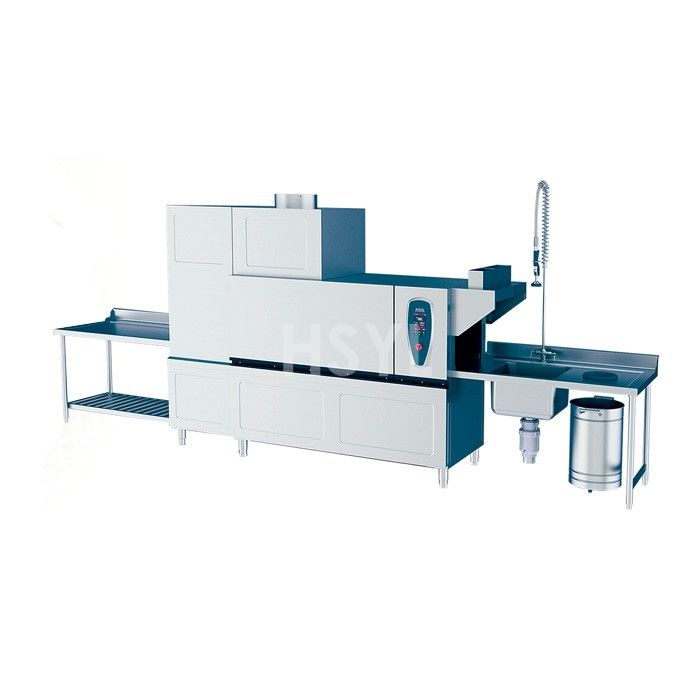
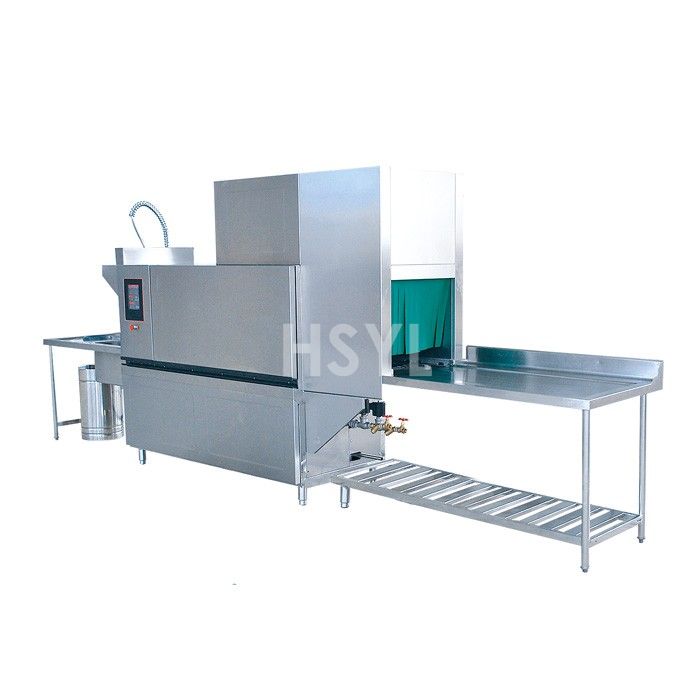
Evaluate the complete wash-area requirement alongside the commercial dishwashing equipment range. The purchasing decision should connect accepted cleaning with practical handling and timely clean return, leaving a record that the production team can use.