Direct Answer / Key Takeaway: Test mixed-product combi oven loads with a pan layout, product criteria and timed observations. Distinguish accepted output from occupied tray positions.
A combi oven may have enough rack positions for several products while the proposed combination still fails the meal schedule. One product may finish early, another may require a different surface result, and opening the door to remove a pan changes the operating sequence. Test the proposed mixed load as a production method rather than adding together pan counts.

Establish a single-product reference
Run a repeatable reference for each relevant product using the agreed recipe, starting condition, pan type and acceptance criteria. Record the equipment configuration and operator sequence. Without that baseline, a mixed-load result is difficult to interpret: the load combination may be blamed for an issue already present in the individual process.
Describe what acceptable output means for the actual menu. Product-specific food safety criteria belong to the site's approved process; appearance alone does not establish them. Include quality and dispatch timing as separate observations.
Draw the proposed load before running it
Give each rack position a reference and identify the product, pan dimensions, loading depth and starting quantity. Note intentionally empty positions. Do not fill an apparent gap merely because the oven door will close; confirm the intended loading arrangement against the applicable instructions.
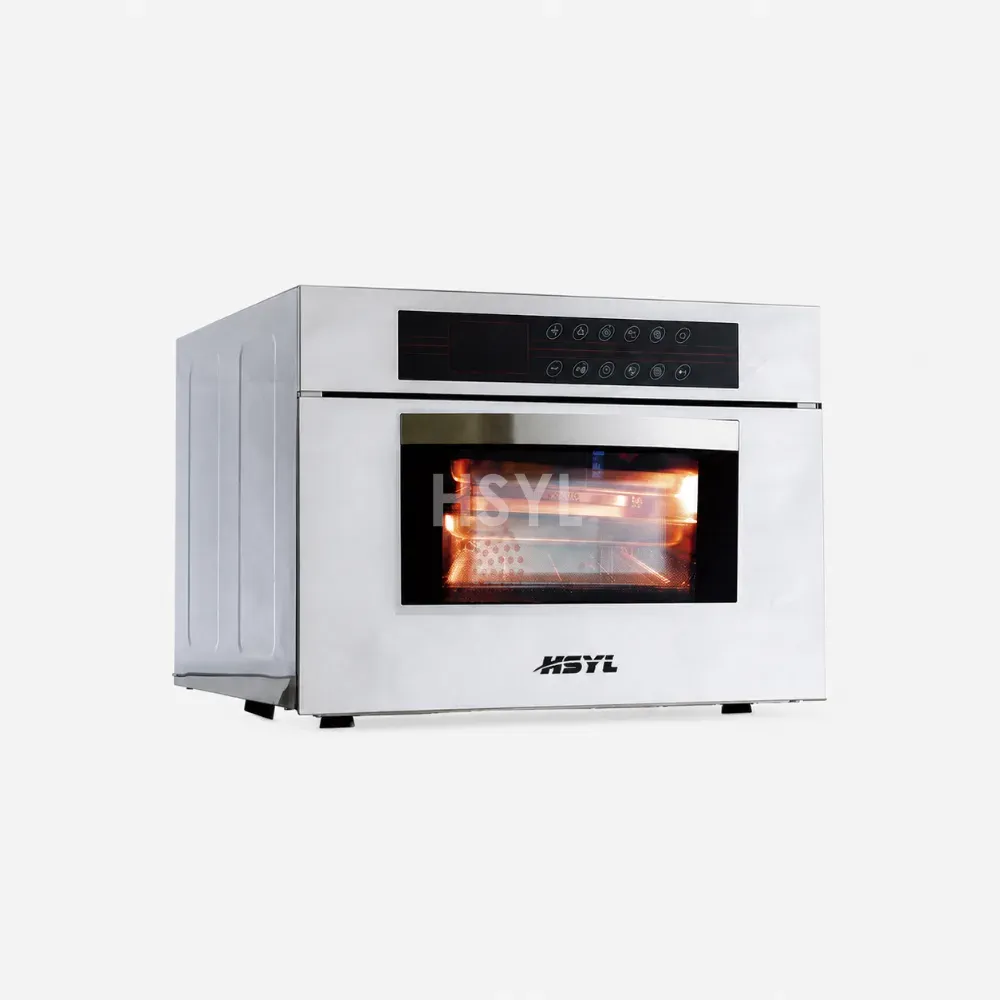
The HCO10.2E commercial combi oven page identifies a product for an enquiry. Request the configuration-specific loading and operating documents before assigning a production duty to that model or to any alternative.
Run a sequence that resembles service
Record loading, program start, planned inspections, door openings and each product's release time. If mixed production requires an operator to remove one product and continue another, include that intervention in the trial. A demonstration in which every pan remains untouched until the end does not test a staggered-release proposal.
Keep enough of the reference conditions unchanged to make the comparison useful. Where the proposed method deliberately changes a condition, label it as a change rather than burying it in the result.
| Observation | What the record should preserve |
|---|---|
| Starting load | Recipe identity, quantity, pan and position |
| Operator sequence | Loading order, door events and removals |
| Product result | Agreed checks and any rejected quantity |
| Service result | Accepted output released in the required window |
| Repeatability | Conditions and results of subsequent trials |
Decide whether the combination is useful
A useful comparison can conclude that the combination works only for certain menus, that fewer occupied positions produce more acceptable food, or that separate batches are easier to control. These are actionable outcomes; the trial does not need to justify a full chamber.
Retain the approved loading diagram and operating sequence with the menu record. When the product, pan or release pattern changes, review the affected combination. Use the broader industrial combi oven planning page for equipment context while keeping the tested mixed-load method specific to the actual operation.
Select the proposed cooking conditions with the combi oven mode guide. If comparing a six-tray combi oven with a twenty-tray roll-in combi oven, repeat the relevant load and dispatch checks for each offered configuration; an image or tray count does not establish equivalent output.