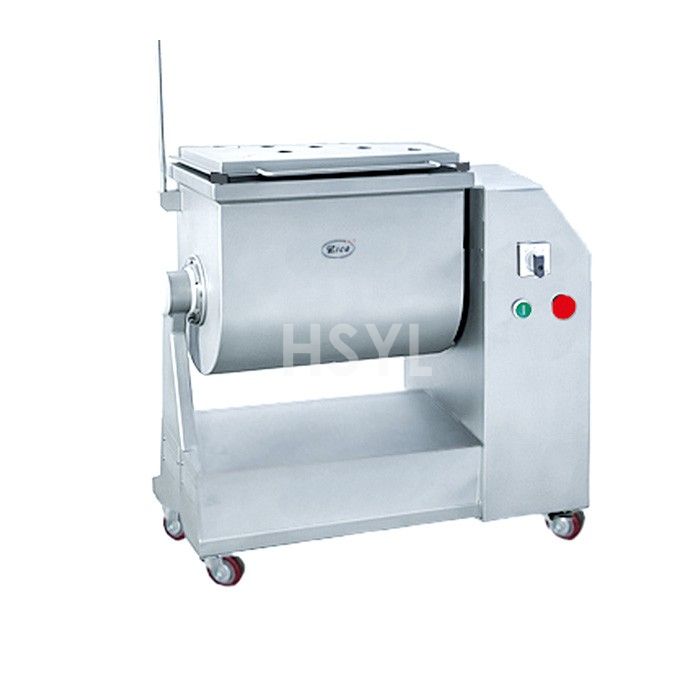
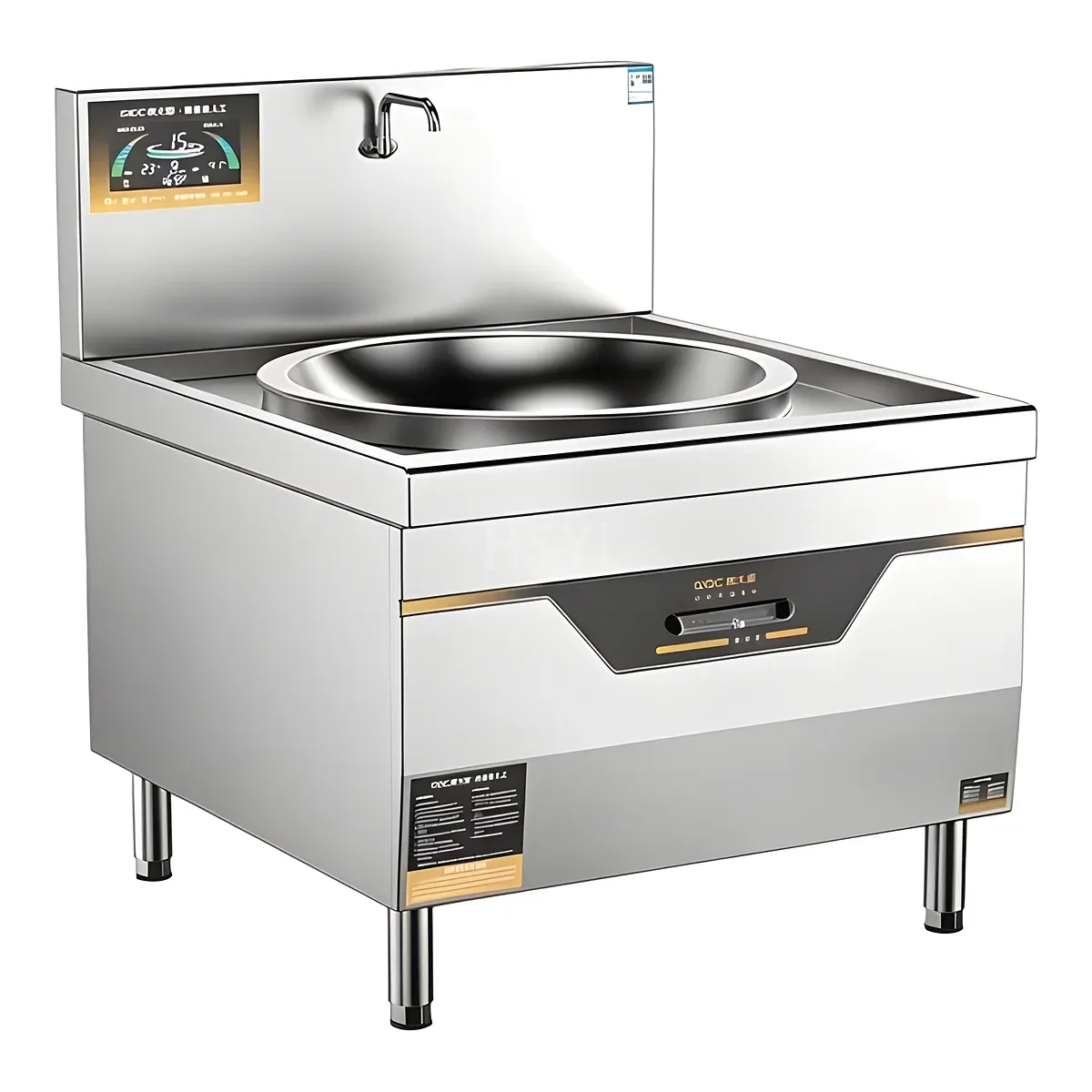
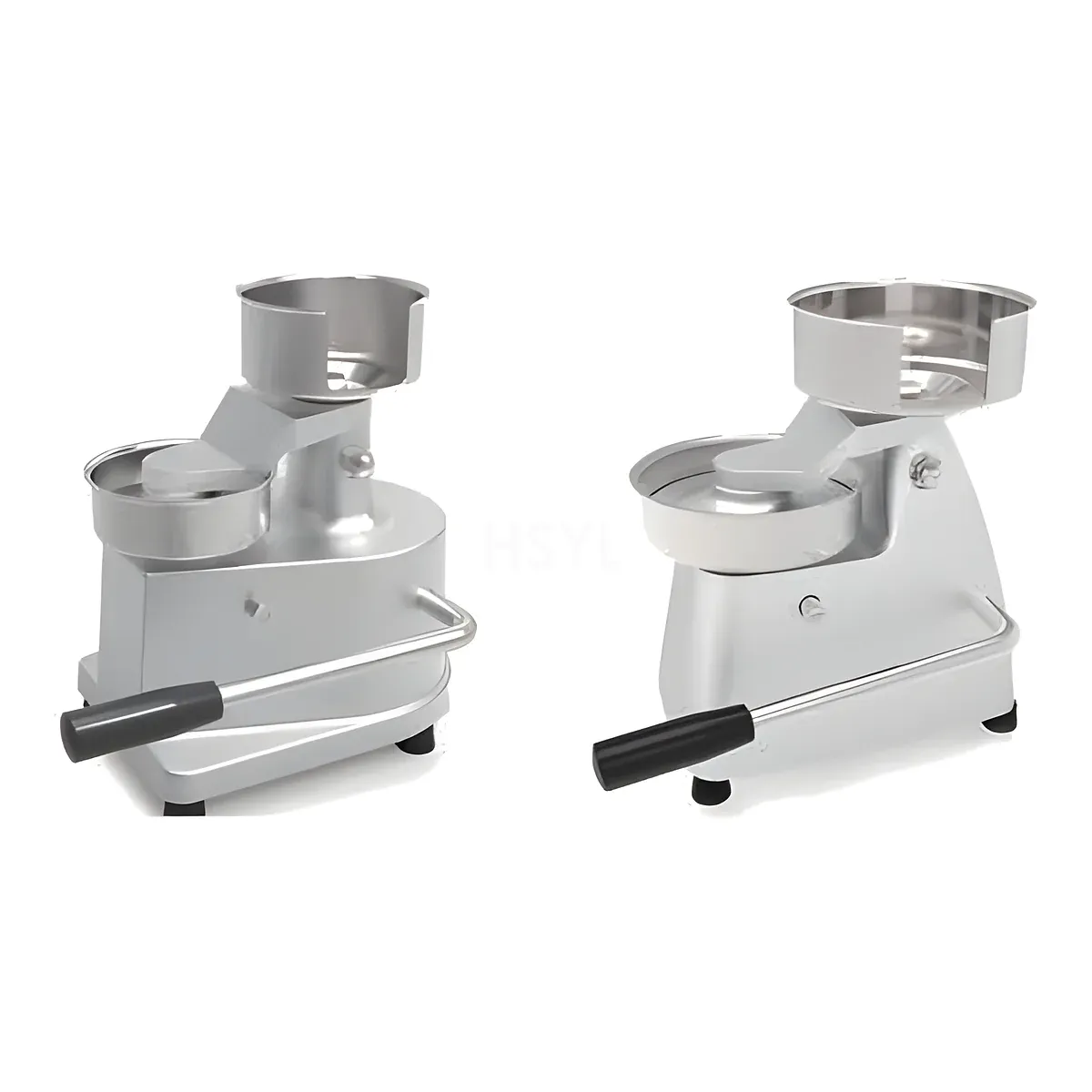
Direct Answer / Key Takeaway: Comprehensive engineering manual for Dough Mixer calculating hourly mass throughput and batch yields. Review OEM engineering specs and MEP standards from HSYL.
Mission-critical commercial food service relies upon uncompromising equipment architecture. For facility directors and project engineers evaluating Standard Duty Commercial Dough Mixer, this technical review delivers in-depth analysis across capacity formula, addressing dimensional tolerances, utility infrastructure, and regulatory quality assurance standards.
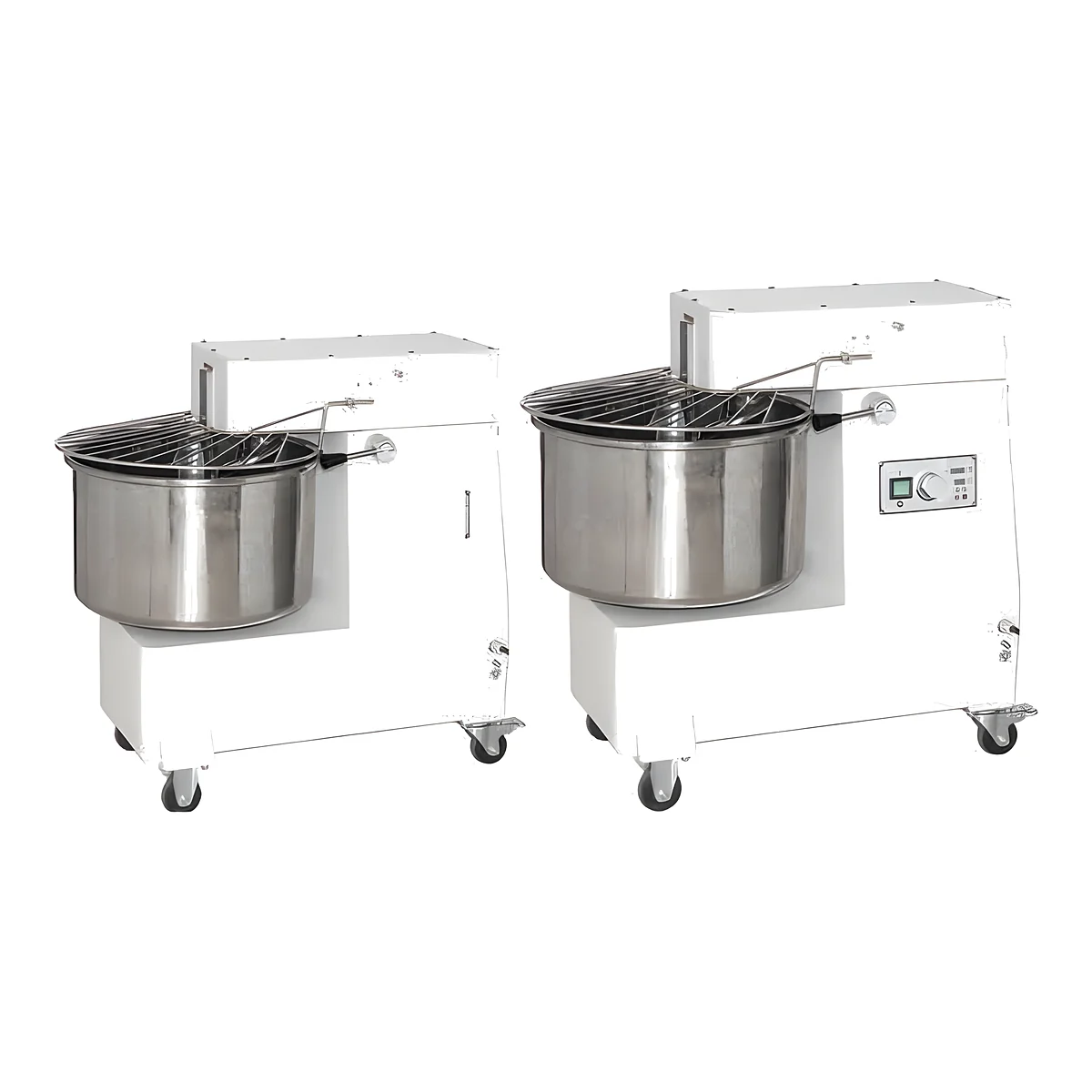
1. Facility Context, Ergonomics & Station Optimization: Capacity Formula
Hourly Mass Throughput Formulations & Culinary Yield Calculations:
Precise capacity sizing in commercial kitchens replaces guesswork with rigorous mass-balance formulations governing food density and thermal batch time. Production throughput is calculated via the fundamental hourly formula: Output Capacity (kg/hr) = (Chamber Batch Load (kg) * Usable Pan Tiers * Finished Culinary Yield %) / ((Cooking Cycle Time (min) + Loading/Unloading Turnaround (min)) / 60). Designers establish raw ingredient bulk densities: bone-in chicken quarters average 4.5 kg per GN 1/1 hotel pan (65 mm depth); dense beef roasts achieve 8.0 kg per pan; roasted root vegetables load at 3.5 kg per pan. Furthermore, moisture loss and fat rendering impose empirical shrink factors (yields range from 75% for braised beef to 85% for steamed vegetables and 65% for high-temperature roasting). For an 8-minute turnaround cycle, a 10-tier GN 1/1 combi oven running a 32-minute chicken cycle delivers an effective processing speed of: (45 kg * 0.78 yield) / ((32 + 8) / 60) = 52.6 kg/hour of finished, ready-to-serve protein.
When sizing equipment for peak production hours, facility planners must reference verified kitchen workflow optimization and ergonomic layout design to ensure capacity reserves remain aligned with scheduled shift turnover targets.
2. Comprehensive Technical Specifications & Material Benchmarks
Engineering evaluation requires contrasting component fabrication, power consumption, and mechanical duty ratings. The comparative table below outlines operational parameters for Standard Duty Commercial Dough Mixer:
| Engineering Parameter | Standard Commercial Spec | Heavy-Duty Institutional Spec | Engineering Variance Threshold |
|---|---|---|---|
| Material Construction | Anodized aluminum alloy / AISI 304, 220V-240V 1N~ (370-750 W), thermal overload protection, IP55 | Full AISI 304 stainless steel housing, 380V-415V 3N~ (1.5-3.0 kW), gear-driven transmission, variable speed VFD | Slice thickness precision +-0.2 mm across commercial slicing range 0.5 mm to 14 mm |
| Primary Engineering Feature | Blade Metallurgy: High-carbon German stainless steel (58 HRC) hardened and ground for surgical precision edge retention | Reinforced industrial assembly with seamless continuous laser welds | Zero structural deflection under maximum rated loading |
| Operational Subsystem | Transmission Mechanism: Oil-bath gear transmission or multi-rib Poly-V belt eliminating blade slip during dense loads | High-efficiency heavy-duty components with dynamic feedback telemetry | Energy efficiency index within top 10% commercial benchmark |
| Sanitary & Safety Rating | Operator Safety: No-volt release safety switch, magnetic safety interlocks on hopper and ejection chute | IPX5 washdown protection with NSF/ANSI cleanability rating | Hermetic perimeter sealing preventing microbial colonization |
3. Fundamental Engineering Mechanics & Subsystem Architecture
Mechanical Torque Transmission & Precision Shear Dynamics: Heavy-duty food preparation machinery (planetary mixers, vegetable cutters, bowl cutters) utilizes hardened alloy gear trains or reinforced timing belts driven by totally enclosed fan-cooled (TEFC) induction motors. High mechanical reduction ratios deliver massive rotational torque at low RPM, slicing through dense fibrous root vegetables or kneading high-viscosity doughs without motor overheating. Precision-ground high-carbon stainless blades produce clean, unbruised cellular cuts, retaining cell moisture and extending the refrigerated shelf-life of prepared produce.
In institutional catering environments, equipment longevity is heavily governed by surface passivation and corrosion resistance. Units fabricated from high-grade austenitic stainless steel must maintain an uncompromised chromium oxide passivated boundary layer. Regular chemical cleaning with non-abrasive detergents prevents pitting attack from chlorinated sanitizers and atmospheric chlorides.
Understanding these thermodynamic and mechanical principles allows consulting engineers to optimize cycle times, reduce utility peak draw, and eliminate premature component fatigue.
4. Empirical Sizing Dynamics & Quantitative Capacity Modeling: Continuous Slicing Throughput Model
Sizing production machinery requires rigorous quantitative modeling to match kitchen peak load demands. The governing mathematical formulation below establishes throughput targets:
Throughput Capacity (kg/hr) = Motor RPM * Cutter Disc Diameter (m) * Blade Count * Food Density (kg/m3) * Feed Factor (0.65)
A commercial vegetable processor running 300 RPM with 4-blade slicing disc on cabbage: Processing rate = 300 * 4 * 0.45 * 0.65 = 351 kg/hour continuous vegetable prep capacity.
Practical sizing engineering requires accounting for the hidden ware factor. Beyond customer dining covers, back-of-house food preparation items (hotel pans, sheet trays, mixing bowls, and prep utensils) contribute an additional 15% to 20% to total kitchen processing loads. Furthermore, thermal transfer times for bulk foods follow the transient conduction square-law relationship (t is proportional to x^2), meaning doubling product depth from 50 mm to 100 mm in pans roughly quadruples core pull-down or heating times. Sizing calculations must incorporate these empirical variables to ensure uninterrupted kitchen workflow.
Employing this sizing method protects the kitchen from meal bottlenecks, prevents premature thermal and mechanical failure, and guarantees compliance with HACCP time-temperature critical control points (CCP).
5. Mechanical, Electrical & Plumbing (MEP) Rough-In Criteria
Successful field commissioning demands strict adherence to facility utility rough-in boundaries. Contractors and installation engineers must verify the following interface criteria for Standard Duty Commercial Dough Mixer:
- Power & Electrical Connection: Dedicated 220V or 380V connection with emergency stop mushroom button accessible to operator.
- Water Supply & Treatment: No water plumbing; washdown maintenance requires splash-proof IP55/IP65 electrical protection.
- Wastewater & Drainage Air Gap: Discharges must connect to temperature-resistant indirect waste lines with an unobstructed physical air gap, conforming to FDA Food Code Chapter 4 backflow mandates.
- Ventilation, Clearances & Environment: Heavy-duty neoprene vibration-damping machine mounts; 600 mm clear perimeter operator working zone; wall-mounted emergency stop button within arm reach.
Critical Field Installation Redlines & Contractor Pitfalls: During jobsite rough-ins, engineering teams must enforce the following compliance boundaries to prevent premature equipment failure and voided warranties:
- Safety Interlock Bypass Ban: Never bypass safety bowl guards or feed chute limit switches; bypassed safety mechanisms represent the primary cause of industrial kitchen amputations.
- Gearbox Lubrication Level: Inspect food-grade gear oil levels quarterly; running gear transmissions dry destroys bronze worm gears under heavy dough kneading resistance.
- Washdown Water Ingress: Do not pressure-wash motor ventilation louvers directly; high-pressure spray forces water past IP55 seals, shorting motor stator windings.
6. Factory Acceptance Testing (FAT) & Regulatory Compliance
Quality verification at the factory gate prevents costly field rework and operational commissioning delays. Before dispatch, Standard Duty Commercial Dough Mixer undergoes structured testing per factory acceptance testing and compliance verification:
- Operational Cutting Precision Verification: 50 kg test batch sliced; thickness uniformity measured with digital caliper +-0.2 mm.
- Dual Safety Microswitch Trip Response: Pusher arm or feed hopper opening terminates blade rotation in <= 0.8 seconds.
- Continuous Motor Thermal Run Test: Operated continuously at full rated load for 90 minutes verifying winding temp rise < 45K.
- No-Volt Release Protection Audit: Main power disconnected and restored; motor verified remaining locked in safe off state.
To satisfy commercial health department and third-party food safety audits, modern commercial appliances incorporate automated HACCP data logging. The onboard microcomputer logs real-time time-temperature decay profiles, cycle durations, and sanitizing rinse parameters with cryptographic timestamps. Facilities personnel can export encrypted audit logs via USB or Modbus/Ethernet IoT interfaces, providing verifiable compliance dossiers to satisfy municipal health inspectors during unannounced regulatory audits.
7. Operational Troubleshooting, Error Codes & Field Remedies
Rapid fault isolation restores meal production lines and protects equipment longevity. The diagnostic table below outlines field troubleshooting procedures for Standard Duty Commercial Dough Mixer:
| Fault Code | Root Cause Diagnostic | Corrective Maintenance Procedure |
|---|---|---|
| M01 | Hopper Magnetic Safety Interlock Fault | Pusher arm sensor misaligned; motor start circuit disabled until interlock contact closes. |
| M02 | Poly-V Drive Belt Tension Loss | Drive belt stretched under heavy cheese grating loads; adjust motor pivot bracket tensioner. |
| M03 | Motor Thermal Relay Stalling Cutout | Continuous root vegetable processing exceeded duty cycle; allow 20 min cool-down before reset. |
8. Scheduled Maintenance Regimen & Longevity Engineering
Extending operating lifespan and safeguarding food hygiene requires disciplined preventive maintenance. Adhere to the following scheduled servicing regimen:
| Maintenance Interval | Inspection Scope & Component Target | Acceptable Operating Standard |
|---|---|---|
| Daily Shift End | Disassemble feed hopper and cutting disc, hand-wash in warm sanitizing solution | Discs and chamber free of vegetable shreds, cutter spindle wiped and lightly oiled |
| Weekly Operational | Inspect blade edge sharpness with visual magnifier, check pusher arm alignment | Blade edge keen without nicks or rolled edges, pusher arm glides freely without binding |
| Monthly Service | Check drive belt tension, inspect motor shaft oil seal for grease weeping | Belt deflection 8 mm under moderate thumb force, oil-bath transmission seal bone dry |
| Annual Overhaul | Sharpen or replace cutting disc blades, inspect magnetic interlock switches | Blades restored to razor sharpness, safety interlock circuit resistance < 0.05 Ohm |
All mechanical maintenance interventions must utilize NSF H1 certified food-grade synthetic lubricants on drive bearings and moving pivot hinges. Electrical connections, magnetic contactors, and grounding continuity must be re-torqued and tested annually using calibrated digital multimeters to prevent thermal resistance hot spots.
Recommended First-Year Commissioning & Preventative Spares Kit: For international projects and remote institutional complexes, maintaining an on-site critical spares inventory avoids catastrophic service interruptions:
| Part Description | Recommended Quantity | Engineering Maintenance Function |
|---|---|---|
| High-Carbon Stainless Slicing Blade Set | 2 Sets | Razor-sharp surgical grade stainless cutting blades resisting dulling and acid corrosion. |
| Planetary Planetary Drive Pinion Gear | 1 Set | Hardened alloy mechanical reduction gear maintaining high torque under thick dough kneading. |
| Safety Interlock Limit Switch Kit | 2 Pieces | Waterproof IP67 micro-switches ensuring motor stops when safety guard is raised. |
| High-Torque Synchronous Timing Belt | 1 Piece | Reinforced aramid-fiber belt transmitting motor drive without slippage. |
9. International Freight Crating & Ocean Transit Engineering
Global ocean freight exposes heavy commercial appliances to harsh maritime conditions, dynamic vessel motion, and rough port handling. To guarantee pristine arrival of Standard Duty Commercial Dough Mixer, export logistics incorporate:
- Cutting Discs Heavy Foam Case: Slicing and grating discs packed in dedicated foam-lined wooden accessory case.
- Machine Motor Base Transit Bracing: Motor housing bolted directly through rubber feet to internal wooden skid base.
- VCI Anti-Corrosion Wrap: Aluminum and stainless surfaces sealed inside anti-tarnish moisture barrier foil.
- ISPM-15 Certified Timber Crate: Foam-lined export crate with heavy-duty strap bindings and lifting lugs.
For comprehensive wiring schematics, spare parts exploded diagrams, and maintenance schedules, consult the official technical documentation and installation manuals provided by HSYL engineering.