Direct Answer / Key Takeaway: Technical B2B engineering guide on Jacketed Cooking Kettle duty cycle planning in high-volume QSR kitchens. Check MEP hookups and factory specs from HSYL.
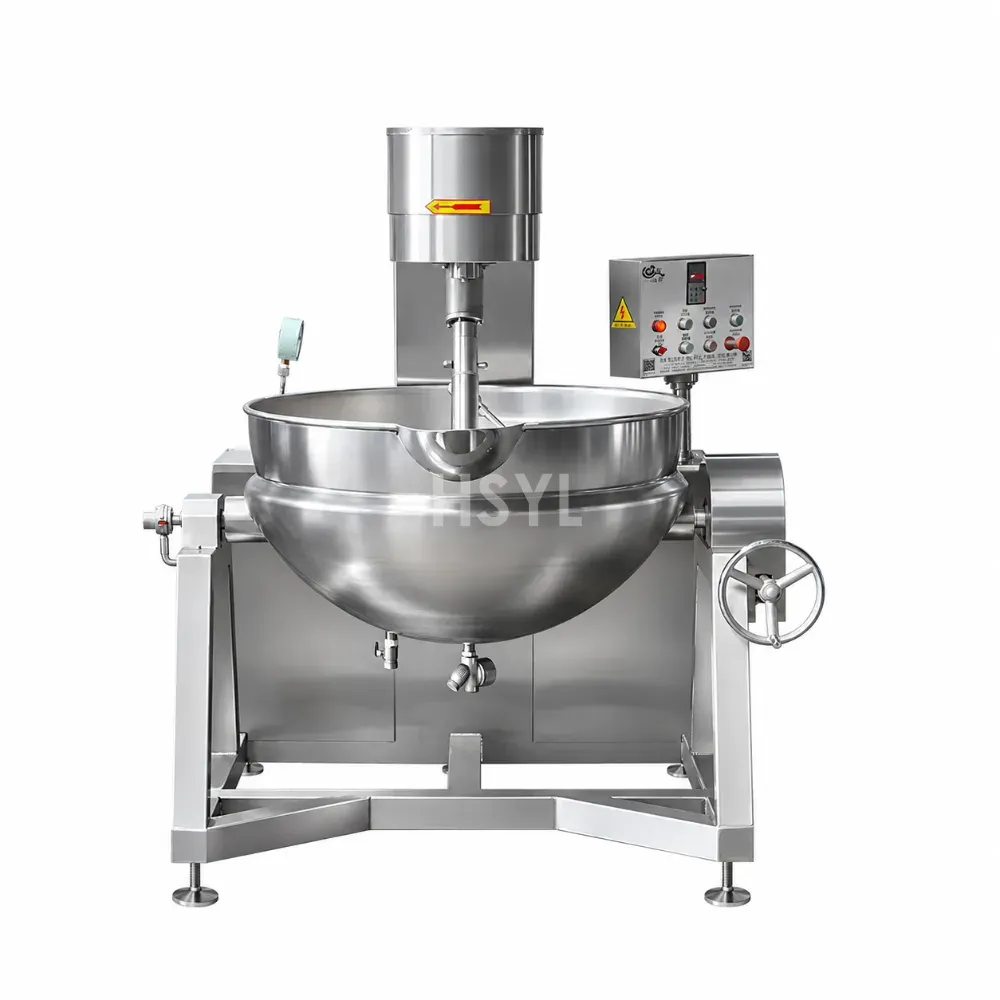
In institutional catering facilities and industrial food production complexes, specifying Standard Duty Jacketed Cooking Kettle serves as a foundational operational milestone. This comprehensive engineering dossier examines physical parameters across duty cycle in high-volume qsr fast food franchises, establishing validated throughput sizing, interface rough-in standards, and factory commissioning metrics.
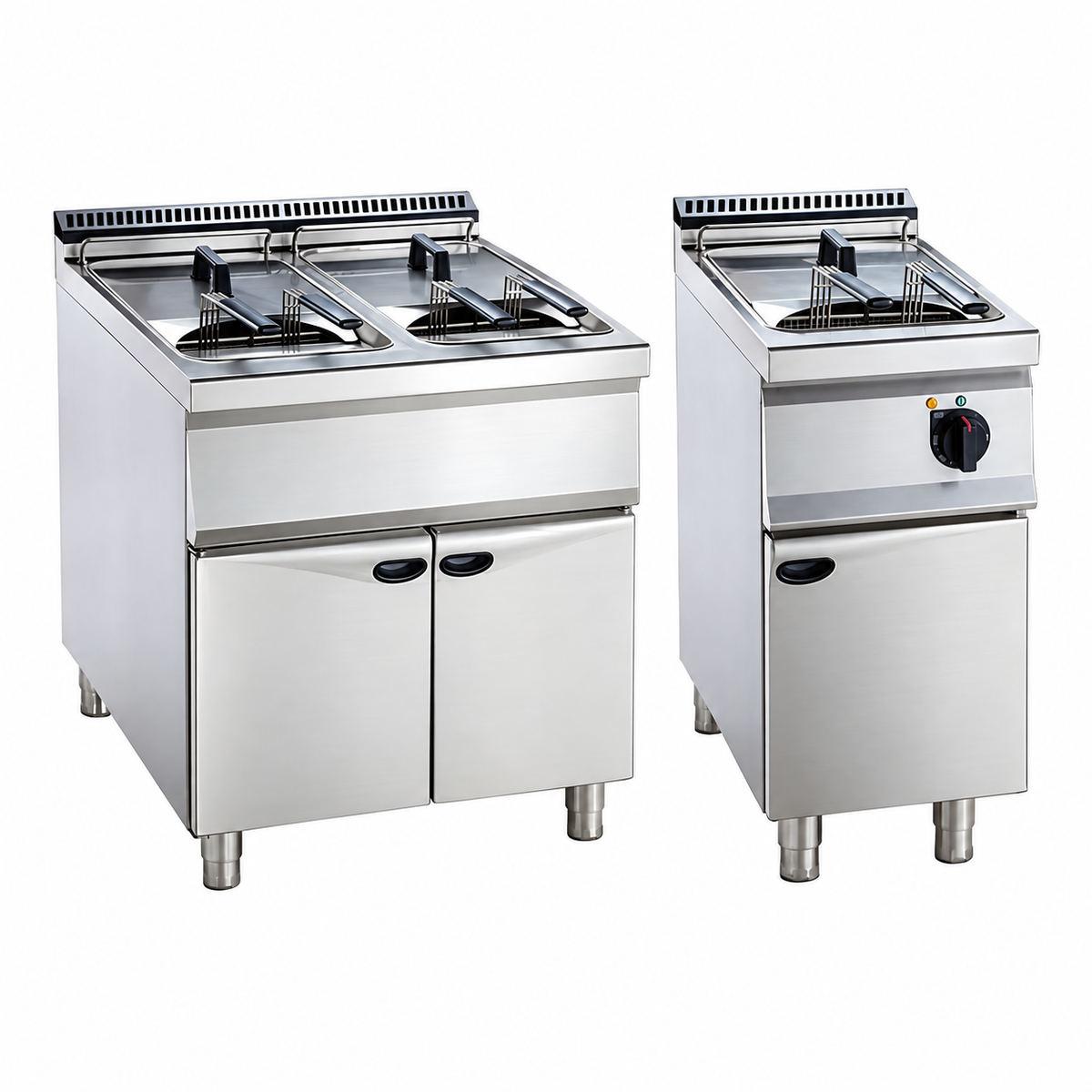
1. Operational Strategy & Production Workflow Integration: Duty Cycle in High-Volume QSR Fast Food Franchises
High-Volume QSR Franchise Duty Cycles & Peak Wave Reliability:
Quick-Service Restaurant (QSR) high-turnover chains subject commercial kitchen machinery to punishing 16 to 18-hour continuous duty cycles with zero tolerance for peak-hour downtime. Operational demand is concentrated in intense 120-minute lunch (11:30–13:30) and dinner (17:30–19:30) velocity spikes, generating up to 60% of total daily transaction volume. Equipment thermal architecture must deliver ultra-rapid temperature recovery: after loading full baskets of -18 deg C frozen products, cavity or oil temperatures must recover to setpoint within 90 seconds to prevent soggy oil absorption or core undercooking. Operator controls must feature standardized one-touch programmable icons with USB lockouts, eliminating human error across entry-level rotating crew shifts. Heavy-duty internal contactors, solid-state relays with oversized heat sinks, and ruggedized switches are engineered to withstand over 250,000 mechanical actuation cycles annually.
When sizing equipment for peak production hours, facility planners must reference verified steam-jacketed tilting kettle capacity guides to ensure capacity reserves remain aligned with scheduled shift turnover targets.
2. Technical Engineering Matrix & Physical Parameters
The following technical matrix defines benchmark physical specifications, operational consumption values, and material thresholds for Standard Duty Jacketed Cooking Kettle units across standard commercial and heavy-duty institutional tiers:
| Engineering Parameter | Standard Commercial Spec | Heavy-Duty Institutional Spec | Engineering Variance Threshold |
|---|---|---|---|
| Material Construction | AISI 304 (1.5 mm), 380V-415V (24-36 kW) or Direct Steam 1.5-3.0 bar, 100-200L volume | AISI 316L inner kettle liner (2.0-3.0 mm), 380V-415V (45-60 kW), motorized tilting, variable speed scrape mixer | Pressure vessel hydrostatically tested to 1.5x design pressure per ASME Section VIII Div 1 |
| Primary Engineering Feature | Steam Jacket Rating: Full-hemispherical jacket with integrated vacuum relief valve and safety relief valve | Reinforced industrial assembly with seamless continuous laser welds | Zero structural deflection under maximum rated loading |
| Operational Subsystem | Agitator Mechanics: Heavy-duty planetary mixer with food-grade PTFE wall-scraping blades (0-60 RPM) | High-efficiency heavy-duty components with dynamic feedback telemetry | Energy efficiency index within top 10% commercial benchmark |
| Sanitary & Safety Rating | Tilting Mechanism: Self-locking worm gear reducer with motor-driven pour control up to 90 degrees | IPX5 washdown protection with NSF/ANSI cleanability rating | Hermetic perimeter sealing preventing microbial colonization |
3. Core Physical Operating Principles & Machine Architecture
Latent Heat Condensation & Pressurized Jacket Dynamics: Steam-jacketed kettles and pressure steamers utilize the latent heat of saturated steam condensing on internal vessel walls at pressures up to 50 psi (3.4 bar), yielding jacket temperatures up to 135 deg C. Unlike direct gas burner heating which creates localized thermal hotspots and product scorching, condensing steam transfers heat with an exceptional heat transfer coefficient exceeding 6,000 W/m2K uniformly across the entire hemispherical basin. Automatic thermostatic air vents continuously purge non-condensable atmospheric air, ensuring 100% pure saturated steam contact.
In institutional catering environments, equipment longevity is heavily governed by surface passivation and corrosion resistance. Units fabricated from high-grade austenitic stainless steel must maintain an uncompromised chromium oxide passivated boundary layer. Regular chemical cleaning with non-abrasive detergents prevents pitting attack from chlorinated sanitizers and atmospheric chlorides.
Understanding these thermodynamic and mechanical principles allows consulting engineers to optimize cycle times, reduce utility peak draw, and eliminate premature component fatigue.
4. Mathematical Throughput Formulation & Batch Calculations: Steam Thermal Transfer Mass Sizing
Accurate equipment sizing requires empirical calculation rather than subjective estimates. Design engineers utilize the following mathematical formulation to establish continuous throughput requirements:
Required Steam Duty (kg/hr) = [Food Batch Mass (kg) * Specific Heat (3.8 kJ/kgK) * Delta-T (75K)] / [Latent Heat of Steam (2257 kJ/kg) * Jacket Efficiency (0.84)]
For a 250L tilting kettle boiling soup from 20 to 95 deg C in 45 minutes: Net thermal requirement = 250 * 3.8 * 75 = 71,250 kJ; Required continuous steam supply = 71,250 / (2257 * 0.84 * 0.75 hr) = 50.1 kg/hr steam at 1.5 bar.
Practical sizing engineering requires accounting for the hidden ware factor. Beyond customer dining covers, back-of-house food preparation items (hotel pans, sheet trays, mixing bowls, and prep utensils) contribute an additional 15% to 20% to total kitchen processing loads. Furthermore, thermal transfer times for bulk foods follow the transient conduction square-law relationship (t is proportional to x^2), meaning doubling product depth from 50 mm to 100 mm in pans roughly quadruples core pull-down or heating times. Sizing calculations must incorporate these empirical variables to ensure uninterrupted kitchen workflow.
Employing this sizing method protects the kitchen from meal bottlenecks, prevents premature thermal and mechanical failure, and guarantees compliance with HACCP time-temperature critical control points (CCP).
5. MEP Engineering, Rough-Ins & Installation Standards
Proper site preparation and mechanical rough-ins are critical to ensure trouble-free installation of Standard Duty Jacketed Cooking Kettle. Engineering teams and MEP contractors must observe the following technical parameters:
- Power & Electrical Connection: Dedicated 3-phase supply for electric boiler / hydraulic tilt motor with emergency mushroom stop switch.
- Water Supply & Treatment: Treated softened water inlet for steam generation; high-capacity floor trough drain for washdown effluent.
- Wastewater & Drainage Air Gap: Discharges must connect to temperature-resistant indirect waste lines with an unobstructed physical air gap, conforming to FDA Food Code Chapter 4 backflow mandates.
- Ventilation, Clearances & Environment: Dedicated drainage floor trough with stainless grating beneath tilting kettle spout; safety relief valve discharge piped downward within 100 mm of floor.
Critical Field Installation Redlines & Contractor Pitfalls: During jobsite rough-ins, engineering teams must enforce the following compliance boundaries to prevent premature equipment failure and voided warranties:
- Safety Relief Valve Discharge: Steam jacket relief valve discharge pipe must be plumbed downward to within 100 mm of floor drain; never cap or reduce pipe diameter.
- Pouring Trough Overhang: Tilting kettle lip must overhang floor drainage trough by at least 150 mm throughout full 90-degree tilt arc to prevent boiling wash splash onto chef footwear.
- Saturated Steam Dryness: Verify incoming steam dryness fraction exceeds 0.95; wet boiler steam causes water hammer and halves the thermal heat transfer coefficient.
6. Quality Assurance, FAT Commissioning & Standards Protocol
Prior to shipment from the manufacturing facility and upon delivery to the job site, Standard Duty Jacketed Cooking Kettle must undergo rigorous quality assurance auditing. Facility managers should follow factory acceptance testing and compliance verification to verify all factory acceptance testing (FAT) documentation:
- Hydrostatic Pressure Vessel Proof Test: Steam jacket pressurized to 4.5 bar (1.5x working pressure) for 30 minutes with zero deformation.
- Steam Safety Relief Valve Pop-Off Calibration: Pressure relief valve verified lifting precisely at 3.0 bar (+-0.1 bar).
- Motorized Kettle Tilting Smoothness: 90-degree full tilt and return cycle tested under 250 kg water load with zero gear binding.
- Scrape Agitator Contact Uniformity: Visual chalk rub test ensuring PTFE scraper blades maintain 100% continuous contact with kettle liner.
To satisfy commercial health department and third-party food safety audits, modern commercial appliances incorporate automated HACCP data logging. The onboard microcomputer logs real-time time-temperature decay profiles, cycle durations, and sanitizing rinse parameters with cryptographic timestamps. Facilities personnel can export encrypted audit logs via USB or Modbus/Ethernet IoT interfaces, providing verifiable compliance dossiers to satisfy municipal health inspectors during unannounced regulatory audits.
7. Diagnostic Matrix & Failure Mode Remedies
Unplanned equipment downtime interrupts service and compromises kitchen safety. Engineering teams should consult the following diagnostic matrix for common operational error codes and remedies:
| Fault Code | Root Cause Diagnostic | Corrective Maintenance Procedure |
|---|---|---|
| E09 | Boiler Water Level Conductive Probe Fault | Mineral scaling on high/low conductive probes; clean probe tips to prevent false low-water dry firing. |
| E15 | Steam Jacket Safety Pressure Valve Weeping | Jacket pressure exceeded 3.2 bar or seat seal worn; test relief lever and check steam trap. |
| E20 | Scraper Mixer VFD Motor Overload | Excessive food viscosity or foreign object jam; inspect paddle clearance and motor torque settings. |
8. Preventive Maintenance Lifecycle & Inspection Intervals
To protect capital investment and maintain steady kitchen productivity, preventative maintenance must be performed according to an engineered schedule:
| Maintenance Interval | Inspection Scope & Component Target | Acceptable Operating Standard |
|---|---|---|
| Daily Shift End | Flush kettle interior with clean warm water, wipe tilting lip and scraper blades | Kettle interior mirror-clean, scrapers free of food residue, drain plug valve seated |
| Weekly Operational | Test steam safety relief valve manual lift lever, grease trunnion pivot bearings | Relief valve releases freely without sticking, trunnions lubricated with high-temp grease |
| Monthly Descaling | Perform citric acid descale of internal steam boiler elements and water probes | Boiler element tubes free of lime scale, conductive probe tips clean and sensitive |
| Annual Overhaul | Inspect worm gear gearbox backlash, replace jacket vacuum relief valve seat | Gear backlash within 0.5 mm, vacuum valve seals tight preventing jacket implosion |
All mechanical maintenance interventions must utilize NSF H1 certified food-grade synthetic lubricants on drive bearings and moving pivot hinges. Electrical connections, magnetic contactors, and grounding continuity must be re-torqued and tested annually using calibrated digital multimeters to prevent thermal resistance hot spots.
Recommended First-Year Commissioning & Preventative Spares Kit: For international projects and remote institutional complexes, maintaining an on-site critical spares inventory avoids catastrophic service interruptions:
| Part Description | Recommended Quantity | Engineering Maintenance Function |
|---|---|---|
| Spring-Loaded Pressure Relief Valve | 1 Piece | Factory-calibrated 50 psi safety valve protecting steam jacket structural envelope. |
| Thermostatic Air Vent Capsule | 2 Pieces | Automatically purges air from steam jacket to maintain 100% saturated steam contact. |
| Worm Gear Bronze Drive Pinion | 1 Set | Guarantees smooth, non-slip manual or motorized tilting during hot liquid pouring. |
| Steam Trap Bimetallic Inverted Element | 1 Piece | Discharges liquid condensate continuously without steam blow-through. |
9. Export Packaging, Marine Transit & Logistics Protection
For international buyers and hospitality EPC contractors, safe transit of Standard Duty Jacketed Cooking Kettle across long-distance ocean voyages requires specialized industrial packing. Commercial equipment is vulnerable to saltwater moisture condensation, mechanical shock, and handling vibration. Factory dispatch standards encompass:
- Tilting Trunnion Transit Clamps: Structural steel transit brackets bolting kettle body securely to chassis frame.
- Agitator Arm Foam Enclosure: Mixer assembly strapped and padded with high-density polyurethane foam.
- Pressure Relief Valve Protective Cap: Valve discharge ports threaded with plastic blanking caps to prevent dirt ingress.
- ISPM-15 Certified Timber Crate: Heavy timber skid base engineered for overhead crane sling lifting.
For comprehensive wiring schematics, spare parts exploded diagrams, and maintenance schedules, consult the official technical documentation and installation manuals provided by HSYL engineering.