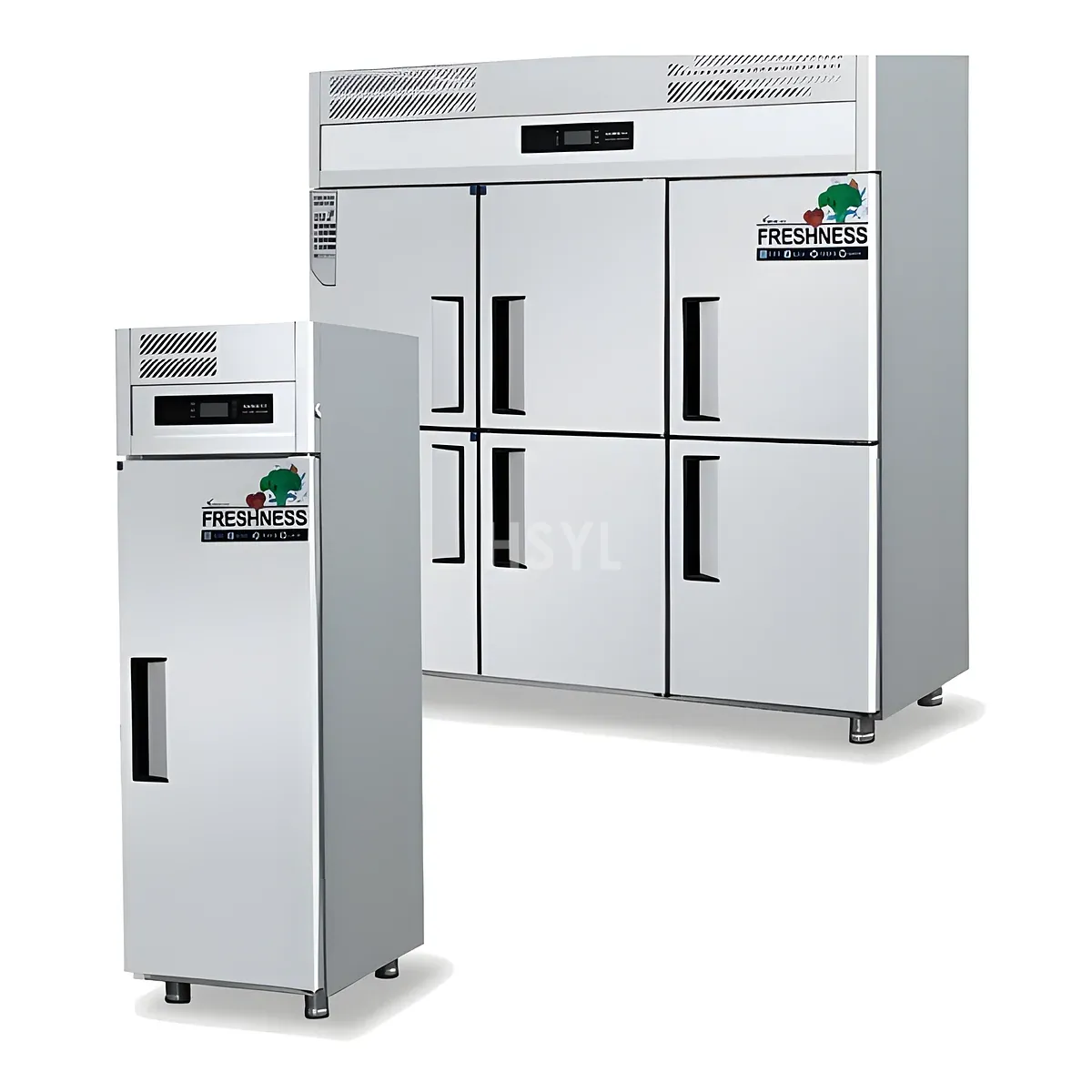
Direct Answer / Key Takeaway: Comprehensive engineering manual for Shock Freezer Cabinet calculating hourly mass throughput and batch yields. Check MEP hookups and factory specs from HSYL.
Mission-critical commercial food service relies upon uncompromising equipment architecture. For facility directors and project engineers evaluating Standard Duty Shock Freezer Cabinet, this technical review delivers in-depth analysis across capacity formula, addressing dimensional tolerances, utility infrastructure, and regulatory quality assurance standards.
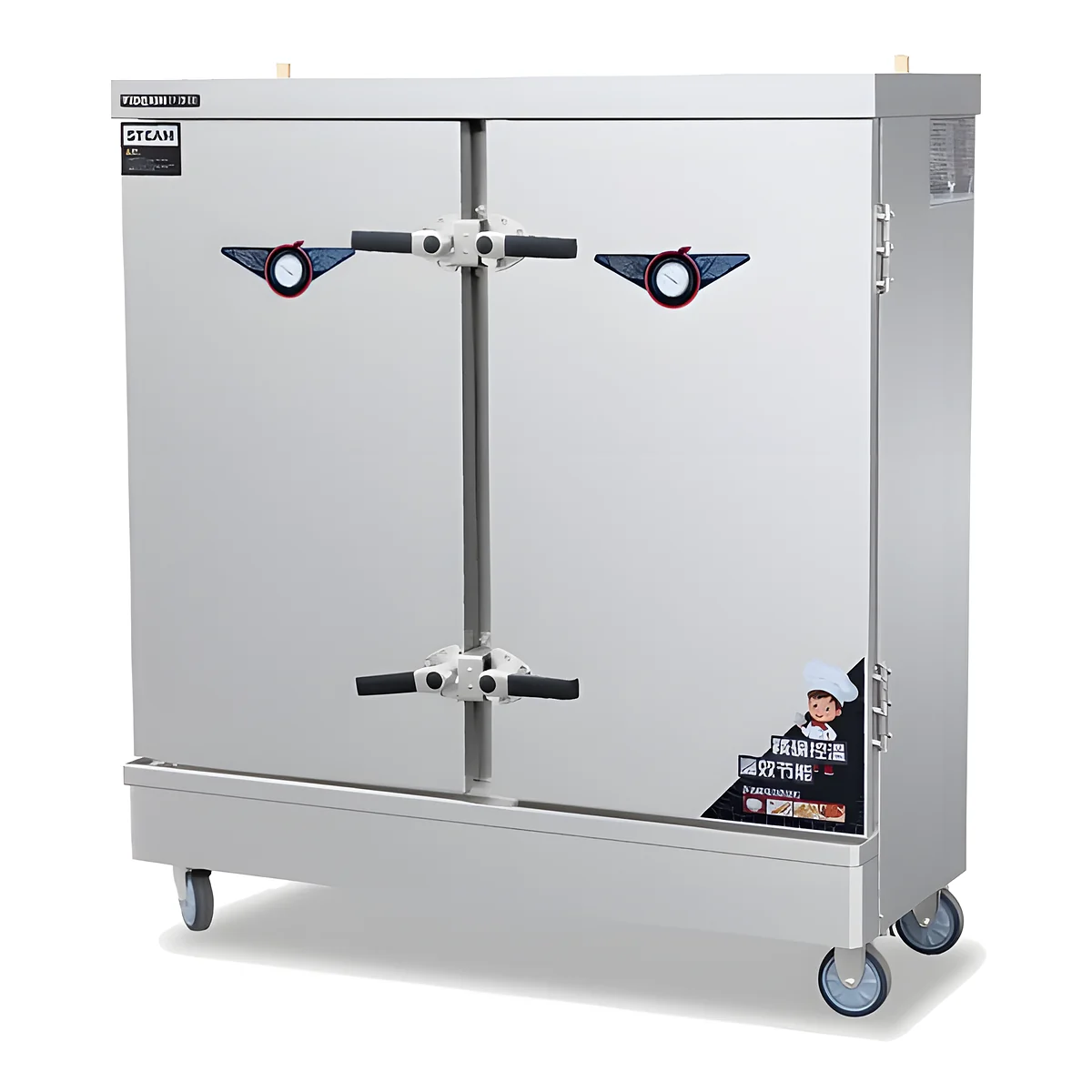
1. Facility Context, Ergonomics & Station Optimization: Capacity Formula
Hourly Mass Throughput Formulations & Culinary Yield Calculations:
Precise capacity sizing in commercial kitchens replaces guesswork with rigorous mass-balance formulations governing food density and thermal batch time. Production throughput is calculated via the fundamental hourly formula: Output Capacity (kg/hr) = (Chamber Batch Load (kg) * Usable Pan Tiers * Finished Culinary Yield %) / ((Cooking Cycle Time (min) + Loading/Unloading Turnaround (min)) / 60). Designers establish raw ingredient bulk densities: bone-in chicken quarters average 4.5 kg per GN 1/1 hotel pan (65 mm depth); dense beef roasts achieve 8.0 kg per pan; roasted root vegetables load at 3.5 kg per pan. Furthermore, moisture loss and fat rendering impose empirical shrink factors (yields range from 75% for braised beef to 85% for steamed vegetables and 65% for high-temperature roasting). For an 8-minute turnaround cycle, a 10-tier GN 1/1 combi oven running a 32-minute chicken cycle delivers an effective processing speed of: (45 kg * 0.78 yield) / ((32 + 8) / 60) = 52.6 kg/hour of finished, ready-to-serve protein.
When sizing equipment for peak production hours, facility planners must reference verified commercial blast chiller pull-down curve ratings to ensure capacity reserves remain aligned with scheduled shift turnover targets.
2. Comprehensive Technical Specifications & Material Benchmarks
Engineering evaluation requires contrasting component fabrication, power consumption, and mechanical duty ratings. The comparative table below outlines operational parameters for Standard Duty Shock Freezer Cabinet:
| Engineering Parameter | Standard Commercial Spec | Heavy-Duty Institutional Spec | Engineering Variance Threshold |
|---|---|---|---|
| Material Construction | AISI 304 (1.2 mm), 380V-415V 3N~ (4.5-8.0 kW), R452A/R449A, 50 kg blast capacity (+70 to +3 deg C in 90 min) | AISI 304/316 (1.5 mm), 380V-415V (12.0-22.0 kW), semi-hermetic scroll, 120 kg capacity (+70 to -18 deg C in 240 min) | Core food temperature pull-down strictly complies with HACCP CCP timeline thresholds |
| Primary Engineering Feature | Evaporator System: High-surface-area epoxy-coated copper tube with aluminum fins and dual high-static blowers | Reinforced industrial assembly with seamless continuous laser welds | Zero structural deflection under maximum rated loading |
| Operational Subsystem | Core Monitoring: 4-point heated core food needle probe with automatic recognition and recording telemetry | High-efficiency heavy-duty components with dynamic feedback telemetry | Energy efficiency index within top 10% commercial benchmark |
| Sanitary & Safety Rating | Refrigeration Circuit: Dual expansion valves with liquid injection for ultra-low temperature motor cooling | IPX5 washdown protection with NSF/ANSI cleanability rating | Hermetic perimeter sealing preventing microbial colonization |
3. Fundamental Engineering Mechanics & Subsystem Architecture
Cryogenic Crystallization & Rapid Thermal Extraction: Blast chillers and shock freezers are engineered to extract heat at extreme volumetric velocities, traversing the critical microbiological danger zone (+60 deg C to +10 deg C) within 90 minutes and deep freezing to -18 deg C within 240 minutes. By driving heat transfer via high-velocity air circulating at 5 to 7 m/s across evaporator coils with extended 8 mm fin spacing, cellular water rapidly undergoes phase change. This rapid thermal extraction produces micro-fine ice crystals within food cellular matrices, completely preventing macro-crystalline membrane rupture, fluid cellular bleeding, and texture degradation.
In institutional catering environments, equipment longevity is heavily governed by surface passivation and corrosion resistance. Units fabricated from high-grade austenitic stainless steel must maintain an uncompromised chromium oxide passivated boundary layer. Regular chemical cleaning with non-abrasive detergents prevents pitting attack from chlorinated sanitizers and atmospheric chlorides.
Understanding these thermodynamic and mechanical principles allows consulting engineers to optimize cycle times, reduce utility peak draw, and eliminate premature component fatigue.
4. Empirical Sizing Dynamics & Quantitative Capacity Modeling: HACCP Blast Pull-Down Rate Formula
Sizing production machinery requires rigorous quantitative modeling to match kitchen peak load demands. The governing mathematical formulation below establishes throughput targets:
Chilling Output (kg/cycle) = Net Core Food Mass / Max Allowable Time (90 mins from +70 deg C to +3 deg C per UK DoH/FDA Food Code)
To chill 80 kg of cooked protein cores from 75 deg C to 3 deg C within 90 minutes: Total thermal extraction = 80 kg * 3.4 kJ/kgK * 72K / 5400s = 3.63 kW net refrigeration capacity required at -25 deg C saturated suction temperature.
Practical sizing engineering requires accounting for the hidden ware factor. Beyond customer dining covers, back-of-house food preparation items (hotel pans, sheet trays, mixing bowls, and prep utensils) contribute an additional 15% to 20% to total kitchen processing loads. Furthermore, thermal transfer times for bulk foods follow the transient conduction square-law relationship (t is proportional to x^2), meaning doubling product depth from 50 mm to 100 mm in pans roughly quadruples core pull-down or heating times. Sizing calculations must incorporate these empirical variables to ensure uninterrupted kitchen workflow.
Employing this sizing method protects the kitchen from meal bottlenecks, prevents premature thermal and mechanical failure, and guarantees compliance with HACCP time-temperature critical control points (CCP).
5. Mechanical, Electrical & Plumbing (MEP) Rough-In Criteria
Successful field commissioning demands strict adherence to facility utility rough-in boundaries. Contractors and installation engineers must verify the following interface criteria for Standard Duty Shock Freezer Cabinet:
- Power & Electrical Connection: Dedicated 3-phase power supply with separate neutral and ground; sized for high locked-rotor compressor amps.
- Water Supply & Treatment: No water feed; high-volume defrost wastewater requires DN32 direct drain with floor drain trap cup.
- Wastewater & Drainage Air Gap: Discharges must connect to temperature-resistant indirect waste lines with an unobstructed physical air gap, conforming to FDA Food Code Chapter 4 backflow mandates.
- Ventilation, Clearances & Environment: Min 400 mm clearance around air-cooled condenser unit; heated gravity condensate floor drain line; smooth, level floor for roll-in trolley ramp docking.
Critical Field Installation Redlines & Contractor Pitfalls: During jobsite rough-ins, engineering teams must enforce the following compliance boundaries to prevent premature equipment failure and voided warranties:
- Food Pan Loading Depth Limit: Never load food into pans deeper than 65 mm (2.5 inches); pan depth follows a square-law relationship (t ~ x^2), where doubling depth quadruples core chilling time.
- Trolley Docking Floor Planarity: Ensure floor transition ramps are 100% planar; an unsealed ramp allows cold air stratification, preventing lower pan levels from reaching target +3 deg C.
- Mechanical Room Heat Extraction: Air-cooled condensing units reject massive heat loads; provide dedicated mechanical room ventilation to prevent condensing air temps exceeding 40 deg C.
6. Factory Acceptance Testing (FAT) & Regulatory Compliance
Quality verification at the factory gate prevents costly field rework and operational commissioning delays. Before dispatch, Standard Duty Shock Freezer Cabinet undergoes structured testing per factory acceptance testing and compliance verification:
- HACCP Thermal Pull-Down Verification: Verified with 80 kg simulated test mass chilling from +70 deg C to +3 deg C in <= 85 minutes.
- Needle Core Probe Calibration: 4-point temperature sensor immersion test in precision ice bath verifying accuracy to +-0.2 deg C.
- Blower Static Air Pressure Measurement: Evaporator high-velocity fans verified delivering >= 12 m/s face velocity across pan tiers.
- Semi-Hermetic Compressor Oil Pressure Safety: Oil differential pressure switch tested ensuring automatic shutdown within 90s on loss.
To satisfy commercial health department and third-party food safety audits, modern commercial appliances incorporate automated HACCP data logging. The onboard microcomputer logs real-time time-temperature decay profiles, cycle durations, and sanitizing rinse parameters with cryptographic timestamps. Facilities personnel can export encrypted audit logs via USB or Modbus/Ethernet IoT interfaces, providing verifiable compliance dossiers to satisfy municipal health inspectors during unannounced regulatory audits.
7. Operational Troubleshooting, Error Codes & Field Remedies
Rapid fault isolation restores meal production lines and protects equipment longevity. The diagnostic table below outlines field troubleshooting procedures for Standard Duty Shock Freezer Cabinet:
| Fault Code | Root Cause Diagnostic | Corrective Maintenance Procedure |
|---|---|---|
| E11 | Multi-Point Food Core Probe Sensor Drift | Heated needle core probe differential exceeds +-1.0 deg C; perform ice point zero offset calibration. |
| E16 | Evaporator Fin Coil Frost Bridging Alarm | Airflow delta-P sensor detects frozen fin blockage; trigger forced hot-gas defrost cycle. |
| E24 | Compressor Thermal Inverter Protection | Compressor winding temperature switch tripped; inspect condenser ventilation and ambient air CFM. |
8. Scheduled Maintenance Regimen & Longevity Engineering
Extending operating lifespan and safeguarding food hygiene requires disciplined preventive maintenance. Adhere to the following scheduled servicing regimen:
| Maintenance Interval | Inspection Scope & Component Target | Acceptable Operating Standard |
|---|---|---|
| Daily Post-Cycle | Disinfect needle probe with alcohol swab, run automatic sanitizing dry cycle | Probe sheath sanitized, chamber walls dry with zero ice accumulation on floor |
| Weekly Operational | Check door heated perimeter gasket, inspect evaporator drain pan line | Zero frost bridging on door frame, free-flowing drain without standing water |
| Monthly Cleaning | Clean condenser pre-filters, inspect fan blades for balance and vibration | Condenser face clear of flour dust, fan assemblies running without motor rumble |
| Annual Overhaul | Inspect expansion valve bulb contact, change liquid line filter drier core | Superheat stable at 4-6K, filter drier pressure drop < 0.2 bar across core |
All mechanical maintenance interventions must utilize NSF H1 certified food-grade synthetic lubricants on drive bearings and moving pivot hinges. Electrical connections, magnetic contactors, and grounding continuity must be re-torqued and tested annually using calibrated digital multimeters to prevent thermal resistance hot spots.
Recommended First-Year Commissioning & Preventative Spares Kit: For international projects and remote institutional complexes, maintaining an on-site critical spares inventory avoids catastrophic service interruptions:
| Part Description | Recommended Quantity | Engineering Maintenance Function |
|---|---|---|
| Heated Multi-Sensor Food Needle | 1 Piece | High-accuracy conical probe with integrated needle heater for quick extraction from frozen food. |
| Silicone Door Frame Thermal-Break Seal | 1 Set | Specially compounded low-temperature gasket resisting brittleness at -40 deg C. |
| Hot-Gas Defrost Solenoid Valve Coil | 1 Piece | Engages reverse refrigerant cycle to melt coil ice rapidly without chamber heating. |
| High-Static Evaporator Fan Blade Set | 1 Set | Maintains 5.5 m/s laminar air velocity across gastro-norm pan stacks. |
9. International Freight Crating & Ocean Transit Engineering
Global ocean freight exposes heavy commercial appliances to harsh maritime conditions, dynamic vessel motion, and rough port handling. To guarantee pristine arrival of Standard Duty Shock Freezer Cabinet, export logistics incorporate:
- Heavy-Duty Machine Skid: Reinforced structural steel base skid accommodating pallet jack and heavy sling crane rigging.
- Core Probe Internal Locking: Heated needle probes securely housed in cushioned transit holster inside the cabinet.
- Electronic Board Shock Damping: Microprocessor PCB enclosure mounted on rubber vibration isolators for marine transit.
- ISPM-15 Export Crate: Solid timber crating with vapor-barrier foil and external impact detection telemetry.
For comprehensive wiring schematics, spare parts exploded diagrams, and maintenance schedules, consult the official technical documentation and installation manuals provided by HSYL engineering.