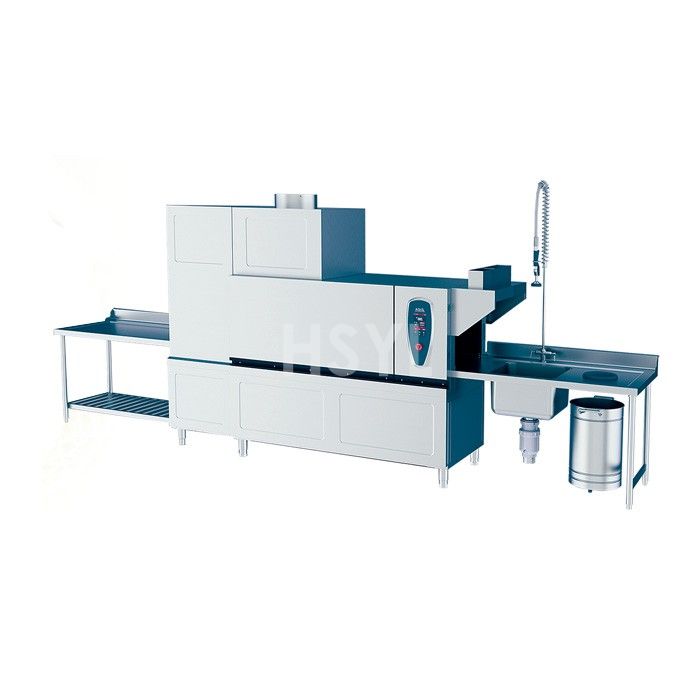
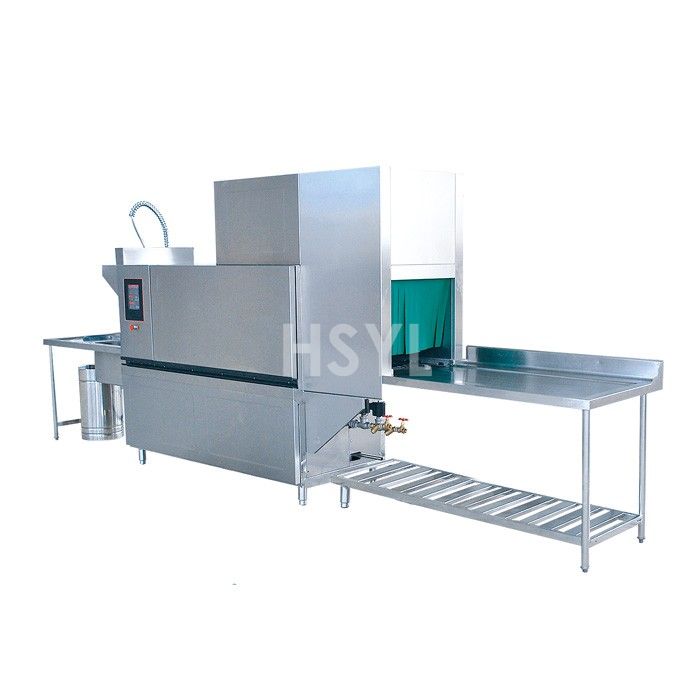
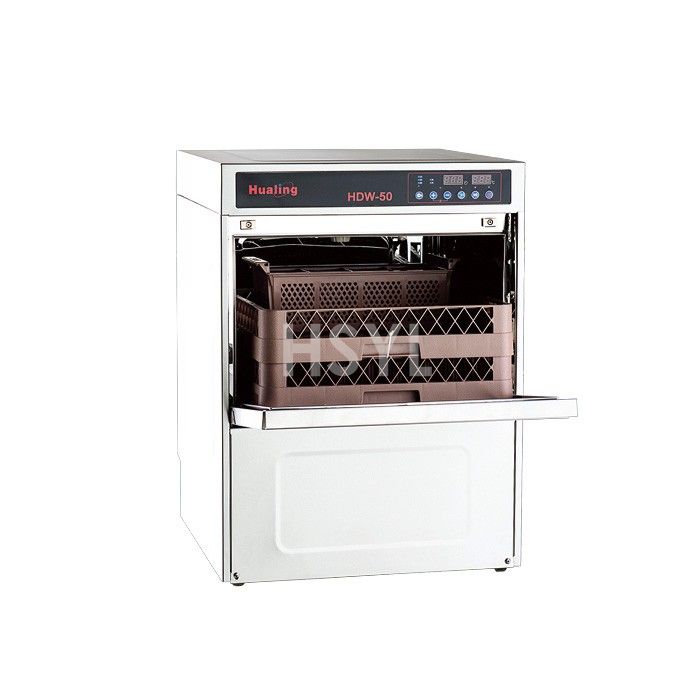
Direct Answer / Key Takeaway: Coordinate outlet geometry, rack travel, table support and the intended water path before fabricating a clean dish table. Obtain exact-model connection approval.
A table with the right overall height can still connect incorrectly to a dishwasher. The outlet edge, rack support, attachment and intended water path must agree as one interface. Obtain the machine and table drawings before cutting or fabricating the connection.
Identify the outlet configuration
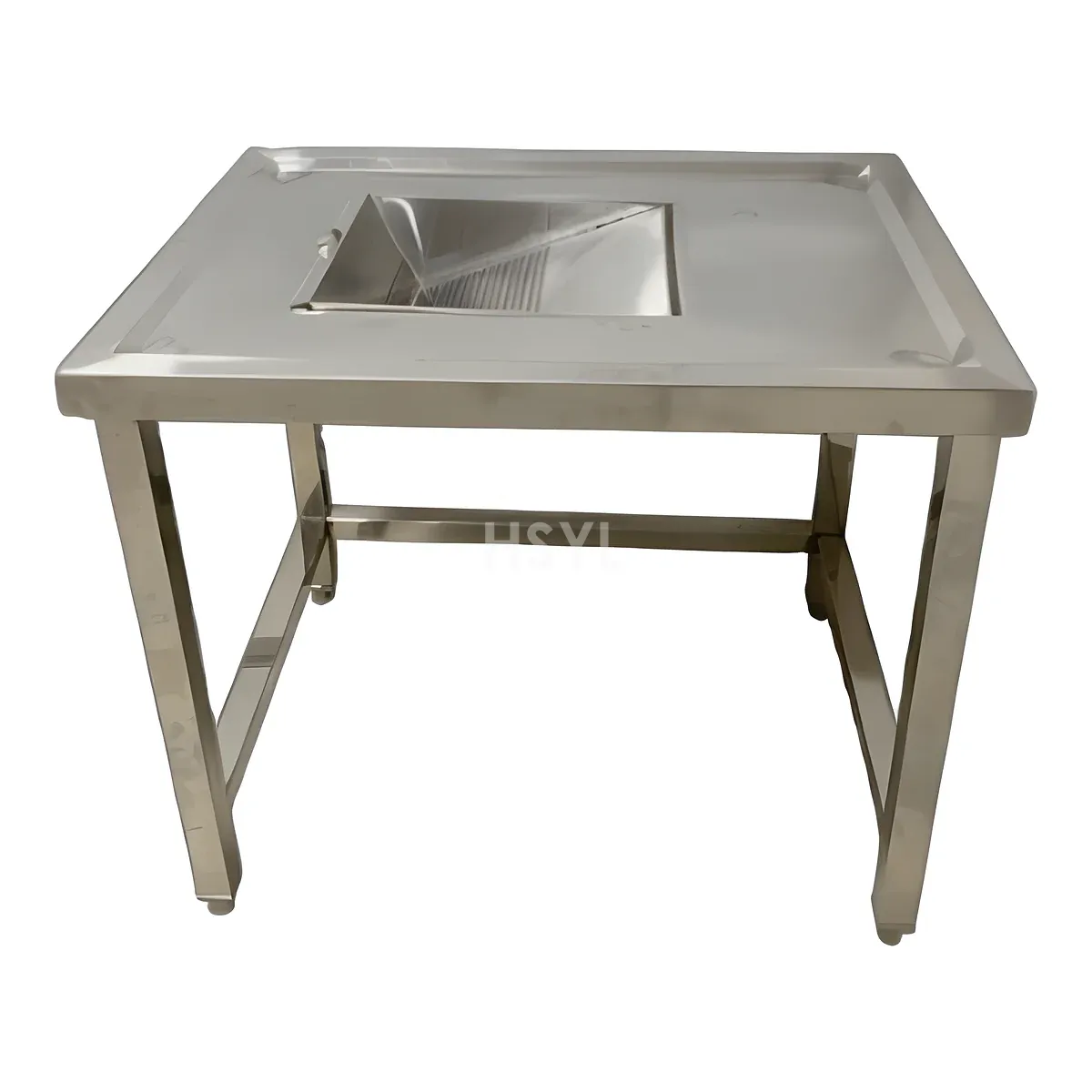
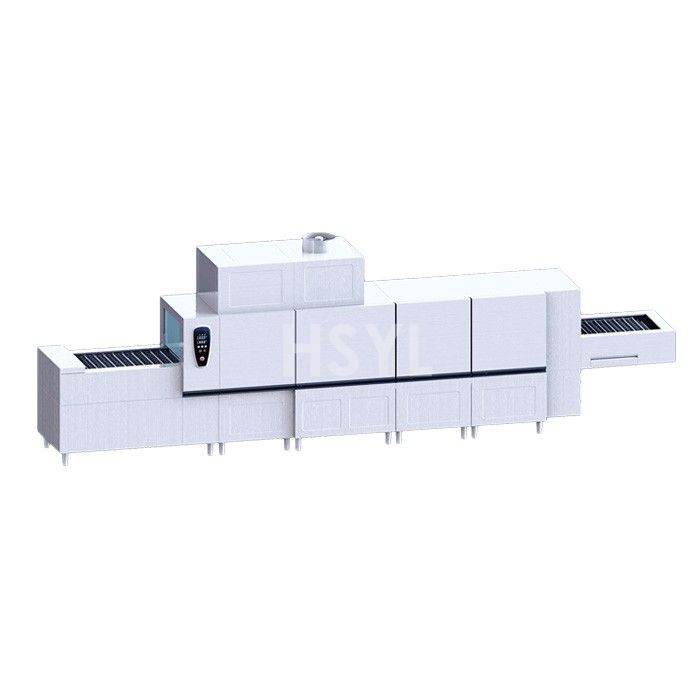
Record the exact dishwasher model, feed direction, installation arrangement and supplied rack type. Obtain the manufacturer's outlet and tabling details, including any relevant guides, brackets, covers and service envelopes. Confirm the ordered table is the clean-side unit; a soiled scraping/pre-rinse table is a different task and arrangement.
Table manufacturers publish machine-specific compatibility requirements. Use that as a reason to request an applicable detail, not to assume one brand's turned edge or fixing pattern is a standard for all machines.
Review the complete mechanical section
Show the table's support surface, connection edge, adjacent machine surface and the path of the actual rack. Check for a step, gap or interference that would catch the rack or force staff to lift it at the handoff. Include the door/hood or inspection-cover movement where applicable.
Confirm which parts carry the table and load. Do not assume the dishwasher wall is designed to support an unsupported extension. Specify the required legs, brackets and permitted fixing method from the relevant instructions. Field drilling or removing a machine bracket needs approval rather than a fabricator's convenience decision.
Resolve drainage before calling the interface finished
Identify where carry-over water is intended to travel in this design. It may use a prescribed return arrangement, table drain or another approved route. Do not apply a universal slope back into a wash tank or assume that every clean table requires a trapped waste connection.
Have the responsible installer coordinate the actual drainage and connection provisions. Record confirmed interfaces in the equipment utility schedule. A low spot created by mismatched supports should not become an accepted water-collection feature.
Approve assembly and verify the handoff
State who supplies the fixing/sealing components, who installs the joint and how it remains cleanable and serviceable. Use materials and methods permitted for the exact connection; a sealant name from another machine's manual does not establish suitability.
Before normal use, have the assigned parties check the assembled support, rack travel, required openings and water path through an agreed safe procedure. Test with the actual rack arrangement and an appropriate representative load without exposing staff to unprotected moving or hot components.
Retain the accepted detail and any field-approved changes. If the dishwasher or table is later replaced, review the interface again. The fact that two pieces of stainless equipment can be pushed together is not an approval of the connection.