Direct Answer / Key Takeaway: Estimate charbroiler service capacity from usable grate space, portion layout and turning time. Keep appliance dimensions and heat input separate from food output.
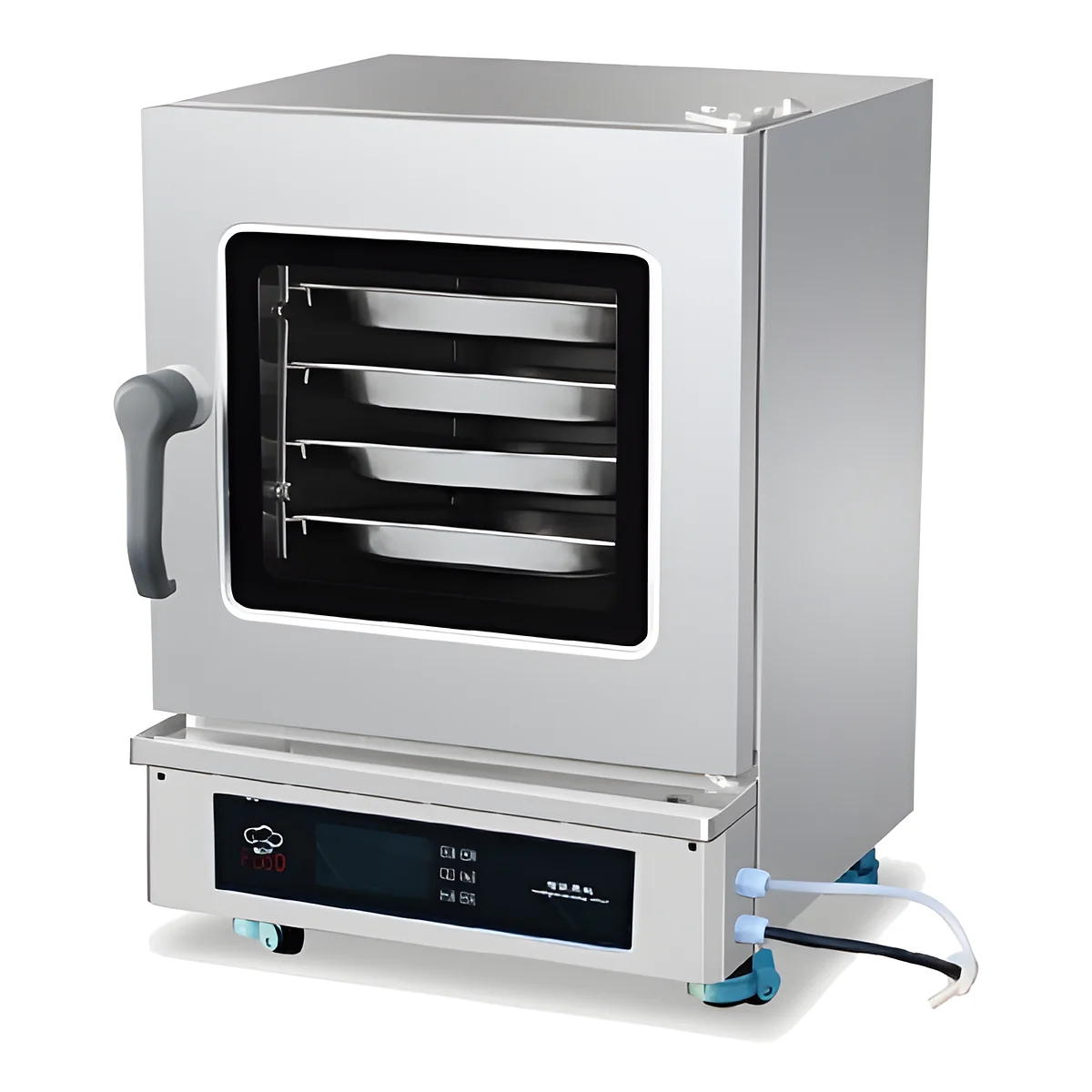
The external width of a charbroiler is useful for planning the cookline, but it is not the usable width of the grate. Frame edges, controls, non-cooking borders and the required arrangement of food all affect the working surface. Capacity must be checked at the grate with the intended menu, not inferred from the number of millimetres in a catalog dimension.
Request the cooking surface drawing
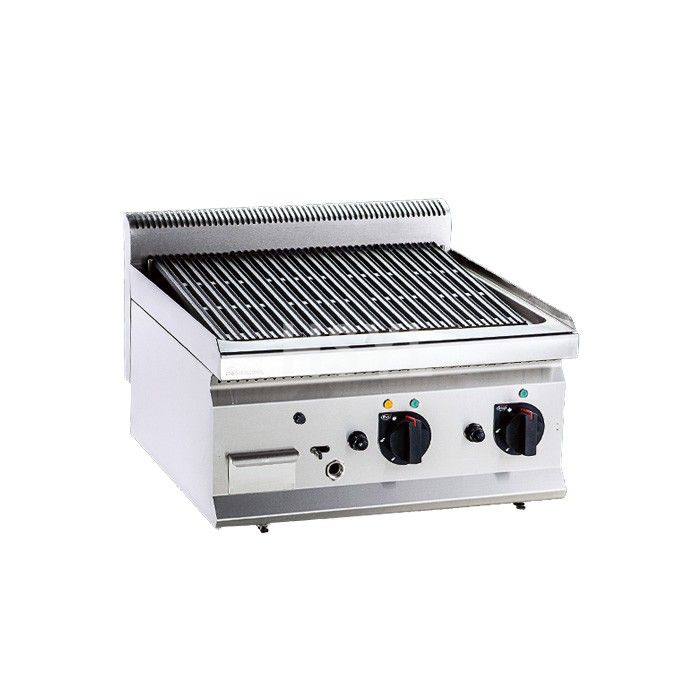
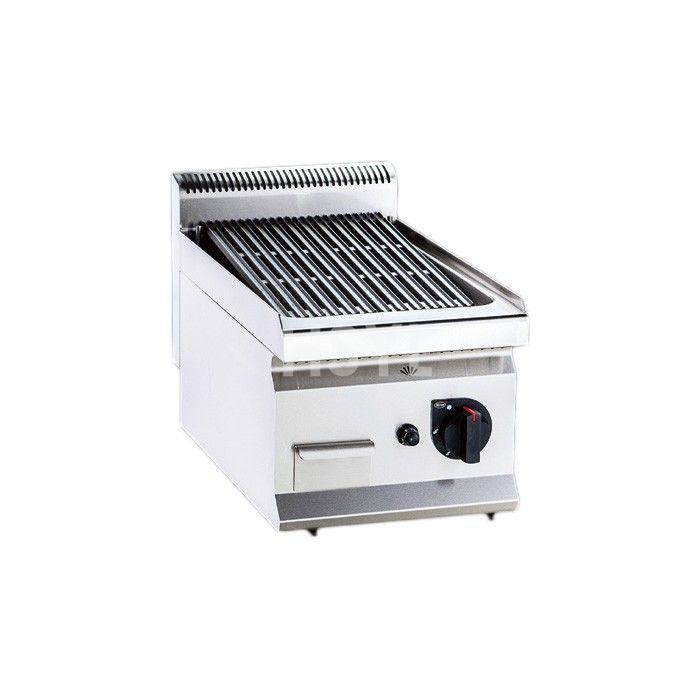
Obtain the usable grate dimensions, the arrangement of the heat zones and the areas the manufacturer intends for cooking. Ask whether every section can operate independently and how the grates are installed. These details establish what can be loaded at one time and whether a quieter service can use part of the appliance.
For example, the catalog identifies the gas HC9040-G charbroiler as a 400 × 900 × 920 mm appliance with a listed heat input of 12.0 kW. It separately lists electric charbroiler modules in the 600 series. Those figures establish installation size and energy input for their particular models. They do not specify a common number of steaks per hour, and the two forms of energy input should not be treated as directly equivalent production ratings.
Draw one realistic load
Use the portions and presentation the chef will actually serve. Mark their loading positions on the usable grate, leaving the working space needed to pick up and turn them without touching the adjacent food. A nominal rectangle divided by a steak's outline overstates capacity if that layout cannot be handled with the station's tools.
Include the mixed menu. A full grate of identical portions may behave differently from a station serving steaks, skewers and vegetables at the same time. Note which items share a zone, which require a different working condition and which must be separated according to the kitchen's allergen or product-handling procedure.
Observe the repeating service cycle
- Load the planned arrangement using the expected starting product condition.
- Time the operator's actual turning, checking and removal sequence.
- Record the accepted finished portions rather than counting everything placed on the grate.
- Begin the next representative load and observe whether the station returns to its working condition.
- Repeat with the menu mix expected during the busiest order period.
The useful result is the number of accepted portions leaving the station over the relevant period. A single fast load at the beginning of a demonstration does not show whether the appliance and operator can sustain the same rhythm through service. Keep rejects, rework and product waiting for another part of the meal visible in the record.
Look for the constraint beside the grate
Portion staging, clean tools and a clear landing area influence output. If the operator has to step away to collect the next tray or cannot unload because the pass is full, the queue belongs to the cookline workflow. Compare a revised layout or staffing arrangement before deciding that a larger charbroiler is the only solution.
Allow for the correct grease collection and cleaning access when placing the appliance. Nothing in a capacity trial replaces the manufacturer's instructions for grates, radiants, lava rock or other model-specific components. A trial must also operate under the ventilation and safety arrangements accepted for that installation.
A sound purchase specification combines the usable surface drawing, the menu layout and a repeatable service trial. This gives the chef and buyer something concrete to accept, while avoiding unsupported claims based on cabinet width, burner count or nameplate input alone.