Direct Answer / Key Takeaway: Plan trolley preparation, chamber use, unloading and return as one loop so a roll-in steamer is not left waiting for its next compatible loaded rack.
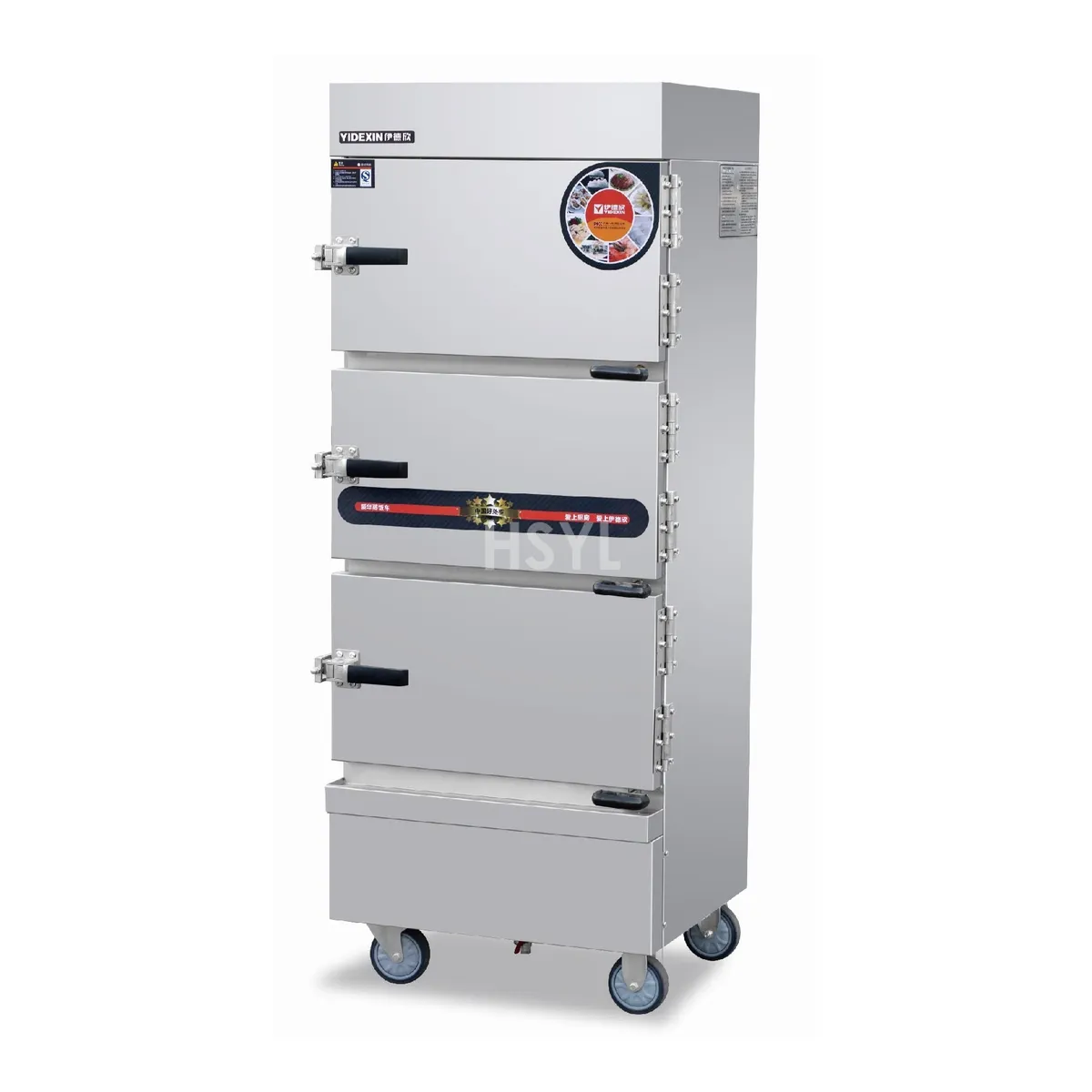
A roll-in steamer can be ready for another load while its only trolley is still being unloaded or prepared. Separate the number of trolley spaces inside the chamber from the number of compatible trolleys needed in circulation. The second number comes from the complete handling loop.
Trace one trolley around the kitchen
Follow preparation and loading, movement to the steamer, the complete chamber occupancy, transfer out, unloading, permitted cleaning and preparation for reuse. Identify which tasks need that same trolley and which can use another approved carrier.
The catalog lists HSYL-TC-24G with one 24-tray trolley and TC-48G with two trolleys totaling 48 trays. Those supplied configurations do not determine how many spare working trolleys a particular kitchen needs. Any additional trolley must remain compatible with the selected roll-in room.
A two-trolley timing example
Assume a hypothetical approved production plan occupies a one-trolley chamber for 40 minutes per load, including its defined entry/release operations. Outside the chamber, a trolley needs 45 minutes to unload, complete the permitted return process and be ready again. These are scheduling examples, not cooking instructions.
| Event | Time in the example |
|---|---|
| Trolley A occupies chamber | 0–40 minutes |
| Prepared trolley B occupies chamber | 40–80 minutes |
| Trolley A finishes its 45-minute outside loop | 85 minutes |
At minute 80 the chamber is free, but A is not ready until minute 85. Two trolleys therefore leave a five-minute gap in this example. A third compatible prepared trolley could address that particular shortage only if staff, preparation space and the remaining process can actually supply it.
Find the work that creates the delay
Break the outside loop into the actual tasks rather than buying trolleys to cover an unexplained total. If unloading waits for a receiving area, another trolley may only create a queue. If the same team prepares the next load and unloads the previous one, confirm that those tasks can overlap as planned.
Include parking positions for clean, prepared and returned trolleys. An extra trolley without an accepted parking and movement route can obstruct the oven approach or mix handling states. Do not substitute a similar-looking rack whose wheels, guides or dimensions have not been approved for the room.
Use the observed loop in the production schedule, including breaks and changes of product. Keep chamber occupancy separate from outside turnaround. The useful trolley count supports the intended sequence; it is not automatically one spare per appliance or a fixed multiple of tray capacity.