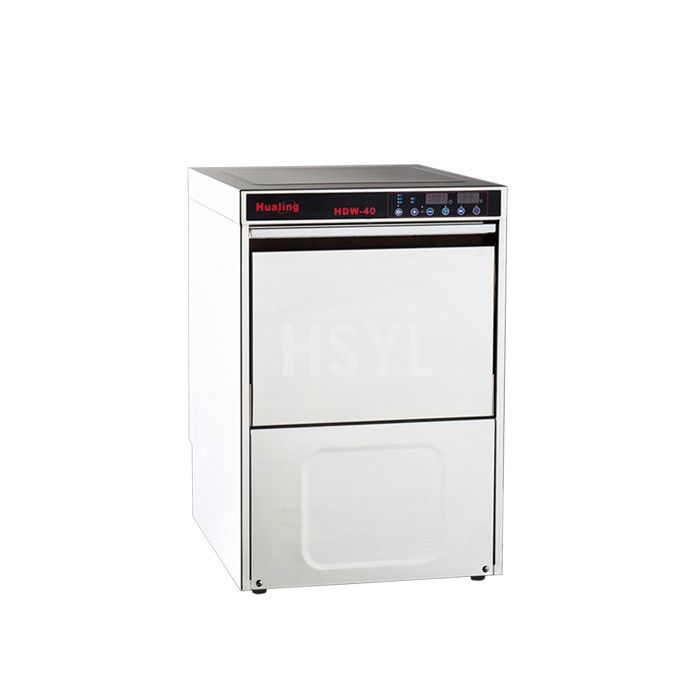
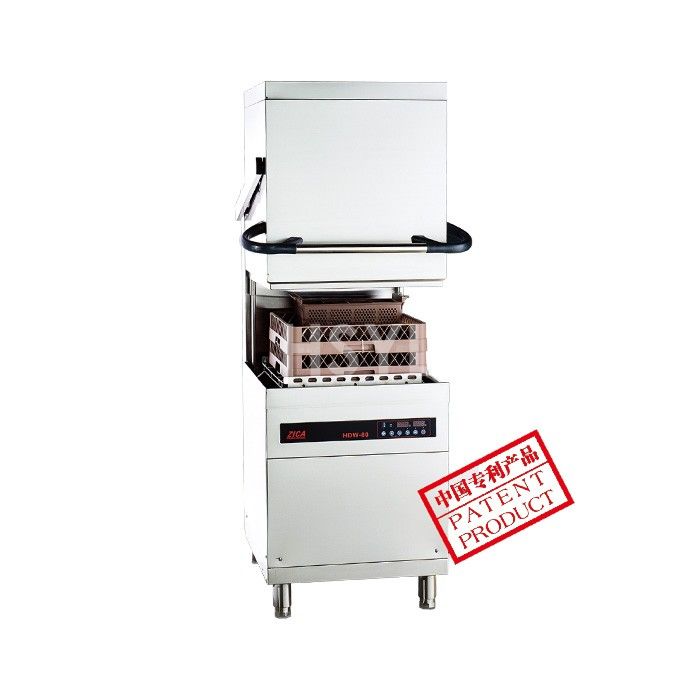
A glasswasher is not a small dishwasher with a narrower basket — it is a different machine for a different surface. A glasswasher washes glassware at a lower, glass-safe temperature and on a dedicated basket, which is what stops stemware from cracking under thermal shock; a dishwasher washes dishes and kitchenware with a hotter rinse that sanitizes and flash-dries. Most venues that serve drinks at volume need the glasswasher for the bar; most that serve food at volume need the dishwasher for the kitchen. A hotel bar-and-restaurant operation genuinely needs both. The HSYL line carries each: the HDW-40 glasswasher and the HDW-80 hood-type dishwasher.
Why a Glasswasher Is Not a Small Dishwasher
Three design differences separate the two, and they are the reason you cannot just run glassware through the dish machine and call it done. First, the basket. The HDW-40 runs a 410 × 380 mm glass basket built for stemware and tumblers, against the HDW-80's 500 × 500 mm dish basket built for plates — the glass basket holds the ware in place without letting stems rattle and chip. Second, the wash program. A glasswasher's cycle is tuned for light soil and glass safety, where a dishwasher's hotter rinse is aimed at grease and thermal sanitizing. Third, the duty: the HDW-40 is documented at 30 baskets per hour on a 4.55 kW, 230 V single-phase supply in a 476 × 550 × 720 mm cabinet — a bar-sized machine — while the HDW-80 runs 60 baskets per hour on 14.75 kW, 380 V three-phase in an 800 × 820 × 1470 mm frame.
That third difference is the practical one at the point of purchase. A glasswasher slots into a bar or café where the single-phase supply is all that exists and the throughput is a few dozen glass baskets an hour; a dishwasher needs the three-phase supply and earns it with double the throughput and the hot rinse that dishes require.
HDW-40 and HDW-80 Side by Side
| Factor | HDW-40 Glasswasher | HDW-80 Dishwasher |
|---|---|---|
| Purpose | Glassware, stemware, tumblers | Plates, dishes, kitchenware |
| Basket | 410 × 380 mm glass basket | 500 × 500 mm dish basket |
| Throughput | 30 baskets per hour | 60 baskets per hour |
| Power | 4.55 kW, 230 V single-phase | 14.75 kW, 380 V three-phase |
| Footprint | 476 × 550 × 720 mm | 800 × 820 × 1470 mm |
| Fits | Bars, cafés, hotel bar counters | Restaurants, canteens, hotel kitchens |
The numbers make the division of labor obvious: the glasswasher is the bar machine, the dishwasher is the kitchen machine, and the two are not interchangeable even when the same building owns both.
When the Same Building Needs Both
Hotels are the cleanest case. The bar washes glasses on its own machine to keep stemware out of the hot kitchen rinse and to keep glass turnaround fast at the counter, while the kitchen runs a dishwasher for plates, cookware and service ware. Running both through one machine forces a compromise: glasses through the dishwasher risk etching and breakage over repeated hot rinses, and dishes through a glasswasher would never keep up with the kitchen's throughput or its grease load. The split is not redundancy — it is matching each ware type to the wash program built for it.
Restaurants with a serious bar program follow the same logic at smaller scale: a glasswasher at the bar, a hood-type dishwasher in the dishroom. The alternative, hand-washing glassware at the bar, costs staff time at exactly the wrong moment and rarely holds a consistent sanitizing standard. For the full picture on where each machine sits in a hotel or banquet operation, the hotel banquet kitchen solution shows how bar and kitchen warewashing split across one property.
Related Equipment & Systems
If the question is which machine form fits your volume first — undercounter, hood or conveyor — the hood vs undercounter vs conveyor guide sorts that before the glass-versus-dish split. And whether the glass machine or the dish machine runs high-temp or chemical sanitizing is the next decision, covered in the high-temp vs low-temp guide. The full line sits under commercial dishwashing equipment.