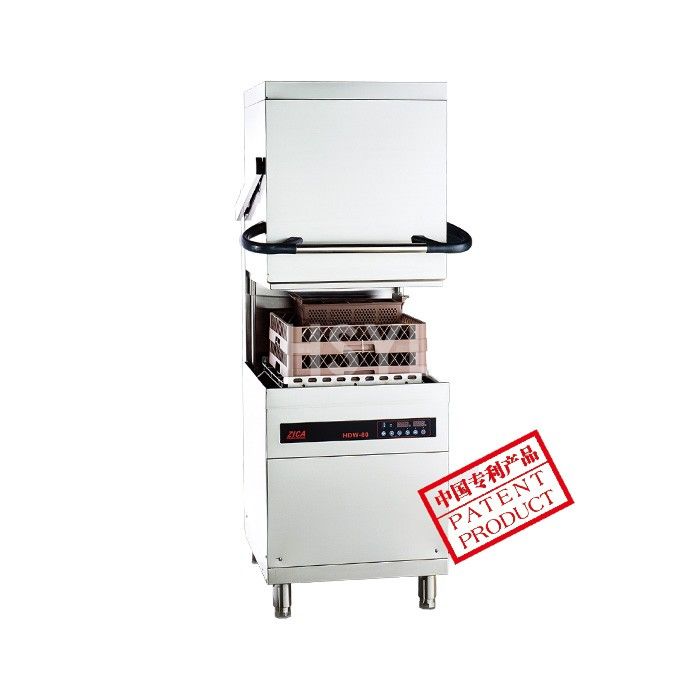
Direct Answer / Key Takeaway: Industrial specification review of Flight-Type Tunnel Dishwasher NSF/ANSI splash zone hygiene and cleanability. Check MEP hookups and factory specs from HSYL.
Optimizing commercial kitchen reliability requires rigorous alignment between equipment performance and facility operational demands. This document provides an exhaustive technical breakdown of Standard Duty Flight-Type Tunnel Dishwasher configurations across nsf/ansi sanitation certification, detailing empirical sizing models, MEP rough-ins, and preventive maintenance protocols.
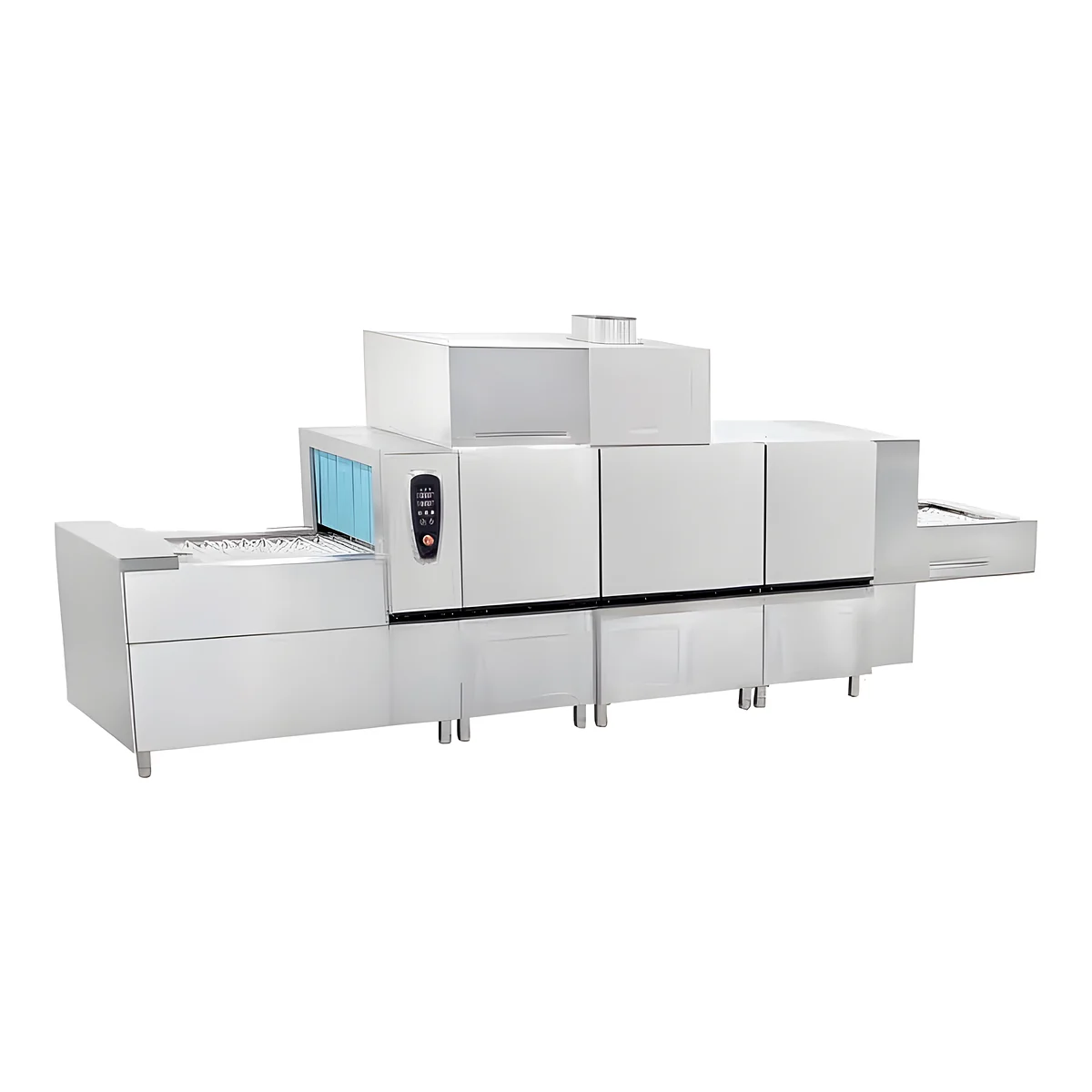
1. Commercial Brigade Deployment & Kitchen Line Harmony: NSF/ANSI Sanitation Certification
NSF/ANSI Standard 2/4/7 Sanitary Geometry & Cleanability Criteria:
Commercial foodservice equipment operating in regulated North American and European markets must comply with rigorous public health sanitation standards established by NSF/ANSI. The standard delineates equipment into three distinct hygiene zones: Food Zone (direct food contact surfaces), Splash Zone (surfaces subject to splashing, spillage, and soiled droplet contact during routine operation), and Non-Food Zone. Food Zone and Splash Zone engineering prohibits external screw threads, exposed piano hinges, rolled sheet metal lips, and 90-degree internal square corners that harbor bacterial biofilms (e.g., Listeria monocytogenes and Salmonella). All internal tank and cavity corners must feature continuous coved radii measuring at least 6.4 mm (1/4 inch), fully welded and ground to a smooth #4 sanitary polish (surface roughness Ra < 0.8 um / 32 micro-inches). Fasteners within splash zones must feature sanitary domed acorn nuts with enclosed threads; sliding doors and pan runners must be removable by hand without tools to facilitate daily washdown sanitization.
When sizing equipment for peak production hours, facility planners must reference verified undercounter commercial dishwasher parameters to ensure capacity reserves remain aligned with scheduled shift turnover targets.
2. Physical Specification Matrix & Institutional Performance Tiers
To assist engineering procurement teams, the matrix below details metallurgical standards, utility ratings, and structural tolerance thresholds for commercial versus heavy-duty Standard Duty Flight-Type Tunnel Dishwasher configurations:
| Engineering Parameter | Standard Commercial Spec | Heavy-Duty Institutional Spec | Engineering Variance Threshold |
|---|---|---|---|
| Material Construction | AISI 304 (1.2 mm), 380V-415V 3N~ (9.5-15 kW), DN20 hot water, wash tank 60 deg C, rinse 82 deg C | AISI 304 deep-drawn tank (1.5 mm), 380V-415V (24-45 kW), heat recovery condensing, rinse 85 deg C | Rinse sanitizing temperature strictly >= 82 deg C per DIN 10510 / NSF 3 standards |
| Primary Engineering Feature | Hydraulic Wash Power: Dual upper and lower rotating composite wash arms with non-clogging concave jets | Reinforced industrial assembly with seamless continuous laser welds | Zero structural deflection under maximum rated loading |
| Operational Subsystem | Sanitizing Water Consumption: 1.8 to 2.4 Liters per rack under dynamic flow pressure 180-250 kPa | High-efficiency heavy-duty components with dynamic feedback telemetry | Energy efficiency index within top 10% commercial benchmark |
| Sanitary & Safety Rating | Chemical Dosing Control: Integrated dual peristaltic electronic metering pumps for detergent and rinse aid | IPX5 washdown protection with NSF/ANSI cleanability rating | Hermetic perimeter sealing preventing microbial colonization |
3. Thermodynamics, Fluid Dynamics & Operating Mechanics
Hydrodynamic Impingement & Thermal Sanitization Kinetics: Commercial warewashing utilizes high-flow centrifugal wash pumps delivering dynamic pressures of 180 to 250 kPa through dual rotating wash manifolds. Water jets strike tableware surfaces at calibrated impingement angles to mechanically dislodge coagulated fats and starch soils. The thermal profile transitions from a 60-65 deg C detergent wash phase to an 82-88 deg C pressurized final sanitizing rinse. In accordance with DIN 10510 and NSF/ANSI 3 thermal sanitization standards, contact with 82 deg C rinse water for a minimum of 10 seconds delivers lethal thermal pasteurization, achieving a verified 5-log microbial reduction (99.999% destruction of vegetative pathogens) without requiring caustic chlorine.
In institutional catering environments, equipment longevity is heavily governed by surface passivation and corrosion resistance. Units fabricated from high-grade austenitic stainless steel must maintain an uncompromised chromium oxide passivated boundary layer. Regular chemical cleaning with non-abrasive detergents prevents pitting attack from chlorinated sanitizers and atmospheric chlorides.
Understanding these thermodynamic and mechanical principles allows consulting engineers to optimize cycle times, reduce utility peak draw, and eliminate premature component fatigue.
4. Rigorous Capacity Derivation & Meal Turnover Equations: Racks Per Hour (RPH) Warewashing Model
Determining optimal unit capacity demands empirical engineering formulations rather than rule-of-thumb approximations. Planners apply the following equation to size continuous throughput:
Required RPH = [Dining Capacity (Seats) * Peak Seat Turnover * Ware Pieces Per Guest (6 pcs)] / [Average Pieces Per Rack (18 pcs) * Operating Window (1.5 hrs)]
For a 240-seat high-turnover restaurant (2.0 seat turns, 6 items per guest): Total pieces = 2,880; Total racks = 160 racks; Required washing speed = 106.7 racks/hour, mandating a double-tank pass-through or compact conveyor dishwasher.
Practical sizing engineering requires accounting for the hidden ware factor. Beyond customer dining covers, back-of-house food preparation items (hotel pans, sheet trays, mixing bowls, and prep utensils) contribute an additional 15% to 20% to total kitchen processing loads. Furthermore, thermal transfer times for bulk foods follow the transient conduction square-law relationship (t is proportional to x^2), meaning doubling product depth from 50 mm to 100 mm in pans roughly quadruples core pull-down or heating times. Sizing calculations must incorporate these empirical variables to ensure uninterrupted kitchen workflow.
Employing this sizing method protects the kitchen from meal bottlenecks, prevents premature thermal and mechanical failure, and guarantees compliance with HACCP time-temperature critical control points (CCP).
5. Facility Interface Engineering, Utility Rough-Ins & Clearances
Mechanical, electrical, and plumbing infrastructure must be properly prepared prior to equipment delivery. The following engineering specifications govern site hookups for Standard Duty Flight-Type Tunnel Dishwasher:
- Power & Electrical Connection: High-power 3-phase connection sized to handle simultaneous booster heater and wash pump inrush current.
- Water Supply & Treatment: Hot water supply at 50-60 deg C with water softener pre-treatment to eliminate scale on heating elements.
- Wastewater & Drainage Air Gap: Discharges must connect to temperature-resistant indirect waste lines with an unobstructed physical air gap, conforming to FDA Food Code Chapter 4 backflow mandates.
- Ventilation, Clearances & Environment: Type II steam vapor condensation hood or direct duct exhaust; min 200 mm clearance on service access panel side; floor drain within 1.0 meter.
Critical Field Installation Redlines & Contractor Pitfalls: During jobsite rough-ins, engineering teams must enforce the following compliance boundaries to prevent premature equipment failure and voided warranties:
- Drain Elevation & Air Gap: Never run gravity discharge lines uphill without an auxiliary factory drain pump; maintain a certified 50 mm physical air gap above the floor sink to prevent back-siphonage.
- Piping Material Temperature Rating: Never use residential PVC for final rinse drainage; discharge temperatures exceed 82 deg C, mandating CPVC, high-temp polypropylene, or copper piping.
- Landing Table Sizing Bottlenecks: Avoid undersized dirty/clean dish landing tables; an undersized sorting table creates a physical labor bottleneck, reducing effective machine throughput by up to 35%.
6. Quality Verification Audits, FAT Dossiers & Certifications
Factory acceptance protocols establish that equipment performance conforms to engineering shop drawings and international safety standards. Auditing teams verify factory acceptance testing and compliance verification across the following tests:
- Hydraulic Pressure & Jet Distribution Audit: Wash pump dynamic discharge pressure measured at 220 kPa with uniform nozzle spray coverage.
- Booster Sanitizing Thermal Performance: Continuous wash-rinse cycling verifying final rinse water temperature strictly exceeds 82.5 deg C.
- Chemical Dosing Metering Accuracy: Peristaltic chemical pumps calibrated to deliver precise 2.5 ml detergent and 0.5 ml rinse aid per cycle.
- Chassis Water-Tightness Soak Test: 180-minute continuous washing operation verifying zero chassis weeping or pump seal leakage.
To satisfy commercial health department and third-party food safety audits, modern commercial appliances incorporate automated HACCP data logging. The onboard microcomputer logs real-time time-temperature decay profiles, cycle durations, and sanitizing rinse parameters with cryptographic timestamps. Facilities personnel can export encrypted audit logs via USB or Modbus/Ethernet IoT interfaces, providing verifiable compliance dossiers to satisfy municipal health inspectors during unannounced regulatory audits.
7. Diagnostic Logic, Failure Modes & Root Cause Troubleshooting
Microprocessor control boards continuously monitor operational health. When anomalous readings occur, technicians should apply the corrective protocols detailed in this diagnostic matrix:
| Fault Code | Root Cause Diagnostic | Corrective Maintenance Procedure |
|---|---|---|
| E04 | Wash Tank Float Level Sensor Fault | Wash tank fails to fill to upper level switch within 5 minutes; inspect inlet solenoid filter screen. |
| E02 | Booster Tank Low Temperature Inhibit | Final rinse water fails to achieve 82 deg C sanitizing threshold; cycle pause engaged until booster recovers. |
| E06 | Drain Pump Pressure Interlock | Drain line backpressure exceeds allowable threshold; check drain pump impeller and check valve. |
8. Preventive Service Schedules & Long-Term Asset Protection
Planned maintenance protocols reduce catastrophic component failures and stabilize utility efficiency. Maintenance personnel must execute inspections per the following intervals:
| Maintenance Interval | Inspection Scope & Component Target | Acceptable Operating Standard |
|---|---|---|
| Daily Post-Shift | Remove scrap trays, clear rotating wash/rinse nozzles, drain tank | Zero food debris in wash manifold, clean rotating spindle, free-flowing drain filter |
| Weekly Operational | Inspect chemical intake suction tubes, check rinse arm bearing play | Flexible suction lines without chemical crystallization, smooth arm spin without wobble |
| Monthly Descaling | Perform acid de-liming wash cycle through boiler and wash tank | Total removal of mineral scale from heating immersion elements and water level probes |
| Annual Overhaul | Replace wash pump mechanical carbon seal, inspect contactors and solenoid seats | Zero pump shaft weeping, solenoid shutoff < 0.2s, electrical contact pitting < 10% |
All mechanical maintenance interventions must utilize NSF H1 certified food-grade synthetic lubricants on drive bearings and moving pivot hinges. Electrical connections, magnetic contactors, and grounding continuity must be re-torqued and tested annually using calibrated digital multimeters to prevent thermal resistance hot spots.
Recommended First-Year Commissioning & Preventative Spares Kit: For international projects and remote institutional complexes, maintaining an on-site critical spares inventory avoids catastrophic service interruptions:
| Part Description | Recommended Quantity | Engineering Maintenance Function |
|---|---|---|
| Wash & Rinse Arm Composite Bushings | 4 Sets | Eliminates rotating manifold friction, ensuring uniform hydraulic wash spray coverage. |
| Peristaltic Chemical Squeeze Tubes | 2 Sets | Maintains exact milliliter chemical dosing for detergent and acidic rinse aid. |
| Wash Pump Mechanical Shaft Seal | 1 Set | Prevents hot wash water ingress into wash pump electric motor windings. |
| Booster Immersion Heating Element | 1 Piece | Guarantees continuous 82 deg C sanitizing final rinse water delivery. |
9. Marine Container Packaging, Shock Telemetry & Export Standards
International export packaging must withstand cross-ocean container shipping, tropical humidity cycling, and intermodal transport vibration. Factory crating standards for Standard Duty Flight-Type Tunnel Dishwasher specify:
- Wash Arm Transit Bracing: Upper and lower wash arms clamped with cushioned nylon retaining brackets to prevent transit shock.
- Pump Volute Drainage & Antifreeze: Water pump chambers fully drained and treated with non-toxic food-safe propylene glycol.
- Vacuum Barrier Moisture Foil: Heavy-duty foil bag with activated silica gel desiccant surrounding complete chassis.
- Reinforced Forklift Base Skid: 4-way entry solid timber skid base engineered for heavy container freight handling.
For comprehensive wiring schematics, spare parts exploded diagrams, and maintenance schedules, consult the official technical documentation and installation manuals provided by HSYL engineering.