Direct Answer / Key Takeaway: Check 50Hz vs 60Hz commercial kitchen equipment compatibility through exact supply data, motor and control ratings, manufacturer approval and site verification.
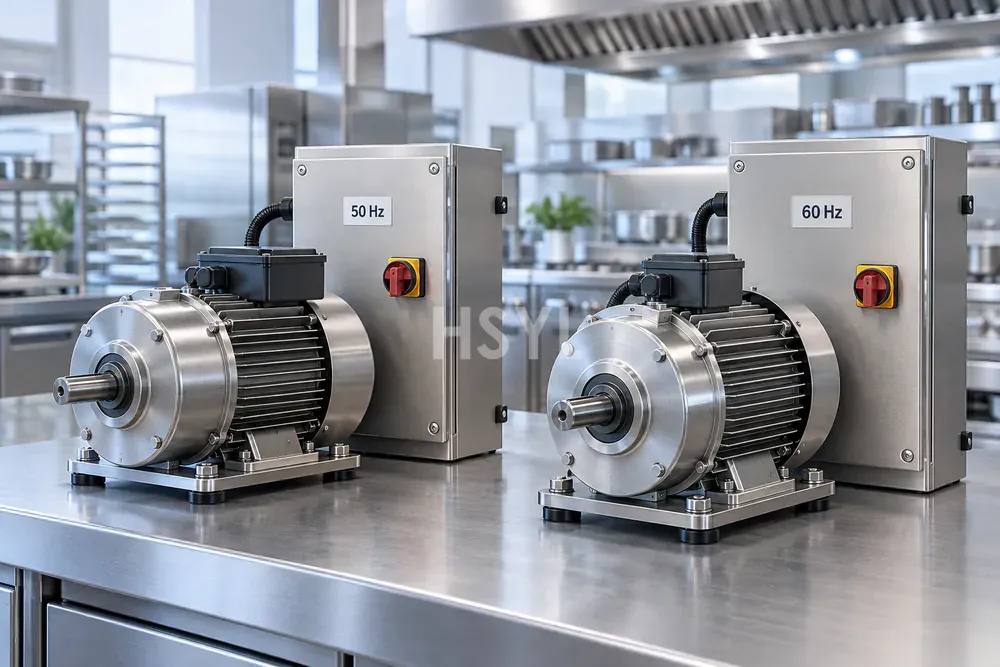
Comparing 50Hz vs 60Hz commercial kitchen equipment requires the exact machine configuration and supply conditions. Matching the visible voltage number is not a complete compatibility assessment. Motors, pumps, fans, controls and other components may have their own documented operating requirements.
Use manufacturer confirmation and competent site engineering for the actual offer. This guide organizes the purchasing evidence; it does not provide a conversion procedure or permission to connect an unapproved configuration.
Record the destination supply and the offered version
Obtain verified voltage, phase, frequency and other relevant supply information through the responsible site process. Record the exact appliance model and electrical version, supplied components and current diagrams. A related unit's nameplate should not be used as evidence for the offered machine.
Keep the manufacturer data and the site design decisions identifiable. The purchaser needs to know which configuration the quotation, drawings and final nameplate describe.
Read component ratings in context
ABB's motor-nameplate guidance explains frequency as part of the rated operating information associated with output, voltage and speed. Use the actual component's documents rather than treating a frequency mark as an isolated number.
List the relevant components in the complete appliance and ask the manufacturer to confirm the supported supply arrangement. A motor with documented dual-frequency conditions does not automatically approve every control or auxiliary component in the machine.
| Evidence | Question to close |
|---|---|
| Appliance version | Which exact electrical configuration is being supplied? |
| Component data | Which ratings and conditions apply to motors and auxiliaries? |
| Controls | What supply and operating conditions are supported? |
| Manufacturer response | Is the destination arrangement approved in writing? |
| Site design | Who releases the building-side installation? |
| Commissioning | What checks demonstrate the final permitted duty? |
Do not substitute appearance for approval
Two units can look similar and still represent different supplied versions. Compare the controlled model, diagrams, ratings and manufacturer statement, not a photograph or a catalogue heading.
If a supplier proposes another electrical arrangement, obtain a revised offer identifying what changes and which documents support it. Do not assume that a frequency-conversion device resolves the complete appliance without an approved design and operating assessment.
Keep performance conditions attached to the confirmation
Define the intended menu or process load and accepted output. Ask what operating conditions the available data represent and whether the supported destination arrangement changes relevant equipment behaviour or limits. Retain the manufacturer's response rather than calculating a universal production adjustment from the frequency ratio.
Where demonstration and destination conditions differ, identify the additional authorized verification. A functioning display or an unloaded motor run is not a complete acceptance record for the kitchen's production duty.
Release one configuration through shipment and site handover
Reconcile quotation, order, nameplate, diagrams, component information and operating instructions. If the unit is changed through an authorized process, make the final configuration traceable so future service does not use superseded information.
The competent installer and site team should use the released documents and applicable requirements. Preserve commissioning results and any unresolved item before routine operation.
Coordinate this information through the kitchen equipment utility schedule. A complete export enquiry states the actual destination supply and exact appliance version, allowing suppliers to address a defined compatibility question instead of a generic 50Hz or 60Hz label.