Direct Answer / Key Takeaway: Document commercial kitchen ceiling condensation with identified moisture events, air conditions, surface observations and the actual cooking and ventilation duty.
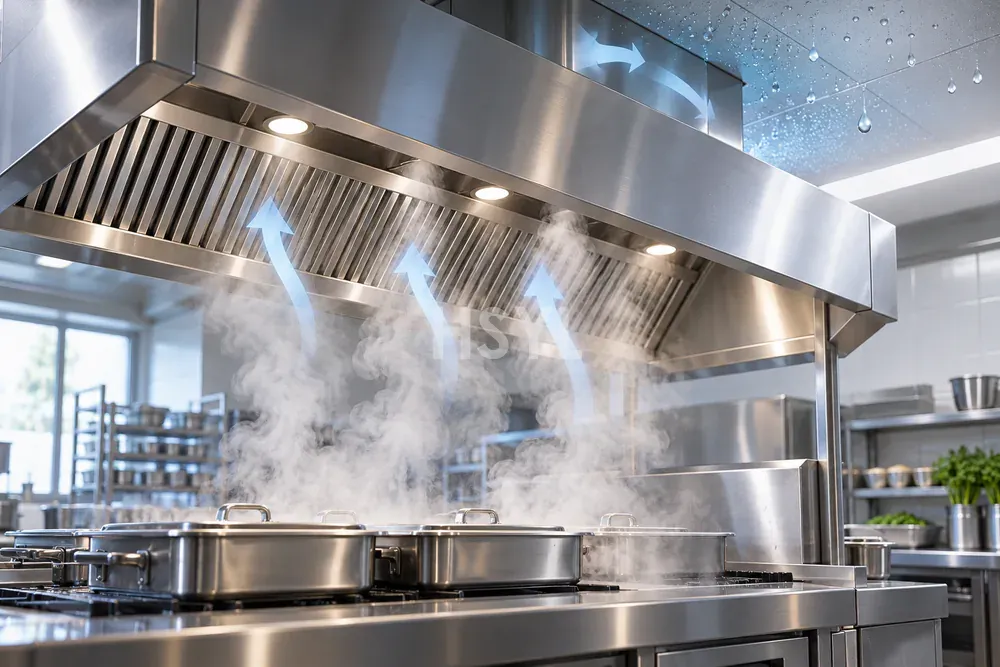
Commercial kitchen ceiling condensation should be investigated with a record of the actual moisture event and operating conditions. A wet surface or a photograph does not establish the complete cause, and increasing an extraction setting without a defined review can leave the original issue unresolved.
Have the responsible building and ventilation professionals confirm the nature of the moisture and the appropriate investigation. The kitchen's contribution is a clear record of when, where and under which production conditions the event occurs.
Identify the event before changing the system
Mark the affected position with a stable reference and record time, extent and nearby operations. Note whether the event appears at startup, a steam-producing process, service peak or shutdown. Retain observations through a representative sequence instead of collecting only the most dramatic photograph.
Do not label every wet-ceiling observation as condensation before the responsible investigation confirms the mechanism. Record the observed condition and let the relevant professional assessment distinguish the evidence from an assumed explanation.
Put air and surface information together
Use an appropriate measurement method selected by competent personnel. Record the air conditions, relevant surface observations, instrument information and locations. Keep time references so measurements describe the same operating interval.
The National Weather Service defines dew point as the temperature at which water vapour begins to condense as the air becomes saturated. This physical concept helps interpret a condition record; it does not specify a commercial kitchen's ventilation design.
An illustrative interpretation might compare an identified surface observation with a contemporaneous air dew-point estimate under the agreed method. The comparison can support the investigation of condensation conditions, but it does not identify which equipment or building change should be made without the fuller site assessment.
Record the duty producing the observation
| Condition | Record |
|---|---|
| Cooking activity | Equipment, menu task and release sequence |
| Access and openings | Relevant doors or operating events |
| Ventilation state | Confirmed permitted operating condition |
| Environment | Time-linked air and surface observations |
| Moisture | Position, onset and observed extent |
Keep equipment configuration and the permitted operating sequence identifiable. A steam appliance's door opening, a changed menu load or a different service pattern can make two photographs represent different conditions. Preserve those differences rather than averaging them into a generic humidity complaint.
Give the design team a usable evidence package
Provide the operating log, identified measurements, site layout, relevant equipment information and the released ventilation documents. The responsible team should assess extraction, replacement air, distribution and building conditions using the actual design basis and applicable requirements.
Any proposed adjustment needs an authorized method and verification of its effect on the complete operation. The catering team should not improvise fan, control or building modifications from a standalone article.
Verify a released change under comparable conditions
If a change is approved, repeat the relevant observation with a compatible cooking and environmental basis. Keep the earlier record and identify what was altered. Record whether the moisture event changed and whether the complete operating requirements remained satisfied.
A result during a quiet interval is not sufficient evidence for the earlier peak duty. The review should name the condition actually demonstrated and any limitation still needing attention.
Use the kitchen utilities and ventilation discussion with this site evidence. A precise record helps connect equipment duty to the building review without presenting a universal airflow number or a photograph as a completed diagnosis.