Direct Answer / Key Takeaway: Technical B2B engineering guide on Underbar Cocktail Back-Bar Cooler evaluating gas vs electric operating costs and recovery. Inspect engineering.
In institutional catering facilities and industrial food production complexes, specifying Standard Duty Underbar Cocktail Back-Bar Cooler serves as a foundational operational milestone. This comprehensive engineering dossier examines physical parameters across gas vs electric operating cost & recovery comparison, establishing validated throughput sizing, interface rough-in standards, and factory commissioning metrics.
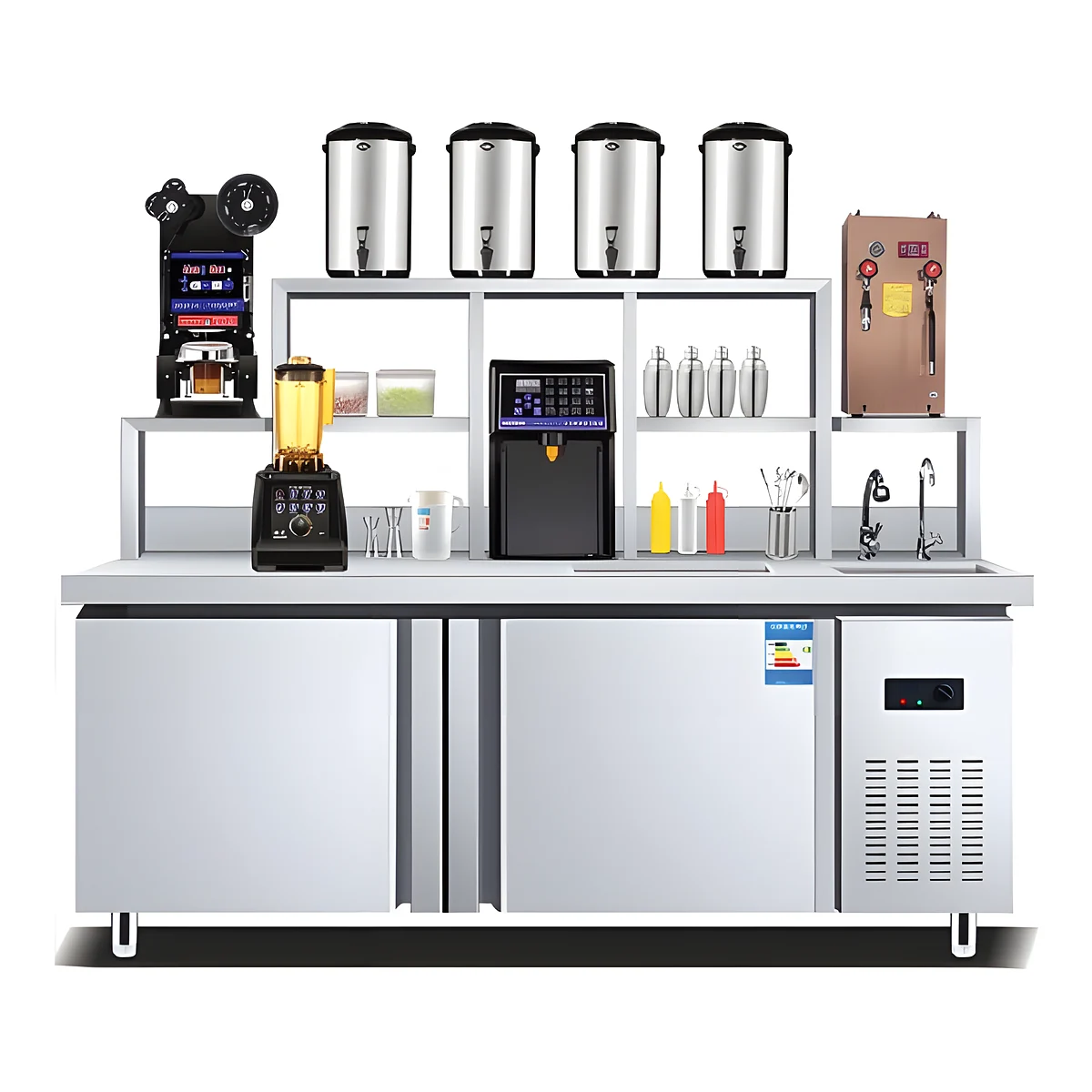
1. Operational Strategy & Production Workflow Integration: Gas vs Electric Operating Cost & Recovery Comparison
Gas vs. Electric Energy Economics, Efficiency & Utility TCO Analysis:
Procurement evaluations between gas and electric commercial kitchen machinery require rigorous modeling of local utility rate tariffs against thermal conversion efficiency. Atmospheric natural gas burners deliver typical thermal transfer efficiencies of 40% to 50%, with the remaining sensible heat lost to exhaust flues and ambient air, whereas heavy-duty electric elements achieve 85% to 90% and commercial induction exceeds 90% efficiency. Consulting engineers calculate the operational breakeven threshold: Operating Cost/Hour = (Rated kW * Electricity Tariff $/kWh) versus ((Rated BTU/hr / 100,000) * Gas Tariff $/therm). While electric appliances deliver faster temperature recovery and reduce air conditioning loads, they demand expensive 3-phase high-amperage facility service upgrades. Conversely, gas appliances require investment in NFPA 96-compliant Type I commercial exhaust canopies, continuous dedicated make-up air (MUA) fan systems, and automated fire suppression interlocks, which significantly elevate upfront MEP capital expenditure (CAPEX).
When sizing equipment for peak production hours, facility planners must reference verified commercial blast chiller pull-down curve ratings to ensure capacity reserves remain aligned with scheduled shift turnover targets.
2. Technical Engineering Matrix & Physical Parameters
The following technical matrix defines benchmark physical specifications, operational consumption values, and material thresholds for Standard Duty Underbar Cocktail Back-Bar Cooler units across standard commercial and heavy-duty institutional tiers:
| Engineering Parameter | Standard Commercial Spec | Heavy-Duty Institutional Spec | Engineering Variance Threshold |
|---|---|---|---|
| Material Construction | AISI 304 (0.8-1.0 mm), 220V-240V 1N~ 50Hz (450-850 W), R290 (120g charge), Climate Class 4 (32 deg C) | AISI 304 interior/exterior (1.2 mm), 220V-240V (1100-1800 W), R290/R452A, Tropical Climate Class 5 (43 deg C ambient) | Internal temperature variance <= +-1.5 deg C throughout all 6 GN pan storage levels |
| Primary Engineering Feature | Compressor Architecture: Hermetic scroll/reciprocating with high-efficiency EC evaporator fan motors | Reinforced industrial assembly with seamless continuous laser welds | Zero structural deflection under maximum rated loading |
| Operational Subsystem | Insulation Density: 75 mm high-density cyclopentane polyurethane foam (40 kg/m3 zero ODP/GWP) | High-efficiency heavy-duty components with dynamic feedback telemetry | Energy efficiency index within top 10% commercial benchmark |
| Sanitary & Safety Rating | Defrost Mechanism: Smart cycle hot gas reverse-cycle defrost with automatic condensate vaporizing pan | IPX5 washdown protection with NSF/ANSI cleanability rating | Hermetic perimeter sealing preventing microbial colonization |
3. Core Physical Operating Principles & Machine Architecture
Vapor-Compression Thermodynamics & Hydrocarbon Fluid Dynamics: Commercial reach-in refrigeration operates on an optimized sub-critical vapor-compression cycle utilizing eco-friendly R290 (propane) refrigerant. The thermodynamic cycle leverages R290's high latent heat of vaporization and favorable volumetric refrigeration capacity, resulting in lower compressor displacement and reduced electrical consumption. Electronic expansion valves (EEV) continually modulate refrigerant mass flow based on dynamic superheat calculations at the evaporator outlet, preventing liquid floodback while maximizing cooling surface utilization under frequent kitchen door openings.
In institutional catering environments, equipment longevity is heavily governed by surface passivation and corrosion resistance. Units fabricated from high-grade austenitic stainless steel must maintain an uncompromised chromium oxide passivated boundary layer. Regular chemical cleaning with non-abrasive detergents prevents pitting attack from chlorinated sanitizers and atmospheric chlorides.
Understanding these thermodynamic and mechanical principles allows consulting engineers to optimize cycle times, reduce utility peak draw, and eliminate premature component fatigue.
4. Mathematical Throughput Formulation & Batch Calculations: Refrigeration Thermal Extraction Duty
Accurate equipment sizing requires empirical calculation rather than subjective estimates. Design engineers utilize the following mathematical formulation to establish continuous throughput requirements:
Cooling Capacity (Watts) = [Cabinet Surface Area (m2) * U-Value (0.35 W/m2K) * Delta-T (35 deg C) * Air Infiltration Factor (1.4)] + Product Pull-Down Load
For a 1400L 2-door reach-in chiller in a 38 deg C kitchen holding at +2 deg C: Transmission load = 380W; Infiltration load = 420W; Product turnover load = 650W; Total required evaporator cooling capacity = 1,450 Watts @ -10 deg C evaporating temp.
Practical sizing engineering requires accounting for the hidden ware factor. Beyond customer dining covers, back-of-house food preparation items (hotel pans, sheet trays, mixing bowls, and prep utensils) contribute an additional 15% to 20% to total kitchen processing loads. Furthermore, thermal transfer times for bulk foods follow the transient conduction square-law relationship (t is proportional to x^2), meaning doubling product depth from 50 mm to 100 mm in pans roughly quadruples core pull-down or heating times. Sizing calculations must incorporate these empirical variables to ensure uninterrupted kitchen workflow.
Employing this sizing method protects the kitchen from meal bottlenecks, prevents premature thermal and mechanical failure, and guarantees compliance with HACCP time-temperature critical control points (CCP).
5. MEP Engineering, Rough-Ins & Installation Standards
Proper site preparation and mechanical rough-ins are critical to ensure trouble-free installation of Standard Duty Underbar Cocktail Back-Bar Cooler. Engineering teams and MEP contractors must observe the following technical parameters:
- Power & Electrical Connection: Dedicated 220-240V single phase supply with surge protection to protect digital microcomputer controllers.
- Water Supply & Treatment: No external water feed required; gravity drain tube routed to hot-gas heated condensate evaporator tray.
- Wastewater & Drainage Air Gap: Discharges must connect to temperature-resistant indirect waste lines with an unobstructed physical air gap, conforming to FDA Food Code Chapter 4 backflow mandates.
- Ventilation, Clearances & Environment: Min 150 mm rear and 300 mm top clearance for condenser fan exhaust airflow; away from direct thermal cooking lines to prevent high head pressure.
Critical Field Installation Redlines & Contractor Pitfalls: During jobsite rough-ins, engineering teams must enforce the following compliance boundaries to prevent premature equipment failure and voided warranties:
- Condenser Airflow Choking: Maintain at least 150 mm rear and 300 mm top clearance; restricting airflow causes compressor head pressure to spike and trips thermal overloads.
- Thermal Radiation Shielding: Never position reach-in chillers directly adjacent to open fryers or charbroilers without a certified insulated stainless heat deflector.
- Condensate Drain Line Freezing: For freezer cabinets, ensure the condensate drain pan heating trace wire is energized to prevent ice dams from cracking the plastic drain line.
6. Quality Assurance, FAT Commissioning & Standards Protocol
Prior to shipment from the manufacturing facility and upon delivery to the job site, Standard Duty Underbar Cocktail Back-Bar Cooler must undergo rigorous quality assurance auditing. Facility managers should follow factory acceptance testing and compliance verification to verify all factory acceptance testing (FAT) documentation:
- Pull-Down Thermal Test: Cabinet brought from 32 deg C ambient down to +2 deg C in under 45 minutes with zero food load.
- Helium Mass Spectrometer Leak Detection: Entire refrigeration circuit tested to detect leakage rate below 0.5 grams/year.
- Compressor Electrical Inrush & Run Amps: Verified across rated voltage +-10% to ensure running current matches nameplate spec.
- Magnetic Perimeter Gasket Thermal Seal: Four-corner paper slip test verifying zero cold air leakage or sweat condensation.
To satisfy commercial health department and third-party food safety audits, modern commercial appliances incorporate automated HACCP data logging. The onboard microcomputer logs real-time time-temperature decay profiles, cycle durations, and sanitizing rinse parameters with cryptographic timestamps. Facilities personnel can export encrypted audit logs via USB or Modbus/Ethernet IoT interfaces, providing verifiable compliance dossiers to satisfy municipal health inspectors during unannounced regulatory audits.
7. Diagnostic Matrix & Failure Mode Remedies
Unplanned equipment downtime interrupts service and compromises kitchen safety. Engineering teams should consult the following diagnostic matrix for common operational error codes and remedies:
| Fault Code | Root Cause Diagnostic | Corrective Maintenance Procedure |
|---|---|---|
| E01 | Cabinet Air Temperature Thermistor Short | Room air sensor reading open/short circuit; system reverts to timed fallback run cycles. |
| E02 | Evaporator Defrost Termination Probe Fault | Defrost sensor fails to report temperature; automatic defrost cycle defaults to time termination. |
| E05 | High Condenser Pressure Protection Alert | Condenser coil obstructed with dust or ambient temp exceeds 45 deg C; inspect filter screen. |
8. Preventive Maintenance Lifecycle & Inspection Intervals
To protect capital investment and maintain steady kitchen productivity, preventative maintenance must be performed according to an engineered schedule:
| Maintenance Interval | Inspection Scope & Component Target | Acceptable Operating Standard |
|---|---|---|
| Daily Shift End | Check digital controller temperature readout, wipe down magnetic door seals | Display indicates setpoint within +-1.0 deg C, gasket supple and clean with zero cracks |
| Monthly Cleaning | Vacuum condenser coil fins using soft brush, clear condensate drain hole | Condenser face free of lint and grease dust, clear gravity flow to condensate tray |
| Quarterly Inspection | Inspect evaporator fan motor bearings and verify automatic defrost termination | Quiet vibration-free fan rotation, defrost terminates cleanly on temperature threshold |
| Annual Servicing | Verify refrigerant operating pressures, test compressor start capacitor microfarads | Suction/discharge pressures match enthalpy chart, capacitor within +-5% microfarads |
All mechanical maintenance interventions must utilize NSF H1 certified food-grade synthetic lubricants on drive bearings and moving pivot hinges. Electrical connections, magnetic contactors, and grounding continuity must be re-torqued and tested annually using calibrated digital multimeters to prevent thermal resistance hot spots.
Recommended First-Year Commissioning & Preventative Spares Kit: For international projects and remote institutional complexes, maintaining an on-site critical spares inventory avoids catastrophic service interruptions:
| Part Description | Recommended Quantity | Engineering Maintenance Function |
|---|---|---|
| Magnetic Perimeter Door Gasket | 2 Sets | Pre-formed snap-in magnetic seals stopping ambient humidity and cold air stratification. |
| Digital Evaporator Thermistor Probe | 2 Pieces | Monitors coil frost accumulation and controls dynamic reverse-cycle defrost. |
| EC Evaporator Motor Assembly | 1 Piece | High-efficiency electronic brushless fan motor ensuring continuous internal CFM circulation. |
| PTC Condensate Pan Heater Wire | 1 Piece | Prevents ice dams and condensate overflow in sub-zero freezer drainage trays. |
9. Export Packaging, Marine Transit & Logistics Protection
For international buyers and hospitality EPC contractors, safe transit of Standard Duty Underbar Cocktail Back-Bar Cooler across long-distance ocean voyages requires specialized industrial packing. Commercial equipment is vulnerable to saltwater moisture condensation, mechanical shock, and handling vibration. Factory dispatch standards encompass:
- Compressor Anti-Vibration Shipping Locks: Transit spring lock brackets securing compressor footings against road shock.
- Condensate Evaporator Pan Sealing: Overflow drain line plugged and drain pan protected with shock-absorbent cell foam.
- Upright Tilt-Alert Telemetry: Prominent TiltWatch indicator affixed to exterior crate warning handlers against tipping.
- ISPM-15 Solid Wood Crate: Heavy timber structural frame designed for multi-tier ocean freight container packing.
For comprehensive wiring schematics, spare parts exploded diagrams, and maintenance schedules, consult the official technical documentation and installation manuals provided by HSYL engineering.