A commercial baking oven should be chosen by the baked product, tray format and number of acceptable batches the kitchen must finish during service. Chamber count and rated temperature alone do not tell you whether cookies brown evenly, bread develops the intended crust or a full tray load fits the production timetable. Define the bake first; then compare ovens under the same loading and recipe conditions.
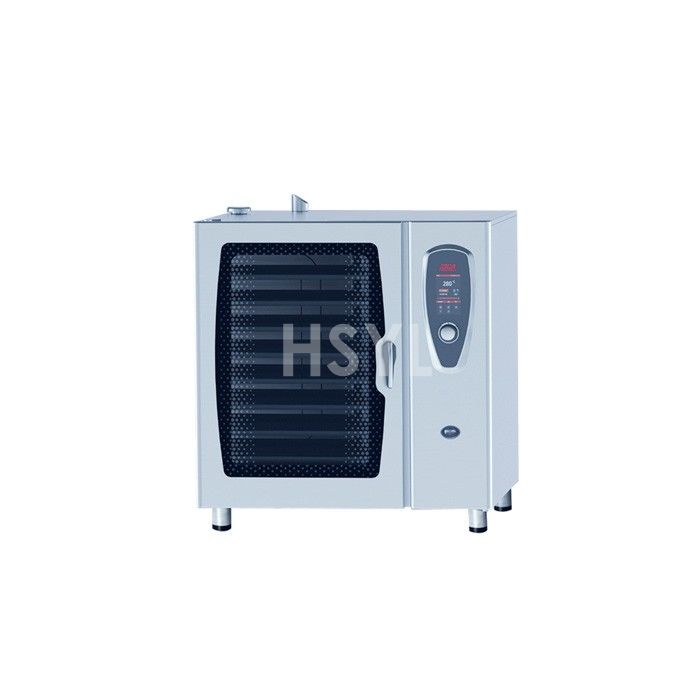
Set a bake brief that a supplier can test
Choose two or three representative products rather than sending a general request for “a bakery oven.” Record dough or batter weight, tray dimensions, spacing between pieces, starting product condition, target finish and the number of trays needed in the busiest production period. Note whether products are baked from chilled or frozen and whether one oven must switch between different recipes. If steam, humidity control or programmable stages are essential to the recipe, state the requirement rather than assuming that every commercial oven includes them.
| Trial check | What to record |
|---|---|
| Tray fit | Usable rack dimensions, number of loaded trays and clearance around the product. |
| Bake quality | Colour and doneness at the front, centre and rear of the load. |
| Handling | Door opening, tray rotation if used and safe transfer to the cooling area. |
| Cycle | Preheat, bake, unloading and recovery time between successive full loads. |
| Waste | Rejects or rework judged against a written acceptance standard. |
Calculate capacity from accepted trays per shift
Do not multiply an empty-chamber cycle by the number of racks and call it hourly output. Run the recipe with the intended tray load. Count only acceptable finished product, include handling and recovery between loads, and compare the result with the available production window. If the test requires rotating trays, record the extra labour and whether rotation is realistic at peak volume. A larger chamber is helpful only when the building can supply the required utilities and the team can load, unload and cool the added product.
Example for planning only: suppose a full trial returns four trays with 18 accepted items per tray, and the complete load–bake–unload–recovery sequence takes 30 minutes. The measured rate under those conditions is 72 accepted items per cycle, or 144 per hour if the result repeats. It is not the oven's rated performance, and the figure changes when the product, tray spacing, reject rate or labour changes. Ask the supplier to run this calculation with your recipe and an observed trial.
For installation, check the actual equipment drawing against the delivery route and final position. Confirm voltage, phase, connected load, ventilation or extraction requirements, door swing, heat clearance and cleaning access for the exact model. If several ovens are proposed, include simultaneous electrical demand and the workspace needed to move hot trays safely.
Separate oven types by recipe need
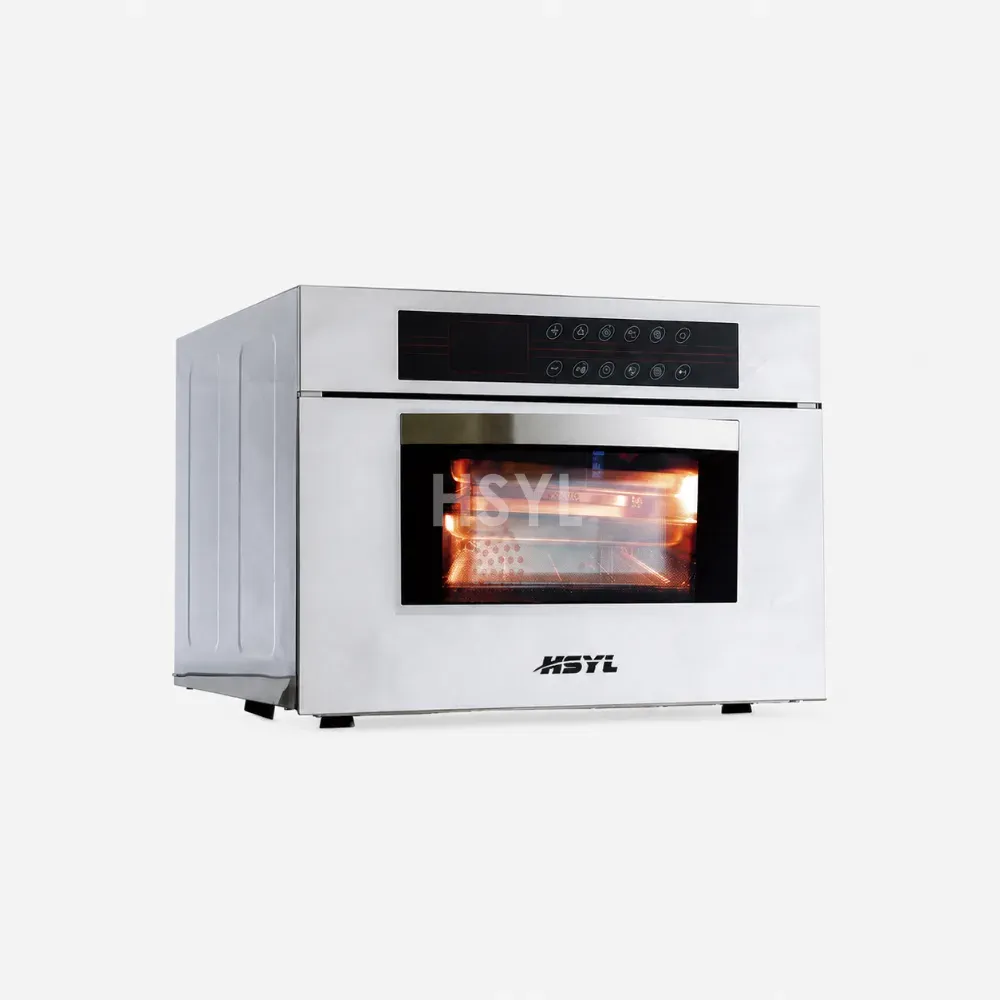
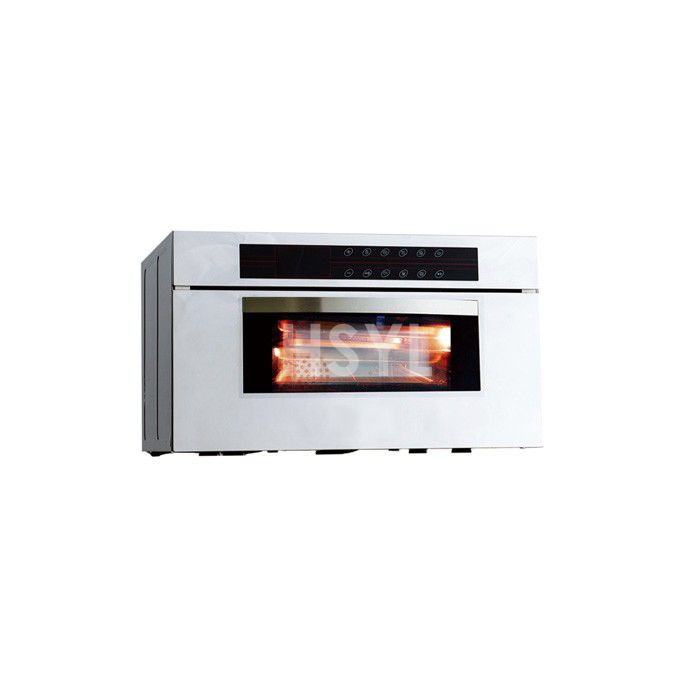
A compact electric oven may suit support baking or limited batch work. A convection oven can offer forced-air circulation; a combi oven is relevant when the menu genuinely needs its steam or mixed modes. These labels do not guarantee the same bake on your product. HSYL's commercial oven range gives model references, while the combi oven selection guide helps test whether additional modes are required.
Send your recipe, tray dimensions, target output and site utility schedule to request a model-specific quotation and loaded trial plan.