Direct Answer / Key Takeaway: Technical B2B engineering guide on Dough Sheeter sizing for 300-bed hospital cook-chill workflows. Review OEM engineering specs and MEP standards from HSYL.
In institutional catering facilities and industrial food production complexes, specifying Standard Duty Commercial Dough Sheeter serves as a foundational operational milestone. This comprehensive engineering dossier examines physical parameters across sizing for 300-bed hospital cook-chill operations, establishing validated throughput sizing, interface rough-in standards, and factory commissioning metrics.
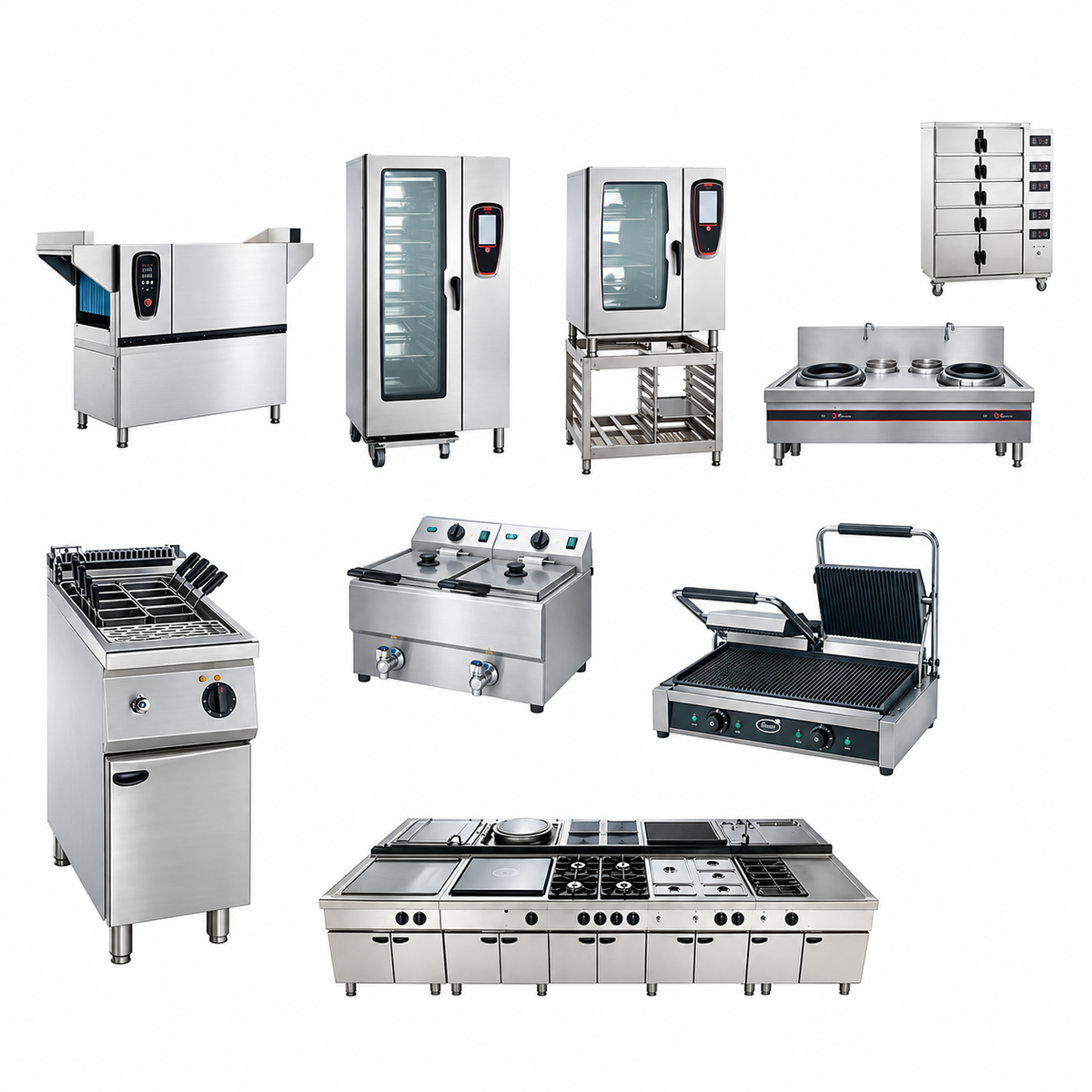
1. Operational Strategy & Production Workflow Integration: Sizing for 300-Bed Hospital Cook-Chill Operations
Acute-Care Hospital Cook-Chill Sizing & Patient Census Sizing Metrics:
In institutional healthcare food service facilities, thermal and refrigeration sizing is fundamentally dictated by clinical patient census dynamics. Hospital dietary engineers calculate capacity using the patient census formula: Total Daily Meals = (Licensed Bed Count * Occupancy Rate * 3 Meals/Day) + Retail Staff Cafeteria Factor (adding 30% to 50% auxiliary volume). For a 300-bed hospital operating at standard 85% occupancy, base patient load equals 765 daily meals, swelling to over 1,140 meals when factoring in multi-shift nursing and medical staff dining. Back-of-house spatial allocation standards mandate 1.0 to 1.2 square feet of dedicated kitchen floor space per daily meal produced. Workstation integration requires strict linear HACCP zoning—separating raw receiving and dirty preparation from thermal cooking lines, blast chillers, and clean tray assembly belts—while providing designated allergen-free and therapeutic preparation zones compliant with IDDSI (International Dysphagia Diet Standardisation Initiative) texture-modified puree guidelines.
When sizing equipment for peak production hours, facility planners must reference verified 304 stainless steel commercial fabrication specifications to ensure capacity reserves remain aligned with scheduled shift turnover targets.
2. Technical Engineering Matrix & Physical Parameters
The following technical matrix defines benchmark physical specifications, operational consumption values, and material thresholds for Standard Duty Commercial Dough Sheeter units across standard commercial and heavy-duty institutional tiers:
| Engineering Parameter | Standard Commercial Spec | Heavy-Duty Institutional Spec | Engineering Variance Threshold |
|---|---|---|---|
| Material Construction | AISI 304 (1.5 mm), 220V-240V (750-1500 W), hydraulic/gear drive, food-grade silicone seals | AISI 304/316 (2.0-3.0 mm), 380V-415V (3.0-7.5 kW), PLC touchscreen control, vacuum deaeration chamber | Portion weight repeatability +-1.0% across continuous high-speed portioning runs |
| Primary Engineering Feature | Extrusion Barrel: Heavy-wall cold-drawn AISI 304 cylinder honed internally to mirror finish (Ra < 0.4 um) | Reinforced industrial assembly with seamless continuous laser welds | Zero structural deflection under maximum rated loading |
| Operational Subsystem | Hydraulic Power Pack: Independent enclosed dual-circuit hydraulic pump with proportional flow rate control valve | High-efficiency heavy-duty components with dynamic feedback telemetry | Energy efficiency index within top 10% commercial benchmark |
| Sanitary & Safety Rating | Sanitary Disassembly: Tool-less quick-release clamps enabling full teardown for daily sanitation in under 5 minutes | IPX5 washdown protection with NSF/ANSI cleanability rating | Hermetic perimeter sealing preventing microbial colonization |
3. Core Physical Operating Principles & Machine Architecture
Continuous Industrial Processing & Sanitary Fluid Dynamics: Specialized food production modules utilize automated continuous processing loops incorporating sanitary stainless steel progressive cavity or lobe pumps, jacketed scraped-surface heat exchangers, and pneumatic portioning valves. All product contact pathways feature 3A sanitary tri-clamp fittings, eliminating threaded or dead-leg crevices where bacterial spores could harborage. Clean-In-Place (CIP) rotary spray balls provide 360-degree chemical washdown without requiring mechanical disassembly.
In institutional catering environments, equipment longevity is heavily governed by surface passivation and corrosion resistance. Units fabricated from high-grade austenitic stainless steel must maintain an uncompromised chromium oxide passivated boundary layer. Regular chemical cleaning with non-abrasive detergents prevents pitting attack from chlorinated sanitizers and atmospheric chlorides.
Understanding these thermodynamic and mechanical principles allows consulting engineers to optimize cycle times, reduce utility peak draw, and eliminate premature component fatigue.
4. Mathematical Throughput Formulation & Batch Calculations: Hydraulic Extrusion Pressure Sizing
Accurate equipment sizing requires empirical calculation rather than subjective estimates. Design engineers utilize the following mathematical formulation to establish continuous throughput requirements:
Extrusion Force (kN) = Hydraulic Piston Area (m2) * System Working Pressure (bar) * Mechanical Efficiency (0.88)
A hydraulic sausage stuffer with 160 mm bore piston operating at 120 bar pressure: Net thrust force = 0.0201 m2 * 12,000 kPa * 0.88 = 212 kN force, achieving smooth air-free extrusion through 12-28 mm nozzles.
Practical sizing engineering requires accounting for the hidden ware factor. Beyond customer dining covers, back-of-house food preparation items (hotel pans, sheet trays, mixing bowls, and prep utensils) contribute an additional 15% to 20% to total kitchen processing loads. Furthermore, thermal transfer times for bulk foods follow the transient conduction square-law relationship (t is proportional to x^2), meaning doubling product depth from 50 mm to 100 mm in pans roughly quadruples core pull-down or heating times. Sizing calculations must incorporate these empirical variables to ensure uninterrupted kitchen workflow.
Employing this sizing method protects the kitchen from meal bottlenecks, prevents premature thermal and mechanical failure, and guarantees compliance with HACCP time-temperature critical control points (CCP).
5. MEP Engineering, Rough-Ins & Installation Standards
Proper site preparation and mechanical rough-ins are critical to ensure trouble-free installation of Standard Duty Commercial Dough Sheeter. Engineering teams and MEP contractors must observe the following technical parameters:
- Power & Electrical Connection: 3-phase 380V-415V circuit with motor circuit protector sized for high hydraulic starting head pressure.
- Water Supply & Treatment: Potable cold water washdown connection; floor drain trough positioned under barrel discharge zone.
- Wastewater & Drainage Air Gap: Discharges must connect to temperature-resistant indirect waste lines with an unobstructed physical air gap, conforming to FDA Food Code Chapter 4 backflow mandates.
- Ventilation, Clearances & Environment: Sloped floor trough drainage with CIP chemical recovery holding tanks; washdown ceiling clearances allowing overhead sanitary piping disassembly.
Critical Field Installation Redlines & Contractor Pitfalls: During jobsite rough-ins, engineering teams must enforce the following compliance boundaries to prevent premature equipment failure and voided warranties:
- CIP Chemical Neutralization: Ensure Clean-In-Place acidic and caustic chemical washes are neutralized in holding tanks before discharge into commercial sewers.
- Sanitary Tri-Clamp Gaskets: Inspect silicone/EPDM sanitary tri-clamp gaskets every 30 days; pinched or decomposed gaskets create bacterial bio-film harborage.
- Progressive Cavity Dry Run: Never run progressive cavity pumps dry; stator elastomeric linings burn out in under 30 seconds without product lubrication.
6. Quality Assurance, FAT Commissioning & Standards Protocol
Prior to shipment from the manufacturing facility and upon delivery to the job site, Standard Duty Commercial Dough Sheeter must undergo rigorous quality assurance auditing. Facility managers should follow factory acceptance testing and compliance verification to verify all factory acceptance testing (FAT) documentation:
- Hydraulic Max Working Pressure Relief Test: System dead-headed against relief valve; pressure stable at 140 bar (+-2.0 bar).
- Piston Seal Blow-By & Leakage Audit: Pressurized to 100 bar with test food paste; zero bypass observed past seal ring.
- Knee-Lever / Foot Pedal Proportional Response: Speed control verified modulating smoothly from 0 to 100% stroke speed.
- Emergency Stop Actuation Test: Knee-lever emergency release drops system pressure to zero in <= 0.15 seconds.
To satisfy commercial health department and third-party food safety audits, modern commercial appliances incorporate automated HACCP data logging. The onboard microcomputer logs real-time time-temperature decay profiles, cycle durations, and sanitizing rinse parameters with cryptographic timestamps. Facilities personnel can export encrypted audit logs via USB or Modbus/Ethernet IoT interfaces, providing verifiable compliance dossiers to satisfy municipal health inspectors during unannounced regulatory audits.
7. Diagnostic Matrix & Failure Mode Remedies
Unplanned equipment downtime interrupts service and compromises kitchen safety. Engineering teams should consult the following diagnostic matrix for common operational error codes and remedies:
| Fault Code | Root Cause Diagnostic | Corrective Maintenance Procedure |
|---|---|---|
| P01 | Hydraulic Oil Over-Temperature Switch | Fluid temp exceeded 65 deg C under continuous shift duty; verify hydraulic heat exchanger fan. |
| P02 | Piston U-Cup Seal Wear Alert | Product bypass detected behind piston face; replace food-grade polyurethane seal kit. |
| P03 | PLC Recipe Parameter Out of Bounds | Cycle speed and pressure setpoint conflict; verify recipe profile in controller setup. |
8. Preventive Maintenance Lifecycle & Inspection Intervals
To protect capital investment and maintain steady kitchen productivity, preventative maintenance must be performed according to an engineered schedule:
| Maintenance Interval | Inspection Scope & Component Target | Acceptable Operating Standard |
|---|---|---|
| Daily Shift End | Remove barrel, piston, and extrusion nozzles; clean and sanitize in wash sink | Barrel mirror interior polished and dried, piston O-ring lubricated with food-grade grease |
| Weekly Operational | Check hydraulic oil reservoir sight glass level, inspect high-pressure hose fittings | Oil level between high and low marks, hose crimps dry with zero hydraulic seepage |
| Quarterly Service | Inspect piston seal ring wear and replace if lip deflection exceeds 0.8 mm | Piston lip maintains tight zero-bypass seal against honed cylinder bore |
| Annual Overhaul | Replace hydraulic fluid (ISO VG 46) and high-pressure suction return filter elements | Hydraulic fluid clear and amber, suction filter free of metal particles or contamination |
All mechanical maintenance interventions must utilize NSF H1 certified food-grade synthetic lubricants on drive bearings and moving pivot hinges. Electrical connections, magnetic contactors, and grounding continuity must be re-torqued and tested annually using calibrated digital multimeters to prevent thermal resistance hot spots.
Recommended First-Year Commissioning & Preventative Spares Kit: For international projects and remote institutional complexes, maintaining an on-site critical spares inventory avoids catastrophic service interruptions:
| Part Description | Recommended Quantity | Engineering Maintenance Function |
|---|---|---|
| Sanitary EPDM Tri-Clamp Gasket Kit | 10 Pieces | FDA-compliant food contact seals for rapid assembly and disassembly of product lines. |
| Progressive Cavity Buna/EPDM Stator | 1 Piece | Elastomeric stator sleeve maintaining positive displacement pressure during sauce pumping. |
| Rotary Clean-In-Place (CIP) Spray Ball | 2 Pieces | Rotating 360-degree wash head delivering high-impact chemical spray to vessel walls. |
| Pneumatic Piston Volumetric Seal Set | 2 Sets | High-wear fluoropolymer piston seals ensuring precise portion dosing repeatability. |
9. Export Packaging, Marine Transit & Logistics Protection
For international buyers and hospitality EPC contractors, safe transit of Standard Duty Commercial Dough Sheeter across long-distance ocean voyages requires specialized industrial packing. Commercial equipment is vulnerable to saltwater moisture condensation, mechanical shock, and handling vibration. Factory dispatch standards encompass:
- Hydraulic Breather Transit Plug: Hydraulic reservoir breather replaced with solid shipping plug preventing oil spills.
- Extrusion Barrel Piston Retraction Lock: Piston driven to bottom stroke and clamped with wooden transit spacer.
- Machined Parts Anti-Rust VCI Coating: Precision-machined nozzle threads and barrel coated with food-grade VCI film.
- ISPM-15 Reinforced Export Crate: Heavy timber crating with reinforced corner gussets and center base skids.
For comprehensive wiring schematics, spare parts exploded diagrams, and maintenance schedules, consult the official technical documentation and installation manuals provided by HSYL engineering.