Direct Answer / Key Takeaway: Compare one large combi oven with two smaller chambers using recipe overlap, partial loads, cleaning windows, service continuity and the actual site connections.
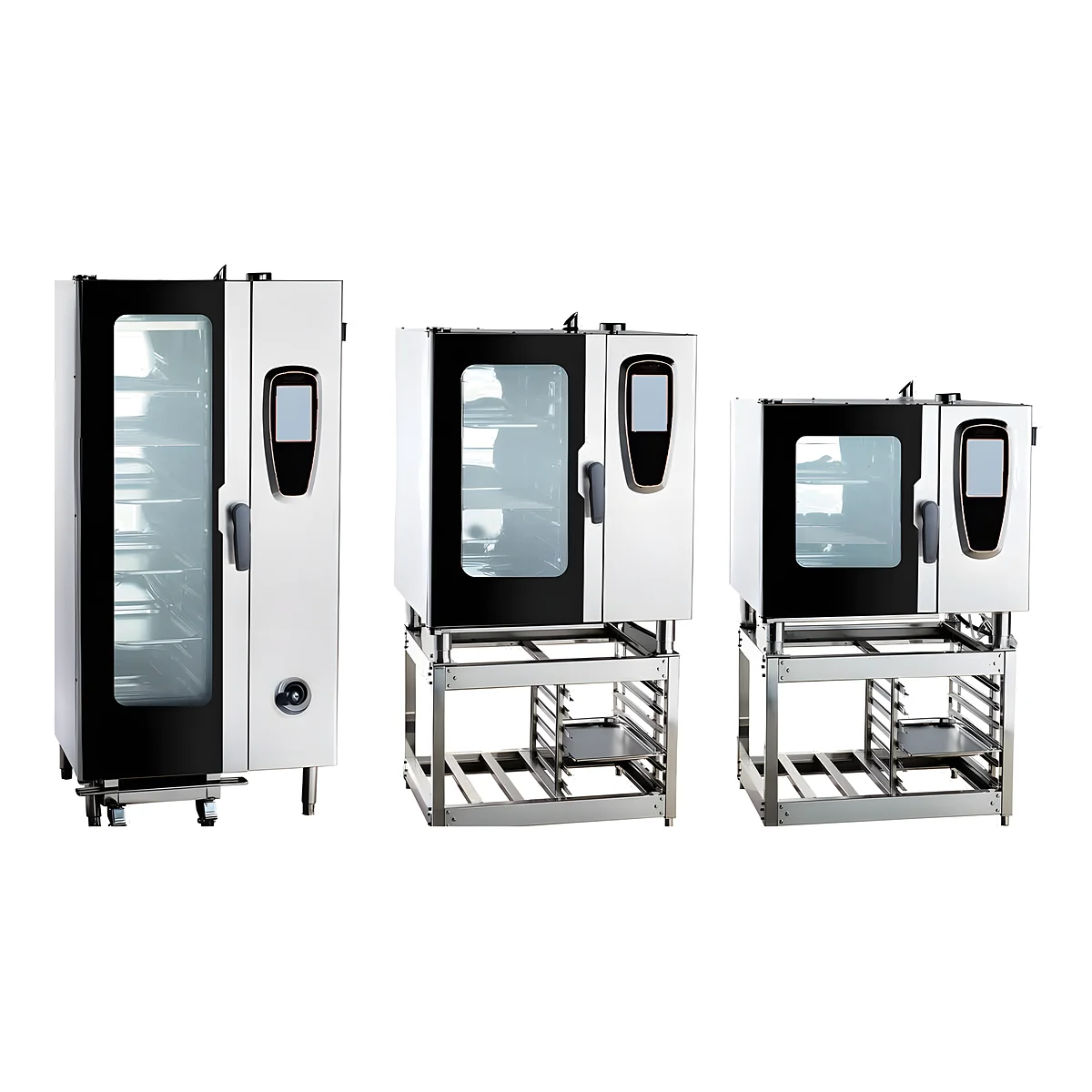
Two smaller combi ovens create two independently scheduled cooking spaces. One larger oven creates a larger shared cooking space. This difference is often more important than the sum of the pan rails. The right comparison begins with the recipes that must be ready together.
Start with the recipes that cannot share a program

Mark the busiest service period and identify dishes needing different chamber conditions, different finishing times or separation under the kitchen's product-handling procedure. If those dishes overlap, the flexibility of separate chambers has a practical value. If most production consists of one large repeated recipe, a single chamber may be easier to load and supervise.
Use the actual pan format. The catalog lists HCO6.1E within the six-position range, HCO10.1E and HCO20.1E with GN 1/1 positions; the corresponding .2E entries use GN 2/1. A rail count comparison made across different pan formats can conceal a substantial difference in the intended load.
Compare the arrangement at quiet service as well
Separate chambers may let the kitchen schedule a small task without reserving its larger cooking space, but that does not establish a universal energy saving. Ask for measured operating data or conduct a comparable trial using the actual menu. Nameplate input describes a connected appliance rating, not a meter reading for the day's cooking.
The catalog lists HCO6.1E at 19.0 kW and HCO10.1E at 22.0 kW for the shown versions. Two of the listed six-position units would have 38.0 kW of combined rated input. This arithmetic does not say they consume that amount continuously, and it does not mean both arrangements can use the same building infrastructure. The connection review must cover the complete proposed installation.
Look at the handling difference
Draw the pan route from preparation to loading and from unloading to the next process. Include the door movement, landing space and operator reach at the actual installation height. A proposal to stack smaller ovens needs its own approved stacking arrangement and access review; two freestanding product dimensions do not establish a safe stacked assembly.
For a larger trolley-loaded model, include the loading trolley, route and transfer method in the comparison. It is possible to gain chamber volume while creating a more demanding unloading task or a route that conflicts with another station.
Make continuity and cleaning explicit purchase criteria
Ask what happens to the menu when one chamber is cleaning, awaiting service or unavailable. Two appliances do not automatically provide full backup: the remaining chamber may lack the capacity, pan format or cooking window needed for the whole menu. Write a reduced production plan for an unavailable combi oven and test whether it is workable.
A single larger oven also needs a planned cleaning interval and a response to a production interruption. Include those requirements in the quote review instead of assigning an arbitrary financial value to downtime. Spare-part availability, service access and the actual support terms should be documented rather than assumed.
The final comparison should name the recipes, useful loading arrangement, installation scope and operating schedule each option supports. The preferred option is the one that fits those conditions at an acceptable quoted cost, not simply the one with more nominal rails.