Direct Answer / Key Takeaway: Calculate combi oven demand from usable pan positions, recipe time and service deadlines. Compare GN formats without treating a diner range as guaranteed output.
A kitchen can run out of oven space while several pan rails remain empty. The unused rails may be too close to a deep roasting pan, a second dish may need a different cooking mode, or the first batch may still be inside when the next service wave starts. Combi oven sizing therefore begins with a production timetable, not a headline number of meals.
Turn the menu into an oven occupancy list

For every dish that will use the oven, record the service deadline, quantity, actual pan format, food depth, cooking program and unloading time. Give separate lines to foods that cannot share the same chamber conditions. A roast, a delicate steamed product and a tray of bread do not become one batch simply because their pans fit the same rails.
Count usable positions after allowing the clearance required by the recipe and the oven instructions. A six-position cavity is a physical loading arrangement; it does not promise six equally loaded pans for every product. Deep pans, tall products and the selected airflow arrangement may change the useful load.
GN format changes the comparison
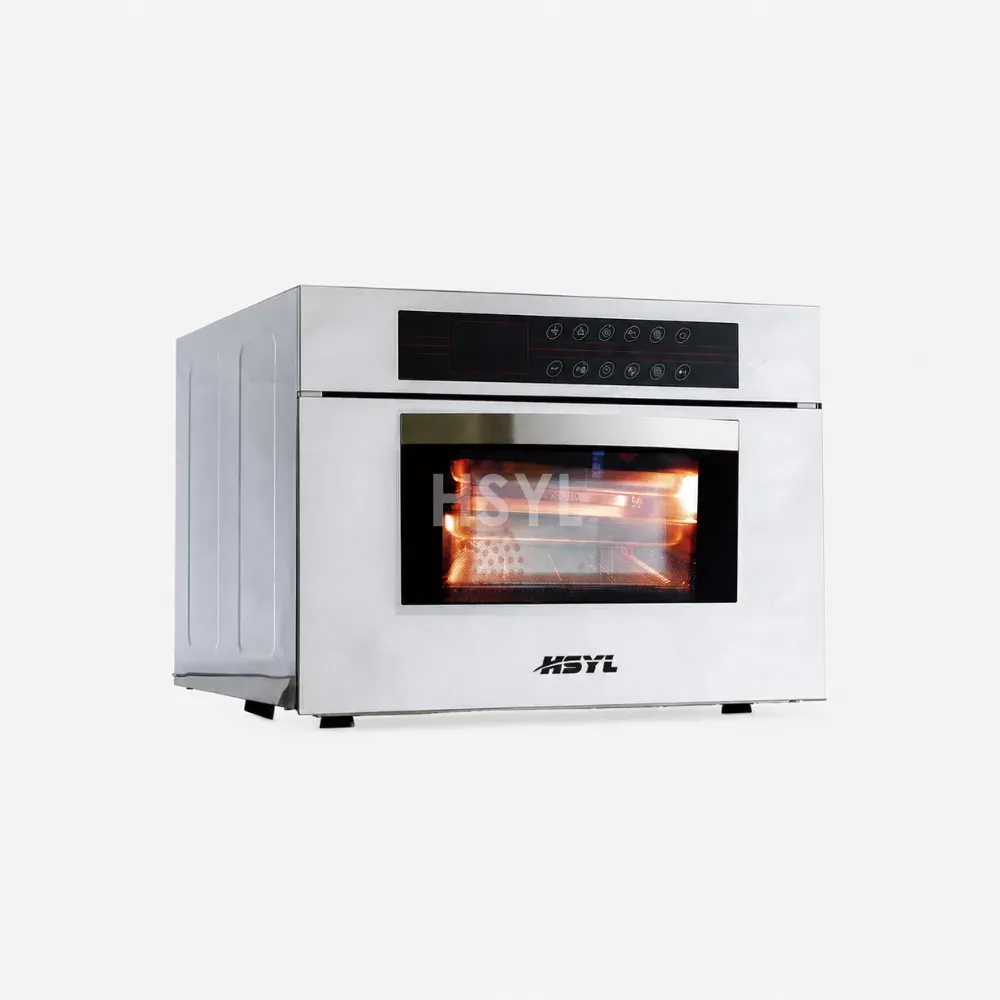
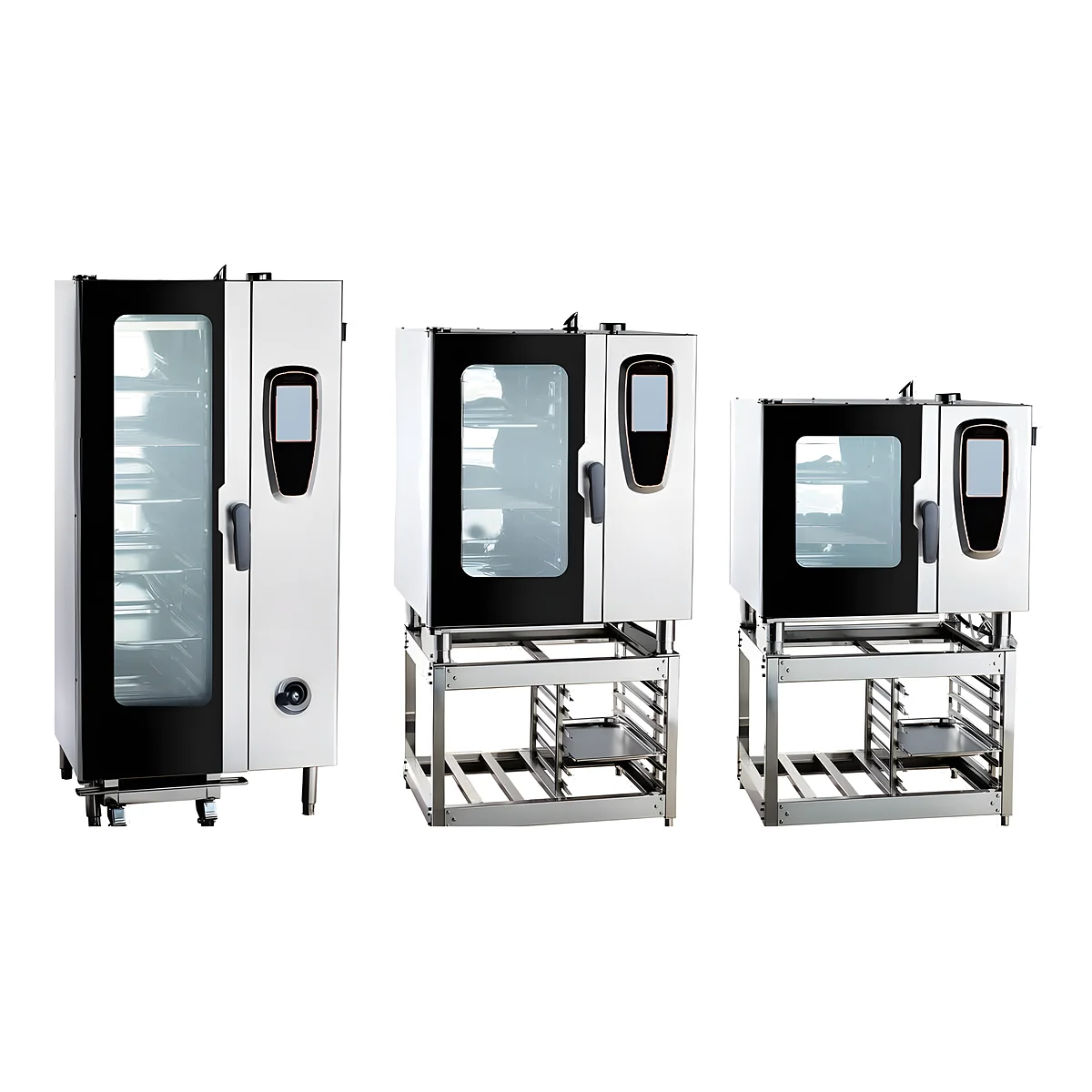
The HSYL catalog lists HCO6.1E with six GN 1/1 positions and HCO6.2E with six GN 2/1 positions. Those are both described as six-position ovens, but they do not offer the same pan format. The same table lists ten- and twenty-position alternatives. Compare compatible pan dimensions before comparing the position count, and check the exact trays already used in the kitchen.
| Production question | What to record | How it affects the decision |
|---|---|---|
| Can dishes cook together? | Program, temperature setting, humidity selection and flavor restrictions | Incompatible recipes require separate chamber time |
| What load is usable? | Pan format, product depth and spacing demonstrated in a trial | Usable positions may be fewer than nominal rails |
| When must the food leave? | Service deadline and unloading or transfer allowance | Late batches cannot be counted toward an earlier meal wave |
| What happens between batches? | Loading, program changes, cleaning where needed and recovery | These intervals consume the same production window |
Test the busiest overlap, not the daily average
Consider an illustrative schedule in which vegetables occupy four GN 1/1 pans until 11:20, while six pans of a different recipe must begin before 11:10. The demand overlaps even if the daily pan total looks modest. The decision is whether the menu can be rescheduled, whether the first product can be transferred using an approved holding process, or whether separate oven capacity is needed. Dividing the daily meals by an advertised diner range will not reveal that conflict.
A useful mixed-product load trial reproduces the expected loading pattern and the least convenient recipe change. Record actual start and finish times, product results at different positions and the time needed for safe loading and unloading. Keep the trial conditions with the equipment quotation so a later change in pan depth or menu is not mistaken for an equipment fault.
Include the space around the oven in the capacity decision
A larger oven can increase handling demand. Check where raw pans wait, where hot pans are set down and whether the operator can open the door without blocking the working aisle. For a trolley-loaded model, the route and turning area must be assessed with the trolley actually intended for use. These are different requirements from the oven's closed external dimensions.
The final choice should state the GN format, demonstrated usable load, recipes tested and the service schedule it can support. Catalog position counts are a starting point. The buyer should retain the current model sheet and the accepted load-trial record rather than treating an indicative diner range as a guaranteed production rate.