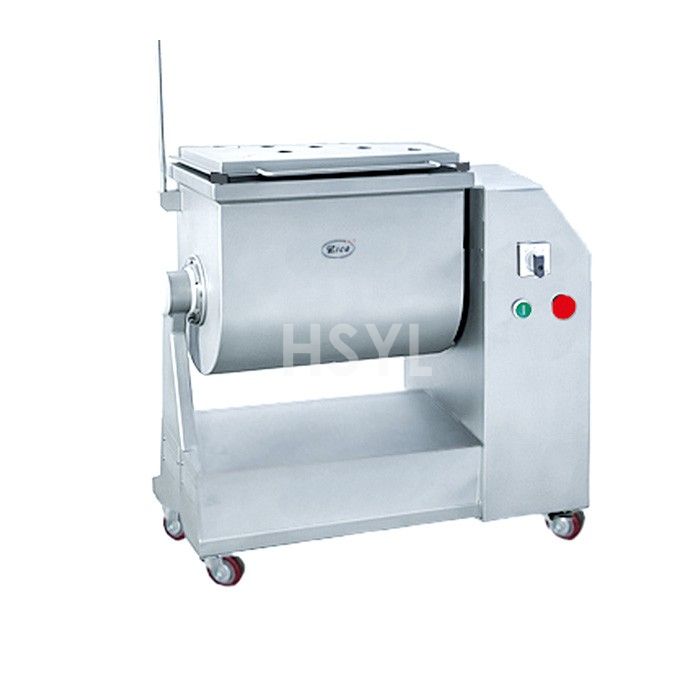
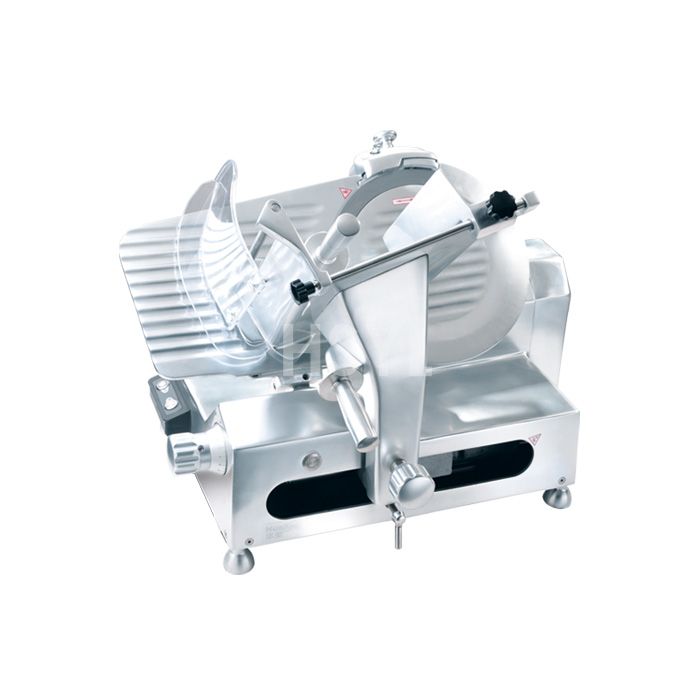
Direct Answer / Key Takeaway: Check the slicer‘s moving carriage, receiving tray, support surface and cleaning access. Match electrical service to the ordered model before installation.
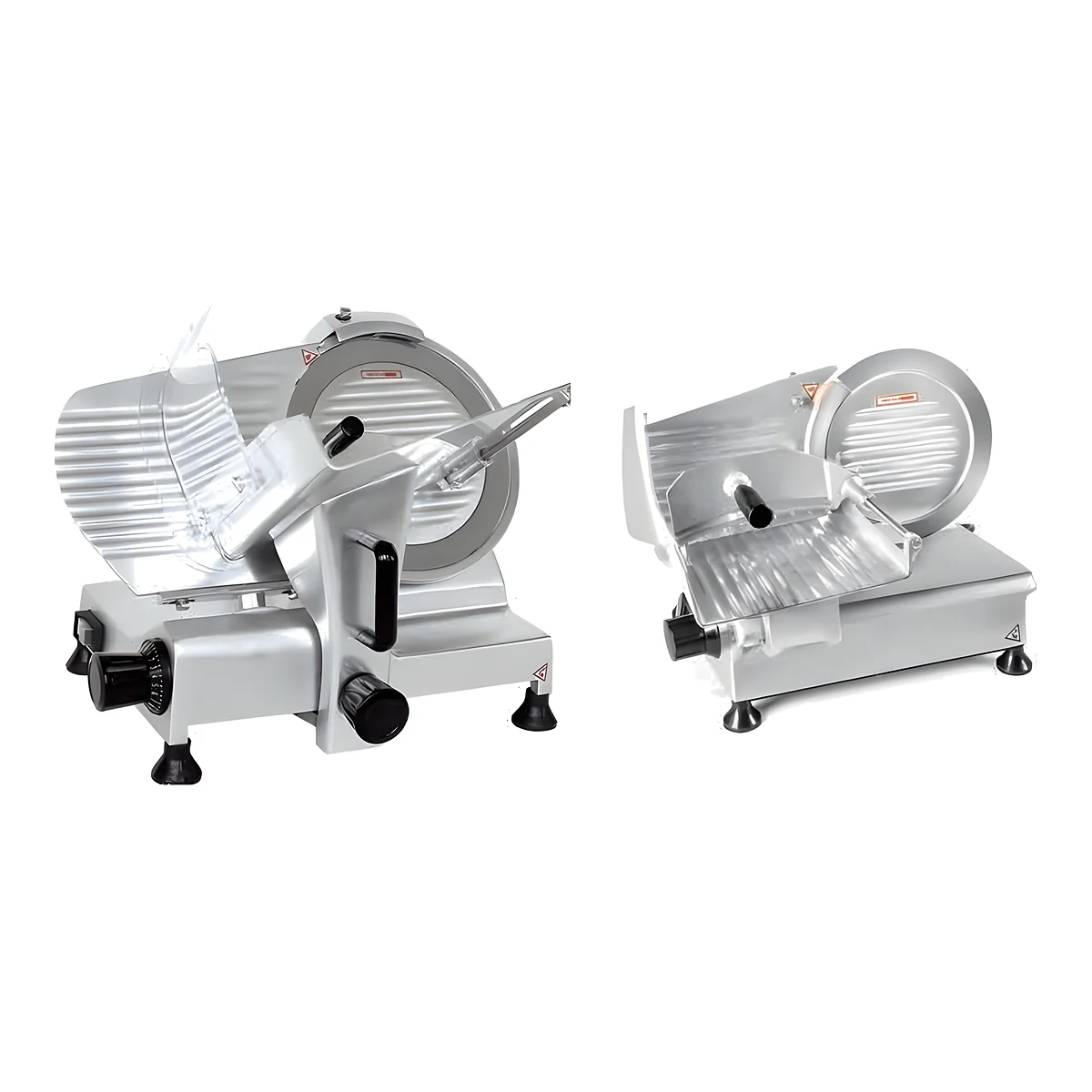
A slicer may sit entirely on a counter and still lack enough room to work. Its carriage moves, food must be loaded, slices need a receiving surface and parts may need to be removed for cleaning. Draw those activities around the exact proposed model before deciding that the station fits.
Start with the moving envelope
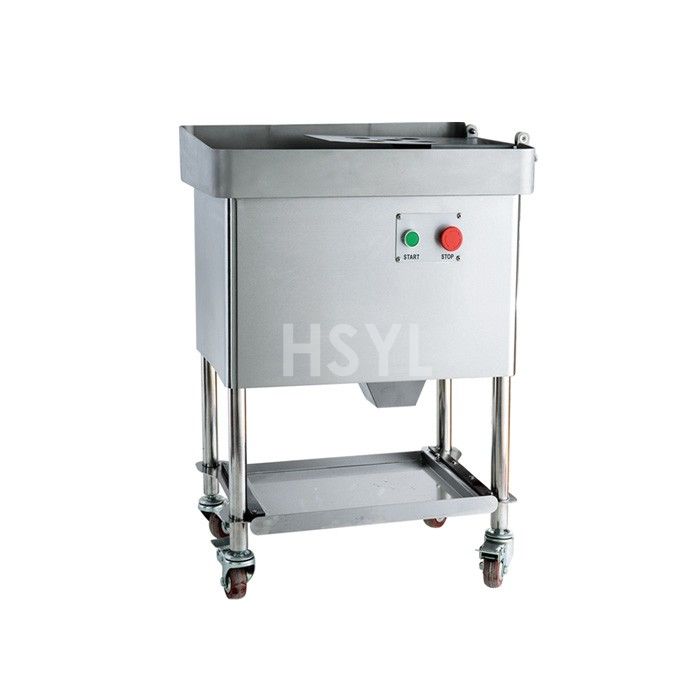
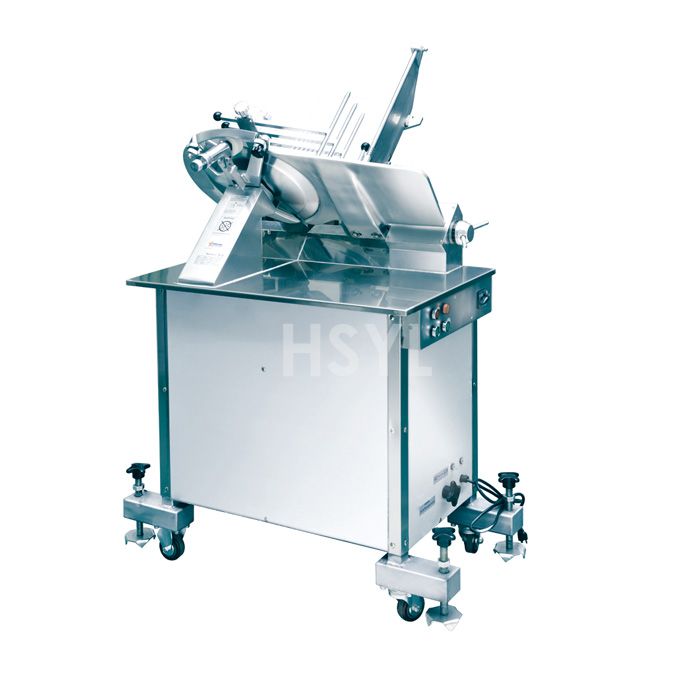
Obtain the manufacturer's installation drawing and identify which dimensions describe the stationary base and which cover full carriage travel. Mark the loading side, operator position, receiving side and controls. Check the arrangement with the equipment in its intended orientation; rotating a drawing to fit a counter can move the handle or slice discharge into an unusable position.
Place the actual receiving tray on the proposed layout. It should have a defined landing position rather than occupy an aisle or cover the controls. Include the incoming food container and the next destination for portioned slices. The available commercial slicer configurations are a starting point for obtaining a model-specific drawing, not a reason to apply one common station dimension to all slicers.
Specify the support as part of the order
Give the table supplier the slicer's installed mass, support points and manufacturer's support requirements. Include other items that will share the top. A statement that a worktable is heavy duty does not establish its suitability for this machine or its concentrated load.
Confirm a practical working height with the intended operators and the installed equipment. Evaluate loading, handle movement and access to the controls together. Avoid choosing height from the bare table alone. For a mobile arrangement, have the equipment and support suppliers confirm the permitted configuration and how it is secured for use; do not improvise a wheeled base.
Check the cleaning arrangement before commissioning
Ask the supplier to demonstrate the model's approved cleaning access and identify any removable items, specialist tools and storage provisions. Plan a protected landing place for those items and the route to the designated cleaning area. A removable knife on one manufacturer's machine does not mean another knife may be removed by the operator.
Check how the space under and behind the unit is reached using its approved method. Do not assume the slicer may be tilted, lifted by a handle or washed with a hose. Keep the actual cleaning instructions at the station. Use the documentation request service to resolve any missing model-specific material before training.
Resolve power at the selected model
Match the ordered electrical configuration and machine data plate with the available service through the responsible qualified installer. The existence of a nearby outlet does not prove compatibility. Route the connection as specified so that it does not cross the carriage, food handling area or normal cleaning route.
At handover, have the supplier demonstrate the installed controls and guarding under the exact manual, then train the designated operators. Retain the installed model and serial number with the station drawing. This ties future questions about parts, support and cleaning to the machine actually supplied.