Direct Answer / Key Takeaway: Check the pan arrangement, counter support and refill sequence for a countertop bain-marie. Match the unit to the actual service menu and access route.
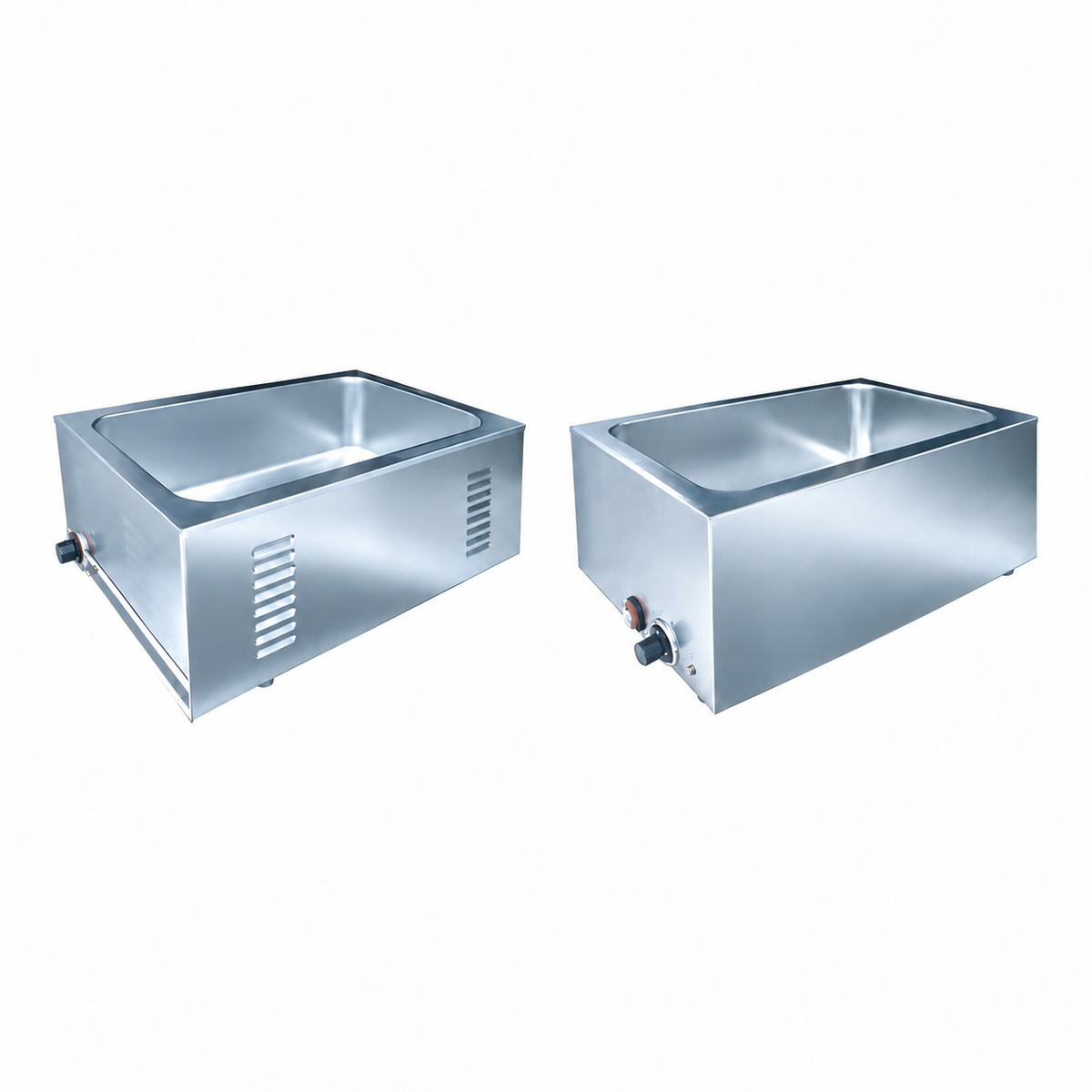
Choose a countertop bain-marie around the pans that must be available at the same time. A menu with several low-volume toppings can need a different arrangement from one dominated by a single fast-selling dish, even when the total number of portions is similar. Start with a plan of the service, not the largest advertised pan count.
Draw the busiest menu arrangement
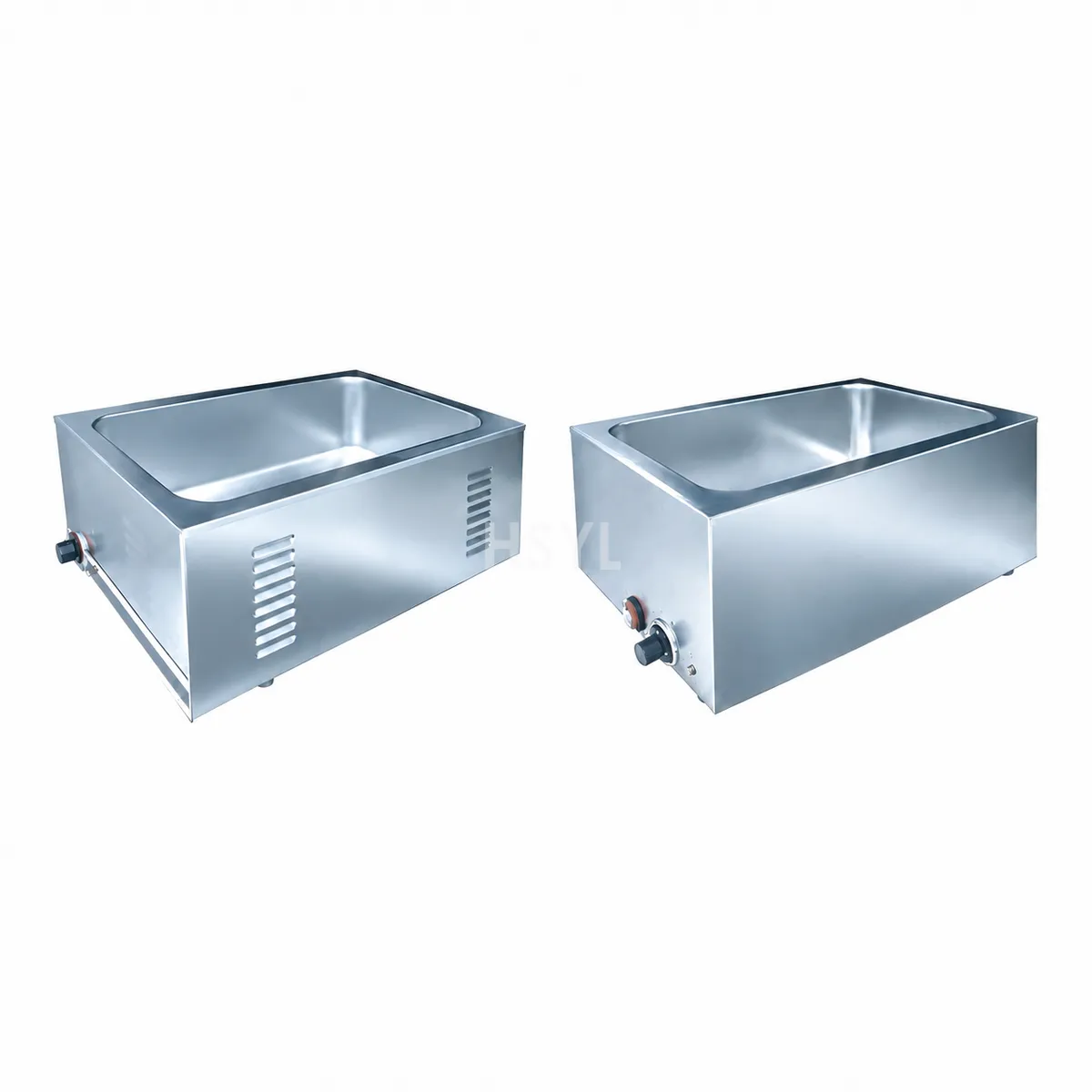
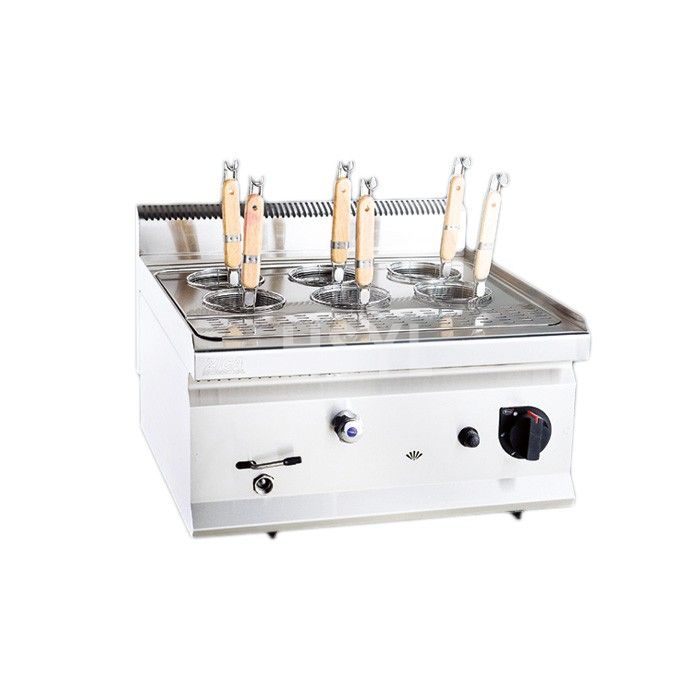
List the dishes offered simultaneously and the pan format used for each one. Mark any dishes that need separate serving utensils, lids or clearly separated positions. Then draw the proposed layout using the actual pan dimensions and the support accessories specified for the warmer. Nominal pan compatibility does not by itself demonstrate that every mixture of smaller inserts is supported.
Ask the supplier to identify the usable opening, compatible pan depths, divider bars and any clearance needed to lift pans out. Check lids and handles in the open position. A layout that fits flat on a drawing can still be awkward when the server removes a lid or replaces a pan during service. The countertop multi-pan warmer configuration should be reviewed separately from a floor-standing serving counter.
Calculate the refill workload
Use an observed service period to estimate how often each pan will be exchanged. Record the batch available from the kitchen, the amount normally served before a change and the route taken by the person carrying the replacement. A larger pan may reduce exchanges while making each exchange harder to handle; a smaller pan can increase interruptions at the busiest point in the queue.
Do not assume that a deep insert is automatically the solution to a fast-selling item. Review the product instructions, serving utensil reach and the establishment's operating controls. This is a holding and service decision, not a licence to use the warmer as an unverified reheating process. The food preparation team should supply food in the condition required by its approved operating procedure.
Walk through a pan change with the intended staff. Identify where the replacement waits, where the removed pan goes, and whether either movement crosses the customer-facing serving action. An agreed pan-depth and refill sequence is more useful than a capacity figure that ignores interruptions.
Check the counter as part of the equipment
The installation review must use the loaded mass of the complete arrangement: warmer, pans, food and any water required by the selected design. Ask for the manufacturer's filled operating load and support requirements, then have the counter support checked for that installation. Do not substitute a guessed weight based on an empty catalogue photograph.
Allow for the actual supply connection and a safe method of filling, emptying and cleaning the unit. A drain tap is useful only when staff can reach it and discharge can be handled using an approved arrangement. Check the cleaning route with the unit in its proposed location, including nearby electrical equipment and food-contact work areas.
Before accepting the purchase, assemble the intended pan mix, fit the accessories and practise a normal refill. Record any missing support bars, blocked handles or unusable space. The resulting pan plan and operating sequence define what has been accepted; the generic label of compact or modular does not.